
Trekking to Machu Picchu: A Day-by-Day Itinerary
How to structure a trek to Machu Picchu — Cusco arrival, acclimatization days, the trail itself, the citadel entry at the end, and post-trek recovery — for the Inca Trail, Salkantay or Lares.

Photo: Juan Carlos / Unsplash
- ✓Every trek itinerary has the same skeleton: acclimatize in Cusco and the valley first, walk the trail, enter the citadel at the end, then recover — never fly in and start walking.
- ✓The classic Inca Trail needs a permit booked months ahead and closes every February; Salkantay and Lares need no permit and can be arranged closer to your dates.
- ✓Trekkers reach passes well above 4,000 m, so acclimatization is not optional padding — it is the difference between a triumphant trek and a miserable one.
- ✓The Inca Trail delivers you to the citadel on foot through the Sun Gate; the alternative treks finish by train into Aguas Calientes and enter on a timed ticket the next morning.
Why a trek needs a whole itinerary, not just a trail
A trek to Machu Picchu is one of the great walks on earth, but the trail itself is only the middle act. Book the walk in isolation and you set yourself up to arrive in Cusco, sleep one jet-lagged night, and start climbing toward 4,000-metre passes the next morning with no time to adjust — a recipe for a brutal first day and, at worst, a trek abandoned to altitude sickness. The trek that works is built as a complete itinerary: a soft landing and acclimatization at the start, the trail in the middle, the citadel as the climax, and a day of recovery at the end.
The romance of walking in is real and worth protecting. Whether you take the original Inca paving stones of the classic trail, the high glacier passes of Salkantay, or the weaving villages of Lares, you arrive at the citadel having earned it — sweat, altitude, cold nights and golden mornings behind you — rather than stepping off a train. The Inca Trail in particular ends by walking down to the Sun Gate (Inti Punku) for the first, slow reveal of the city below, a moment no bus can give you. This itinerary lays out how to frame that walk so the trail is the joy it should be.
Treat the structure here as fixed and the specifics — permit costs, exact distances, operator schedules, the February closure dates, ticket and circuit rules — as things to verify directly with a licensed operator when you book, because those move with the season and the regulations.


At a glance
The shape of a trek-based visit before you commit. Altitudes and the general flow are stable; permit costs, distances, operator schedules, the February Inca Trail closure dates, and ticket and circuit rules move with the season and the regulations, so verify those directly with a licensed operator.
- Skeleton: arrive Cusco → acclimatize (Cusco + Sacred Valley) → trek → Machu Picchu entry → recovery day.
- Acclimatization: budget at least two nights above 3,000 m before the trail — more is better.
- Classic Inca Trail: 4 days / 3 nights, permit required and booked months ahead, closed every February.
- Salkantay: ~4–5 days, no permit, higher and wilder, the most popular alternative.
- Lares: ~3–4 days, no permit, lower-key and more cultural, fewer trekkers.
- Finish: the Inca Trail walks in via the Sun Gate; alternative treks finish by train to Aguas Calientes, then enter on a timed ticket.
- After: build a recovery day in Cusco or the valley before any onward flight.
Step 1 — Choose the trail, because it sets the calendar
Before you can structure anything, you have to choose the route — and the choice splits cleanly on one question: permit, or no permit. The classic four-day Inca Trail is capped, permitted and walked only with a licensed operator; permits sell out months in advance, especially for dry-season dates, and the whole trail closes every February for maintenance and the heart of the rains. If you have your heart set on walking the original stones to the Sun Gate, you must commit early and shape the rest of the trip around the date your permit lands.
The alternatives free up the calendar. Salkantay needs no permit and is the most popular substitute — higher, wilder and more strenuous, crossing a glacier pass beneath the Salkantay massif before dropping into cloud forest. Lares is gentler and more cultural, threading weaving villages and high lakes with fewer trekkers. The Inca Jungle route adds biking and rafting for the adventure-minded. None of these needs a permit booked months ahead, so they can be arranged closer to your dates — but all of them still demand the same acclimatization and the same respect for altitude.
- Want the original paving and the Sun Gate arrival? Choose the classic Inca Trail and book months ahead.
- Travelling in February, or booking late? Choose Salkantay, Lares or the Inca Jungle route — no permit.
- Want the highest, wildest scenery? Salkantay. Want villages and culture over passes? Lares.
- Whatever you pick, only a licensed operator can run the classic Inca Trail — independent walking of it is not allowed.


Step 2 — Land in Cusco and do almost nothing
However you reach Peru, the trek itinerary really begins the moment you land in Cusco at 3,399 m — and the first rule is to under-do it. That abrupt jump to altitude is where soroche (altitude sickness) most often strikes, and it strikes hardest on people who arrive and immediately go hard. So your first day is deliberately gentle: check in, drink the coca tea, hydrate hard, eat lightly, go easy on alcohol, and keep the sightseeing to a slow half-day of the Plaza de Armas, the cathedral and the Coricancha. Save Sacsayhuamán and anything strenuous for once you have settled.
This is not lost time before the trek — it is the trek's foundation. Every day you spend adjusting now is a day you will not spend gasping on a pass later. If you can, arrive in Cusco several days before your trail start, not the night before; the most common cause of a ruined trek is too little acclimatization, and there is no shortcut around it.
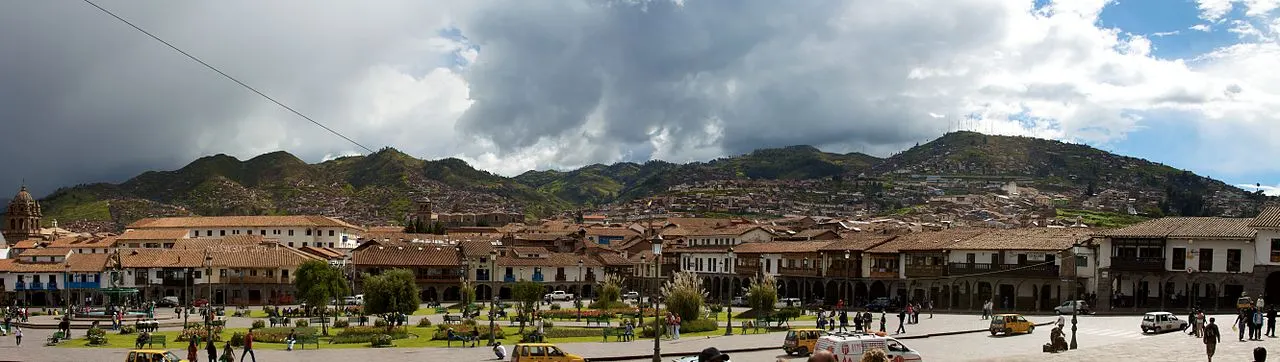


Step 3 — Acclimatize properly in the valley
With a day or two in Cusco behind you, drop into the Sacred Valley, which sits lower (around 2,800 m) and is the ideal place to keep adjusting while you sightsee. Sleeping low in the valley after Cusco is one of the gentlest acclimatization strategies there is, and the valley's Inca sites — Písac's terraces, Ollantaytambo's fortress, Moray and the Maras salt pans — are a preview of the engineering you will meet at the trail's end. Walk a little more each day, hydrate, and let your body build red blood cells while you enjoy yourself.
Use these valley days as a fitness and altitude rehearsal. A short uphill walk to a ruin tells you honestly how your lungs are coping; if you struggle on a gentle terrace climb in the valley, you will struggle far more on a 4,000-metre pass, and it is far better to learn that now. Most operators run a pre-trek briefing in Cusco the evening before departure — gear check, an early night, and the duffel for the porters packed to the weight limit. The valley is also the natural place to stage if your trek departs from Ollantaytambo, as the classic Inca Trail does from its Km 82 trailhead nearby.
- Sleep low in the valley (~2,800 m) for a night or two to keep acclimatizing while you sightsee.
- Use a short uphill walk to a ruin as an honest altitude and fitness test.
- Attend the operator's pre-trek briefing; pack the porter duffel to the weight limit.
- Stage near Ollantaytambo if your trail departs from the Km 82 trailhead.


Step 4 — The trail itself: pacing the walking days
Now the walking. The exact day-by-day differs by route, but the rhythm is shared: easier opening days that gain altitude gradually, a hard high-pass day at the trek's physical heart, and then a descent toward the cloud forest and the citadel. On the classic Inca Trail that crux is Warmiwañusca — Dead Woman's Pass — at over 4,200 m, typically tackled on the second day; on Salkantay it is the Salkantay Pass beneath the glacier. Whatever your route, the high-pass day is the one that humbles people, and the answer is the same everywhere: walk slowly, breathe deliberately, drink constantly, and let the porters and guides set a sustainable pace.
Camp life is part of the experience. On a well-run trek the porters go ahead, pitch the tents, and have hot drinks waiting; the food is better than you would believe possible at altitude, and the nights are cold and starlit. Listen to your guide on pacing and symptoms — they read altitude sickness for a living — and be honest about how you feel. The Inca Trail rewards its final stretch with Wiñay Wayna and then the long descent to the Sun Gate; the alternative treks trade passes for hot springs, jungle and a final approach by train.
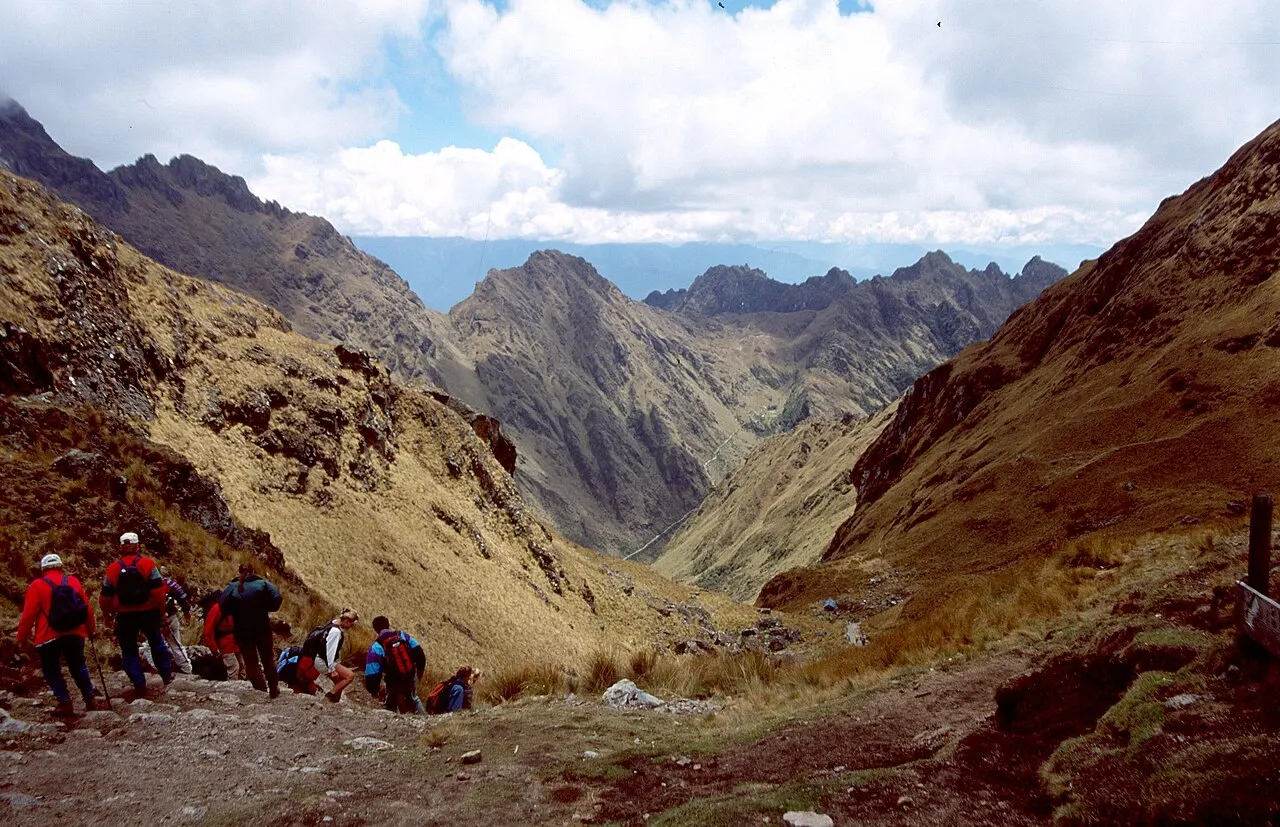
- Expect the same arc: gradual opening days, one hard high-pass day, then descent toward the citadel.
- On the high-pass day, go slow, breathe deliberately, hydrate constantly — it is not a race.
- Trust your guide on pacing and altitude symptoms, and report how you feel honestly.
- Tip the porters and guides fairly — their work makes the trek possible.

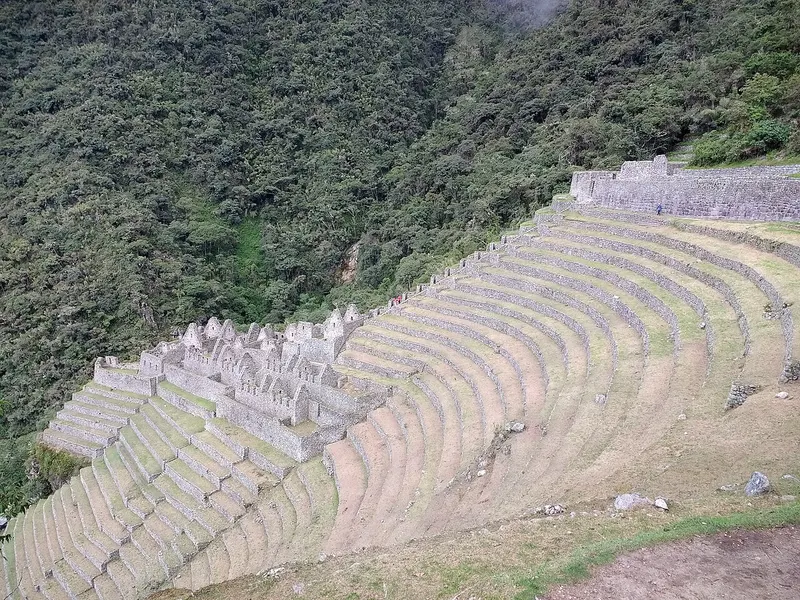

Step 5 — Entering the citadel: two very different finishes
How your trek ends depends entirely on which route you walked, and it is worth knowing the difference before you book. The classic Inca Trail finishes on foot: on the final morning you walk the last stretch and climb to Inti Punku, the Sun Gate, where the whole citadel opens up below you for the first time — the single most cinematic arrival in travel. From there you descend into Machu Picchu itself. Your trek operator handles the entry, and the timing is built into the permit, so you walk straight into the site that day.
The alternative treks — Salkantay, Lares, the Inca Jungle route — do not connect on foot all the way to the gate. They finish at or near Aguas Calientes, usually with a final stretch by train into the town, where you sleep. You then visit the citadel the next morning like any other train arrival: the early bus up the switchbacks and entry on a timed-entry ticket tied to a circuit. That means for an alternative trek you must book a Machu Picchu entry ticket separately for your citadel day, with the same circuit choice and early-slot strategy as any train itinerary. Confirm with your operator exactly how and when your citadel entry is arranged — it is the detail people most often get wrong.
- Classic Inca Trail: walk in via the Sun Gate; entry is handled within the trek permit.
- Salkantay / Lares / Inca Jungle: finish near Aguas Calientes, sleep, then enter the next morning on a timed ticket.
- For alternative treks, book a separate Machu Picchu entry ticket and choose your circuit early.
- Confirm with your operator exactly how your citadel entry and bus are arranged.
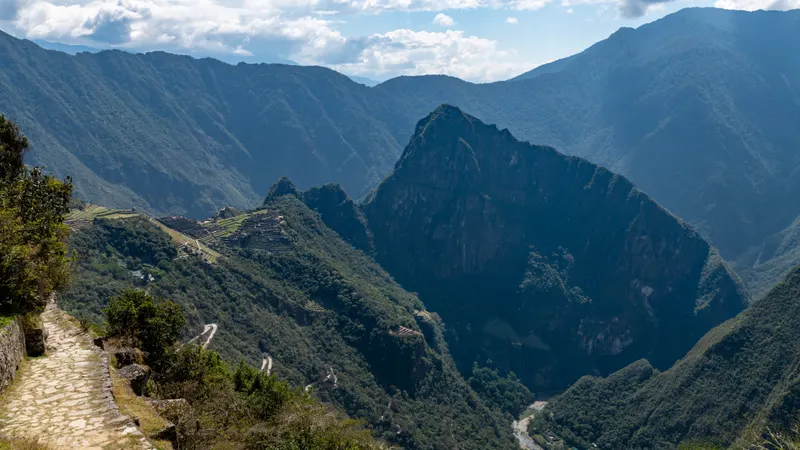


Step 6 — Recover before you fly
The mistake that turns a great trek into a sour memory is scheduling the flight home for the day you come off the trail. After several days of altitude, cold nights and long climbs, you will want a soft landing: a real bed, a hot shower, a long meal, and ideally a day to do nothing in particular. Build a recovery day into the itinerary in Cusco or the Sacred Valley, and never book your international departure for the same day you leave the citadel. Mountain flights between Cusco and Lima are weather-prone, and a tight connection on top of trek fatigue is asking for trouble.
Use the recovery day for the gentle pleasures the trek left no room for: the things you skipped in Cusco when you were taking it easy on arrival, a market run for alpaca layers, a celebratory dinner, a long sleep. You will have earned all of it. Then fly out with the particular satisfaction that only walking to Machu Picchu can give — the citadel met on foot, the passes behind you, the whole arc completed in the right order.
- Build a recovery day in Cusco or the valley after the trek — never fly out the same day.
- Do not schedule the Cusco–Lima flight for your citadel day; mountain weather delays happen.
- Use the recovery day for the soft pleasures the trail skipped — a bed, a meal, a market run.
- Verify permit costs, distances, schedules, the February closure and circuit rules directly — this guide stays evergreen.



Related guides

The Classic 4-Day Inca Trail to Machu Picchu
The four-day Inca Trail — the only trek that walks you into Machu Picchu through the Sun Gate. Permits, camps, Dead Woman's Pass, altitude, porters and what each day actually feels like.
Read guide
The Salkantay Trek to Machu Picchu
The Salkantay — the most popular permit-free alternative to the Inca Trail. Its route under a glaciered peak, the Humantay Lake detour, altitude and season, lodges versus camping, and how it differs from the classic trail.
Read guide
Inca Trail vs Salkantay: Which Trek to Machu Picchu?
A clear head-to-head between the two classic treks to Machu Picchu — permits and availability, scenery, altitude, cost, comfort and archaeology — to help you pick the right one.
Read guideMore in Itineraries
6
A Luxury Machu Picchu Itinerary
A high-end Machu Picchu plan with palace hotels in Cusco, luxury Sacred Valley lodges, the Hiram Bingham train, private guiding and soft, altitude-kind pacing.
Read guide
A Machu Picchu Honeymoon
How to build a honeymoon around Machu Picchu — romantic hotels in Cusco and the Sacred Valley, a luxury train into the gorge, a private guide, spa days and a dawn at the citadel.
Read guide
Beyond the Citadel: Peru Add-Ons to Machu Picchu
How to bolt the rest of Peru onto a Machu Picchu trip — Rainbow Mountain, Humantay Lake, the South Valley and the bigger leaps to the Amazon, Lake Titicaca, Lima and Arequipa — sequenced for altitude and time.
Read guide
Family Machu Picchu Itinerary: A Kid-Paced Plan
A family-paced Machu Picchu itinerary built around the altitude ladder, kid-friendly circuits, the train, Sacred Valley downtime and unhurried buffer days — so children and grandparents arrive at the citadel rested, not wrecked.
Read guide
Five Days: Cusco, the Sacred Valley & Machu Picchu
A balanced five-day Machu Picchu itinerary — proper Cusco acclimatization, an unhurried Sacred Valley, an overnight in Aguas Calientes and the citadel, with altitude and ticket buffers built in so a cloudy morning or a late train never sinks the trip.
Read guide
Machu Picchu by Train: A Step-by-Step Itinerary
A train-based Machu Picchu itinerary from Cusco or Ollantaytambo — the booking order, hotel timing, the bus up from Aguas Calientes, and the backups that keep the day calm.
Read guide