
Inca Trail vs Salkantay: Which Trek to Machu Picchu?
A clear head-to-head between the two classic treks to Machu Picchu — permits and availability, scenery, altitude, cost, comfort and archaeology — to help you pick the right one.

Photo: Giacomo Buzzao / Unsplash
- ✓Inca Trail = archaeology + the Sun Gate arrival, but capped by permit, guided only, booked months ahead, and closed every February.
- ✓Salkantay = wilder, higher mountain scenery with Humantay Lake, no permit, bookable late, open year-round — but it reaches the citadel by train, not on foot.
- ✓Salkantay's pass (~4,600 m) is higher than the Inca Trail's Dead Woman's Pass (~4,215 m); both demand real acclimatization.
- ✓Rule of thumb: choose the Inca Trail for the Inca and the Sun Gate; choose Salkantay for the Andes, the freedom and the comfort of optional lodges.
One decision, two very different walks
Almost everyone weighing a trek to Machu Picchu ends up at this fork: the classic Inca Trail or the Salkantay. They are the two headline routes, and they are not lesser and greater versions of the same thing — they are genuinely different journeys that happen to share a destination. The Inca Trail is a pilgrimage along original stone roads to a dawn arrival at the Sun Gate; the Salkantay is a big-mountain adventure beneath a glacier. Picking well means knowing which experience you actually want.
The comparison below runs through the decisions that matter most — permits and availability, scenery, altitude, cost, comfort and archaeology — and ends with a plain recommendation for common traveller types. Volatile details like permit quotas and prices change, so confirm those with a licensed operator; the trade-offs themselves are stable.
Permits and availability
This is often the decision-maker. The Inca Trail runs on a strictly capped daily permit, sold only through licensed operators, passport-named and non-transferable — and in high season it disappears months in advance. It also closes entirely every February for maintenance. The Salkantay needs no permit at all: you can book it weeks rather than months out, and it runs year-round, February included. If your dates are fixed and close, or if Inca Trail permits are already gone, Salkantay is frequently the answer by default.
- Inca Trail: capped permit, licensed operators only, often sold out months ahead, closed every February — verify.
- Salkantay: no permit, bookable close to your dates, open year-round.
- If permits are gone or your trip is in February, Salkantay (or the train) is the fallback.

Scenery and archaeology
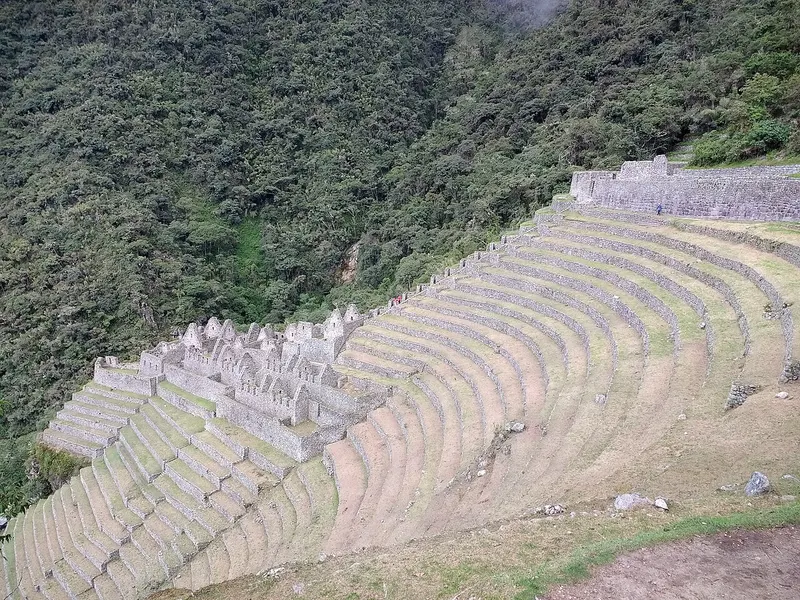
Here the two routes part most clearly. The Inca Trail is the cultural walk: original Inca paving the whole way, a string of ruins you can reach no other way — Llactapata, Runkurakay, Sayacmarca, Phuyupatamarca and the exquisite Wiñay Wayna — and the singular reward of entering Machu Picchu through the Sun Gate at first light. It is history underfoot. Salkantay is the wilderness walk: the turquoise glacier lake of Humantay, the snow-and-ice pyramid of Nevado Salkantay, and a dramatic descent from alpine ice into cloud forest and coffee country. It has little Inca archaeology, but its raw mountain scenery is, for many, more spectacular.
- Inca Trail: original stone roads, hidden ruins, and the Sun Gate (Inti Punku) entrance — archaeology-rich.
- Salkantay: Humantay Lake, glaciered peaks, glacier-to-jungle descent — scenery-rich, archaeology-light.
- Only the Inca Trail enters the citadel on foot from above; Salkantay finishes by train.
Altitude, difficulty and comfort
Both are demanding high-altitude treks, and both require acclimatizing for several days in Cusco or the Sacred Valley first. In altitude terms Salkantay is the tougher: its pass tops out around 4,600 m, above the Inca Trail's Dead Woman's Pass at roughly 4,215 m. The Inca Trail's signature difficulty is its long, knee-working stone-stair descents. On comfort, Salkantay has a clear edge for those who want it — it offers fixed lodges with hot showers and real beds as an alternative to camping, while the Inca Trail is camped throughout. Neither is a stroll; both reward training and proper altitude preparation.
- Highest point: Salkantay ~4,600 m vs Inca Trail ~4,215 m — Salkantay is higher.
- Inca Trail's hardship: long stone-stair descents and the Dead Woman's Pass climb.
- Comfort: Salkantay offers lodge-to-lodge options; the Inca Trail is tents only.
- Both need several nights of acclimatization beforehand.

Cost
Prices move with operator, season, group size and comfort level, so treat any figure you see as a quote to verify rather than a fixed rate. Broadly, a camped Salkantay tends to be the more affordable of the two, partly because it carries no permit fee, while the Inca Trail's permit and guiding requirements set a floor under its price. The premium lodge-to-lodge Salkantay, by contrast, can cost well above a standard Inca Trail. In short: budget walkers often lean Salkantay-camping; comfort-seekers can spend more on Salkantay-lodges than on the Inca Trail. Compare actual quotes for your dates.
- Camped Salkantay: usually the most affordable, with no permit fee.
- Inca Trail: permit and guiding requirements set a price floor.
- Lodge-to-lodge Salkantay: a premium option that can exceed the Inca Trail.
- Always compare current operator quotes for your exact dates — verify.
So which should you choose?
Choose the Inca Trail if the history is the point — if you have dreamed of walking original Inca roads to the Sun Gate and seeing ruins no train rider reaches, and you can book far enough ahead to secure a permit (and avoid February). Choose Salkantay if you want the wildest scenery, the freedom to book late, a route that runs year-round, optional lodge comfort, and you don't mind reaching the citadel by train rather than on foot. Both end at the same unforgettable place; they simply take you there through different worlds.
- Choose Inca Trail: for archaeology, the Sun Gate arrival, and if you can book months ahead outside February.
- Choose Salkantay: for big-mountain scenery, late booking, year-round availability, and optional lodge comfort.
- Permits gone or trip in February? Salkantay, by default.
- Want the on-foot citadel entrance? Only the Inca Trail delivers it.

Common questions
Is Salkantay a 'second-best' Inca Trail? No — it is a different and arguably more scenic trek that happens to be the usual alternative. Many walkers actively prefer it for the mountains.
Can I do either without acclimatizing? You shouldn't. Both cross passes above 4,000 m; a few nights at altitude in Cusco or the Sacred Valley first is essential for both.
Do both arrive at the Sun Gate? No. Only the Inca Trail enters through Inti Punku on foot. Salkantay reaches the citadel by train and you visit the next morning on a standard timed ticket.
What if I want history and freedom? Consider the short Inca Trail, which gives the Sun Gate arrival on a permit that is usually easier to secure, or pair a Salkantay with extra time at the Sacred Valley's Inca sites.




Related guides

The Classic 4-Day Inca Trail to Machu Picchu
The four-day Inca Trail — the only trek that walks you into Machu Picchu through the Sun Gate. Permits, camps, Dead Woman's Pass, altitude, porters and what each day actually feels like.
Read guide
The Salkantay Trek to Machu Picchu
The Salkantay — the most popular permit-free alternative to the Inca Trail. Its route under a glaciered peak, the Humantay Lake detour, altitude and season, lodges versus camping, and how it differs from the classic trail.
Read guideThe Short 2-Day Inca Trail to Machu Picchu
The 1–2 day Inca Trail — the trail's grand finale past Wiñay Wayna and through the Sun Gate, without the high passes or camping. Permits, fitness, train logistics and the circuit caveats to know.
Read guideMore in Treks
6
Choosing a Licensed Inca Trail Operator
The classic Inca Trail can only be booked through a licensed operator — so the operator is your most important choice. How to vet permits, porter welfare, cancellation terms, and spot a too-good-to-be-true offer.
Read guide
Dead Woman's Pass: The Inca Trail's Hardest Day
Warmihuañusca — the 4,215 m high point of the classic Inca Trail and the day everyone fears. The altitude, the effort, the pacing, the weather and the mental game of the trek's toughest climb.
Read guide
Hiking Gear for Machu Picchu and the Treks
What to actually pack for the Inca Trail, Salkantay, rainy-season trekking, day hikes like Huayna Picchu, and the citadel circuits — the layering system, footwear, rain gear and daypack, without overpacking.
Read guideInca Trail Packing List
Exactly what to bring for the classic four-day Inca Trail — the layering system, rain gear, the sleeping setup, your daypack contents, medication and toiletries, and how the porter duffel weight limit shapes everything.
Read guide
Inca Trail Permits: How They Work and How to Get One
How Inca Trail permits work — who can book them, the strict daily cap, release timing, passport rules, the February closure, and what to do when your dates are sold out.
Read guidePorter Ethics on the Inca Trail
The people who carry your trek up the mountain — how to choose an operator that pays, feeds, equips and protects its porters, what the load and welfare rules say, and how to tip without insulting anyone.
Read guide