
Sacred Valley Itinerary: One or Two Perfect Days
A loop-by-loop Sacred Valley itinerary linking Písac, Urubamba, Maras and Moray, Chinchero and Ollantaytambo — paced for altitude and built to end at the train to Machu Picchu rather than back in Cusco.

Photo: Silvia Fang / Unsplash
- ✓The valley floor sits around 2,800 m — lower and kinder than Cusco (3,399 m) — which is exactly why it works as both a sightseeing route and an acclimatization day.
- ✓A one-day version hits the headline sites (Písac or Maras–Moray, plus Ollantaytambo); two days lets the valley breathe and ends with you already at the train.
- ✓Drive the valley west, not east: finish in Ollantaytambo so your Machu Picchu morning is a short walk to the platform, not a dawn dash from Cusco.
- ✓Most sites are covered by the regional boleto turístico, not individual tickets — buy the right version before you set out and verify current prices directly.
Why give the valley its own day (or two)
It is tempting to treat the Sacred Valley as a corridor — somewhere you pass through on the way from Cusco to the train — and plenty of trips do exactly that. But the valley rewards the traveller who slows down inside it. The Río Urubamba runs the whole length, dropping out of the cold highlands toward the cloud forest, and on either bank the Inca terraced the slopes into green staircases that still hold the hillside a thousand years on. Spend a day here and the terraces of Písac, the salt pans of Maras and the circular bowls of Moray stop being a checklist and become a slow, dazzling preview of the engineering you will meet, grander, at the citadel itself.
There is a practical reason too, and it is the one that turns a nice idea into a smart plan. The valley floor sits several hundred metres lower than Cusco, around 2,800 m against the city's 3,399 m. Spending your first full day down here — walking ruins, eating long lunches, sleeping low — is one of the gentlest ways to acclimatize before climbing anything. You descend from Cusco into the valley, descend again to Machu Picchu at 2,430 m, and only climb back up to the city at the very end. A Sacred Valley itinerary, paced right, is therefore both a sightseeing day and an altitude strategy folded into one.
This guide lays out a one-day version for tight trips and a two-day version for those who want the valley to breathe, both built around the same golden rule: travel west and finish in Ollantaytambo, so the train to Machu Picchu is a short, calm hop rather than a pre-dawn scramble back through Cusco traffic.
 Sacred Valley guideThe valley overview — Písac, Ollantaytambo, Maras and Moray, and how the trip stages through it.
 Acclimatization & altitudeWhy a lower valley day blunts soroche before the citadel.
 Staging Machu Picchu from the valleyHow to reach the citadel from the valley instead of returning to Cusco.
At a glance
The shape of the itinerary before you commit. Altitudes are approximate and stable; anything to do with prices, site-ticket versions, opening hours and train times moves with the season and the operators, so verify those directly when you book.
- Direction of travel: west, Cusco → Písac → Urubamba → Maras/Moray/Chinchero → Ollantaytambo, ending at the train.
- One day: choose either the eastern (Písac) end or the plateau (Maras–Moray) cluster, plus Ollantaytambo — not all of it.
- Two days: spread the whole valley, sleeping in Urubamba or Ollantaytambo, with the citadel morning on day three.
- Altitude: valley floor ~2,800 m, lower and kinder than Cusco — treat the day as gentle acclimatization.
- Tickets: most ruins (Písac, Ollantaytambo, Chinchero, Moray) sit on the regional boleto turístico; Maras salt pans are a separate small entry. Verify versions and prices.
- Transport: a private driver or organised tour folds the stops together; shared colectivos are cheaper but slower and less flexible.
- Golden rule: finish in Ollantaytambo so the Machu Picchu train is a walk, not a dash.
Before you set out — three things to settle
A little preparation makes the valley flow rather than stall. Settle these three before the day begins and the rest is pure pleasure.
First, your site ticket. Most of the Inca ruins on this route — Písac, Ollantaytambo, Chinchero, Moray — are covered not by individual tickets at the gate but by the regional boleto turístico, a combined ticket sold in partial and full versions. Buy the right one before you set out; the Maras salt pans (Salineras) sit outside that system with their own small entry. Confirm which version covers your planned stops and the current price directly, as these are set by the regional authority and change.
Second, your transport. The valley's sites string out along the river and up onto a plateau rather than clustering, so how you move shapes how much you see. A private driver or a well-run small-group tour folds the stops together and lets you linger; shared colectivos are cheap and characterful but slow, fixed to the main road, and awkward for the off-road plateau sites. Decide before the day, not at the first crossroads.
Third, the altitude rhythm. This is, ideally, an early day in your trip when you are still adjusting, so keep it gentle: water, an unhurried pace, a long lunch, and no heroics on the steeper terrace climbs. The valley is lower than Cusco, but it is still high ground.
- Buy the correct boleto turístico version before you start; check separately for the Maras salt-pan entry.
- Lock your transport — private driver, small-group tour, or colectivos — before the day, not on the road.
- Treat an early-trip valley day as acclimatization: hydrate, pace yourself, skip the hardest climbs if you are feeling the height.
- Carry small cash for the salt pans, market stalls, tips and roadside snacks.
- Start early — the day-trip coaches from Cusco arrive mid-morning, so the first hour at each site is the quietest.

Step 1 — Start east: Písac, terraces and the market
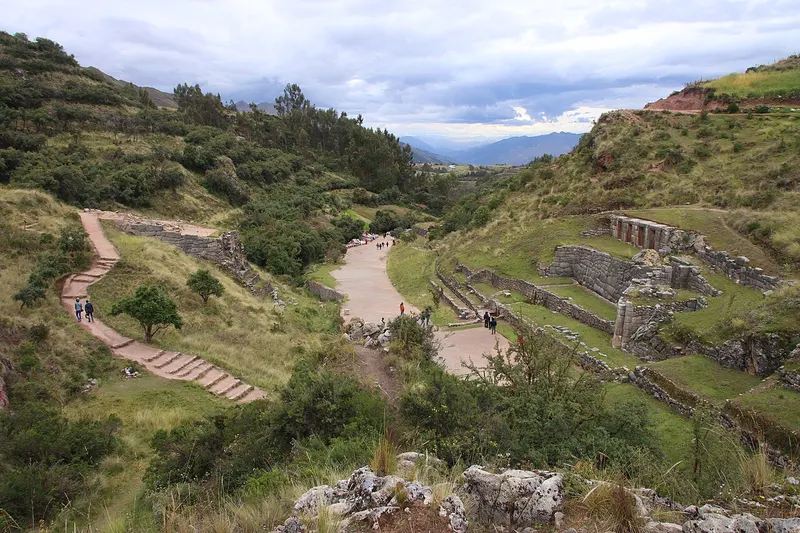
Leave Cusco early and drop east into the valley to Písac, the market town that anchors its eastern end. Two things draw visitors here, and a good day takes in both. High above the town, an extraordinary complex of agricultural terraces and Inca ruins clings to the cliff — one of the most dramatic terrace systems anywhere in the valley, with ceremonial buildings, water channels and an old hillside necropolis cut into the rock opposite. A driver can take you up to the higher gate and let you walk down through the terraces, which is far kinder on the legs and the lungs than climbing up from the town.
Down in Písac itself, the famous artisan market spills across the main square and the surrounding lanes — textiles, ceramics, silver and produce, busiest on its traditional market days but trading most of the week now. It is touristy, yes, but it is also a genuine and colourful introduction to highland craft, and a good place to buy the alpaca layer you will want for cold valley evenings. Give Písac a couple of hours, see the ruins before the coaches arrive, browse the market, and move on.
Step 2 — Lunch in the middle: Urubamba
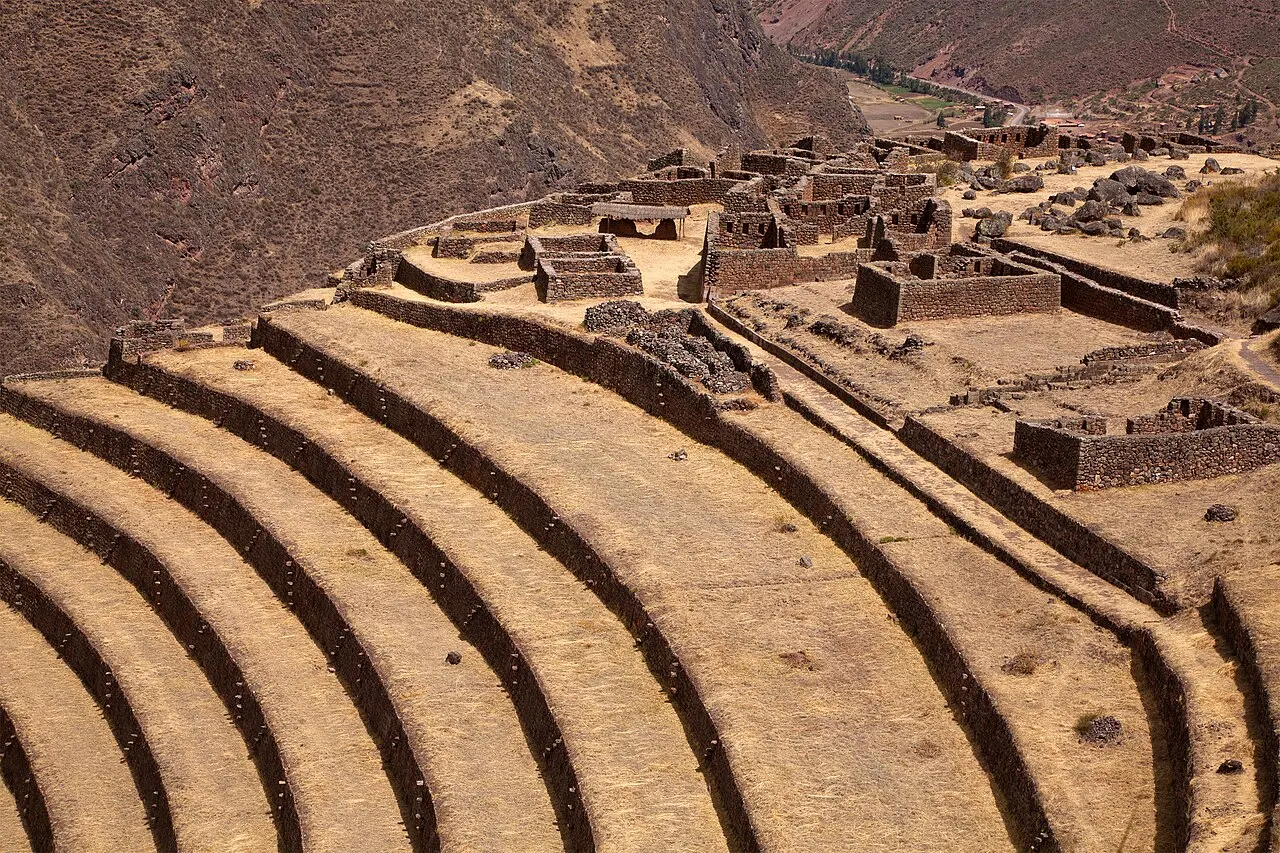
From Písac the route runs west along the river to Urubamba, the valley's unglamorous hub and natural lunch stop. The town centre is workaday rather than picturesque — this is a place people live and farm — but the surrounding countryside holds some of the best eating in the valley, from a celebrated farm-to-table restaurant and a hillside brewery to hotel dining rooms set in flower-heavy gardens. A long, slow lunch here is not lost time; it is the acclimatization day doing its quiet work.
Urubamba is also the crossroads from which the plateau sites are reached, so it is the logical place to pause, refuel and decide your afternoon. If you are running the full loop, eat lightly and push on up to Maras and Moray. If you are taking the relaxed version, this is where you can afford to linger over a second course and a valley view.

Step 3 — Up to the plateau: Maras salt pans and Moray
Climb out of Urubamba onto the high plateau above the valley for the two sights that feel least like anything else in Peru. Moray is a set of vast concentric circular terraces sunk into the earth like an amphitheatre, widely thought to have been an Inca agricultural laboratory — each ring a different microclimate, the temperature falling measurably as you descend. It is a quietly astonishing piece of engineering, and the bowls photograph best with the long light of late afternoon.
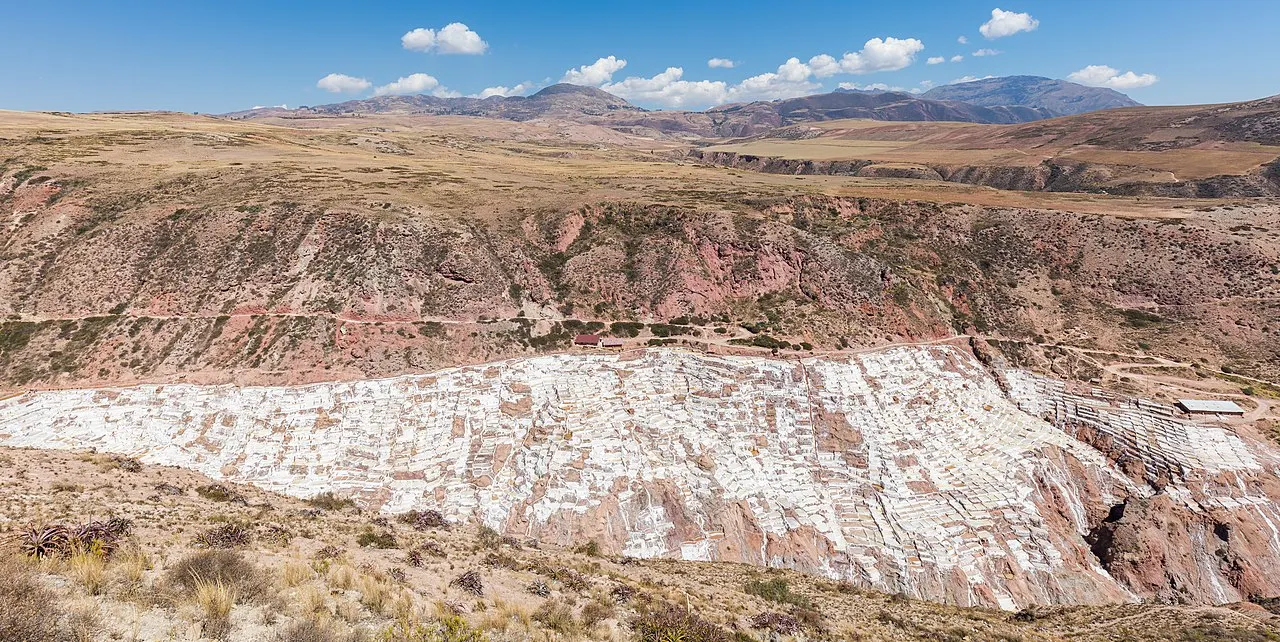
A short drive away, the salt pans of Maras (Salineras de Maras) tumble down a hillside in thousands of small white-and-ochre evaporation ponds, fed by a naturally salty spring that the local community has harvested since long before the Inca. The terraces glow at golden hour and the families who still work the pans sell their salt at the entrance. Note that Maras sits outside the boleto turístico with its own small separate entry, and access rules to walk among the pans can change — verify before you go. Together, Maras and Moray make a compact, otherworldly half-day that pairs naturally with either Písac in the morning or Chinchero on the way down.
Step 4 (optional) — Chinchero on the way down
If you have the appetite and the daylight, Chinchero adds a lovely grace note. Set high on the plateau between the valley and Cusco, it is a weaving town built over Inca foundations, with a colonial church raised directly on Inca walls, terraces falling away toward the snow peaks, and a living tradition of natural-dye textile work demonstrated in community cooperatives. It sits slightly higher than the valley floor, so it suits travellers who are already feeling settled at altitude, and it folds naturally into the descent from Maras and Moray.
Chinchero is the kind of stop that rewards an unhurried half-hour rather than a quick photo: watch the dyeing and spinning, walk the terraces behind the church, and let the high, clear light do its thing. On a tight one-day itinerary it is the first thing to drop; on a two-day version it is a quiet highlight.
Step 5 — Finish in Ollantaytambo: the fortress and the platform
Whichever way you have come, the day should end at the western edge of the valley in Ollantaytambo — and this is the single most important piece of the whole itinerary. Ollantaytambo is both a living Inca town, with the original street grid still inhabited and water running in the old channels, and the main departure station for trains to Machu Picchu Pueblo (Aguas Calientes). Finishing here means that if you are going on to the citadel, your morning is a short walk or five-minute transfer to the platform rather than a long, anxious drive back through Cusco.
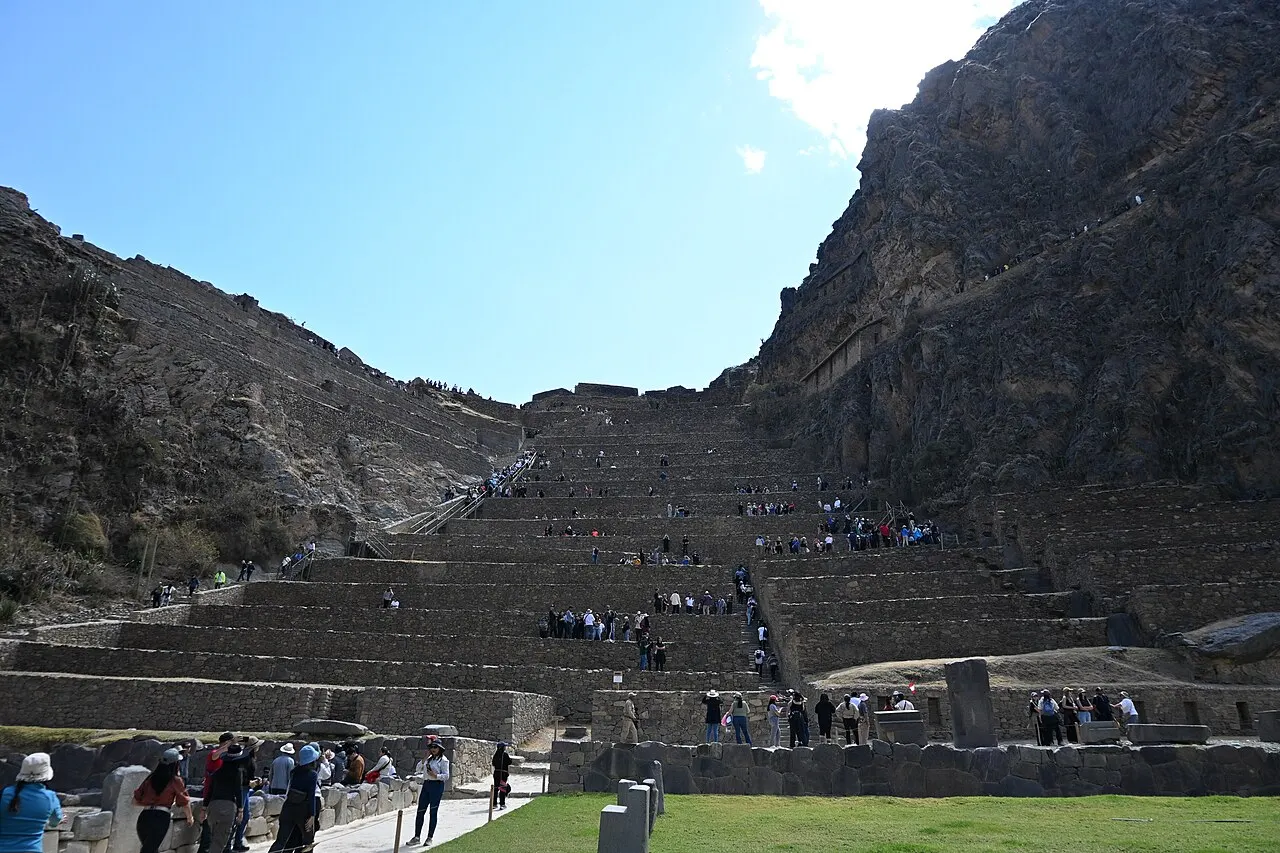
Arrive with enough daylight to climb the great terraced fortress that rises straight out of the town — a steep but short ascent to the ceremonial plateau and the famous wall of monolithic pink-granite blocks, with a sweeping view back over the valley you have just driven. Then settle into a courtyard restaurant under the glowing temple hill, sleep low and well, and let the morning bring the train. This is the romantic and the practical climax of the valley day rolled into one: the last great Inca site, and the front door to the citadel, in the same small town.

The one-day version (when time is tight)
If you only have a single day before the train, do not try to swallow the whole valley — you will spend it in the car. Instead, pick one cluster and pair it with Ollantaytambo. Choose the eastern option if you want the most dramatic terraces and a market; choose the plateau option if you want the otherworldly salt pans and Moray. Both end the same way, in Ollantaytambo, ready for the train.
The trick to a one-day valley itinerary is ruthless triage and an early start. Leave Cusco as early as you reasonably can, see your chosen sites before the mid-morning coaches, keep lunch efficient, and protect the late afternoon for Ollantaytambo's fortress and an unhurried evening. A driver pays for itself here, because every minute saved at the wheel is a minute returned to the ruins.
- Option A (east): Cusco → Písac ruins and market → Urubamba lunch → Ollantaytambo fortress and overnight.
- Option B (plateau): Cusco → Moray → Maras salt pans → Chinchero (if time) → Ollantaytambo fortress and overnight.
- Start early, triage hard, and protect the late afternoon for Ollantaytambo.
- Sleep in the valley, not back in Cusco — it sets up an easy citadel morning.
The two-day version (when the valley deserves it)
With two days you can let the valley unfold instead of racing it, and you sleep low for two nights — excellent altitude insurance before the climb. The natural split is east-then-west: spend day one at the Písac end, sleep in Urubamba or Yucay in the middle, then spend day two on the plateau and finish in Ollantaytambo, ready for the citadel on the morning of day three.
Two days also opens room for the things a one-day dash skips: a proper wander through Písac's market, the terrace walk at Moray in good light, a slow lunch at one of the valley's farm-to-table tables, the weaving demonstrations at Chinchero, and the Pinkuylluna granary climb above Ollantaytambo. None of it is essential, but all of it deepens the valley from a corridor into a destination — and every extra hour at 2,800 m is an hour your body spends getting ready for Machu Picchu.
- Day 1: Cusco → Písac (ruins and market) → lunch in Urubamba → sleep in Urubamba or Yucay.
- Day 2: Moray → Maras → Chinchero → Ollantaytambo (fortress, old town) → sleep in Ollantaytambo.
- Day 3: early train from Ollantaytambo to Machu Picchu.
- Use the slower pace as acclimatization — two valley nights are real altitude insurance.
How it fits the wider Machu Picchu trip
Wherever you slot it, the valley day is one move in a longer sequence, and it helps to see the whole board. A well-paced Machu Picchu trip tends to follow the same arc: acclimatize a day or two in Cusco, drop into the lower valley to sleep, adjust and sightsee, ride the train into the gorge, climb the citadel, and only then return up to Cusco at the end. The Sacred Valley itinerary lives in the soft middle of that arc — the rest stop where the altitude eases, the engineering previews and the train waits — which is exactly why almost every good plan builds it in.
Whatever shape your valley days take, the booking order does not change: secure your timed Machu Picchu entry ticket first, then the train from Ollantaytambo that lands you in time for it, then your valley beds around both. Get those three lined up and the valley becomes pure pleasure — a slow, terraced, salt-bright prelude that delivers you, calm and acclimatized, to the foot of the mountain.
- Book in order: Machu Picchu entry ticket first, then the train, then the valley hotels.
- Travel the valley west and finish in Ollantaytambo for an easy citadel morning.
- Treat valley nights as acclimatization — sleep low before you climb.
- Verify current site-ticket versions, prices, opening hours and train times directly.




Related guides

Ollantaytambo: A Living Inca Town Guide
The Sacred Valley's most atmospheric staging base — a fortress town where the Inca street grid is still lived in, the train to Machu Picchu departs, and an early citadel morning becomes a short walk to the platform.
Read guide
Písac Market: Textiles, Crafts & Etiquette
The famous artisan market in the Sacred Valley town of Písac — what to buy, how the timing and bargaining work, telling handwoven from machine-made, and how to fit the market and the hilltop ruins into one day.
Read guideSacred Valley to Machu Picchu
How to stage Machu Picchu from the Sacred Valley instead of returning to Cusco — why Ollantaytambo is the gateway, how the train and bus connect, and the timing, luggage and altitude logic that make it the smoother way in.
Read guideMore in Sacred Valley
6
Best Hotels in the Sacred Valley
A curated shortlist of where to sleep in the Sacred Valley before Machu Picchu — sorted by what each does best: shortest train day, gardens and acclimatization comfort, family space, honeymoon luxury and value.
Read guide
Chinchero: Weaving, Terraces & the High Plateau
The 'birthplace of the rainbow' on the plateau above the Sacred Valley — its living weaving tradition, the church built on Inca foundations, the terraces, the Sunday market, and how the new airport and a valley loop fit around it.
Read guide
Family Hotels in the Sacred Valley
Where families should sleep in the Sacred Valley before Machu Picchu — garden resorts with lawns and pools, family rooms, easy meals, low-altitude comfort and smooth train-day logistics.
Read guide
Hiring a Private Driver in the Sacred Valley
When a private driver beats a group tour in the Sacred Valley — the flexibility, the off-road plateau sites, families and luggage, citadel-morning transfers, and realistic route ideas with honest timing.
Read guide
Luxury Sacred Valley Hotels
The Sacred Valley's high-end lodges, spa retreats and honeymoon bases — destination hotels where pampering doubles as low-altitude acclimatization before Machu Picchu.
Read guide
Maras & Moray: A Half-Day Route
A practical half-day plan for combining Moray's circular Inca terraces and the Maras salt pans — from Cusco or a Sacred Valley base. Transport options compared, the best order, timing for light and crowds, tickets, altitude notes and how to add it to a bigger valley day.
Read guide