
Family Machu Picchu Itinerary: A Kid-Paced Plan
A family-paced Machu Picchu itinerary built around the altitude ladder, kid-friendly circuits, the train, Sacred Valley downtime and unhurried buffer days — so children and grandparents arrive at the citadel rested, not wrecked.

Photo: Willian Justen de Vasconcellos / Unsplash
- ✓Altitude is the real challenge with kids, not the ruins: Cusco sits at 3,399 m and the citadel is lower at 2,430 m, so the trip is a descent — sleep low in the Sacred Valley early and let small bodies adjust before you climb anything.
- ✓Pick a gentler circuit for the family visit — the classic Circuit 2 gives the postcard view and the urban sector without the exposed peak climbs, which are off-limits to younger children anyway.
- ✓The train is part of the holiday: big panoramic windows, snacks and a moving cloud-forest movie make the ride from Ollantaytambo the easiest two hours of the day.
- ✓Build buffer days. One late train, one off-colour stomach or one cloudy morning shouldn't sink the whole trip — slack in the schedule is the single best gift you can give a family plan.
What makes Machu Picchu a great — and gentle — family trip
Machu Picchu is one of those rare bucket-list places that genuinely works for a family, because the headline experience is mostly about looking, not enduring. The citadel itself is reached by bus from the valley floor, and the classic walking route through the ruins is paved, signposted and broadly downhill — no scramble, no exposure, no need for technical fitness. Children who would mutiny on a long museum day tend to come alive here, among the llamas, the cloud, the tumbling terraces and the sheer storybook strangeness of a stone city in the sky. The wonder does a lot of the parenting for you.
The thing that actually decides whether a family trip is joyful or miserable is not the ruins — it is the altitude, and the pacing around it. Cusco, the usual gateway, sits at 3,399 m, high enough that adults feel it and children sometimes feel it harder. The good news, and the counter-intuitive secret of the whole region, is that Machu Picchu is lower than Cusco, at roughly 2,430 m. The smart family itinerary treats the trip as a gentle descent: land, sleep low, let everyone adjust, and only ever climb back up at the very end. Get the altitude ladder right and the rest of the trip is genuinely easy.
This itinerary is paced for a mixed group — young children, teenagers, parents, grandparents — with built-in downtime, short walking days and slack in the schedule so a single hiccup never derails the whole plan. Adjust the days up or down to fit your family, but keep the shape: acclimatize low, sightsee gently, ride the train, see the citadel rested, and head home.
 Machu Picchu itinerariesThe wider acclimatize-stage-climb arc that every good plan, family or not, is built on.
 Cusco with kidsFamily-friendly sights, food and pacing for your first days in the old capital.
 Altitude & acclimatizationSoroche, hydration and the low-to-high-to-low rhythm that keeps children comfortable.
At a glance — the family plan
The shape of the trip before you commit to dates. Altitudes are approximate and stable; anything to do with prices, ticket circuits, opening hours, bus and train schedules and child age limits moves with the season and the operators, so verify those directly when you book.
- Length: five to seven days is the comfortable family window — enough for a real acclimatization buffer and a recovery day, without forced marches.
- Direction of travel: descend. Sleep low in the Sacred Valley (~2,800 m) before, not after, you tackle anything strenuous.
- Citadel circuit: the classic Circuit 2 for the postcard view plus the urban sector; skip the add-on peaks with younger kids.
- Train: the standard panoramic tourist trains from Ollantaytambo are perfect for families — book early in dry season (May–September).
- Tickets: timed-entry Machu Picchu ticket first, then the train, then hotels. Children's tickets and ID rules apply — verify current ages and prices.
- Buffer: keep at least one slack half-day for a late train, a queasy stomach or a cloudy morning.
- Guides: a private family guide turns the citadel from a walk into a story, paced to short legs and short attention spans.

Before you go — three family decisions to settle
A little preparation turns a daunting trip into a relaxed one. Settle these three before you leave and the days fall into place.
First, the altitude plan. This is the one piece of planning unique to the Andes, and with children it matters most. Do not fly into Cusco and immediately sprint up to Sacsayhuamán; the gentlest approach is to head straight down to the lower Sacred Valley for your first nights, where the air is kinder, and save Cusco for the end of the trip when everyone is fully adjusted. Hydrate hard, go slow on the first day, and know the signs of altitude sickness (soroche) so a grumpy, headachy child gets rest rather than a packed schedule.
Second, the citadel circuit and timing. Machu Picchu now runs on timed-entry tickets tied to specific circuits and routes; for families, the classic Circuit 2 is the sweet spot — it delivers the iconic overlook and a wander through the urban sector without committing anyone to the steep, exposed peak climbs of Huayna Picchu or Machu Picchu Mountain, which carry minimum-age rules in any case. Book a mid-morning slot rather than the very first of the day if early starts wreck your kids; the light is still good and the gate is a touch calmer.
Third, the logistics that make small humans happy: where you sleep, how you move, and what you carry. Choose hotels with space to spread out, ideally with a garden or pool for downtime; lock a private driver or organised transfers so nobody is wrangling luggage and toddlers through bus stations; and travel light, because the train enforces a strict luggage allowance and you'll leave the big bags behind anyway.
- Sleep low first: head to the Sacred Valley before Cusco to soften the altitude for children.
- Choose Circuit 2 and a slot that fits your family's natural rhythm, not the other way round.
- Book accommodation with downtime built in — garden, pool, or simply room to breathe.
- Pack light for the train's luggage limit; leave big bags in Cusco or Ollantaytambo.
- Carry water, snacks, sun protection and layers — mountain weather turns fast.


Days 1–2 — Land low: the Sacred Valley
Resist the temptation to base in Cusco from the moment you land. With children, the kindest first move is to transfer straight down into the Sacred Valley, where the valley floor sits around 2,800 m — several hundred metres lower than the city and noticeably easier on small lungs. Pick a hotel with a garden or pool, let everyone nap off the flight, and treat day one as deliberately empty: short walks, long meals, lots of water, early bed. This is not lost time. It is the altitude doing its quiet work while the kids think they're just on holiday.
Day two is for gentle, kid-pleasing sightseeing without ever pushing the pace. The valley's Inca sites are a brilliant warm-up for the citadel and far less crowded: the terraced ruins and colourful market at Písac, the otherworldly circular terraces of Moray, and the cascading white salt pans of Maras all reward a couple of unhurried hours. A private driver lets you fold these together at a child's pace, stopping when someone needs the loo or a snack rather than running on a coach's clock. End the day in or near Ollantaytambo, the living Inca town where the train to Machu Picchu departs, so the next leg starts as a short stroll rather than a dawn drive.


Day 3 — The train into the cloud forest
Travel day, and one of the easiest and most magical of the whole trip. From Ollantaytambo the train follows the Río Urubamba as it tumbles out of the highlands into genuine cloud forest, the landscape turning greener and steeper with every mile. For children, the panoramic tourist trains are a treat in themselves — huge windows, glimpses of snow peaks, snack service, and a sense of going somewhere properly remote. Two hours pass without a single 'are we there yet,' which on a family trip counts as a small miracle.
Aim to arrive in Machu Picchu Pueblo (Aguas Calientes), the little town at the foot of the mountain, with the afternoon ahead of you. Check into your hotel, let the kids burn off energy, and keep the evening low-key: an early dinner, a soak if your hotel has hot water, and lights out, because tomorrow's the big one. Some families with very young children prefer to visit the citadel this same afternoon and keep the morning free; others save it for a fresher early start. Either works — the point is to have the timed ticket booked for the window that suits your crew, not to chase someone else's sunrise.
- Book panoramic tourist-class seats in advance; dry-season trains fill up.
- Keep luggage light — only what you need for the night in Aguas Calientes.
- Arrive with the afternoon free for downtime, not back-to-back activity.
- Decide in advance whether your citadel slot is this afternoon or the next morning.


Day 4 — The citadel, at a kid's pace
The day you came for. From Aguas Calientes a shuttle bus climbs the switchbacks up to the gate — a far better idea than the steep walk-up with children — and deposits you at the entrance for your timed slot. Walking the classic Circuit 2 takes a family a comfortable couple of hours: the path opens at the famous overlook above the agricultural terraces, the postcard view that makes everyone gasp, then leads down through the urban sector past temples, fountains, the carved Intihuatana stone and, with luck, a llama or two photobombing the family portrait. It is broadly downhill and easy underfoot, which is exactly why it suits mixed ages.
The single best upgrade for a family is a private guide. Left to a guidebook, children read Machu Picchu as 'a lot of old walls'; a good guide reads it as a story — who lived here, why it was built into a saddle between two peaks, how the Inca moved and shaped these stones without iron tools or the wheel, where the sun lands on the solstice. A guide also paces the visit to your family rather than a coach group's, lingering where the kids are captivated and moving on where they flag. Keep everyone hydrated, slathered in sun cream (the high-altitude sun is fierce even when it's cool), and snacking, and protect this as the only real 'activity' of the day. After the citadel, the family is allowed to do nothing at all.
- Take the shuttle bus up rather than the steep walk-up with children.
- Walk Circuit 2 — the postcard view and urban sector, no exposed climbs.
- Hire a private guide to turn 'old walls' into a story kids remember.
- Sun cream, hats, water and snacks — the altitude sun burns even when it's cool.
- Skip Huayna Picchu and Machu Picchu Mountain with younger children; mind the age rules.


Day 5 — Buffer, recover, and back up to Cusco
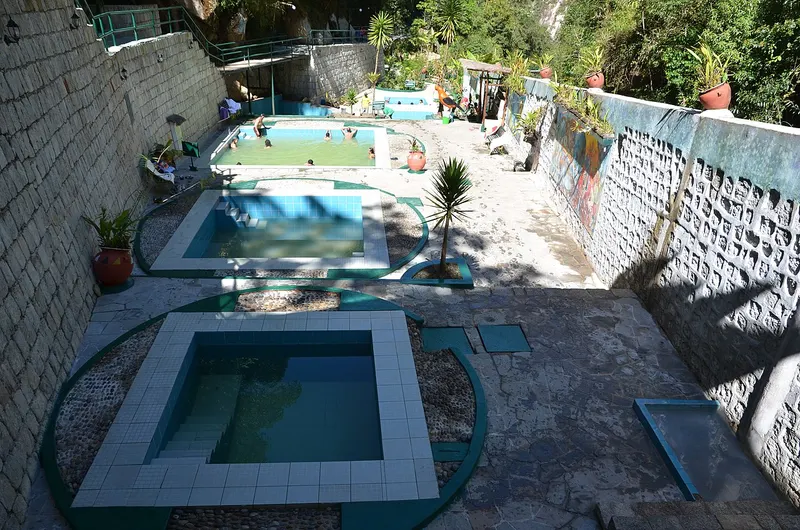
Here is the day that separates a relaxed family trip from a frazzled one: a deliberate buffer. Mountain weather, train schedules and small stomachs are all unpredictable, and a plan with no give is a plan waiting to break. If everything has gone smoothly, this becomes a glorious slow morning — a wander along the river in Aguas Calientes, a soak in the hot springs the town is named for, a leisurely lunch — before the afternoon train back up the valley. If the previous day was rained out or a child was poorly, this is your second chance at the citadel. Either way, the slack is doing its job.
Travel back up to Cusco only now, at the end, when the whole family is fully acclimatized and the city's 3,399 m no longer feels like a wall. Spend your final night or two exploring the old capital at an easy pace — the Plaza de Armas, the San Pedro market for souvenirs and snacks, a kid-friendly cooking experience — before flying home. By saving the highest place for last, you have turned the trip's biggest physical challenge into its gentle finale rather than its brutal opening.
- Keep day five flexible — it's your insurance against weather, trains and tummies.
- If all went well, use it for the hot springs, the river walk and a slow lunch.
- If not, it's your second shot at the citadel.
- Return up to Cusco only at the end, fully acclimatized, for the final nights.

Practical notes for travelling with children
A handful of family-specific realities to fold into the plan. None is a dealbreaker, but each is easier handled in advance than discovered on the day.
Altitude affects children differently and sometimes more abruptly than adults; watch for headache, poor appetite, broken sleep and unusual crankiness, treat them as signals to rest and hydrate rather than push, and talk to your doctor before the trip about whether any altitude medication is appropriate for your family. The mountain sun is intense at altitude regardless of temperature, so sun protection is non-negotiable. Tap water isn't safe to drink, so carry bottled or purified water for everyone, which doubles as your altitude defence.
On the citadel itself, large backpacks, tripods, drones and food are restricted inside the site, strollers are impractical on the stepped paths (a soft carrier suits a toddler far better), and re-entry rules mean you should use the toilets before you go through the gate. Children's ticket prices and the ID required at entry change, so confirm current ages, discounts and documents directly when you book — the passport or ID you book with is checked at the gate, for every member of the family.
- Know the signs of soroche in kids; rest and hydrate rather than push through.
- Sun protection is essential at altitude — hats, cream, sunglasses for everyone.
- Drink only bottled or purified water; tap water isn't safe.
- Use a soft carrier for toddlers, not a stroller, on the stepped citadel paths.
- Toilets are outside the gate; go before you enter, as re-entry is restricted.
- Verify children's ticket prices, age rules and required ID directly before booking.



Related guides
Cusco with Kids
How to pace Cusco for a family — gentle acclimatization, low-effort sights, food children will actually eat, where to sleep, and how to set up a calm, kid-friendly run at Machu Picchu.
Read guide
The Sacred Valley with Kids
The lower, warmer valley is the kindest place to travel with children before Machu Picchu — gentle ruins to clamber, farms and weavers, llamas and salt pans, family hotels, and an altitude that lets small bodies adjust slowly.
Read guideMore in Itineraries
6
A Luxury Machu Picchu Itinerary
A high-end Machu Picchu plan with palace hotels in Cusco, luxury Sacred Valley lodges, the Hiram Bingham train, private guiding and soft, altitude-kind pacing.
Read guide
A Machu Picchu Honeymoon
How to build a honeymoon around Machu Picchu — romantic hotels in Cusco and the Sacred Valley, a luxury train into the gorge, a private guide, spa days and a dawn at the citadel.
Read guide
Beyond the Citadel: Peru Add-Ons to Machu Picchu
How to bolt the rest of Peru onto a Machu Picchu trip — Rainbow Mountain, Humantay Lake, the South Valley and the bigger leaps to the Amazon, Lake Titicaca, Lima and Arequipa — sequenced for altitude and time.
Read guide
Five Days: Cusco, the Sacred Valley & Machu Picchu
A balanced five-day Machu Picchu itinerary — proper Cusco acclimatization, an unhurried Sacred Valley, an overnight in Aguas Calientes and the citadel, with altitude and ticket buffers built in so a cloudy morning or a late train never sinks the trip.
Read guide
Machu Picchu by Train: A Step-by-Step Itinerary
A train-based Machu Picchu itinerary from Cusco or Ollantaytambo — the booking order, hotel timing, the bus up from Aguas Calientes, and the backups that keep the day calm.
Read guide
Machu Picchu Couples Itinerary: A Slow, Romantic Route
A romantic Machu Picchu itinerary for two: a luxury Sacred Valley base, the panoramic train, a private guide, the quietest entry slot for that first hush at the overlook, and long candlelit meals that turn a bucket-list trip into a love story.
Read guide