
Where to Stay in the Sacred Valley
A base-by-base guide to sleeping in the Sacred Valley before Machu Picchu — Ollantaytambo, Urubamba, Yucay, Písac and the luxury riverside lodges — chosen for altitude comfort, train access and the kind of trip you're taking.

- ✓The valley floor sits around 2,800 m — roughly 600 m lower than Cusco — which makes it the kinder place to sleep while you acclimatize before the citadel.
- ✓Ollantaytambo is the rail gateway: stay here if you want the shortest, calmest path to an early train to Machu Picchu.
- ✓Urubamba sits in the geographic middle of the valley with the broadest spread of hotels — from family resorts to the grandest riverside lodges — and the easiest access to Maras, Moray and Písac alike.
- ✓Yucay and Písac trade convenience for character: colonial-hacienda calm in Yucay, market-town buzz and high terraces in Písac.
- ✓Match the base to the trip — train day, altitude sensitivity, sightseeing plans and budget all pull toward different towns.
Why you sleep in the valley at all
There is a romance to the Sacred Valley that the guidebooks undersell. The Río Urubamba runs the length of it, dropping out of the cold highlands toward the cloud forest, and on either bank the Inca terraced the slopes into green staircases that still hold the hillside together a thousand years on. Eucalyptus and corn, adobe villages, snow on the far peaks at dawn — it is one of the loveliest places in the Andes simply to wake up. But there is a hard, practical reason most well-planned Machu Picchu trips spend a night or two here, and it is worth understanding before you choose a town.
The reason is altitude, and it is the one piece of logic that catches first-timers out. Cusco, the obvious gateway, sits at 3,399 m — high enough that the thin air is where most travellers actually feel soroche, the local name for altitude sickness. The Sacred Valley floor sits several hundred metres lower, around 2,800 m. Sleeping down here, rather than up in Cusco, blunts the worst of the adjustment, and it puts you on the right rung of the low-to-high-to-low ladder: you descend from Cusco into the valley, descend again to the citadel at 2,430 m, and only climb back up to the city at the end. Choosing where to stay in the valley is therefore not just a hotel decision; it is part of how comfortable and how well-slept you arrive at Machu Picchu.
The second reason is the train. There is no road to the citadel — you reach it by rail from the valley or on foot via a trek — and the great majority of trains begin at Ollantaytambo, deep inside the valley. Staging here means your citadel morning is a short, calm hop to the platform rather than a pre-dawn dash from Cusco. So the question 'where to stay in the Sacred Valley' is really a balance of three things: how low you want to sleep, how close to the train you want to be, and how much of the valley itself you want to see along the way.


At a glance — the five bases compared
Five towns and clusters do most of the work in the Sacred Valley. Here is the shorthand before we walk through each in turn. Altitudes are approximate and stable; everything to do with prices, availability and exact train times moves, so verify those with operators and hotels when you book.
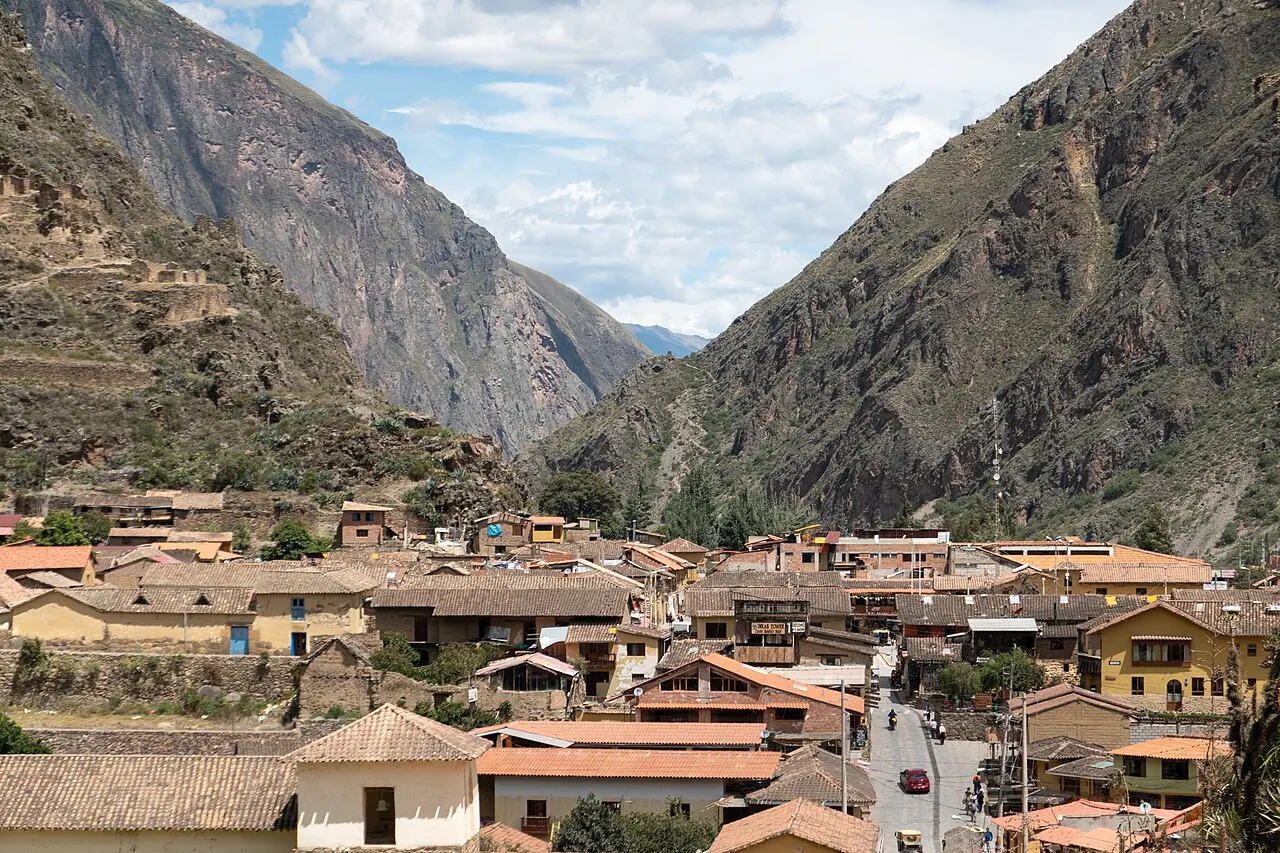
- Ollantaytambo (~2,790 m): the rail gateway. Best for the calmest early-train day and a living Inca town under its own fortress. Compact, atmospheric, can feel busy by day.
- Urubamba (~2,870 m): the valley's hub and crossroads. Widest hotel range, easiest access to Maras, Moray, Písac and the train alike. Less postcard-pretty in the centre, but the surrounding countryside holds the grandest lodges.
- Yucay (~2,860 m): a quiet, green village minutes from Urubamba, built around colonial haciendas. Calm, characterful, mid-to-upper range.
- Písac (~2,970 m): the eastern, market-town end. Famous artisan market, high cliffside ruins, a bohemian streak. Slightly higher and farther from the train.
- Riverside luxury lodges (Huayllabamba / Urubamba countryside, ~2,800–2,900 m): destination hotels in their own gardens — spas, river frontage and acclimatization comfort — rather than a town you walk out into.
Ollantaytambo — stay here for the train
If your trip is short and the citadel is the point, Ollantaytambo is the base that makes the morning easiest. The town is the main departure station for trains to Aguas Calientes, so sleeping here turns the most stressful part of any Machu Picchu day — getting to the platform on time with the right bag — into a five-or-ten-minute walk or transfer. There is no road to cut fine, no Cusco traffic to swallow your buffer, just a short, calm hop to the train. For anyone with an early or tightly timed entry slot, that calm is worth a great deal.
It would be a base worth staying in even without the rails, because Ollantaytambo is one of the few places where the Inca street grid is still lived in. The original canchas — walled compounds with single doorways — still front the cobbled lanes, water still runs in the Inca channels, and the great terraced fortress rises straight out of the town at its western edge. Sleep here and you can climb the ruins in the soft light before the day-trippers arrive, then eat in a courtyard restaurant with the temple hill glowing above you.
The trade-offs are the ones that come with a small, popular town. The centre fills with tour groups by mid-morning, accommodation skews toward characterful guesthouses and mid-range hotels rather than sprawling resorts, and the place is compact enough that the very cheapest and the very grandest options are both thinner on the ground than in Urubamba. For a one-night staging stop before the citadel, though, it is hard to beat.


Urubamba — stay here for range and reach
Urubamba is the unglamorous hero of the valley. It is the largest town and the geographic crossroads, which means it has the broadest spread of places to stay — backpacker guesthouses, family-friendly resorts with lawns and pools, and, in the countryside around it, several of the finest hotels in southern Peru. If you are not sure which base suits you, Urubamba is the safe answer, because almost every kind of traveller finds something here.
Its other virtue is reach. From Urubamba the salt terraces of Maras and the concentric agricultural bowls of Moray are a short drive up onto the plateau; Písac and its market lie an easy run east; Ollantaytambo and the train are close to the west; and Chinchero, with its weaving traditions and its airport-to-be, sits just above. If your plan is to spend two or three days actually exploring the Sacred Valley rather than treating it purely as a staging post, Urubamba puts the most on your doorstep with the least backtracking.
The honest catch is that the town centre itself is workaday rather than picturesque — this is a place people live and farm, not a film-set village. The beauty is in the surrounding countryside and the hotels that sit in it, so in Urubamba more than anywhere you are choosing a property and its grounds as much as a town. For families and for travellers who want a comfortable, well-connected hub, that is a fair trade.
Yucay and Písac — quieter character, two ways
Yucay sits barely ten minutes east of Urubamba and feels a world quieter. It was a retreat for Inca nobility and later for colonial landowners, and a couple of its hotels occupy genuine colonial haciendas — courtyards, chapels, old adobe walls and gardens heavy with flowers. If you want the convenience of central Urubamba but a softer, more cloistered place to actually sleep, Yucay is the natural compromise. It is calm, green and low-key, with the same easy access to Maras, Moray and the train.
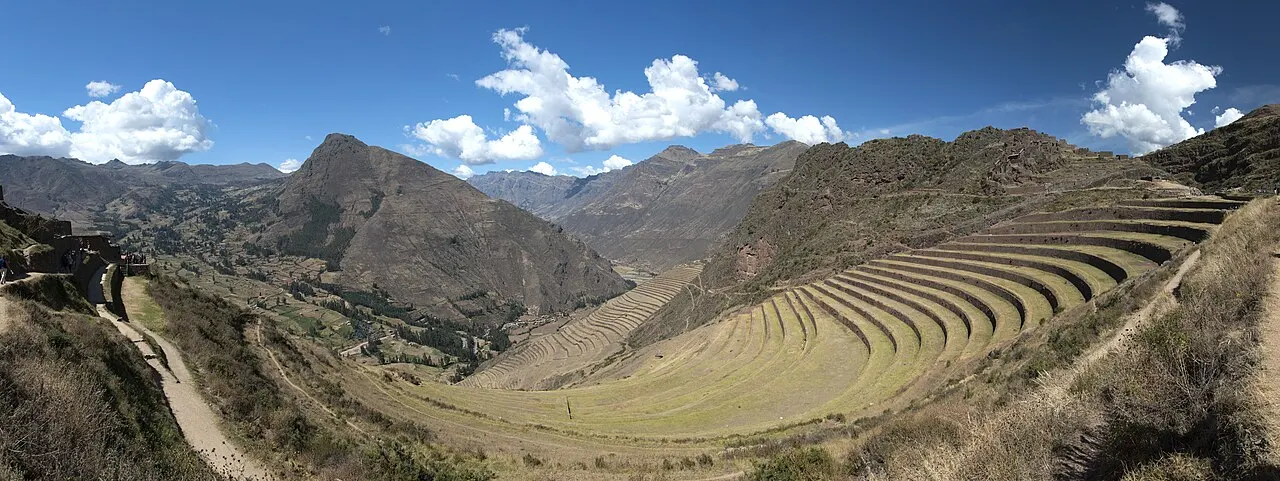
Písac anchors the opposite, eastern end of the valley, and it has a stronger personality than anywhere else here. Its artisan market is the most famous in the region, drawing day-trippers from Cusco; above the town, an extraordinary complex of agricultural terraces and Inca ruins clings to the cliff. The town carries a slightly bohemian, wellness-leaning streak — yoga retreats, vegetarian cafés, healers — that you either lean into or pass through. The practical caveats are that Písac sits a touch higher (around 2,970 m) and is the farthest of the main bases from the Ollantaytambo train, so it suits travellers giving the valley its own time rather than those purely chasing an early citadel departure.
The riverside luxury lodges — a base of their own
A distinct category of stay sits scattered through the Urubamba and Huayllabamba countryside: destination lodges that are less a hotel in a town than a small world unto themselves. These are the properties with river frontage, terraced gardens, spas with hot-spring or thermal-style soaking, observatories for the famously clear valley skies, and restaurants serving Andean tasting menus. You do not so much stay near the valley as inside a curated version of it, stepping out for sightseeing and back into your own walled garden.
For honeymooners, for anyone marking an occasion, and for travellers who treat the Sacred Valley as a place to decompress and acclimatize in comfort before the citadel, these lodges are the reason to come. They cluster at the lower, kinder altitudes of the valley floor, which means the acclimatization benefit is real as well as restful — you sleep low, warm and well-fed while your body adjusts. The trade-off is simply that you are somewhat sealed off from town life; if you want to wander cobbled lanes and eat in local courtyards, you will be driving to do it.

How to choose — match the base to the trip
Strip away the romance and the choice comes down to a few honest questions about your own trip. Answer them and the right town tends to pick itself.
Start with the train. If your priority is the smoothest possible citadel morning — an early entry slot, no margin for traffic, the least stress with luggage — sleep in Ollantaytambo and walk to the platform. If the train is just one part of a fuller valley itinerary, you can afford to base elsewhere and transfer to Ollantaytambo on the day, leaving a generous buffer.
Then weigh altitude. If Cusco's height has worried you, or you are travelling with children, older relatives or anyone prone to soroche, favour the lower valley-floor towns — Urubamba, Yucay, the riverside lodges — over slightly higher Písac, and give yourself a night here before climbing anywhere. The valley exists, in part, to make this easier.
Finally, weigh what you actually want from the days. For maximum sightseeing reach with minimum backtracking, choose Urubamba. For atmosphere and a living Inca town, choose Ollantaytambo. For quiet colonial calm, Yucay. For market buzz and a wellness lean, Písac. For pampering and acclimatization in one, the riverside lodges. None is a wrong answer; they simply serve different trips.
- Shortest, calmest train day → Ollantaytambo.
- Widest hotel range and best sightseeing reach → Urubamba.
- Quiet colonial-hacienda calm near the hub → Yucay.
- Market town, high ruins, wellness streak → Písac.
- Pampering plus low-altitude acclimatization → riverside luxury lodges.
- Altitude-sensitive travellers and families → favour the lower valley-floor towns and give yourself a night before climbing.

Practical notes for booking a valley night
A few details save grief whichever base you choose. First, luggage: the trains to Aguas Calientes enforce a strict carry-on limit, so most travellers leave their large suitcase with their valley hotel and travel onward with one small bag. Almost every property here will store bags free while you are at the citadel — confirm it when you book, and pack your day bag deliberately. Second, timing: in the dry-season peak of June and July, the best valley hotels and the morning train slots both sell out weeks ahead, so secure your Machu Picchu entry ticket first and build the hotel around it.
Third, dinner and warmth: the valley is lower and milder than Cusco but still high, and clear nights turn cold fast once the sun drops behind the peaks. Pack layers even if the afternoon was warm, and check whether your hotel restaurant runs to your train schedule, as some valley kitchens keep early hours. None of this is onerous — it is simply the rhythm of a place where the citadel, the train and the altitude all have to be lined up in the right order.
- Book your Machu Picchu entry ticket first, then the train, then the valley hotel around both.
- Leave the big suitcase at your valley hotel; travel on with one small train-legal bag.
- Pack warm layers — clear valley nights are cold even after warm afternoons.
- Verify current prices, train times and luggage limits directly with hotels and rail operators.


Fitting the valley into the wider trip
Where you sleep in the Sacred Valley is one move in a longer sequence, and it helps to see the whole board. A well-paced Machu Picchu trip tends to follow the same arc whichever towns you choose: acclimatize high in Cusco for a day or two, drop into the lower valley to sleep and adjust, ride or walk into the gorge, climb the citadel, and only then return up to Cusco at the end. The valley sits in the soft middle of that arc — the rest stop where the altitude eases and the train waits — which is exactly why almost every good itinerary builds a night or two here.
How many valley nights you take depends on the trip. A tight three-or-four-day citadel run might spend a single night, usually in Ollantaytambo, purely to catch the morning train calm and rested. A fuller week can afford two or three nights spread across the valley — perhaps Písac or Urubamba first for the sights, then a final night in Ollantaytambo right by the rails — turning the valley from a staging post into a destination of its own. The terraces, the salt pans of Maras and the circular bowls of Moray reward the extra time, and they double as a gentle preview of the engineering you'll meet at the citadel.
If you are deciding between Cusco and the valley for your very first nights off the plane, the valley's lower altitude tips many travellers its way, especially families and anyone who has struggled with height before. You can always see Cusco's sights — the Coricancha, San Pedro market, Sacsayhuamán — on the way back through, when you are fully acclimatized and the thin air no longer bites.
A note on transfers between valley towns
One thing first-timers underestimate is how the valley's towns connect, because it shapes which base is convenient for what. The towns string out along the Río Urubamba rather than clustering, so a base in the centre — Urubamba or Yucay — minimises driving to the sights at either end, while bases at the extremes (Písac in the east, Ollantaytambo in the west) put you close to one end and farther from the other. None of the distances are long, but they add up across a busy sightseeing day, which is why the centre suits explorers and the western end suits train-day efficiency.
Getting around is straightforward. Shared colectivos run the valley route in daylight and are cheap and characterful; private drivers and tour transfers are calmer and let you fold in stops at Maras, Moray or Písac along the way. For the citadel morning specifically, most travellers prearrange a transfer to the Ollantaytambo station rather than chancing a colectivo against a fixed train time. Whatever you choose, leave a generous buffer on train day — the train will not wait, and the valley road has its own unhurried pace.



Related guides

Where to Stay in Ollantaytambo
The best places to sleep in Ollantaytambo before Machu Picchu — chosen for early-train access, ruins views, luggage storage, budget value and a calm one-night staging stop in a living Inca town.
Read guide
Urubamba: The Sacred Valley's Comfortable Hub
The valley's central crossroads — lowest-altitude comfort, the widest range of hotels and the grandest lodges, and the easiest reach to Maras, Moray, Pisac and the train. When Urubamba beats Cusco or Ollantaytambo as a base.
Read guide
Luxury Sacred Valley Hotels
The Sacred Valley's high-end lodges, spa retreats and honeymoon bases — destination hotels where pampering doubles as low-altitude acclimatization before Machu Picchu.
Read guideMore in Sacred Valley
6
Best Hotels in the Sacred Valley
A curated shortlist of where to sleep in the Sacred Valley before Machu Picchu — sorted by what each does best: shortest train day, gardens and acclimatization comfort, family space, honeymoon luxury and value.
Read guide
Chinchero: Weaving, Terraces & the High Plateau
The 'birthplace of the rainbow' on the plateau above the Sacred Valley — its living weaving tradition, the church built on Inca foundations, the terraces, the Sunday market, and how the new airport and a valley loop fit around it.
Read guide
Family Hotels in the Sacred Valley
Where families should sleep in the Sacred Valley before Machu Picchu — garden resorts with lawns and pools, family rooms, easy meals, low-altitude comfort and smooth train-day logistics.
Read guideHiring a Private Driver in the Sacred Valley
When a private driver beats a group tour in the Sacred Valley — the flexibility, the off-road plateau sites, families and luggage, citadel-morning transfers, and realistic route ideas with honest timing.
Read guide
Maras & Moray: A Half-Day Route
A practical half-day plan for combining Moray's circular Inca terraces and the Maras salt pans — from Cusco or a Sacred Valley base. Transport options compared, the best order, timing for light and crowds, tickets, altitude notes and how to add it to a bigger valley day.
Read guide
Moray: The Inca's Circular Terraces
The concentric terraced bowls on the plateau above the Sacred Valley — what they are, the leading theory that they were an Inca agricultural laboratory, the microclimates between the rings, how to get there, the Boleto Turístico, time needed, and pairing with the Maras salt pans.
Read guide