
The Classic 4-Day Inca Trail to Machu Picchu
The four-day Inca Trail — the only trek that walks you into Machu Picchu through the Sun Gate. Permits, camps, Dead Woman's Pass, altitude, porters and what each day actually feels like.

Photo: Matt Madonna / Unsplash
- ✓The classic Inca Trail is a roughly 42 km, four-day walk along original Inca stone roads, ending at the Sun Gate (Inti Punku) above Machu Picchu at dawn — the only trek that enters the citadel on foot from above.
- ✓It runs on a strictly capped permit booked months ahead through a licensed operator; you cannot walk it independently, and it closes every February for maintenance and the heaviest rains — verify current dates and quotas.
- ✓The hardest day crosses Dead Woman's Pass (Warmiwañusca) at roughly 4,215 m — higher than anything at the citadel, which is exactly why acclimatizing in Cusco or the Sacred Valley first matters.
- ✓You pass Inca sites no train rider sees — Llactapata, Runkurakay, Sayacmarca, Phuyupatamarca and the exquisite Wiñay Wayna — before the final dawn push to the Sun Gate.
Walk in the way the Inca intended
Most people arrive at Machu Picchu by train and bus, glance up, and meet the citadel face-on across the terraces. Inca Trail walkers arrive differently: on foot, at first light, stepping through a notch in the ridge called Inti Punku — the Sun Gate — to find the whole city laid out below them in the valley. It is the entrance the Inca built the road for, and after four days of high passes and cloud-forest stairways it lands with a weight no other approach can match. This is the romance the classic trail trades on, and it earns it.
The trail is roughly 42 kilometres of original Inca paving threaded across three high passes, sleeping in tents above the gorge and rising in the dark on the last morning. It is not the longest trek to the citadel, nor the highest, but it is the only one that is the destination as much as the route — every kilometre is a UNESCO-protected fragment of the same world you are walking toward. You do not so much travel to Machu Picchu as walk the last days of a pilgrim's road into it.

At a glance
The essentials before you commit. Permit numbers, quotas, prices and closure dates are set by Peru's Ministry of Culture and change from year to year — treat everything here as the shape of the decision and confirm the current figures with a licensed operator before you book.
- Distance and duration: roughly 42 km over four days and three nights, ending at Machu Picchu on the fourth morning.
- Highest point: Dead Woman's Pass (Warmiwañusca), about 4,215 m — the trek's defining climb.
- Permit: capped daily quota, booked months ahead through a licensed operator only; independent walking is not allowed — verify.
- Closure: the trail closes every February for maintenance and peak rains (the citadel itself stays open) — verify dates.
- Best season: the dry months, roughly May to September, for the clearest passes and firmest footing.
- Difficulty: challenging — long stone-stair descents and a serious high pass, manageable with fitness and proper acclimatization.
- Ends at: the Sun Gate (Inti Punku), then down into the citadel; the same timed-entry ticket rules apply on arrival — verify.
The permit: why you book this one first, and early
The Inca Trail is unlike every other route to Machu Picchu in one decisive way: it is rationed. A fixed number of people may start the trail each day — a quota that includes guides and porters, so the trekker share is smaller than the headline figure suggests — and once that day is sold, it is gone. In the high season permits for the best months routinely disappear weeks or months in advance. If your heart is set on the classic four-day trail for specific dates, the permit is the very first thing to secure, before flights are locked and certainly before you build the rest of the trip around it.
You cannot buy a permit yourself or walk the trail alone. Permits are issued only through licensed operators, tied to your passport, and non-transferable — bring the exact passport you booked with, because names are checked at the trailhead and again on the trail. The same document discipline that governs the citadel's timed-entry ticket runs through the whole trail. Build in a buffer: if permits for your dates are sold out, the short two-day Inca Trail, the Salkantay or the Lares are the usual fallbacks.
- Permits are capped per day, passport-named, non-transferable, and sold only via licensed operators — verify current quotas and cost.
- High-season dates sell out months ahead; book the permit before flights and the rest of the trip.
- Carry the exact passport used to book; it is checked at the trailhead and on the trail.
- Sold out? The short 2-day Inca Trail, Salkantay or Lares are the standard alternatives.

Day by day on the trail
Itineraries vary slightly between operators, but the rhythm of the classic four-day trail is consistent: an easy first day to find your legs, a brutal-then-beautiful second day over the high pass, a long third day of Inca sites and cloud forest, and a short pre-dawn fourth day to the Sun Gate. Knowing the arc helps you pace your effort and your expectations.
Day one starts near Ollantaytambo at the trailhead by the Río Urubamba, an undulating warm-up day past the terraced site of Llactapata to a first camp. Day two is the test: a long, steady climb to Dead Woman's Pass at around 4,215 m, the highest and hardest hours of the whole trek, rewarded by the view back down the valley before a knee-working descent to camp. Day three is the connoisseur's day — over a second and third pass, past Runkurakay, Sayacmarca and Phuyupatamarca, then a long stone stairway down through cloud forest to the final camp near Wiñay Wayna, the trail's loveliest ruin. Day four begins in the dark: a short walk to the Sun Gate for the citadel at first light, then down into Machu Picchu itself.
- Day 1: trailhead by the Urubamba near Ollantaytambo, gentle ascent past Llactapata to the first camp.
- Day 2: the long climb to Dead Woman's Pass (~4,215 m), then a steep descent — the trek's hardest day.
- Day 3: second and third passes, the sites of Runkurakay, Sayacmarca and Phuyupatamarca, down to camp near Wiñay Wayna.
- Day 4: pre-dawn walk to the Sun Gate (Inti Punku) for first light, then down into Machu Picchu.

Dead Woman's Pass and the altitude reality
The single fact that catches first-time trekkers off guard is that the trail's high point sits well above Machu Picchu — and above Cusco. Dead Woman's Pass (Warmiwañusca, named for the reclining-figure silhouette of the ridge, not for any grim event) tops out around 4,215 m. That is high enough that even fit walkers move slowly, breathe hard and feel the thin air, and it is the reason acclimatization is not optional. The citadel at 2,430 m is a gentle finish; the pass on day two is the real altitude challenge.
The defence is simple and it happens before the trek: spend at least a couple of nights at altitude first, ideally in the Sacred Valley (lower and kinder) or Cusco, drinking plenty of water, going easy on alcohol, and letting your body adjust. Walk the trail slowly and steadily rather than fast and hard, eat and drink through the day, and tell your guide early if you feel unwell. The pass is hard for almost everyone — that is normal — but acute mountain sickness is a medical matter, and a good operator carries oxygen and watches the group closely.


Porters, guides and what's carried for you
The classic trail is run as a supported expedition. A team of porters carries the tents, the kitchen, the food and a share of your personal gear; cooks turn out surprisingly good meals at camp; and a licensed guide leads the group, reads the sites and watches everyone's health. You walk with a daypack — water, layers, camera, snacks — while the heavy load goes ahead and the camp is pitched before you arrive. It is hard walking made humane, and the porters who make it possible are the unsung heroes of the route.
That support comes with a responsibility. Peru regulates porter loads and welfare, and the better operators pay fairly, equip their teams properly and respect the weight limits — worth asking about when you choose a company, since the cheapest quote is sometimes cheap for the wrong reasons. Tipping the porters, cooks and guide at the end is customary and warmly deserved. Choosing an ethical operator is part of trekking the trail well.


When to walk it, and what to pack
The trail follows the Andean seasons, not four of them. The dry season — roughly May to September — gives the clearest passes, the firmest footing and the most reliable Sun Gate dawn, and it is also the busiest, which is why permits go earliest then. The shoulder months either side are quieter and greener. The wet season brings mud, cloud and slippery stone stairs, and February closes the classic trail entirely for maintenance and the heart of the rains — the one month it simply cannot be walked, even though Machu Picchu itself stays open.
Pack for a mountain that can serve all four seasons in a day: layers for cold dawns and warm climbs, genuine waterproofs whatever the forecast, broken-in boots for the long stone descents, sun protection for the high passes and a head torch for the pre-dawn final morning. Trekking poles spare your knees on the punishing day-three stairways. Your operator supplies tents, meals and usually a sleeping mat; confirm exactly what is included so you carry neither too much nor too little.

Common questions
How fit do I need to be? Fit enough for several long days of up-and-down walking on stone, including one big high-altitude climb. You don't need to be an athlete, but train with hills and stairs beforehand, and acclimatize properly — altitude undoes more people than fitness does.
Can I do the Inca Trail without a guide or permit? No. The classic trail is permitted, capped and guided by law; independent walking is not allowed. If you want to walk to the citadel without a permit, the Salkantay and Lares routes are the alternatives.
What happens when I reach Machu Picchu? You enter through the Sun Gate above the citadel, descend for the classic overlook, then visit on the same timed-entry, circuit-based system as everyone else — your operator handles the entry logistics, but the circuit rules still apply. Confirm the current arrangement, as entry rules have changed in recent years.
Is it worth it over the train? If the journey matters as much as the arrival, yes — emphatically. If you mainly want to see the citadel comfortably and have limited time or appetite for altitude and camping, the train, the short Inca Trail or a softer alternative may suit you better.


Related guides
Wiñay Wayna: The Inca Trail's Hidden Masterpiece
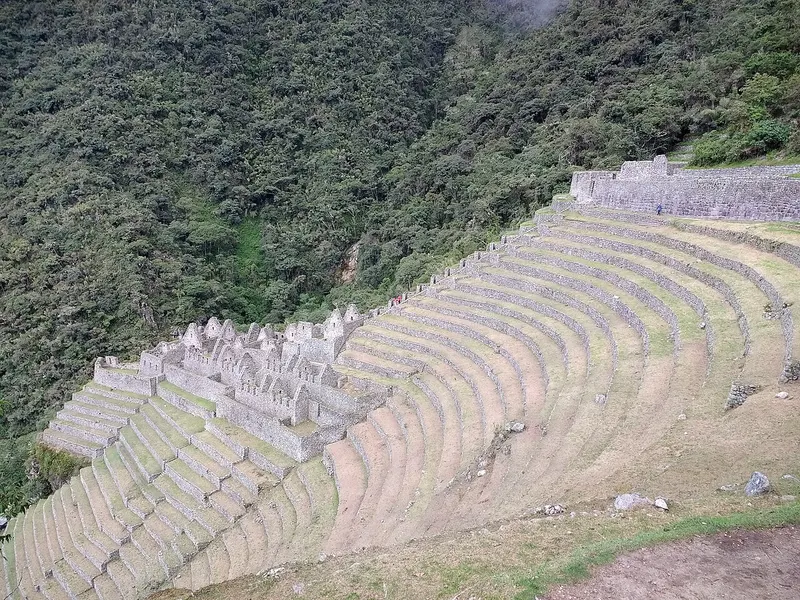
Wiñay Wayna — 'forever young' — the spectacular terraced ruin near the end of the Inca Trail, with its ritual fountains and cloud-forest setting. Why trekkers rank it above the citadel, and how it fits the classic and two-day routes.
Read guide
Intipunku, the Sun Gate: How to Reach It
The Sun Gate above the citadel — the Inca Trail's grand entrance and a stiff out-and-back for ticket holders. How to reach it, the seasonality, the views and the effort involved.
Read guide
Inca Trail vs Salkantay: Which Trek to Machu Picchu?
A clear head-to-head between the two classic treks to Machu Picchu — permits and availability, scenery, altitude, cost, comfort and archaeology — to help you pick the right one.
Read guideMore in Treks
6
Choosing a Licensed Inca Trail Operator
The classic Inca Trail can only be booked through a licensed operator — so the operator is your most important choice. How to vet permits, porter welfare, cancellation terms, and spot a too-good-to-be-true offer.
Read guide
Dead Woman's Pass: The Inca Trail's Hardest Day
Warmihuañusca — the 4,215 m high point of the classic Inca Trail and the day everyone fears. The altitude, the effort, the pacing, the weather and the mental game of the trek's toughest climb.
Read guide
Hiking Gear for Machu Picchu and the Treks
What to actually pack for the Inca Trail, Salkantay, rainy-season trekking, day hikes like Huayna Picchu, and the citadel circuits — the layering system, footwear, rain gear and daypack, without overpacking.
Read guideInca Trail Packing List
Exactly what to bring for the classic four-day Inca Trail — the layering system, rain gear, the sleeping setup, your daypack contents, medication and toiletries, and how the porter duffel weight limit shapes everything.
Read guide
Inca Trail Permits: How They Work and How to Get One
How Inca Trail permits work — who can book them, the strict daily cap, release timing, passport rules, the February closure, and what to do when your dates are sold out.
Read guidePorter Ethics on the Inca Trail
The people who carry your trek up the mountain — how to choose an operator that pays, feeds, equips and protects its porters, what the load and welfare rules say, and how to tip without insulting anyone.
Read guide