
Five Days: Cusco, the Sacred Valley & Machu Picchu
A balanced five-day Machu Picchu itinerary — proper Cusco acclimatization, an unhurried Sacred Valley, an overnight in Aguas Calientes and the citadel, with altitude and ticket buffers built in so a cloudy morning or a late train never sinks the trip.

Photo: Jeff Anders / Unsplash
- ✓Five days is the balanced classic: proper acclimatization, an unhurried Sacred Valley, the citadel on a calm slot, and the buffer that lets you absorb a cloudy morning, a cancelled train or a slow altitude day without the whole trip wobbling.
- ✓The arc is unchanged but given room to breathe: acclimatize low, sightsee gently, ride into the gorge, sleep at the foot of the mountain, climb the citadel rested, and return up to Cusco only at the end.
- ✓The extra days open the door to extras — a peak climb, a second valley site, a hot-springs evening, a deeper Cusco — without ever feeling crammed.
- ✓Book in the unchanging order — timed-entry ticket first, then the train pair, then your beds — because the entry slot is the only piece with a hard, finite supply.
Why five days is the sweet spot
Ask seasoned travellers how long to give Machu Picchu and many will land on five days — not because the citadel needs five days, but because the journey around it does. The shorter plans deliver the place and do it well, but they spend their slack to do so: a one-day dash has no buffer at all, and even a two- or three-day trip leaves little room for the things that reliably go sideways in the Andes — a morning lost to cloud, a train cancelled by a landslide, a body that takes its time adjusting to the height. Five days is the length at which the trip stops being a tightrope and starts being a holiday.
The extra time does three things. It lets you acclimatize properly, so the altitude is a footnote rather than the story of your first days. It lets the Sacred Valley and Cusco be destinations in their own right rather than corridors to the citadel — and both genuinely are, full of ruins, markets, food and texture you'd be sad to rush past. And it builds in a buffer, a day of slack you hope you won't need, so that a single bad morning at the citadel becomes a second chance rather than a ruined trip. Slack, in the mountains, is the best money you can spend.
The shape that follows keeps the region's golden rule front and centre: you sleep progressively lower as you approach the citadel, and you save the highest place — Cusco — for the end, when you're fully adjusted. Treat the days as a framework rather than a script; swap, stretch and reorder to taste, but keep the descent and the buffer, because those are what make five days feel as unhurried as they should.
 All Machu Picchu itinerariesHow the balanced five-day plan compares with the one-, two- and three-day routes.
 Three days: Cusco, Valley & MPThe tighter version of the same arc, without the acclimatization and buffer slack.
 Acclimatization & altitudeWhy the first days govern how comfortable the whole trip feels.
At a glance — the five-day shape
The bones of the plan before you commit to dates. Altitudes are stable and evergreen; everything to do with train times, prices, ticket release windows, circuit availability and valley-ticket coverage shifts with the season and the operators, so treat the figures below as orientation and verify the specifics directly when you book.
- Length: five days, four nights — two to settle and stage low, one to ride in, one for the citadel, and a buffer worked into the middle and end.
- Altitude ladder: Sacred Valley floor ~2,800 m → Aguas Calientes ~2,040 m → citadel ~2,430 m → Cusco 3,399 m last. Sleep lower before you climb; save Cusco for the end.
- Staging base: the Sacred Valley, ideally Ollantaytambo, where the train to the citadel departs.
- Overnight at the foot of the mountain: Aguas Calientes (Machu Picchu Pueblo), so you reach the gate on an early, calm slot.
- Tickets needed: a timed-entry Machu Picchu ticket (plus a peak-climb permit if you want one), a return train pair, a shuttle bus, and a valley sites ticket. A guide is required at the citadel.
- Booking order: timed-entry ticket first, then the train pair, then your beds in the valley, Aguas Calientes and Cusco.
- Verify before you go: current timetables, entry rules, circuit and peak availability, valley-ticket coverage and prices — all move.


Book in the right order, weeks ahead
The booking sequence never changes, and five days gives you more freedom to honour it. The timed-entry ticket comes first, always, because it is the only element with a hard, finite daily supply and the only one that genuinely sells out — dry-season morning slots can be gone weeks ahead, and any add-on peak earliest of all. With five days you might choose a peak-climb permit you'd skip on a shorter trip, so decide early; the circuit is fixed at booking and cannot be swapped at the gate.
Next comes the train pair: an inbound train on the day you ride into the gorge and an outbound on the day you leave. Staging in the valley means you depart from Ollantaytambo, close to the gorge, so you can pick civilised times. Both PeruRail and IncaRail run the line, from panoramic tourist trains to the luxury Hiram Bingham — and on a five-day trip the train can be part of the treat rather than mere transit. Then book your beds: nights in the valley, a night in Aguas Calientes, and your final nights in Cusco, all of which have limited dry-season supply. Finally, the return shuttle bus and a private driver for the valley.
A guide is required to enter the citadel, so arrange one in advance — a private guide for an unhurried, personal walk is a fitting splurge on a trip with time to savour. For the valley, a private driver-guide for a day is one of the best-value upgrades of the whole trip, letting you fold Písac, Maras, Moray and Ollantaytambo together at your own pace. The luxury of five days is that none of this has to be rushed: you can book the calm, well-spaced version of every leg.
- Step 1: secure the timed-entry ticket — and any peak-climb permit — on your chosen circuit; the keystone, and the thing that sells out.
- Step 2: book the inbound and outbound train pair; valley staging lets you pick unhurried times.
- Step 3: book your beds — valley nights, an Aguas Calientes night, and final Cusco nights, all limited in dry season.
- Step 4: book the return shuttle bus and a private driver for the valley sites.
- Carry the exact passport you booked the ticket with — it is checked at the citadel gate.


Days 1–2 — Land low and let the valley do its work
The single best decision of a five-day plan is made on arrival: don't sprint up into Cusco the moment you land. The old capital sits at 3,399 m, high enough that most altitude sickness strikes on arrival, and the kindest move is to transfer straight down into the Sacred Valley, where the floor runs around 2,800 m — several hundred metres lower and noticeably gentler on the lungs. Treat day one as deliberately empty: a hotel with a garden, a slow lunch, plenty of water, an early night. This is not wasted time. It is the altitude doing its quiet work while you think you're merely resting.
Day two is for gentle valley sightseeing, with the pace kept easy because acclimatization still matters more than ground covered. The valley is a glorious preview of the citadel in stone: the terraced ruins and colourful market at Písac, the surreal white salt pans of Maras cascading down the valley wall, and the concentric agricultural bowls of Moray. A private driver-guide lets you fold these together at your own rhythm, stopping for a long lunch and a longer look wherever the day invites it. End the day in or near Ollantaytambo, the living Inca town where the train departs and the streets still follow their Inca grid with water running through the channels.
Two unhurried days low in the valley are the foundation the rest of the trip is built on. By the time you ride into the gorge you'll be adjusted enough that the altitude barely registers, and you'll have seen a slice of the Inca heartland most rushed itineraries skip entirely. If your group is altitude-sensitive, or you simply like a slow start, this is the part of the plan to give the most room — there is no harm and much benefit in an extra valley night.
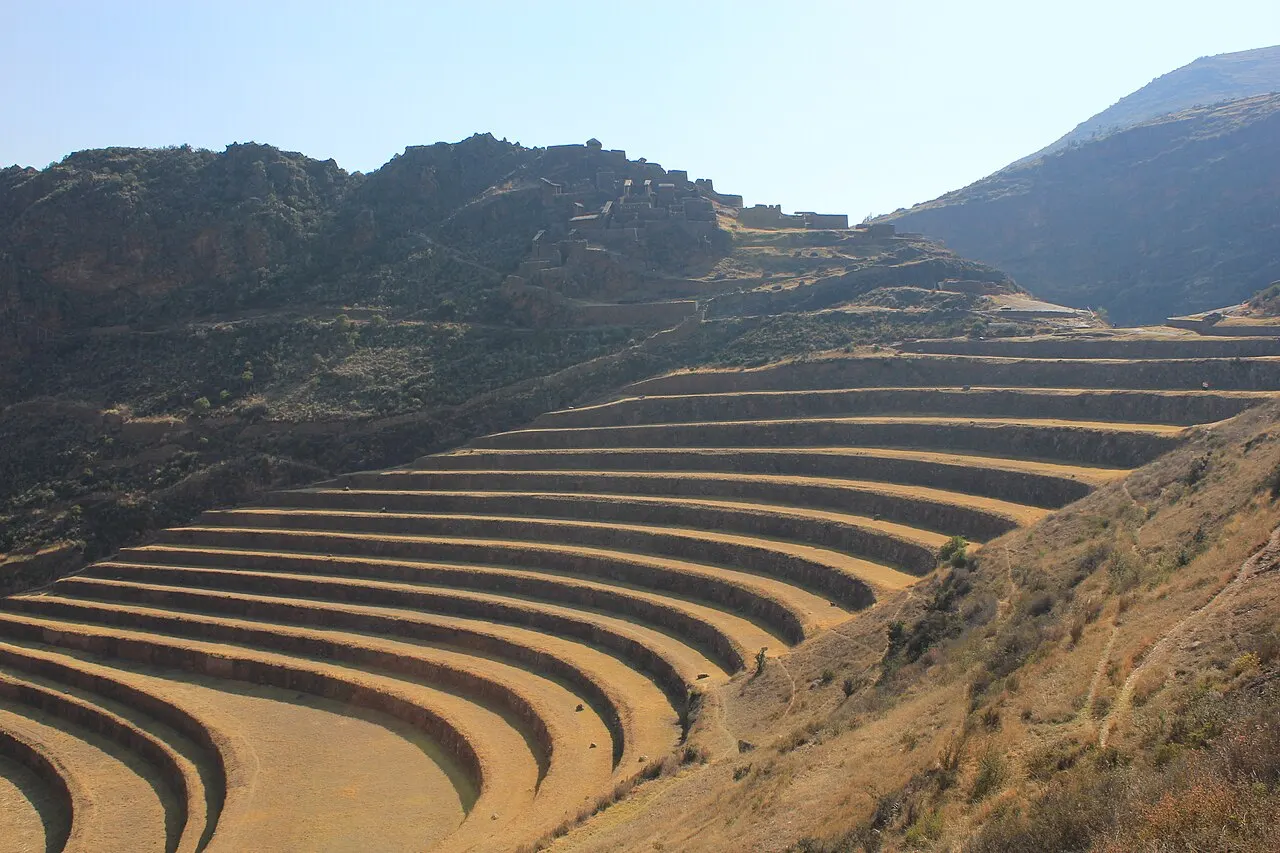
- Transfer straight to the valley on landing — sleep at the kinder ~2,800 m, not Cusco's 3,399 m.
- Make day one deliberately empty: garden hotel, slow lunch, lots of water, early night.
- Day two: gentle valley sightseeing — Písac, Maras, Moray — at an easy, acclimatizing pace.
- Sleep in or near Ollantaytambo, where the train departs and your citadel morning starts as a short walk.
- Give this part the most room if your group is altitude-sensitive — an extra valley night is pure benefit.


Day 3 — The train into the gorge and a settled afternoon
Day three is the travel-in day, and staging in Ollantaytambo makes it almost effortless. Rather than a pre-dawn drive, you walk to the platform and board a train that follows the Río Urubamba as it tumbles out of the highlands into genuine cloud forest. It is one of the great rail journeys: the valley narrows into a gorge, the vegetation thickens from highland scrub to dripping green, the air warms, and the altitude eases with every kilometre. With five days you're in no rush, so take a civilised mid-day departure, claim the window, and let the descent do you good.
Aim to arrive in Aguas Calientes (Machu Picchu Pueblo) with the afternoon ahead of you. The town is small, steep and built around the railway and the river, with the bus depot, the market, the restaurants and the hot springs within a short walk. Check in, drop the bags, and let the pace slow right down. This afternoon is both downtime and buffer: a wander along the river, a soak in the thermal baths the town is named for, an unhurried dinner, and a sensible night, because tomorrow is the citadel and you'll want to be fresh for an early slot.
Because you have the buffer, you can also be relaxed about the weather. If the forecast for tomorrow looks poor and your ticketing allows it, you have the flexibility a shorter trip lacks — the slack to adjust rather than gamble everything on one morning. That is the quiet luxury of five days: you arrive at the foot of the mountain with options, not just a single tightly wound plan.
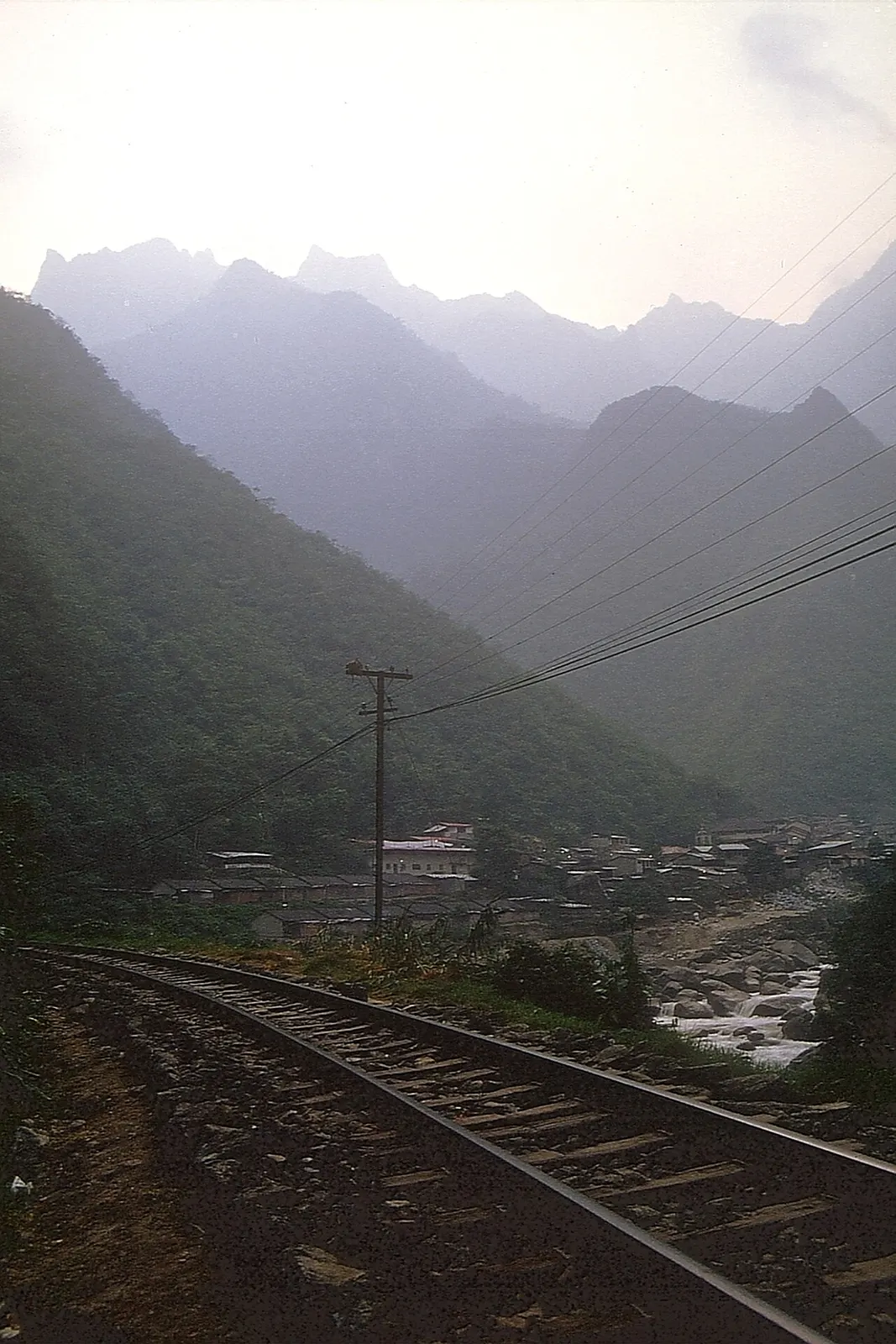
- Walk to the Ollantaytambo platform and take a civilised mid-day train down through the gorge.
- Watch the landscape turn from highland scrub to cloud forest as the altitude eases.
- Arrive in Aguas Calientes with the afternoon free; river, hot springs and an unhurried dinner.
- Use the buffer: if tomorrow's weather looks poor and your ticket allows, you have room to adjust.
 Ollantaytambo to Machu PicchuThe short, scenic rail leg that starts your citadel day calm.
 Where to stay in Aguas CalientesThe town at the foot of the mountain, from budget rooms to the lodge by the gate.
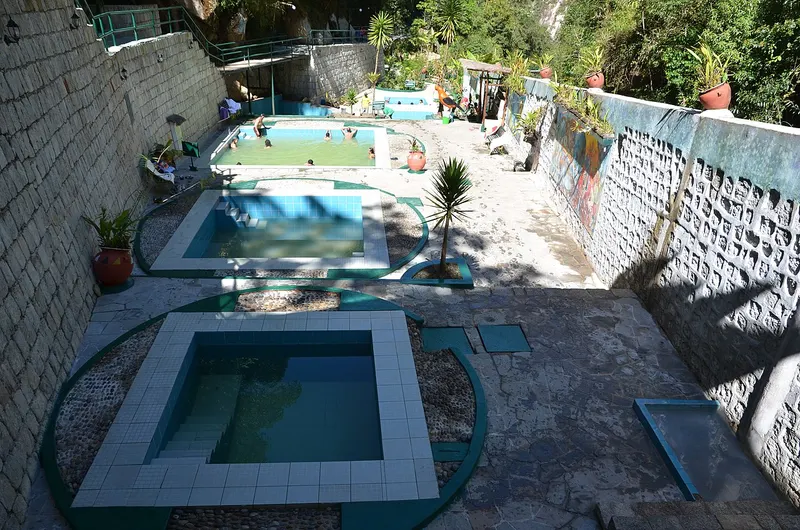 The Aguas Calientes hot springsThe thermal baths the town is named for — the classic first-evening soak.
Day 4 — The citadel, unhurried, with room for a peak
This is the day the whole plan has been building toward, and four days of easing down the altitude ladder means you meet it rested. Sleeping in Aguas Calientes lets you reach the gate for an early slot without a pre-dawn marathon — a short walk to the bus depot, the shuttle up the switchbacks, and you're at the entrance while the day-trippers are still rattling down the gorge on their trains. The first slots of the morning are the citadel at its most magical: thin mist lifting off the terraces, the great bowl of the city slowly revealing itself, and far fewer people on the one-way paths than there will be by late morning.
Walk your circuit with your guide and, for once, take your time. The classic full visit opens at the high overlook above the agricultural terraces — the postcard frame, the city laid out below with Huayna Picchu rising behind it — then descends through the urban sector past the temples, the fountains, the carved Intihuatana ritual stone, and the great mortarless stonework. On a five-day trip you can let the visit breathe: linger at the overlook, sit a while among the temples, let the guide tell the long version of the story rather than the rushed one. This is what the extra days buy — not more sights, but more presence.
Five days is also the length at which a peak climb stops being a stretch. If you booked a permit, Huayna Picchu (the steep pyramid behind the city) or Machu Picchu Mountain (the higher summit opposite) rewards the fresh morning with a god's-eye view of the whole citadel — both strenuous, exposed, time-limited and tied to specific circuits, but very much within reach when you've slept at the foot of the mountain and have nowhere urgent to be afterwards. When you've had your fill, ride the shuttle back down with the whole afternoon still ahead, and no last-train panic to cut the day short.
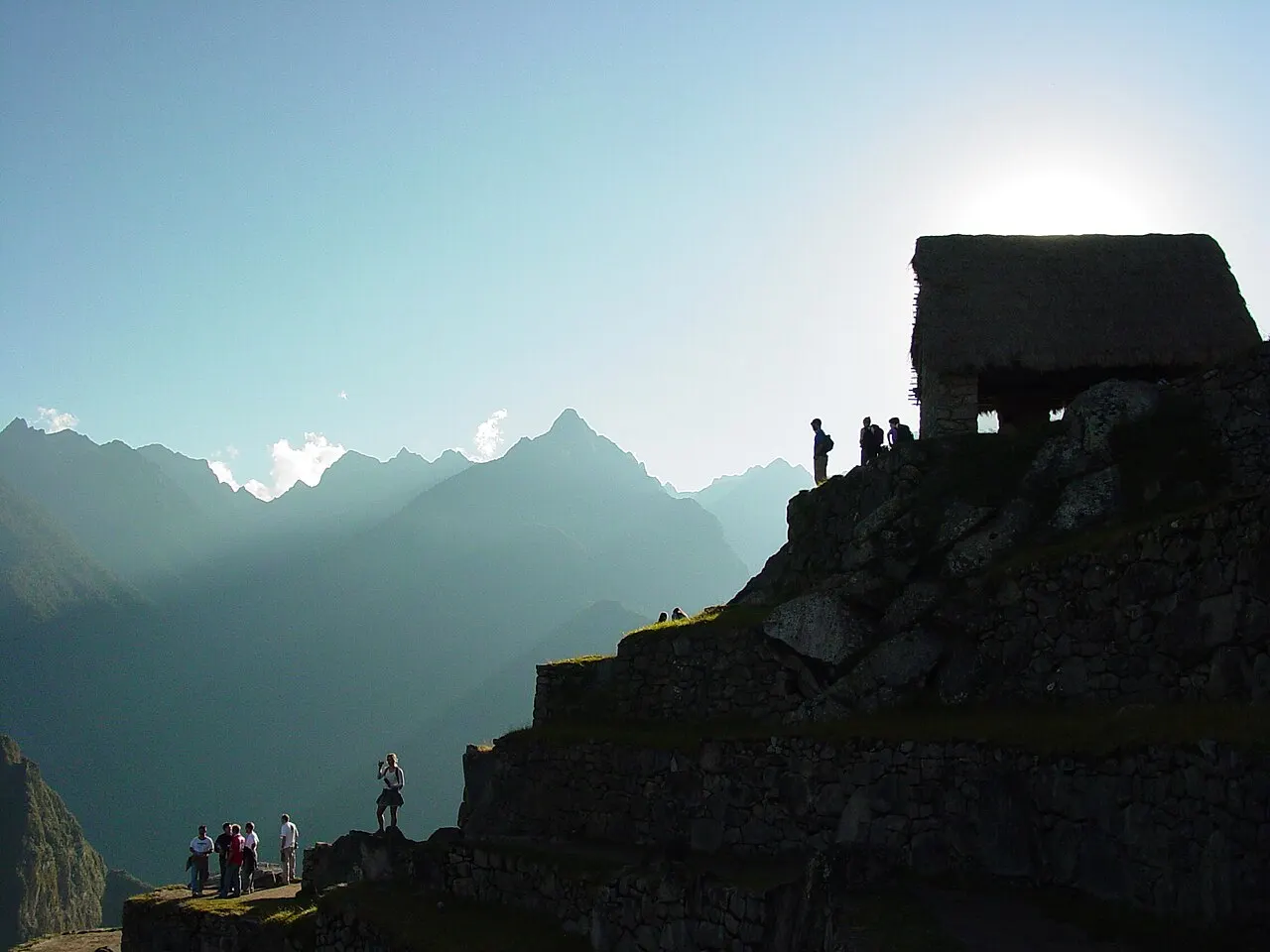
- Sleeping in town lets you reach an early, calm slot without a pre-dawn epic — you beat the day-trip trains.
- Walk the classic circuit slowly: the overlook, then the urban sector, the temples and the Intihuatana.
- Five days means you can let the visit breathe — more presence, not just more sights.
- A peak climb (Huayna Picchu or Machu Picchu Mountain) is well within reach on a fresh morning — verify permits.
- Carry water, sun protection and a rain layer; the cloud forest is warm, fierce in sun, and changeable.
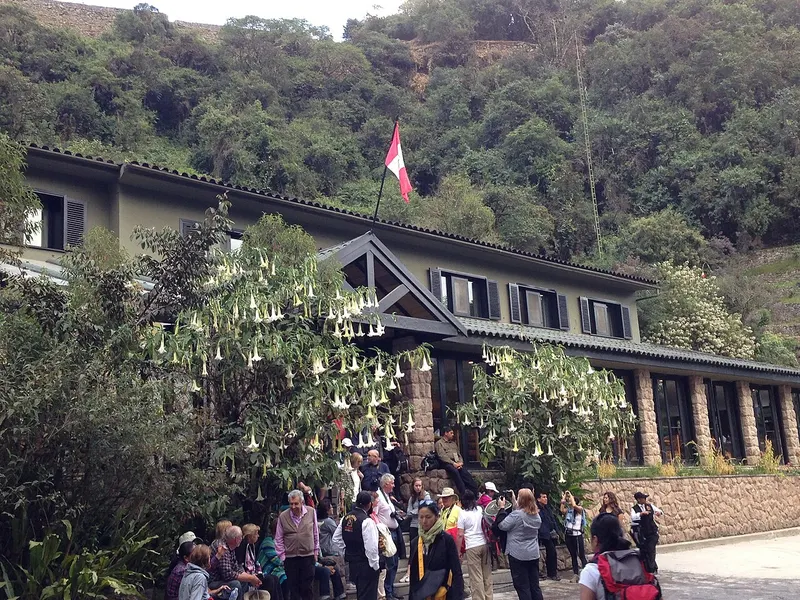 The first bus upCatching an early shuttle from Aguas Calientes to reach the gate before the crowds.
 Climbing Huayna PicchuThe steep peak behind the city — the classic add-on a five-day trip has time for.
 What to see at the citadelReading the overlook, the Intihuatana, the temples and the terraces circuit by circuit.
Day 5 — Buffer, then back up to Cusco for the finale
Day five is the day that separates a relaxed trip from a frazzled one: a deliberate buffer. Mountain weather, train schedules and altitude are all unpredictable, and a plan with no give is a plan waiting to break. If everything has gone smoothly, this becomes a glorious slow morning — a final river walk, a last soak in the hot springs, an unhurried lunch — before an afternoon train up the valley. If yesterday was rained out or someone was off-colour, this is your second chance at the citadel, the single most valuable thing the extra day can buy. Either way, the slack has done its job.
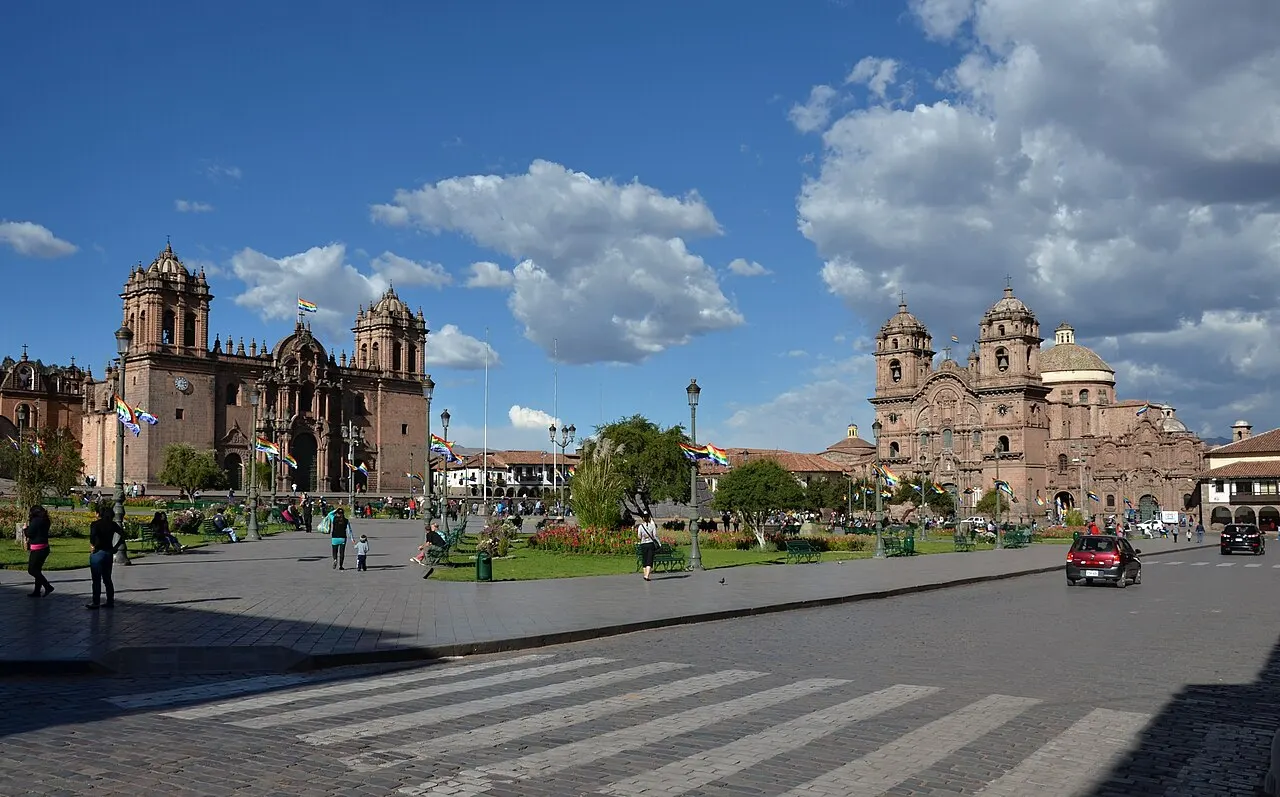
Travel back up to Cusco only now, at the end, when you're fully acclimatized and the city's 3,399 m no longer feels like a wall. Saving the highest place for last is the masterstroke of the whole plan: you've turned the trip's biggest physical challenge into its gentle finale rather than its brutal opening. Spend your final night or two exploring the old capital at an easy pace — the Coricancha sun temple, the San Pedro market, the cathedral on the Plaza de Armas, the steep artisan lanes of San Blas, and the Inca walls that still underpin the colonial city — before flying home.
Cusco at the end of a five-day trip is a different city than it would have been at the start. Acclimatized, unhurried and full of context after days among Inca terraces and temples, you can read the old capital properly — see how the citadel you've just stood in fits into the wider story of the empire whose navel this was. It is the right place to end, and ending there rather than starting there is the quiet wisdom the five-day plan is built on.
- Keep day five flexible — it's your insurance against weather, trains and altitude.
- If all went well, use it for the hot springs, a river walk and a slow lunch before the afternoon train.
- If not, it's your second shot at the citadel — the most valuable thing the buffer buys.
- Return up to Cusco only now, fully acclimatized, for the trip's gentle finale.
- Read the old capital properly at the end: Coricancha, San Pedro market, the Plaza de Armas, San Blas.


What the extra days let you add
The framework above is the unhurried core, but five days has just enough give to fold in an extra without crowding the trip — and which extra you choose says a lot about the journey you want. If the citadel is the whole point, spend the slack on it: book a peak climb, or hold a second citadel entry so you can return to the ruins in different light. If it's the landscape that moves you, give the Sacred Valley a second, deeper day, or add a side trip from Cusco to Sacsayhuamán and the ruins ringing the city. And if you simply want to slow down, do nothing at all with the buffer except enjoy it — the most underrated extra of any trip.
A few popular add-ons stretch the plan toward six or seven days rather than fitting inside five: Rainbow Mountain, Humantay Lake, or a stretch of the Amazon are all genuine highlights but they are separate expeditions, often at serious altitude, and bolting them onto a tight five-day plan is how a relaxed trip becomes a forced march. The honest advice is to lock the core citadel arc first and add the big extras only once it's secure — and ideally only with an extra day or two to absorb them. Five days is balanced precisely because it doesn't try to do everything.
Whatever you add, the bones never change: book the timed-entry ticket first and build the train and beds around it, sleep progressively lower as you approach the citadel, save Cusco for the end, and keep a buffer day for the weather and the rails, which always get a vote in the Andes. Get those right and five days through Cusco, the Sacred Valley and Machu Picchu is the version of this trip most people wish they'd given themselves — long enough to feel the place in your bones, generous enough to weather a surprise, and paced so the high point stays a joy rather than an ordeal.
- Citadel-led: spend the slack on a peak climb or a second entry in different light.
- Landscape-led: a deeper second valley day, or Sacsayhuamán and the ruins around Cusco.
- Slow-down: do nothing with the buffer but enjoy it — the most underrated extra of all.
- Big add-ons (Rainbow Mountain, Humantay, the Amazon) need extra days — lock the core arc first.
- Bones never change: ticket first, lower beds as you go, Cusco last, and a buffer for weather and rails.



Related guides
Cusco acclimatization & altitude
How to land soft in Cusco at 3,399 m: reading soroche, pacing your first day, what to eat and drink, the easy activities that help, and when to simply rest before Machu Picchu.
Read guide
Sacred Valley Itinerary: One or Two Perfect Days
A loop-by-loop Sacred Valley itinerary linking Písac, Urubamba, Maras and Moray, Chinchero and Ollantaytambo — paced for altitude and built to end at the train to Machu Picchu rather than back in Cusco.
Read guide
Two Days at Machu Picchu: The Overnight Plan
A two-day Machu Picchu itinerary built around one night in Aguas Calientes — calmer entry slots, the second-entry decision, less transit stress, and a relaxed train in and out, paced for couples and first-timers who want the citadel to breathe.
Read guideMore in Itineraries
6
A Luxury Machu Picchu Itinerary
A high-end Machu Picchu plan with palace hotels in Cusco, luxury Sacred Valley lodges, the Hiram Bingham train, private guiding and soft, altitude-kind pacing.
Read guide
A Machu Picchu Honeymoon
How to build a honeymoon around Machu Picchu — romantic hotels in Cusco and the Sacred Valley, a luxury train into the gorge, a private guide, spa days and a dawn at the citadel.
Read guide
Beyond the Citadel: Peru Add-Ons to Machu Picchu
How to bolt the rest of Peru onto a Machu Picchu trip — Rainbow Mountain, Humantay Lake, the South Valley and the bigger leaps to the Amazon, Lake Titicaca, Lima and Arequipa — sequenced for altitude and time.
Read guide
Family Machu Picchu Itinerary: A Kid-Paced Plan
A family-paced Machu Picchu itinerary built around the altitude ladder, kid-friendly circuits, the train, Sacred Valley downtime and unhurried buffer days — so children and grandparents arrive at the citadel rested, not wrecked.
Read guide
Machu Picchu by Train: A Step-by-Step Itinerary
A train-based Machu Picchu itinerary from Cusco or Ollantaytambo — the booking order, hotel timing, the bus up from Aguas Calientes, and the backups that keep the day calm.
Read guide
Machu Picchu Couples Itinerary: A Slow, Romantic Route
A romantic Machu Picchu itinerary for two: a luxury Sacred Valley base, the panoramic train, a private guide, the quietest entry slot for that first hush at the overlook, and long candlelit meals that turn a bucket-list trip into a love story.
Read guide