
Machu Picchu by Train: A Step-by-Step Itinerary
A train-based Machu Picchu itinerary from Cusco or Ollantaytambo — the booking order, hotel timing, the bus up from Aguas Calientes, and the backups that keep the day calm.

- ✓The train is the standard way in — no road reaches the citadel — and almost every itinerary departs from Ollantaytambo in the Sacred Valley rather than Cusco.
- ✓Book in one fixed order: timed-entry Machu Picchu ticket first, then the train that lands you in time for it, then the hotels around both.
- ✓Sleep in the Sacred Valley or in Aguas Calientes the night before, not in Cusco — it turns a pre-dawn dash into a short, calm transfer.
- ✓Trains carry a strict luggage allowance, so leave the big bag in Cusco or the valley and travel up with an overnight bag only.
Why the train is the heart of the plan
There is no road to Machu Picchu. The citadel sits in a steep cloud-forest gorge that the Inca reached on foot and that the modern traveller reaches, almost always, by rail. The train is therefore not a detail of the trip but its spine: the timetable you choose decides when you sleep, where you sleep, and what time you stand at the gate. Get the train right and the rest of the itinerary clicks into place; get it wrong and you spend the most beautiful morning of the trip watching a clock.
The romance helps. The line hugs the Río Urubamba as it drops out of the highlands, the carriages built with panoramic windows so you can watch snow peaks give way to orchids and the river churn white alongside the rails. Two operators run the route — PeruRail and IncaRail — with service tiers from cheerful tourist trains to the luxury Hiram Bingham. Whichever you ride, the journey is part of the experience, not just transit to it.
This itinerary lays the train trip out step by step, in the order you should actually book and travel it. Treat the structure as fixed and the specifics — exact departure times, fares, luggage limits, circuit availability — as things to verify directly with the operators when you book, because those move with the season.


At a glance
The shape of a train-based visit before you commit. Stations and the general flow are stable; anything to do with prices, exact timetables, luggage allowances, circuit availability and opening hours moves with the season and the operators, so verify those directly when you book.
- Departure station: almost always Ollantaytambo in the Sacred Valley, not Cusco — it is far closer to the gorge.
- Operators: PeruRail and IncaRail, both ending at Machu Picchu Pueblo (Aguas Calientes) station.
- Booking order: Machu Picchu timed-entry ticket → train → hotels and the bus.
- Where to sleep the night before: the Sacred Valley (Ollantaytambo/Urubamba) for a one-day strike, or Aguas Calientes for the earliest possible citadel start.
- Last leg: a shuttle bus climbs the switchbacks from Aguas Calientes to the gate; the first buses leave very early.
- Luggage: a strict allowance on board — travel up with an overnight bag and leave the big case behind.
- Backup: build margin into connections; mountain weather, rockfalls and rail works do cause delays.

Step 1 — Book the entry ticket before anything else
The single rule that makes a train itinerary work is that the train serves the ticket, not the other way round. Your Machu Picchu entry is a timed slot tied to one of the three official circuits and ten numbered routes — a fixed walking path through the citadel, introduced in the post-2024 reorganisation by Peru's Ministry of Culture. That slot is the only truly immovable point in the day. Secure it first, then choose a train that lands you in Aguas Calientes with comfortable time to ride the bus up and reach the gate for your window.
Book early for dry-season dates (roughly May to September), when the best morning slots and the Huayna Picchu and Machu Picchu Mountain add-on permits sell out weeks ahead. Decide your circuit at this stage too, because it shapes what you see and which add-ons you can attach. Carry the passport you booked with — it is checked at the gate.


Step 2 — Choose your departure station
Almost everyone boards at Ollantaytambo, the living Inca town at the western end of the Sacred Valley. It sits far closer to the gorge than Cusco does, which is why staging your night here turns the citadel morning into a short walk to the platform rather than a long, anxious drive. Some services run from points nearer Cusco or use a bimodal bus-then-train arrangement, but the Ollantaytambo departure is the clean, standard choice — and it lets you fold the Sacred Valley into the trip on the way down.
Match the station to where you will sleep. If you are sleeping in the valley, an Ollantaytambo departure is the obvious fit. If your plan starts from Cusco, factor in the road transfer down to Ollantaytambo (a couple of hours) before the train, and never cut it fine — Cusco morning traffic and mountain roads are not the place to gamble on a fixed departure.


Step 3 — Pick the operator and service tier
Two operators share the line. PeruRail and IncaRail both end at Machu Picchu Pueblo (Aguas Calientes) station, and both run a ladder of service tiers — from value tourist trains with panoramic windows to mid-range comfort classes to the headline luxury services, including PeruRail's Hiram Bingham with its dining car and bar. The view out of the window is broadly the same whichever you ride; what changes is the comfort, the catering and the price. Choose for budget and mood rather than for the scenery, which the gorge supplies for free.
Whatever tier you pick, the practical points are the same. Trains run to a fixed timetable with limited daily departures, seats are reserved, and the luggage allowance is strict. Book the train only after your entry ticket is set, so you can choose a departure that delivers you to Aguas Calientes with margin before your slot rather than racing it.


Step 4 — Decide where to sleep the night before
This is the choice that quietly decides how relaxed your citadel morning feels, and there are two good answers. Sleeping in the Sacred Valley — Ollantaytambo or Urubamba — puts you a short transfer from the train and, just as importantly, lower than Cusco, which helps with the altitude. From here you ride an early train, climb the citadel, and ride back the same day. It is the efficient, well-paced choice for most trips.
The alternative is to sleep in Aguas Calientes itself, the small town directly below the citadel. Staying here lets you catch the very first bus up at dawn, beating most of the day-trippers and giving yourself a quieter gate and a real chance at the mist lifting off the ruins. It costs an extra night and the town is touristy, but for travellers who want the calmest, earliest possible morning — or who simply do not like being rushed — it is worth it. Either way, do not sleep in Cusco the night before a same-day strike: the pre-dawn road-and-rail scramble is the single most common way to start the day frayed.
- Valley night (Ollantaytambo/Urubamba): efficient, lower for altitude, short transfer to the train — best for most.
- Aguas Calientes night: first bus up, quietest gate, best mist odds — best for an unhurried morning.
- Avoid a Cusco night before a same-day citadel strike — the dawn dash is the classic stress mistake.


Step 5 — The ride down the gorge
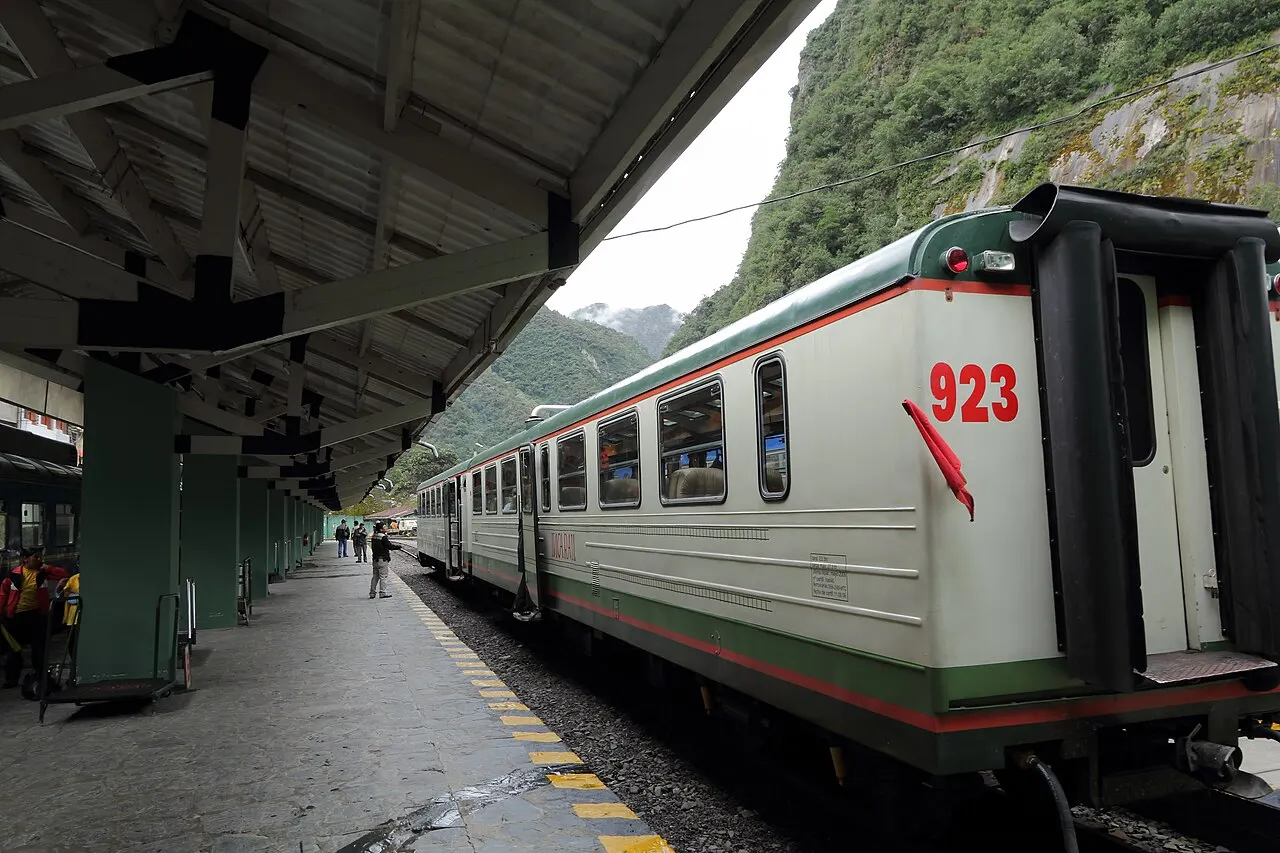
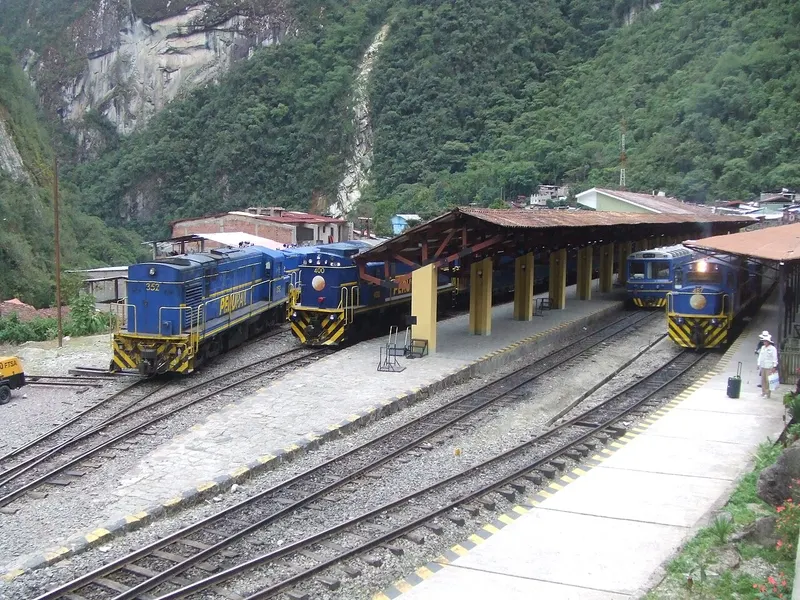
On the day of travel, the train does the work and you get to watch. From Ollantaytambo the line follows the Urubamba as the valley narrows and the air thickens into genuine cloud forest — the vegetation greening, orchids and bromeliads crowding the banks, snow peaks slipping behind the walls of the gorge. Sit on the side the staff recommend for the river, keep your camera handy but your eyes on the window, and let the journey be the prelude it is meant to be.
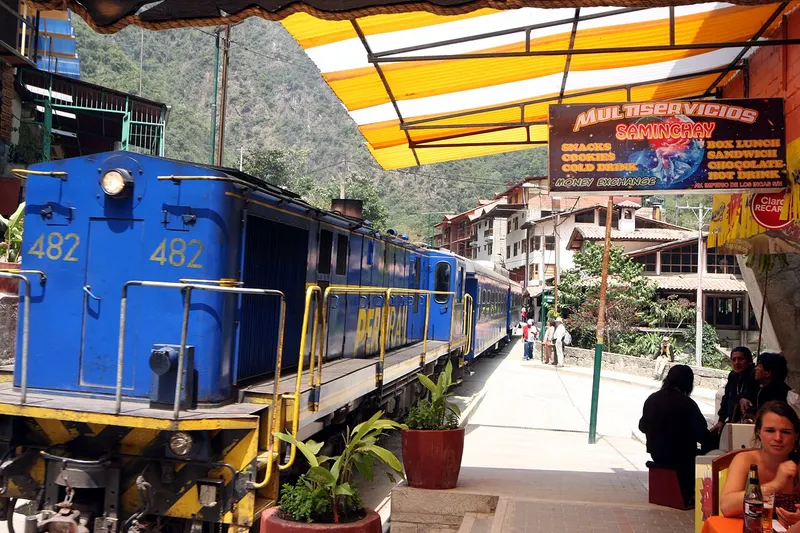
The train ends at Machu Picchu Pueblo, still universally called Aguas Calientes — a steep little town wedged into the gorge below the citadel, built almost entirely around visitors. From the station it is a short walk to the bus stop and the hotels. If you are doing the citadel the same day, you transfer straight to the bus; if you are overnighting, drop your bag, eat, and rest for an early start.

Step 6 — The bus up, and the citadel morning
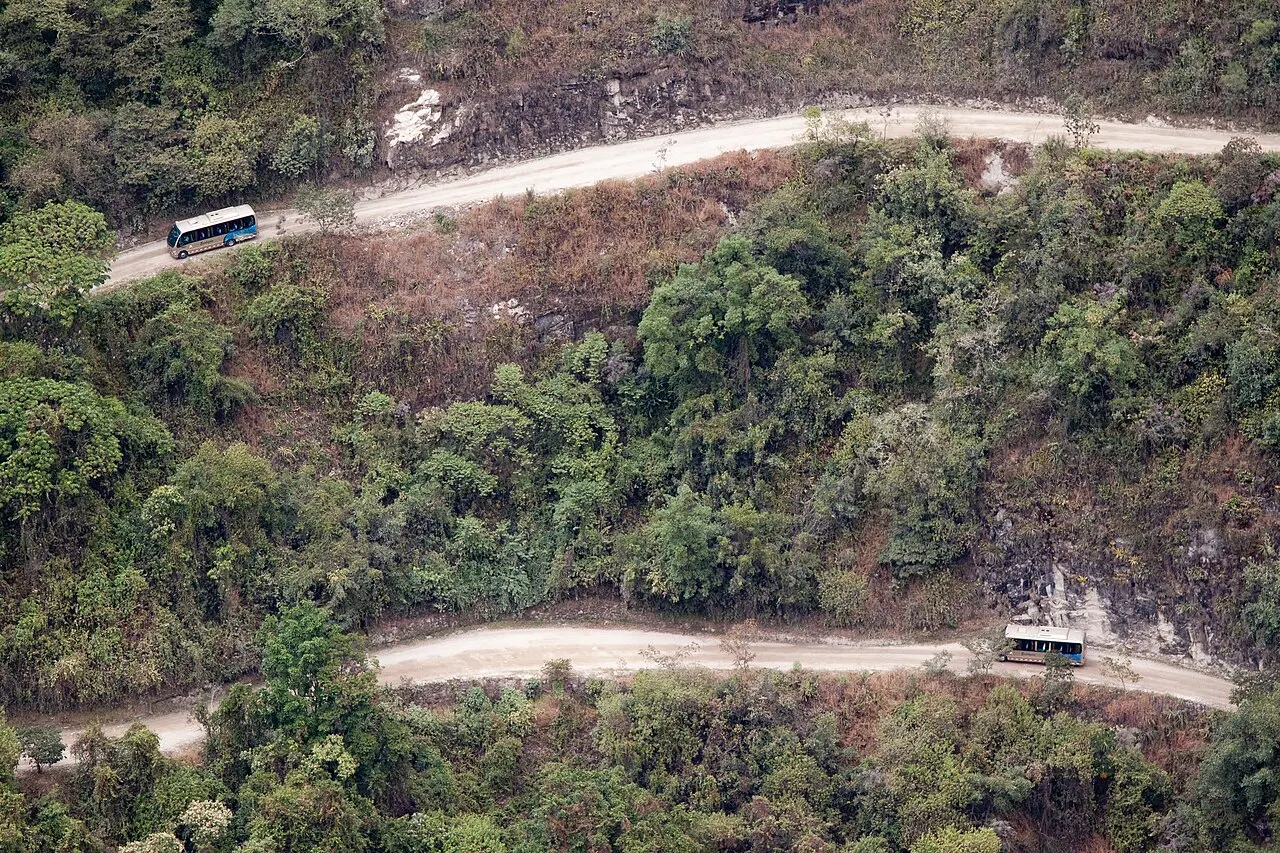
The last leg is the shuttle bus, which climbs a series of switchbacks from Aguas Calientes to the gate in around half an hour. The first buses leave very early, and an early bus is worth the alarm: thinner crowds, cooler air, and the best chance of catching the cloud lifting off the terraces. Queues form at the bus stop in peak season, so allow time and have your bus ticket and passport ready. (The fit and stubborn can walk up the steep staircase trail instead, but most people are glad of the bus.)
At the gate, your timed-entry ticket sends you onto your chosen circuit — a one-way walking route through the citadel. Take it slowly: stand at the upper overlook for the postcard frame above the terraces, read the carved granite Intihuatana, trace the masonry of the Temple of the Sun. If you booked Huayna Picchu or Machu Picchu Mountain, your add-on climb is a separate permit with its own entry window — pace the morning around it. When you have drunk it in, ride the bus back down, collect your bag, and catch your return train.

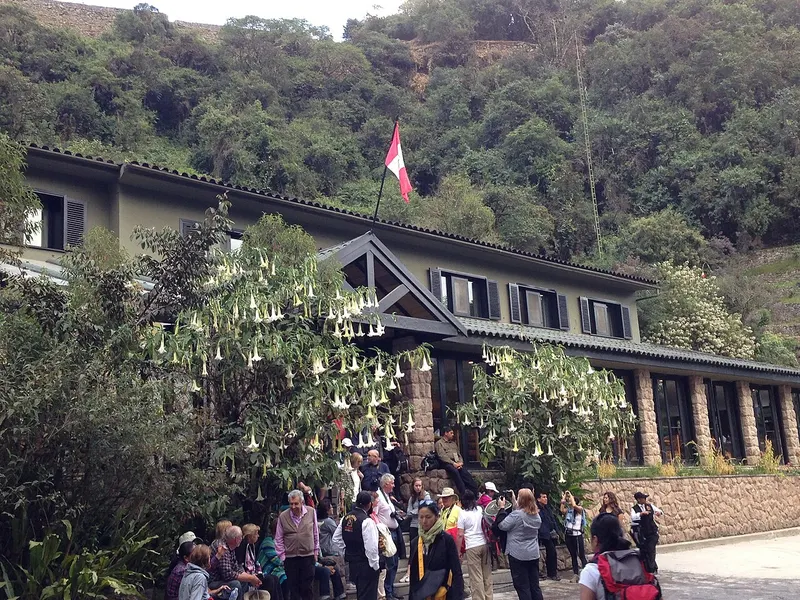

Step 7 — The return, and building in backups
Most train itineraries return the same way they came: bus down to Aguas Calientes, train back to Ollantaytambo, transfer up to Cusco or your valley hotel. Book the return train with the same care as the outbound — leave enough buffer after your citadel time to walk the circuit unhurried, queue for the bus, and reach the station without sprinting. A return that is too tight turns the end of a perfect morning into a panic.
The mountains do not always cooperate, and a good plan accepts that. Rockfalls, heavy rain, rail maintenance and the occasional regional strike can disrupt the line; flights between Cusco and Lima are weather-prone too. Build margin into every connection, never schedule your international flight for the same day you leave the citadel, and keep the booking references and operator contacts to hand. If you are travelling in the wet season or during a period of known disruption, an extra buffer day is cheap insurance against a very expensive missed flight.
- Book the return train with a comfortable buffer after your entry slot — never a tight turnaround.
- Do not fly Cusco–Lima the same day you leave Machu Picchu; leave a night's margin.
- Carry booking references and operator contacts for both train legs.
- In wet season or during known disruptions, an extra buffer day is worth it.
- Verify current timetables, fares, luggage rules and circuit availability directly — this guide stays evergreen.

One day or two? Matching the train trip to your time
A train itinerary stretches or compresses to fit the time you have, and it helps to know the two shapes it usually takes. The tightest realistic version is a single full day from the Sacred Valley: an early train up from Ollantaytambo, the bus, the citadel, and the train back the same afternoon, sleeping in the valley both nights. It works — thousands of people do exactly this — but it is unforgiving. One delayed train, one long bus queue, or one cloudy morning and there is no slack to recover, so a same-day strike is best reserved for travellers who are already well acclimatized and happy to accept the risk that the weather may not cooperate.
The calmer version adds a night in Aguas Calientes. You ride up in the afternoon, sleep at the foot of the mountain, take the first bus at dawn for a quiet gate and the best light, and ride back at leisure the following day. That single extra night transforms the trip: it removes the pre-dawn pressure, doubles your chances of a clear citadel (if the first morning is socked in, you have a second), and lets you walk the circuit unhurried rather than against a clock. For most people, and certainly for anyone who has come a long way, the extra night is the best money in the whole itinerary.
Either way, the train trip is just one move in a longer arc. A well-paced Machu Picchu trip acclimatizes in Cusco, drops into the lower Sacred Valley to sleep and sightsee, rides the train into the gorge, climbs the citadel, and only then returns up to Cusco. The train itinerary lives in the heart of that sequence — so wherever you slot it, sleep low before you climb and keep the citadel morning unrushed.
- Same-day from the valley: efficient but no slack — best when well-acclimatized and weather-tolerant.
- Overnight in Aguas Calientes: removes the dawn pressure, doubles your clear-sky chances, lets you linger.
- For most travellers, the extra night below the citadel is the best-value upgrade of the trip.
- Fit the train trip into the wider arc: acclimatize, stage low, ride in, climb, return — sleep low before you climb.




Related guides

Trains to Machu Picchu
PeruRail vs IncaRail, Cusco vs Ollantaytambo departures, the service classes, stations, the strict luggage allowance, bimodal road-and-rail options, and where the train fits in the booking order.
Read guide
Ollantaytambo to Machu Picchu: The Easiest Way In
Why Ollantaytambo is the most reliable rail gateway to the citadel — the timing, the short gorge ride, where to stay, taxis to the platform, and how to stage it from the Sacred Valley.
Read guide
Two Days at Machu Picchu: The Overnight Plan
A two-day Machu Picchu itinerary built around one night in Aguas Calientes — calmer entry slots, the second-entry decision, less transit stress, and a relaxed train in and out, paced for couples and first-timers who want the citadel to breathe.
Read guideMore in Itineraries
6
A Luxury Machu Picchu Itinerary
A high-end Machu Picchu plan with palace hotels in Cusco, luxury Sacred Valley lodges, the Hiram Bingham train, private guiding and soft, altitude-kind pacing.
Read guide
A Machu Picchu Honeymoon
How to build a honeymoon around Machu Picchu — romantic hotels in Cusco and the Sacred Valley, a luxury train into the gorge, a private guide, spa days and a dawn at the citadel.
Read guide
Beyond the Citadel: Peru Add-Ons to Machu Picchu
How to bolt the rest of Peru onto a Machu Picchu trip — Rainbow Mountain, Humantay Lake, the South Valley and the bigger leaps to the Amazon, Lake Titicaca, Lima and Arequipa — sequenced for altitude and time.
Read guide
Family Machu Picchu Itinerary: A Kid-Paced Plan
A family-paced Machu Picchu itinerary built around the altitude ladder, kid-friendly circuits, the train, Sacred Valley downtime and unhurried buffer days — so children and grandparents arrive at the citadel rested, not wrecked.
Read guide
Five Days: Cusco, the Sacred Valley & Machu Picchu
A balanced five-day Machu Picchu itinerary — proper Cusco acclimatization, an unhurried Sacred Valley, an overnight in Aguas Calientes and the citadel, with altitude and ticket buffers built in so a cloudy morning or a late train never sinks the trip.
Read guide
Machu Picchu Couples Itinerary: A Slow, Romantic Route
A romantic Machu Picchu itinerary for two: a luxury Sacred Valley base, the panoramic train, a private guide, the quietest entry slot for that first hush at the overlook, and long candlelit meals that turn a bucket-list trip into a love story.
Read guide