
Machu Picchu Without Trekking: The Train-and-Bus Route
A low-hike Machu Picchu itinerary by train and bus, with easy Sacred Valley stops, the gentlest circuit, a hotel strategy that minimises stairs and altitude strain, and honest notes on the unavoidable steps inside the citadel.

Photo: Willian Justen de Vasconcellos / Unsplash
- ✓You do not have to trek to see Machu Picchu: the train into the gorge and the shuttle bus up to the gate deliver you to the citadel with no multi-day hike at all.
- ✓Choose the gentlest circuit and skip the add-on peaks: the classic Circuit 2 gives the postcard view and the urban sector on a broadly downhill, paved path, while Huayna Picchu and Machu Picchu Mountain are strenuous separate climbs you can simply leave out.
- ✓Altitude, not hiking, is the real effort here — Cusco at 3,399 m is higher than the citadel at 2,430 m, so sleeping low in the Sacred Valley first does more for an easy trip than any fitness regime.
- ✓Be honest about the steps: even the easiest circuit has uneven Inca stone stairs, so this is a low-hike trip, not a no-steps one — verify current accessibility provisions if mobility is a concern.
You can reach the citadel without a single hike
The Inca Trail and the multi-day treks get the glory, but they are entirely optional. Most people who visit Machu Picchu never hike to it at all — they ride a comfortable train into the cloud forest and a shuttle bus up the final switchbacks to the gate. If your knees, your lungs, your time or simply your preference rule out a trek, you lose nothing essential: the train-and-bus route reaches exactly the same astonishing citadel as the footsore trekkers, and arrives fresher. This itinerary is for travellers who want the wonder without the multi-day walk — older visitors, anyone with mobility or health concerns, families, or people who just don't fancy camping at altitude.
The key shift in mindset is this: the challenge of a no-trek Machu Picchu trip is not physical exertion, it's altitude. Cusco, the usual gateway, sits at a breathless 3,399 m, while the citadel itself is lower, at roughly 2,430 m. The single most effective thing you can do for an easy, comfortable trip has nothing to do with fitness — it's to sleep low in the Sacred Valley first and let your body adjust before you climb anything at all. Get the altitude ladder right and the rest of the trip really is as gentle as a train ride and a bus.
One honest qualifier before the plan: low-hike is not no-steps. Machu Picchu is an ancient site built on a mountain saddle, and even the gentlest circuit involves uneven stone stairs and slopes that can't be paved flat. This guide minimises the walking and chooses the easiest route, but if you have significant mobility needs, treat it as a low-effort itinerary rather than a step-free one, and verify the citadel's current accessibility provisions directly before you commit.


At a glance — the low-hike plan
The shape of the trip before you commit. Altitudes are stable; everything to do with prices, ticket circuits, opening hours, train classes, bus schedules and accessibility provisions moves with the season and the operators, so verify those directly when you book.
- Length: four to six days, with low-altitude valley nights up front and slack for an easy pace.
- Into the gorge: the train from Ollantaytambo, not a trek — comfortable, scenic, two easy hours.
- Up to the gate: the shuttle bus, not the steep walk-up — the whole point of a no-trek trip.
- Citadel: classic Circuit 2 for the postcard view and urban sector; skip Huayna Picchu and Machu Picchu Mountain.
- Altitude over fitness: sleep low in the Sacred Valley (~2,800 m) first; the citadel (2,430 m) is lower than Cusco (3,399 m).
- Reality check: even the easy circuit has uneven Inca stairs — this is low-hike, not step-free.
- Hotels: choose central, low-stair stays near the train and the bus stop to cut needless walking.

Days 1–2 — Sleep low and stay flat in the Sacred Valley
Skip the instinct to base in high Cusco from the start. For a low-effort trip, transfer straight down into the Sacred Valley, where the valley floor sits around 2,800 m — meaningfully lower and kinder than the city — and check into a comfortable, flat, low-stair hotel. Day one is deliberately gentle: rest off the flight, drink plenty of water, eat well, and let your body adjust without exertion. This isn't laziness; it's the single most important thing you can do to make everything that follows easy.
Day two adds soft, low-walking sightseeing without any hiking. The valley's Inca sites can be enjoyed largely from the road and the lower levels: you can take in the salt pans of Maras and the terraces of Moray, browse the market at Písac, and admire Ollantaytambo's fortress from the town below without climbing it. A private driver is the key to a no-strain valley day — it folds the stops together at your pace, drops you close to each one, and spares you the long walks and steep approaches that public transport forces. End in or near Ollantaytambo, where the train departs, so the next leg begins as a short transfer rather than a tiring journey.


Day 3 — The easy train into the cloud forest
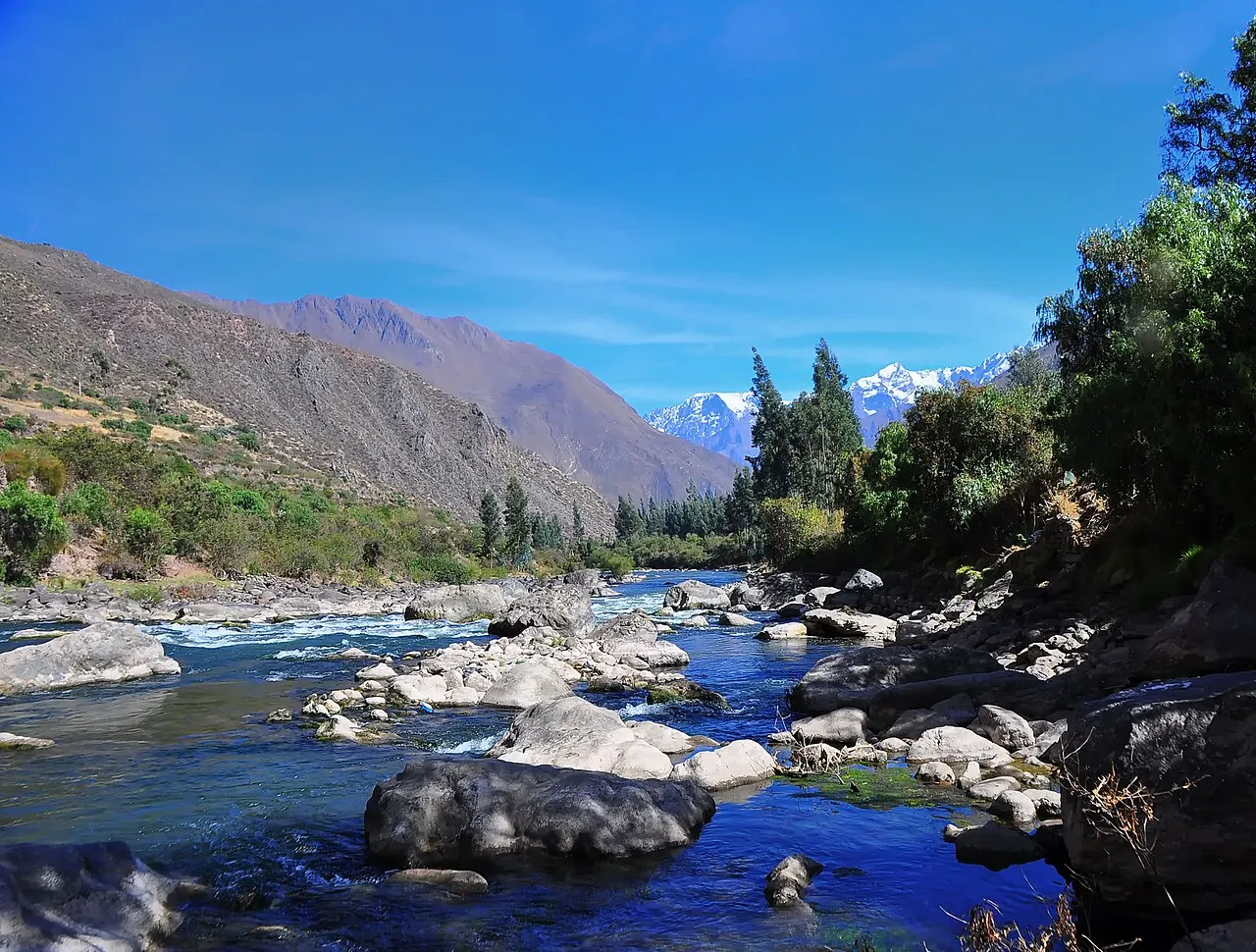
The journey that replaces the trek, and it could hardly be gentler. From Ollantaytambo the train glides alongside the Río Urubamba as it drops into genuine cloud forest, the scenery turning greener and steeper through big panoramic windows. You sit, you watch, you arrive — two comfortable hours and not a step of trekking. Both rail operators run comfortable tourist-class services with snack service and large windows; choose seats and a class to suit, and book early in dry season when trains fill up.
Arrive in Machu Picchu Pueblo (Aguas Calientes), the small town at the foot of the mountain, with the afternoon free. Choose a hotel close to the centre and the bus stop so you minimise walking around the town's stepped streets, check in, and take it easy: an early dinner, perhaps a soak in the thermal baths, and an early night. By arriving the day before rather than doing a long same-day round trip, you wake at the foot of the citadel rested and ready, with only a short bus ride between you and the gate.
- Take the comfortable tourist train from Ollantaytambo — no trekking, two easy hours.
- Book early in dry season (May–September); trains fill up.
- Choose an Aguas Calientes hotel near the centre and the bus stop to cut walking.
- Arrive the afternoon before so the citadel morning is short and unhurried.


Day 4 — The citadel, with the walking kept low
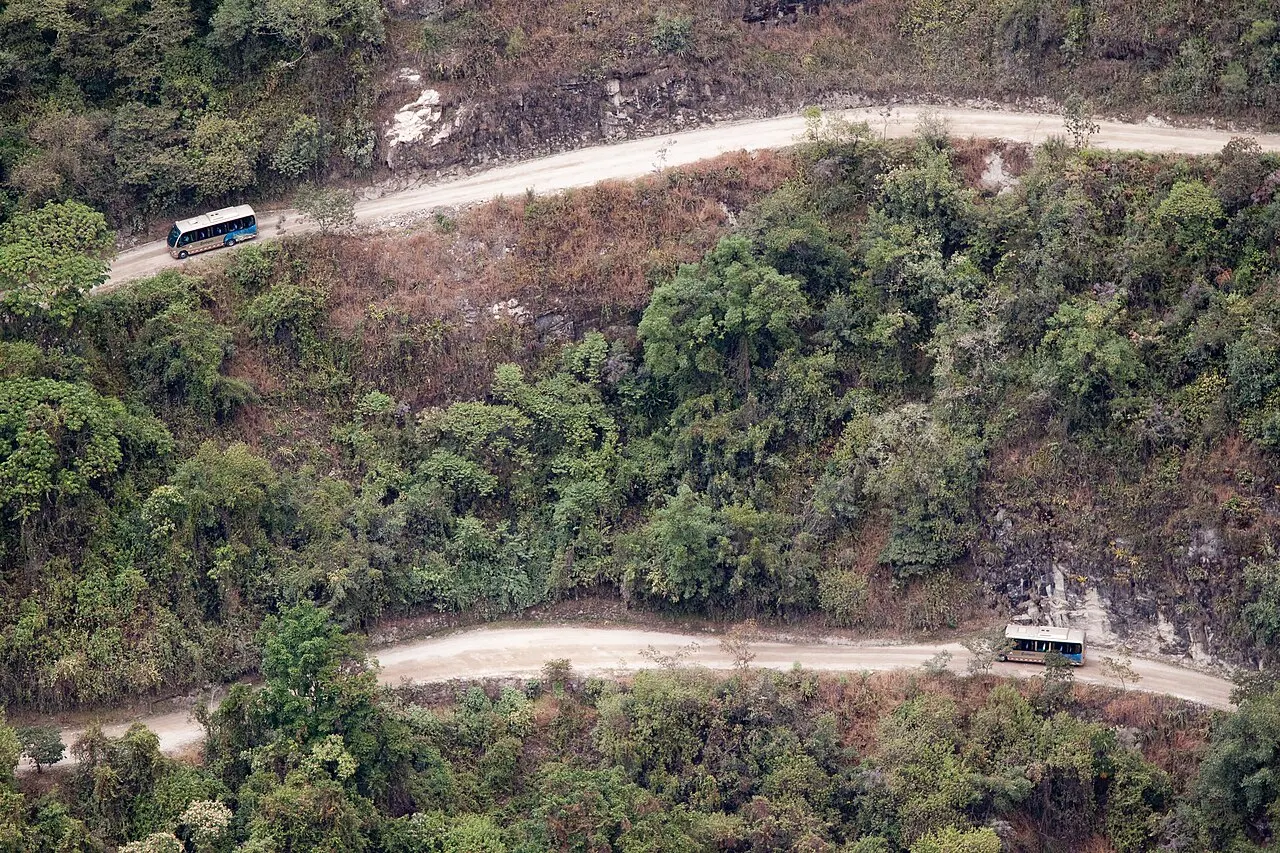
The morning you came for, reached the easy way. From Aguas Calientes the shuttle bus climbs the switchbacks up to the gate — this is the heart of a no-trek visit, sparing you the steep, strenuous hour-and-a-half walk-up that the budget and fitness crowds tackle. The bus deposits you right at the entrance for your timed slot, with your legs and lungs fresh for the citadel itself. Take it both up and down; the descent on foot is just as hard on the knees as the climb.
Inside, choose the gentlest path. The classic Circuit 2 delivers the famous overlook — the postcard view above the agricultural terraces — and a walk down through the urban sector past temples, fountains and the carved Intihuatana, on a route that is largely paved and broadly downhill. Crucially, leave out the two add-on peaks: Huayna Picchu and Machu Picchu Mountain are separate, strenuous, exposed climbs of an hour or more each, and they are entirely optional. You see the citadel, and the view that made it famous, without them. A guide can pace the visit gently, find the level resting spots, and tell the story so you spend your energy on wonder rather than on map-reading. That said, be ready for uneven Inca stone stairs even on the easy circuit — take it slowly, use the handrails where they exist, rest often, and verify the current accessibility provisions and any partial-route options if steps are a real concern.
- Take the shuttle bus both up and down — the core of a no-trek visit.
- Walk Circuit 2 for the postcard view and urban sector on a broadly downhill path.
- Skip Huayna Picchu and Machu Picchu Mountain — strenuous, optional peak climbs.
- Expect uneven stone stairs even on the easy circuit; go slowly and rest often.
- A guide paces the visit gently and finds the level resting spots.
- Verify current accessibility provisions and partial-route options if steps are a concern.


Day 5 — An easy exit and back up to Cusco
Leave the way you came, gently. Take the bus down from the gate, a slow morning in Aguas Calientes — a final soak, an unhurried lunch — and the afternoon train back up the valley. There is no need to rush; the low-hike trip should feel restful from start to finish. Build in a little slack for a late train or a cloudy morning, and let the day be easy.
Return up to Cusco only now, at the end, when you are fully acclimatized and the city's 3,399 m no longer feels like a wall. Spend your final night or two exploring the old capital at a flat, gentle pace — the central Plaza de Armas, a courtyard restaurant, the cathedral and the main squares are all walkable and largely level — before flying home. By saving the highest place for last, you've made the trip's only real physical challenge, the altitude, into an easy finale rather than a brutal opening, and you've seen the wonder of Machu Picchu without ever lacing up a pair of trekking boots.
- Take the bus down and an afternoon train up the valley — no rushing.
- Keep slack for a late train or weather; the trip should feel restful throughout.
- Return up to Cusco only at the end, fully acclimatized.
- Cusco's central squares and courtyards are walkable and largely level for the finale.


Choosing the gentlest circuit inside the citadel
Even a no-trekking visit involves walking inside Machu Picchu, and the circuits are not equal in how hard they are on the legs. The single most important choice is to avoid the summit add-ons entirely: Huayna Picchu, Machu Picchu Mountain, the Great Cavern and the Sun Gate all involve serious, steep, exposed climbing and have no place in a low-hike plan. What you want is a standard circuit that delivers the classic overlook and a walk through the city without an optional peak attached. The lower-terrace variant of the classic circuit (Route 2B) is typically the gentlest way to still get the postcard view and the urban sector, with less upper-terrace climbing than the fuller 2A.
Be realistic about what 'gentle' means here, though. No route through Machu Picchu is flat: the citadel is built on a mountain saddle, and every circuit involves uneven Inca steps, slopes and stone underfoot. There are no handrails on most of it and no shortcuts once you're on a one-way route. The win is in choosing the shortest, lowest standard circuit, going at the cool, quiet start or end of the day, hiring a guide to set a slow informative pace, and treating the visit itself as the day's main exertion rather than stacking a hike on top of it. For anyone with real mobility limits, the accessible-visit guidance is the place to start before booking a circuit.
- Skip all summit add-ons (Huayna Picchu, MP Mountain, Great Cavern, Sun Gate) — they are the hard hikes.
- Pick a standard circuit with the classic overlook; the lower-terrace 2B is usually the gentlest.
- No route is flat — expect uneven Inca steps, slopes and stone with few handrails.
- Go early or late, hire a guide for a slow pace, and let the visit be the day's main effort.
Seeing the highlights without the climbs
The reassuring truth is that most of Machu Picchu's headline sights sit on the standard circuits, not up the side peaks. The classic overlook near the guardhouse, the Temple of the Sun, the Sacred Plaza and Temple of the Three Windows, the Intihuatana stone, the Sacred Rock and the Temple of the Condor are all reachable on a normal circuit walk — you do not need to climb anything beyond the citadel's own internal steps to see the architecture and the view that make the place famous. The summits add a different perspective and a sense of achievement, but they are extras, not the main event.
Lean into the things a low-hike visit does especially well. A private guide turns a gentle, seated-and-strolling pace into a deeply rewarding two hours of history and meaning rather than a forced march. Photographers do better lingering at the classic overlook in good light than rushing to a summit. And pairing the citadel with the train experience — a Vistadome with its panoramic windows, or simply a relaxed Expedition service — makes the journey itself part of the pleasure rather than an obstacle. Done this way, a no-trekking Machu Picchu is not a compromise; for many travellers it is simply the better trip.
- Headline sights — overlook, Temple of the Sun, Intihuatana, Sacred Rock, Temple of the Condor — are all on standard circuits.
- A private guide makes a gentle pace richer, not poorer.
- Linger at the classic overlook for the photo rather than chasing a summit.
- Make the scenic train part of the experience, not just transport.



Related guides

Trains to Machu Picchu
PeruRail vs IncaRail, Cusco vs Ollantaytambo departures, the service classes, stations, the strict luggage allowance, bimodal road-and-rail options, and where the train fits in the booking order.
Read guide
Aguas Calientes bus to the citadel
How the shuttle bus from Aguas Calientes (Machu Picchu Pueblo) up to the citadel gate works — buying tickets, the morning queue, timing it to your entry slot, and the walking alternative.
Read guide
Accessible Machu Picchu
An honest look at mobility at the citadel — the uneven Inca stone, the stairs, how the train and shuttle bus help, hotel strategy, the gentlest circuit and route, and why a private guide is the key to a workable visit.
Read guideMore in Itineraries
6
A Luxury Machu Picchu Itinerary
A high-end Machu Picchu plan with palace hotels in Cusco, luxury Sacred Valley lodges, the Hiram Bingham train, private guiding and soft, altitude-kind pacing.
Read guide
A Machu Picchu Honeymoon
How to build a honeymoon around Machu Picchu — romantic hotels in Cusco and the Sacred Valley, a luxury train into the gorge, a private guide, spa days and a dawn at the citadel.
Read guide
Beyond the Citadel: Peru Add-Ons to Machu Picchu
How to bolt the rest of Peru onto a Machu Picchu trip — Rainbow Mountain, Humantay Lake, the South Valley and the bigger leaps to the Amazon, Lake Titicaca, Lima and Arequipa — sequenced for altitude and time.
Read guideFamily Machu Picchu Itinerary: A Kid-Paced Plan
A family-paced Machu Picchu itinerary built around the altitude ladder, kid-friendly circuits, the train, Sacred Valley downtime and unhurried buffer days — so children and grandparents arrive at the citadel rested, not wrecked.
Read guide
Five Days: Cusco, the Sacred Valley & Machu Picchu
A balanced five-day Machu Picchu itinerary — proper Cusco acclimatization, an unhurried Sacred Valley, an overnight in Aguas Calientes and the citadel, with altitude and ticket buffers built in so a cloudy morning or a late train never sinks the trip.
Read guide
Machu Picchu by Train: A Step-by-Step Itinerary
A train-based Machu Picchu itinerary from Cusco or Ollantaytambo — the booking order, hotel timing, the bus up from Aguas Calientes, and the backups that keep the day calm.
Read guide