
Where to stay in Aguas Calientes
How to choose a base in the little town below Machu Picchu — weighed not on stars but on how cleanly it gets you onto the first bus, off a late train, fed early, and settled for an altitude-friendly night before the citadel.

- ✓Aguas Calientes exists for one reason — to put you at the foot of Machu Picchu — so the 'best' base is the one that makes your entry slot, your bus and your train painless, not the one with the grandest lobby.
- ✓The town is tiny and walkable, but it is also steep and stacked along a river gorge: the difference between a flat five-minute stroll to the bus queue and a stair-climb with luggage is a real one, and worth checking before you book.
- ✓Sleeping here, rather than commuting from Cusco or the Sacred Valley, is what buys you the early, quiet, cloud-wrapped first entry — the single best argument for spending a night in town.
- ✓We name no nightly rates and quote no exact bus or train times: those move constantly, so treat every figure as 'verify live' and confirm with the operator and hotel close to your dates.
A town that exists for the citadel
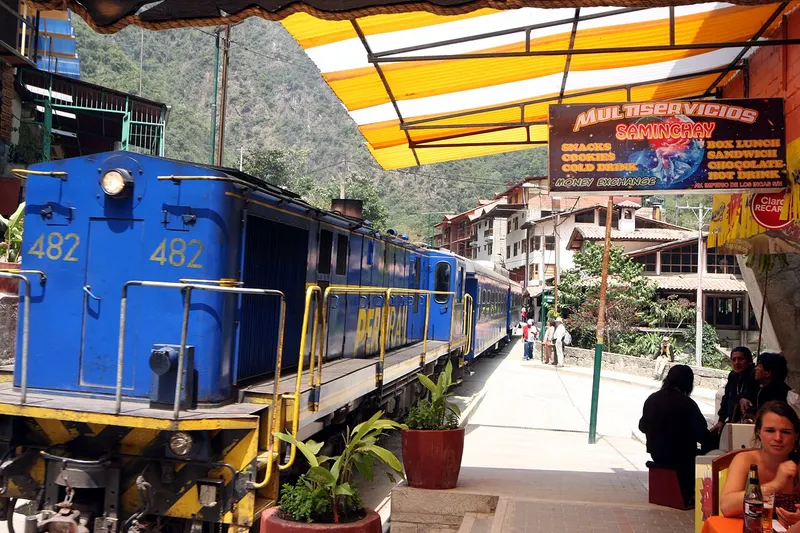
Aguas Calientes — officially Machu Picchu Pueblo — is not a place you go for itself. It is a narrow, vertical town wedged into the cloud-forest gorge of the Río Vilcanota, hemmed by green peaks, with a railway running through its heart and no road in from the outside world. It exists for one purpose: to be the last stop before Machu Picchu, the place where you sleep so that you can be at the citadel gate early, and where you eat and rest after coming down. Understanding that one fact reframes the whole question of where to stay. You are not choosing a holiday hotel; you are choosing a launchpad.
Because of that, the usual hierarchy of what makes a hotel 'good' is reshuffled here. A beautiful river-view room matters less than whether you can be in the bus queue within minutes of waking. A spa matters less than whether breakfast can be served — or boxed — before the first buses leave. Star ratings tell you almost nothing about the thing that actually shapes your stay: how cleanly the hotel slots into the tight choreography of trains, buses and your timed entry ticket. This guide is built around that choreography, sorting bases by the traveller and the trip rather than by price alone.
It is also worth saying plainly what staying here is and is not for. A night in Aguas Calientes is the price of the best version of Machu Picchu: the early entry, the soft light, the relative quiet before the day-trippers arrive on the late-morning trains. If you skip the night and commute from Cusco or the valley, you arrive later, in the crowd, and you spend the day racing a return train. So the deeper question behind 'where to stay' is really 'whether to stay' — and for most travellers chasing the citadel at its loveliest, the answer is yes, one night, in the town below.

At a glance — what actually shapes a stay here
Before you fall for a listing photo, run any Aguas Calientes hotel through these. The first three matter far more than the décor, because they decide whether your citadel morning is calm or frantic.
- Bus-queue proximity: how flat and how short is the walk to the bus stop on Avenida Hermanos Ayar, where the line to the citadel forms?
- Train-station proximity: how far is the room from the rail platform, with luggage, after a tiring day?
- Early-breakfast flexibility: will the hotel feed you — or box a breakfast — before the first buses leave, or does its dining room open too late to be useful?
- Gradient and stairs: is the room a level stroll from the centre, or up a steep stepped lane that is punishing with bags?
- Quiet vs. central: the centre is convenient but noisy with early trains and bustle; riverside and edge rooms trade a few minutes' walk for calm.
- Logistics help: bag storage for the citadel hours, help confirming bus and train timings, a reliable early wake-up.
- Price: always verify live — rates here swing hard with season and how close to your dates you book.
The geography you're actually booking
Aguas Calientes is small enough to cross on foot in well under fifteen minutes, but it is not flat, and the layout matters more than its size suggests. The town climbs steeply from the river, with the railway and the main pedestrian streets running along the valley floor and lanes of hotels rising up both banks. Three fixed points govern any base decision: the train station, where you arrive and leave; the bus stop on the road that climbs to the citadel, where the queue forms in the dark; and the main square with its restaurants and church. The closer a hotel sits to those, and the fewer steps between, the smoother the stay.
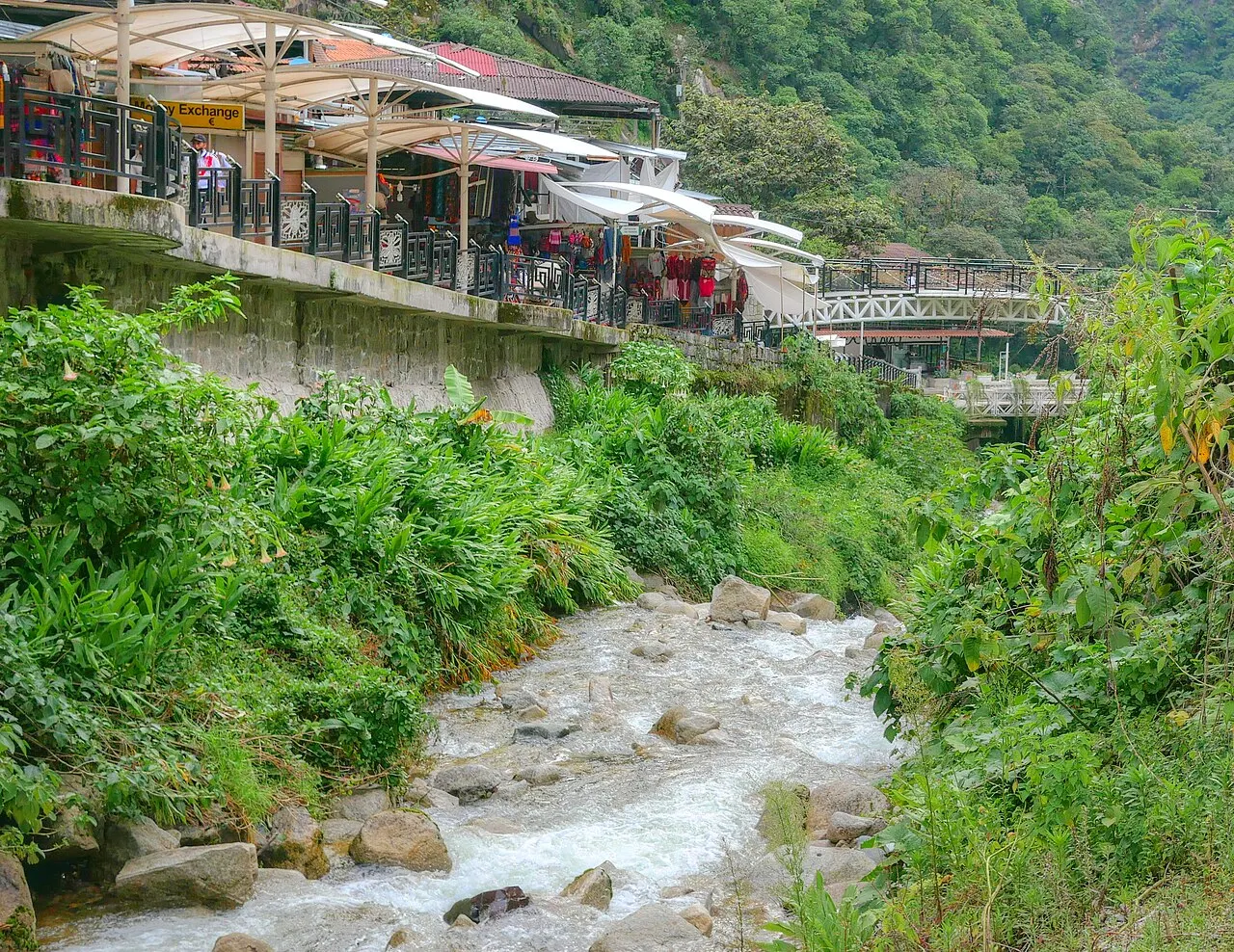
Roughly speaking, the lower, central streets near the river and the bus stop are the most convenient and the most lively — meaning a little noise from early-morning bustle and passing trains, in exchange for being able to roll out of bed almost into the bus queue. The lanes that climb the hillsides offer quieter, often greener rooms with views down over the rooftops, at the cost of a stair-climb to reach them. A few hotels sit a touch further along the river, away from the centre, where you trade a five-to-ten-minute walk for genuine calm. None of these are far apart in absolute terms, but with luggage and a pre-dawn start, 'not far' and 'level' are different things.
The other geographic truth worth absorbing is that everything funnels to the bus. There is no driving yourself up to Machu Picchu and no car in town at all; the way up is the shuttle bus from the stop in the centre, or a steep walk up the footpath. So however lovely a hillside room is, its real-world value is measured in how fast you can get from its door to the bus queue. Read the map for that line above all.
- Three anchors: the train station, the bus stop on the citadel road, and the main square.
- Lower & central: most convenient, most lively, some early-morning noise.
- Hillside lanes: quieter and greener, but stairs to climb with bags.
- Riverside edge: calm, at the cost of a short walk to the centre.
- Everything funnels to the bus — measure any room by its walk to the queue.

Best for catching the first bus
If the whole point of your night in town is the early, quiet entry — and for most people it should be — then proximity to the bus queue is the feature to optimise for above all others. The first buses climb in the pre-dawn dark, and the queue forms before they do; on a busy dry-season morning it can already be long when you arrive. A hotel a flat two or three minutes from the stop lets you join that line quickly, half-awake, without a stressful trek across town in the cold. A hotel up a stepped hillside lane, however charming, costs you those precious minutes when you can least spare them.
Look for hotels that describe themselves as near the bus stop or the centre and that sit low rather than high, and confirm the walk in a message before booking — ask plainly, 'How many minutes, and how flat, from your door to the bus queue?' The genuinely first-bus-ready hotels go further: they will arrange an early wake-up, brief you the night before on where exactly the queue forms, and either feed you early or hand you a boxed breakfast. That combination — close, level, early-fed — is what turns a 4am alarm into a smooth start rather than a scramble.
- Prioritise: a flat, short walk to the bus stop over views or charm.
- Look for: an early wake-up service and a clear bus-queue briefing.
- Confirm before booking: exactly how many minutes, and how level, to the queue.

Best for a late or early train
The other logistical pivot is the train. You arrive in Aguas Calientes by rail and you leave by rail, and the station sits in the centre of town. If your itinerary lands you in late — an afternoon or evening train, perhaps after a Sacred Valley morning — then a base close to the station spares you hauling luggage uphill in the dark on a tired evening. Likewise, if you leave on an early train the day after the citadel, a near-station room means a short, calm walk to the platform rather than a rush. For anyone arriving or departing at the awkward ends of the day, station proximity is the comfort that matters.
There is a real trade-off here, though, and it is worth naming. The most station-convenient rooms are also the most central, which means the most exposed to the sounds of a town that comes alive early — trains, voices, the clatter of breakfast service. Light sleepers who value quiet over a two-minute platform walk may prefer to step a little back from the centre and accept the short stroll with bags. As ever, the honest move is to read recent reviews for the words 'noise' and 'train' and to weigh your own tolerance: some travellers sleep through anything, others would trade much for silence.
- Near the station: best for late arrivals and early departures with luggage.
- Trade-off: central rooms hear the early bustle and passing trains.
- Light sleepers: step back from the centre and accept a short walk.
- Confirm your real train times live with the operator before booking the base.


Best for families
Travelling here with children, or with grandparents, shifts the priorities toward the practical. Family-friendly in Aguas Calientes means, first, the geography done kindly: a level, central base spares small legs and older knees the stepped lanes, and keeps the room close enough to retreat to mid-afternoon when someone flags. It means proper room configurations — triples, family rooms or connecting doubles rather than a cramped double with a cot — and it means flexibility around food and timing, because the pre-dawn citadel start is hard on young children and a hotel that can box breakfast or feed you early takes the sting out of it.
The town's compactness is a gift to families: nothing is far, the restaurants are close, and the hot springs that give the town its name are an easy, low-altitude treat for tired children after the citadel. Because you have already descended from Cusco's height by the time you reach town, altitude is less of a worry here than at your earlier bases — a relief for families. The things to confirm before booking are the unglamorous ones: family rooms, how flat the walk is, whether breakfast can come early, and whether the hotel will store bags during the citadel hours so nobody carries them. A two-line message settles all of it.
- Look for: triples, family rooms or connecting doubles; a flat, central location.
- Helpful extras: early or boxed breakfast, bag storage, easy access to the hot springs.
- Reassurance: you've already descended from the high altitude by the time you're here.
- Confirm: family room availability and how level the walk in is.
Best for luxury and a special occasion
There is real luxury to be had in and around Aguas Calientes, and it comes in two distinct flavours. The first is the town's high-end riverside hotels and a famous cloud-forest lodge a short way out, where the indulgence is in lush gardens, fine dining and a sense of seclusion from the bustle — a beautiful place to celebrate, with the citadel a short bus ride away in the morning. The second, in a category of its own, is the single hotel that sits at the very entrance to Machu Picchu, beside the gate itself, which trades garden seclusion for the unrepeatable convenience of being able to walk into the citadel before anyone has ridden up from town.
Which luxury suits you depends on what you are buying. If the splurge is about romance, calm and a gorgeous room — a honeymoon, an anniversary — the riverside and cloud-forest options deliver that handsomely, and you still get the early entry via an early bus. If the splurge is specifically about the citadel experience — being first in, lingering longest, returning at quiet hours — then the gate-side lodge is the only address that delivers it, at a price to match. We keep this guide free of rates because they move and because the gate-side option in particular is in a league of its own; the honeymoon and luxury-itinerary guides below set the splurge in the context of the whole trip.

Best for budget travellers
Aguas Calientes is a town where you can spend a great deal or very little, and the good news for the budget traveller is that a cheap room here serves the one job that matters — getting you to the bus and back — just as well as an expensive one. The town has a healthy supply of hostels, simple guesthouses and family-run hotels, many of them perfectly placed near the centre and the bus stop, where you trade polish and river views for money kept back for the train and the ticket. For a single night whose whole purpose is an early start, that is often exactly the right trade.
The smart budget move is to spend where it counts and save where it does not. A warm, clean, well-located basic room is all you need for one short night before the citadel; the splurge, if you have one, is better spent on the entry experience or a celebratory dinner than on a room you'll occupy for a few hours of sleep. Read recent reviews for the things that matter here — warmth, hot water, how central, how steep the walk, whether breakfast comes early enough — rather than for luxuries you won't use at 4am. Done well, a budget base in town leaves the rest of the trip richer.

Best for a quiet, restful night
Not everyone wants to sleep in the thick of the action, and Aguas Calientes does have calm if you know where to look for it. The quieter rooms are away from the immediate centre — up the hillside lanes or along the river toward the edges of town — where the early bustle and the passing trains fade and you trade a few minutes' walk for proper rest. For travellers who want to arrive, decompress after a long day of trains and altitude, and sleep deeply before the citadel, that calm can be worth more than a two-minute bus walk. The river itself, rushing through the gorge, becomes a pleasant white noise rather than a nuisance.
The catch, predictably, is the morning. A quiet hillside room means a longer, possibly stepped walk to the bus queue in the dark, which partly undoes the rest you bought. The way to square the circle is to pick a quiet room that is still low and central enough to reach the bus quickly — calm without the climb — and to confirm both the noise level and the walk before booking. Read reviews for 'quiet' and 'restful' on one hand and 'steep' and 'stairs' on the other, and find the room that balances them for the version of the trip you want.
- Quieter zones: the hillside lanes and the riverside edges of town.
- Trade-off: calm rooms often mean a longer or stepped walk to the bus.
- Aim for: quiet but still low and central enough to reach the queue fast.
- Confirm both 'quiet' and 'flat' in reviews before booking.
Best for a same-day or last-minute plan
Sometimes the night in town is improvised — a trek that ran long, a missed earlier train, a decision to stay an extra night to climb again. If you arrive without a booking, the town's compactness works in your favour: hotels are clustered and close, and you can usually find a room on foot near the station within a short walk. But the caveat in high season is real. Dry-season weekends fill, and the best-located, best-value rooms go first, so an unbooked arrival in June or July may leave you with the dearer or the steeper options. The earlier you can lock a base, even by a day or two, the better.
If your plan is genuinely last-minute — including the entry ticket itself — there are dedicated guides below for the harder version of this trip, where availability rather than preference drives the choice. The honest advice is to settle the fixed, capped parts of the trip first: the timed citadel entry and the train both sell out before hotels do, so a room you can't use because you have no ticket helps nobody. Secure those, then take whatever decent, well-placed room is going, and verify its live price before you commit.


What to be wary of when booking
A few traps catch travellers who book Aguas Calientes on looks alone. The first is hidden gradient: a room that is 'close to the centre' may be close as the crow flies but up a steep stepped lane, which is an ordeal with luggage and a misery at 4am. The second is breakfast timing — many dining rooms open too late to be any use before the first buses, so a hotel that won't feed you early or box a breakfast leaves you starting the citadel on nothing. The third is noise: the most central rooms hear the earliest trains and bustle, and a light sleeper who books for convenience may regret it. All three are checkable: read recent reviews for 'stairs', 'breakfast' and 'noise', and message the hotel to ask plainly.
The deeper trap is treating the hotel as the trip's keystone. It is not — the timed citadel ticket, the train and the bus up are, and they should be booked and protected first. A common, avoidable mistake is falling for a hotel, building the dates around it, and then finding the entry slot or the train you need has gone. The town room is the easy part to change; the capped, dated essentials are not. Book the trip's fixed bones first, then choose the base that fits within them, and verify its live price rather than trusting any figure printed in a guide, including this one.
- Watch for hidden gradient — 'central' can still mean 'up the stairs'.
- Confirm the hotel will feed you early or box a breakfast before the first buses.
- Check reviews for 'noise' and 'train' if you sleep lightly.
- Book the citadel ticket, train and bus before committing to a room.
- Never trust a printed rate — confirm the live price yourself.
Booking well: a short checklist
Put it all together and a good Aguas Calientes booking comes down to a handful of confirmations. Match the hotel to your traveller type — first-bus chaser, late-train arrival, family, splurger, budgeter — then verify the things that actually shape a one-night, pre-dawn-start stay before you pay. The prettiest listing photo tells you nothing about the walk to the bus, the breakfast hour or the noise, and a two-line message to the hotel usually settles every doubt.
And keep the whole trip's spine in mind. The citadel entry is the fixed, capped point everything else is built around, with the train and the bus close behind; secure those before you fall for a room. The town base is the flexible piece — choose it to fit the body of the trip and your budget, confirm the live price, and you have the most important night of the journey sorted. Then the only thing left to do is set the alarm.
- Confirm the logistics: walk to the bus, walk to the station, early or boxed breakfast.
- Confirm the fit: family rooms, quiet, gradient, or the romance you're after.
- Confirm bag storage for the citadel hours.
- Verify the live price — never trust a quoted figure from any guide.
- Lock the citadel ticket, train and bus before the room.


Related guides

Best hotels in Aguas Calientes
How to choose well among the hotels of the town below Machu Picchu — judged not on stars alone but on bus-queue and station proximity, river views, family fit, early breakfasts, luxury and value, and how cleanly each one sets up the citadel morning.
Read guideBelmond Sanctuary Lodge
The only hotel beside the Machu Picchu entrance gate — who should splurge on it, what its location genuinely buys you, and the things it does not solve. An honest look at the citadel's most coveted address.
Read guide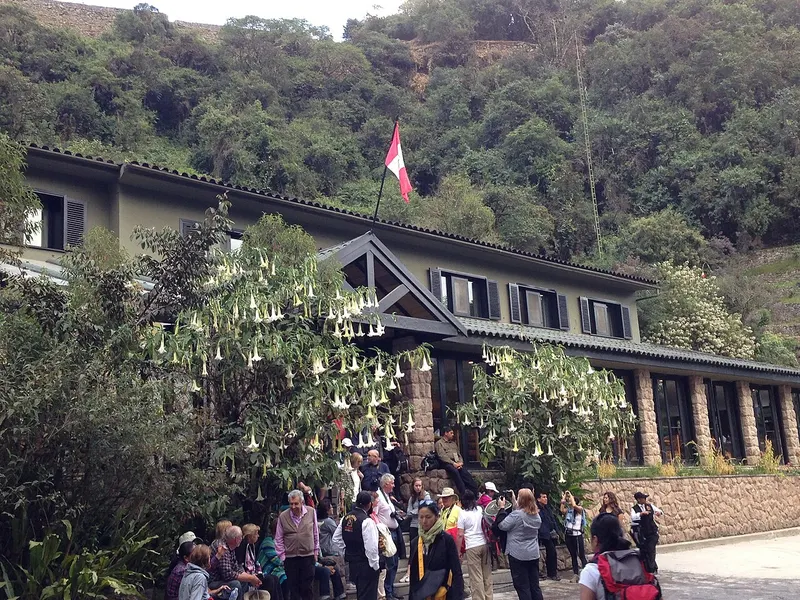
First-bus strategy
How the dawn shuttle-bus queue in Aguas Calientes really works, when catching the first bus is worth it, and how to match your effort to your timed entry slot without unnecessary pre-dawn stress.
Read guideMore in Around the Site
6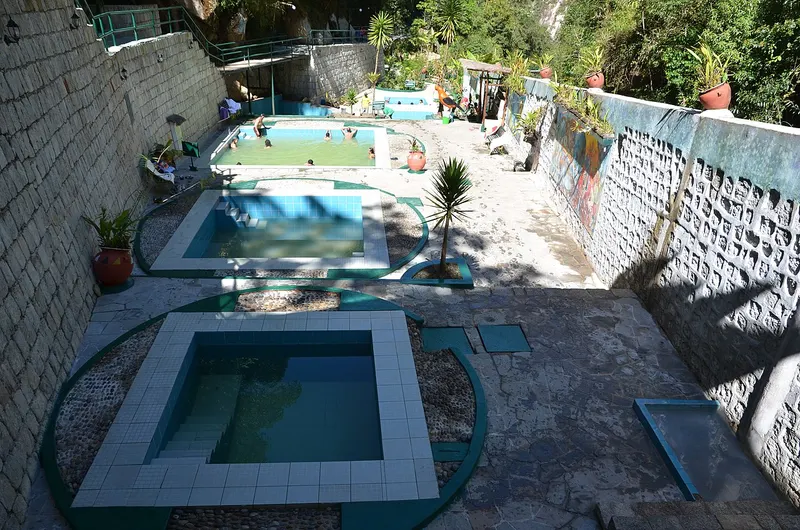
Aguas Calientes hot springs
The thermal baths that give Aguas Calientes its name — what to expect, when to go, what to bring, and whether they're worth a soak before or after the citadel or a long trek.
Read guide
Aguas Calientes restaurants
Where and how to eat in the town below Machu Picchu — the early breakfast that makes a dawn entry possible, the warm lunch on the way down, the celebratory dinner, and how to time meals around late trains.
Read guide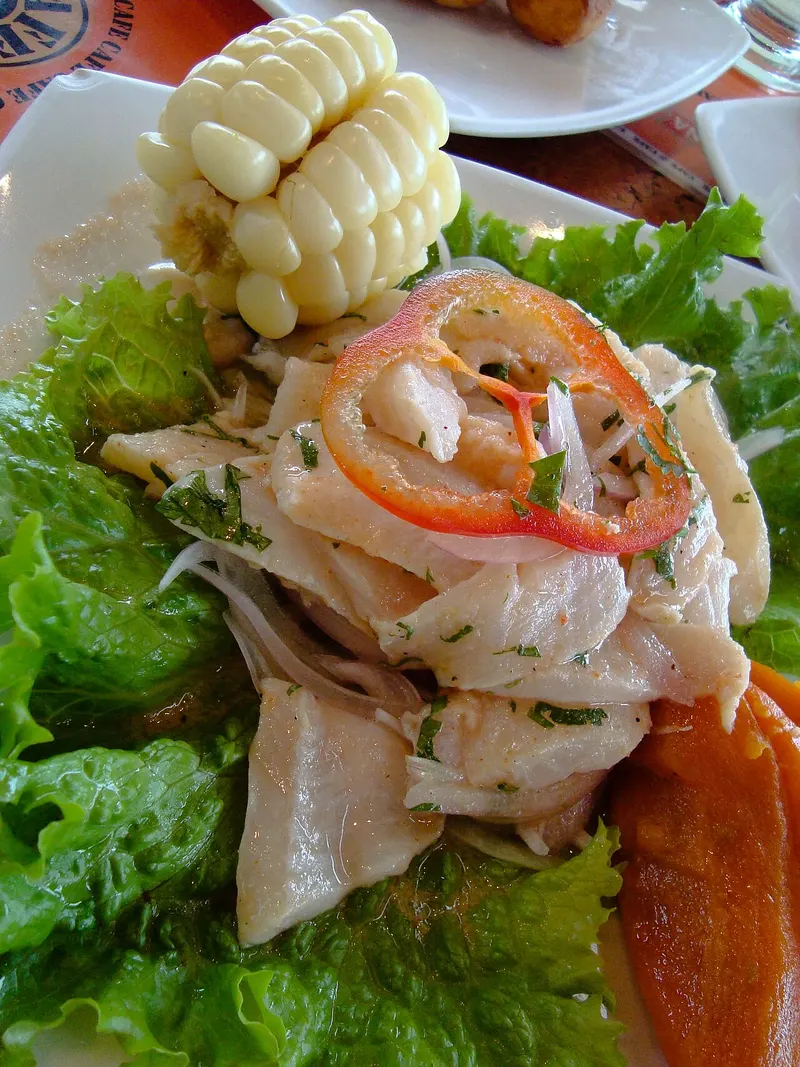
Budget food in Aguas Calientes
How to eat well for less in Aguas Calientes (Machu Picchu Pueblo) — bakeries and set menús, market snacks, an early breakfast before the bus, and where the captive-market markups hide.
Read guide
Budget hotels in Aguas Calientes
How to sleep cheaply in the town below Machu Picchu without missing a train, a bus or your early entry — what a good budget room needs to get right, where the value sits, and the traps to dodge.
Read guide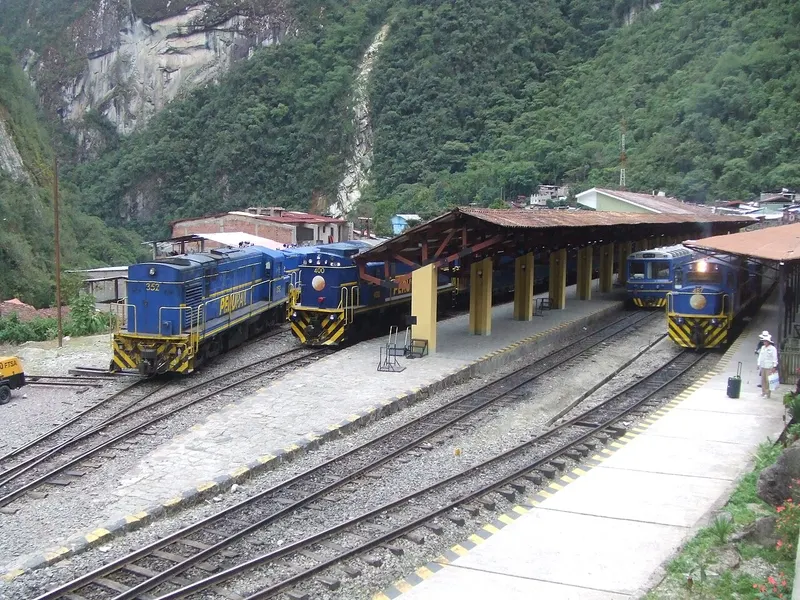
Machu Picchu Pueblo station
Arrival and departure flow at the Aguas Calientes (Machu Picchu Pueblo) train station — the craft-market exit, finding your hotel, the bus stop, luggage, and timing your train to avoid the station scrum.
Read guide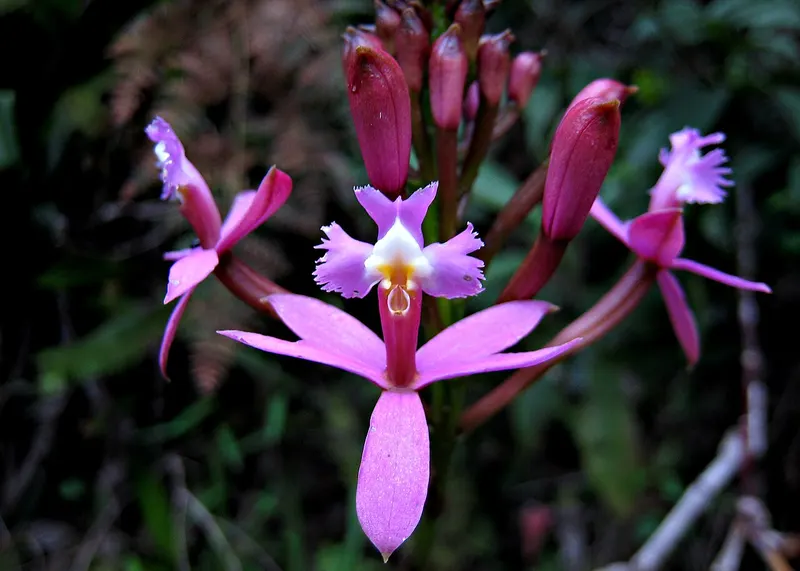
Mandor Gardens guide
A quiet cloud-forest walk along the railway from Aguas Calientes to the Mandor waterfall — orchids, birdlife and butterflies, and the perfect low-key extra day or rainy-citadel alternative.
Read guide