
Circuit 2: The Classic Route
The all-rounder most first-timers want — the postcard overlook followed by a descent into the urban sector. What Routes 2A and 2B include, and why Circuit 2 sells out fastest.

Photo: Giorgia Doglioni / Unsplash
- ✓Circuit 2 is the 'classic' full visit — the postcard overlook plus a descent into the urban sector.
- ✓It is the most-recommended first-timer route and, for that reason, the one that sells out earliest.
- ✓It splits into two sub-routes — Route 2A and Route 2B — that differ mainly in flow and how much of the terraces you walk.
- ✓You get the iconic photo and the temples in a single visit, without committing to a summit climb.
- ✓If Circuit 2 is gone for your date, Circuit 1 still reaches the overlook and Circuit 3 goes deepest among the temples.
The visit most people picture
If you close your eyes and imagine Machu Picchu, you are almost certainly picturing Circuit 2. It is the classic route in Peru's three-circuit system: you start high at the upper overlook for the postcard frame — the citadel cascading down its saddle with Huayna Picchu behind — and then descend into the urban sector to walk among the temples, plazas and houses the Inca built. In one visit you get both the icon and the place, which is exactly why it is the default recommendation for a first time at the citadel.
Circuit 1 stays high and panoramic; Circuit 3 runs low and royal among the temples and carries the Huayna Picchu add-on. Circuit 2 splits the difference — the all-rounder that asks no summit commitment and leaves almost no one feeling they missed the headline experience. The trade-off is demand: precisely because it is the most-wanted ticket, it is the first to disappear in the dry season.

At a glance — Circuit 2
Capacities, slot windows and exact route extents change — verify them on the official Ministry of Culture channel just before you book.
- Character: the classic full visit — high overlook then a descent into the urban sector.
- Sub-routes: Route 2A and Route 2B, differing mainly in flow and terrace coverage.
- Headline sights: the classic overlook, the agricultural terraces, the urban sector and the Intihuatana area.
- Add-on climbs: none attach to Circuit 2 (Huayna Picchu → Circuit 3; Machu Picchu Mountain → Circuit 1).
- Effort: moderate — a real walk with steep Inca steps, but no summit ascent.
- Best for: first-timers wanting the postcard photo and the temples in one go; the broadest appeal of the three.
The classic overlook, then the descent
Circuit 2's structure is what makes it satisfying. You arrive onto the upper path among the agricultural terraces, where the classic overlook delivers the frame everyone comes for. Lingering there — as much as the one-way flow allows — is the photographic heart of the visit, best in an early slot before cloud builds over the gorge.
Then the route descends. You drop off the high terraces into the urban sector, the lived-in core of the city: temples, fountains, the plazas, the residential quarters and the ritual stones at its heart. This is where Machu Picchu stops being a postcard and becomes a place you can read — the engineering of its water channels, the precision of its joinery, the logic of how a mountain city worked.

Route 2A and Route 2B
Circuit 2 divides into two numbered sub-routes. They cover broadly the same classic experience — overlook plus urban sector — but differ in the order and flow, and in how much of the upper terraces you walk. Route 2A is the fuller, more 'complete' classic walk; Route 2B is generally the shorter, lower-terrace variant, a touch gentler on the legs while still reaching the headline view.
For most travellers the difference is secondary to simply securing a Circuit 2 ticket at all. But if you have a choice — and especially if you want the most thorough walk, or conversely the easier one — it is worth understanding which sub-route you are booking. The two dedicated guides below break each down on flow, terrace coverage, photo access and crowds.
Why Circuit 2 sells out first
Daily entry to Machu Picchu is capped, and within that cap the classic circuit is the one nearly everyone wants. In the dry season — roughly May to September, with June and July at the peak — the most-wanted Circuit 2 morning slots can vanish weeks ahead. The summit add-ons (on Circuits 1 and 3) go even earlier, but among the standard tickets, Circuit 2 is the hardest to land late.
The lesson is the booking order. Secure the entry ticket — ideally your preferred circuit and slot — before the train, the bus up from Aguas Calientes and the hotel. If Circuit 2 is sold out for your date, you are not out of luck: Circuit 1 still reaches the classic overlook on its panoramic loop, and Circuit 3 goes deepest among the temples. Treat all prices and release windows as things to verify on the official channel before you buy.


Is Circuit 2 right for you?
Choose Circuit 2 if it is your first time, if you want the postcard photo and a walk among the temples in one visit, and if you would rather not commit to a summit climb. For the broadest range of travellers it is the single best-balanced ticket on the mountain.
Look elsewhere if you specifically want a peak: Huayna Picchu means Circuit 3, Machu Picchu Mountain means Circuit 1. And if your whole reason for coming is the refined royal masonry, Circuit 3 reaches the Temple of the Sun more directly. But for the classic Machu Picchu day, Circuit 2 — and within it Route 2A or 2B — is the one to chase.
Frequently asked questions
Is Circuit 2 the best for first-timers? For most people, yes — it pairs the classic overlook with a descent into the urban sector, so you get the icon and the temples in one visit without a summit commitment.
What is the difference between Route 2A and 2B? Both are the classic experience; 2A is the fuller, more complete walk and 2B is generally the shorter, lower-terrace variant. See the dedicated route guides for the detail.
Can I climb Huayna Picchu or Machu Picchu Mountain on Circuit 2? No — no summit add-on attaches to Circuit 2. Huayna Picchu is on Circuit 3, Machu Picchu Mountain on Circuit 1.
Why is Circuit 2 so hard to book? It is the most-wanted classic ticket, so in the dry season its morning slots sell out earliest among standard tickets. Book the entry ticket first and verify availability on the official channel.
What you see on Circuit 2 — the full sweep
Circuit 2 is called the classic for a reason: in a single one-way loop it strings together almost everything a first-time visitor pictures when they imagine Machu Picchu. You begin by climbing through the agricultural sector — the great stepped terraces that fed the city and held the mountainside together — toward the upper viewpoint near the guardhouse, where the postcard panorama opens up: the city below, the green terraces, and Huayna Picchu rising at the far end. From there the route descends into the urban sector and walks you through the working and ceremonial heart of the citadel rather than just past it.
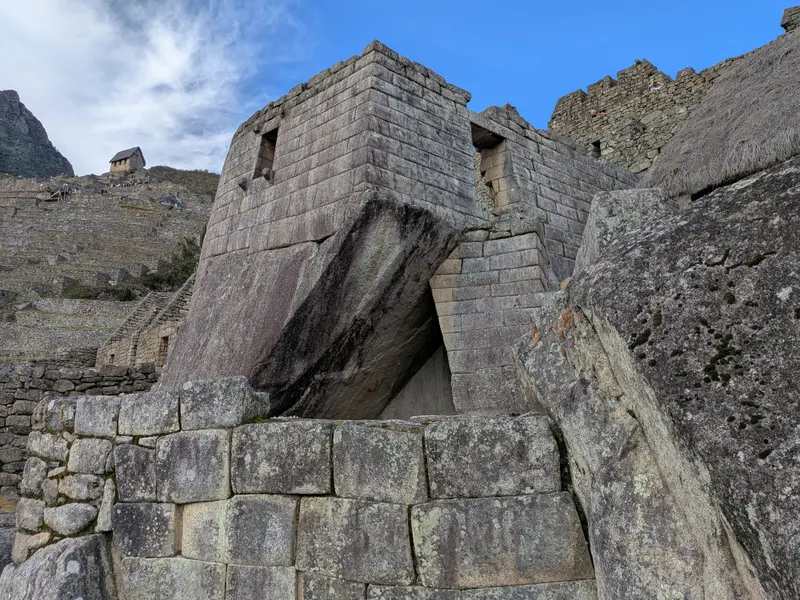
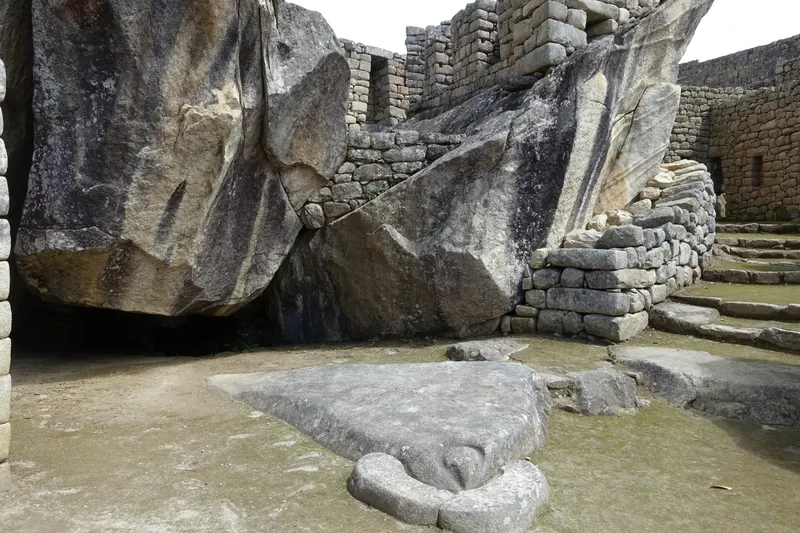
Down in the city you pass the structures that give Machu Picchu its meaning. The route typically takes in the Temple of the Sun with its curved wall and the cave beneath it, the Sacred Plaza and the Temple of the Three Windows, the Intihuatana ritual stone on its raised platform, the Sacred Rock at the city's northern end, the residential quarters, and the famous Temple of the Condor with its wings carved from natural rock. No other standard circuit packs this many headline sights into one walk — which is precisely why Circuit 2 is both the most recommended and the hardest to book.
- The classic overlook for the postcard view, reached via the agricultural terraces.
- The Temple of the Sun, Sacred Plaza, Temple of the Three Windows and the Intihuatana stone.
- The Sacred Rock, residential quarters and the Temple of the Condor in the urban sector.
- The fullest sweep of headline sights in one one-way loop — hence its popularity and scarcity.

Related guides

Route 2A: The Full Classic Walk
Route 2A is the fuller of Circuit 2's two classic sub-routes — the upper terraces and the postcard overlook plus a complete descent into the urban sector. What it includes, how it differs from 2B, and what to do if it's sold out.
Read guideRoute 2B: The Lower-Terrace Classic
Route 2B is the shorter, gentler of Circuit 2's two classic sub-routes — the lower-terrace variant that still reaches the postcard view. How it compares with 2A on terrace views, flow, crowds, mobility and first-timer fit.
Read guide
Best Circuit for the Classic Machu Picchu Photo
Which routes deliver the iconic postcard view, when the light is best, how mist and season play, and how to avoid the photo disappointment that catches first-timers.
Read guideMore in Circuits explained
3
Circuit 1: The Panoramic Routes
The high circuit — upper terraces, the classic overlook, the Sun Gate and Inca Bridge spurs, and the add-on climb of Machu Picchu Mountain. Who Circuit 1 is really for.
Read guide
Circuit 3 Royalty guide
The lower 'Royalty' circuit that hugs the citadel's urban core — the gateway to Huayna Picchu, Huchuy Picchu and the Great Cavern, and the path most Inca Trail walkers finish on.
Read guideThe Best Machu Picchu Circuit for Your Visit
There is no single best circuit — only the right one for you. How to choose by the classic view, photography, ruins depth, hiking ambition, mobility, family pace and ticket scarcity.
Read guide