
Where to stay in Cusco
A neighbourhood-by-neighbourhood guide to basing in Cusco before Machu Picchu — weighing altitude comfort, charm, walkability, station and airport access, and which area suits families, couples, luxury and budget travellers.

Photo: Anna Khromova / Unsplash
- ✓Cusco is small and steep: where you stay decides how much uphill walking you do at 3,399 m, which matters more here than in any lowland city.
- ✓The Plaza de Armas is the flat, central, walkable heart; San Blas is the romantic artists' quarter, beautiful but a climb.
- ✓Cusco has no station to Machu Picchu of its own day-to-day — most trains leave from Ollantaytambo in the Sacred Valley, so plan the onward journey, not just the bed.
- ✓Match the area to the traveller: couples to San Blas, families and the altitude-sensitive to flat central streets, luxury to the converted palaces, budget to San Pedro and the streets just out from the centre.
A small city on a steep hill, at the height that matters
Most city-stay guides are really about taste — which streets you find prettiest, which restaurants you want on your doorstep. Cusco asks one extra question first, and it is a physical one. At 3,399 m, this is the highest you will sleep on a standard Machu Picchu trip, higher even than the citadel, and the old town is built across a slope the Inca terraced centuries before the Spanish laid their squares on top. Every choice of neighbourhood is also a choice about how many flights of cobbled stairs you climb, breathless, on the days your lungs are still catching up.
So the romance and the practicality braid together here. Cusco is genuinely one of the loveliest cities in the Americas — a place of golden churches built on Inca foundations, blue doors set in white walls, courtyards that open off noisy lanes into sudden quiet. You will want to wander it. But where you base yourself shapes whether that wandering is a joy or a wheeze, whether your first morning is a gentle stroll to the plaza or a lung-burning haul uphill with a suitcase. This guide walks the main areas one by one, and weighs each against the things that actually decide a Cusco stay: altitude comfort, charm, walkability, and how cleanly you can get out to the train the morning you leave for Machu Picchu.

At a glance — choosing your Cusco base
The short version, before the detail. Cusco's centre is compact enough to cross on foot, but the gradients change everything at altitude. Pick for how your body handles height, then for charm.
- Flattest and most central: the Plaza de Armas and the streets immediately around it — best for the altitude-sensitive and for families.
- Most romantic, most charming, most uphill: San Blas, the artists' quarter on the hill.
- Quietest and most local-feeling: the streets out toward San Pedro market and the residential lanes beyond the centre — often the best value.
- Grandest: the converted colonial palaces and monasteries, mostly clustered near the plaza.
- Getting to Machu Picchu: trains run from Ollantaytambo (Sacred Valley), roughly 1.5–2 hours by road from Cusco — factor the transfer into where you sleep the night before.
- Airport: Velasco Astete (CUZ) sits inside the city, a short ride from almost any central base.
The Plaza de Armas & historic centre: flat, central, easy on the lungs
If you take one piece of advice from this page, it is that the streets in and immediately around the Plaza de Armas are the gentlest base in Cusco — and at this altitude, gentle is a feature worth paying for. The great square itself is broad and level, ringed by the cathedral and the Compañía de Jesús, arcaded with shops and cafés, and lit beautifully at night. From a hotel here you can reach most of the headline sights — the Coricancha sun temple, the cathedral, the lanes of Inca stonework — on the flat or close to it, which on your first acclimatizing days is a genuine kindness.
This is the obvious choice for anyone nervous about altitude, for families with children or grandparents in tow, and for short stays where you want to lose no time to logistics. It is also the most touristed part of the city, busiest and not the cheapest, and a few streets can be lively into the night. But the trade is a good one: you wake in the middle of everything, walk out onto level ground, and ease into the height without a climb before breakfast. For a first Cusco visit built around Machu Picchu, it is hard to better.
- Best for: altitude-sensitive travellers, families, short and first-time stays.
- Strengths: flat, central, walkable, every major sight close by.
- Trade-offs: busiest and most expensive area; some evening noise.
San Blas: the artists' quarter, beautiful and uphill
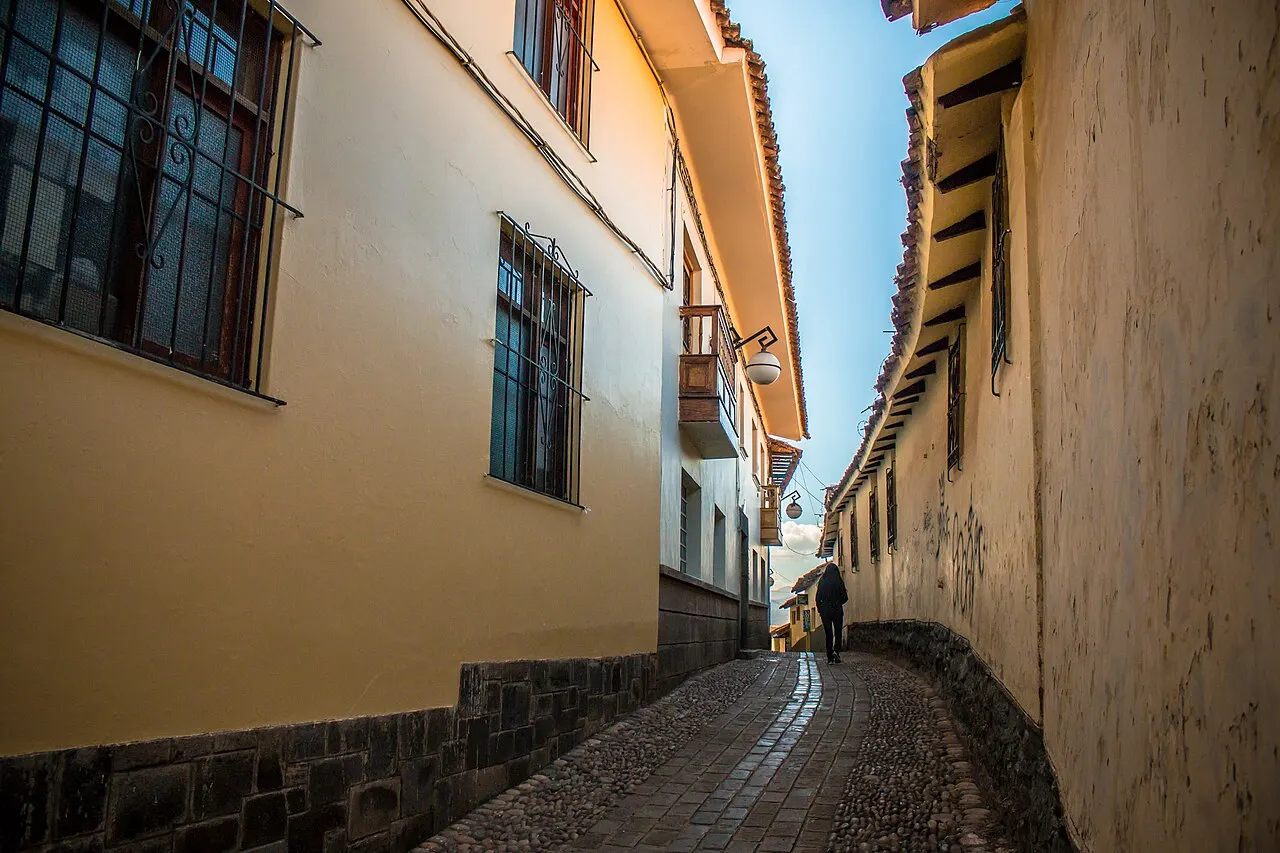
San Blas is the Cusco of postcards and daydreams — a tangle of narrow cobbled lanes climbing the hillside above the centre, white-walled houses with bright blue balconies, craft workshops, tiny galleries, viewpoint cafés and a small leafy plaza with one of the oldest churches in the city. Couples fall for it; so do photographers and anyone who prefers atmosphere to convenience. Stay here and you get the most romantic version of Cusco, with views back over the red rooftops to the mountains beyond, and a slower, more bohemian rhythm than the plaza below.
The catch is in the geography. San Blas is up, and getting to it means climbing those lovely stepped lanes — charming with a camera, considerably less so with luggage or with altitude-tired legs on day one. The honest counsel is to love San Blas but to time it: it can be a wonderful place to move to for your second stretch in Cusco, once you have acclimatized and your lungs have stopped protesting at every staircase. If you stay here from the start, take a taxi to the nearest drivable point, keep the first day's wandering downhill, and let the climbs come once you have your breath.
- Best for: couples, photographers, repeat or later-in-trip stays, atmosphere-seekers.
- Strengths: the most charming quarter in the city; viewpoints, galleries, character.
- Trade-offs: steep and stepped — hard on luggage and on first-day altitude legs.
San Pedro & the streets beyond the centre: value and local life
Walk a few minutes out from the plaza toward the San Pedro market and the city changes register. The lanes get more workaday, the prices ease, and the rhythm becomes more local than touristic. The covered San Pedro market itself is a riot of fruit stalls, juice counters, cheese, bread and cheap, hearty lunches — a daily theatre of highland life. The blocks around it, and the residential streets stretching beyond, are where many of Cusco's better-value hotels, guesthouses and hostels sit, still within walking distance of the centre but at a friendlier nightly rate.
This is the natural home of the budget and mid-range traveller who wants to keep a Machu Picchu trip affordable without retreating to the suburbs. You give up some polish and a little flatness — parts of this area climb too — and you may walk a bit further to the marquee sights, but you gain a more honest slice of the city and more money left for the train and the ticket. For travellers comfortable with a slightly rougher edge, it is often the best-value base in town.
- Best for: budget and mid-range travellers, longer stays, local atmosphere.
- Strengths: lower prices, the great San Pedro market, real city life.
- Trade-offs: less polished, some uphill streets, a longer walk to a few sights.
The converted palaces: where luxury lives
Cusco wears its layered history in its grandest hotels, and most of them cluster within a short, fairly level walk of the plaza. Here the Spanish built mansions and monasteries on Inca foundations, and several have been turned into hotels of real character — stone arcades around flower-filled courtyards, colonial cloisters, chapels and centuries-old walls, with the comforts modern travellers want folded discreetly inside. Some go further still with altitude-easing touches like piped or available oxygen, which can make the difference on a sensitive first night.
If the Cusco stay is a honeymoon, an anniversary or simply a splurge, this is where to point it — and the central clustering means the luxury comes without the uphill penalty of San Blas. You sleep inside the history, step out onto the plaza, and have the easiest possible base for both acclimatizing and exploring. The detail to confirm when you book is altitude support and airport pickup; the romance takes care of itself.
- Best for: honeymoons, special occasions, comfort-first and altitude-sensitive splurges.
- Strengths: history you sleep inside; central, mostly flat; sometimes oxygen support.
- Trade-offs: the top end of Cusco prices.

Staying in Cusco vs the Sacred Valley: the altitude question
Before you settle on a Cusco neighbourhood at all, it is worth asking whether you should spend those first nights in the city or drop straight to the lower Sacred Valley. Cusco at 3,399 m is the high point of the trip; the valley floor, around 2,800 m, is noticeably kinder to a body still adjusting. Travellers who have struggled with altitude before, or who simply want the softest possible landing, sometimes base in the valley first, ride into Cusco on day trips once acclimatized, and save the high city for later.
It is not a clean win either way. Cusco gives you the museums, the nightlife, the great Inca-colonial sights and the buzz of the old capital on your doorstep; the valley gives you thicker air, warmth and a head start on the train, since the line to Machu Picchu begins down there at Ollantaytambo. Many of the best itineraries do both — a couple of valley nights to acclimatize gently, then Cusco at the end when your lungs no longer care about the climb to San Blas. Where you sleep is as much a health decision as a sightseeing one.


Getting from your Cusco bed to the Machu Picchu train
A Cusco base is wonderful, but it is not the end of the line — and a common planning slip is to choose a hotel without thinking about the morning you leave for the citadel. There is no everyday rail service straight from the heart of Cusco; the great majority of trains to Aguas Calientes depart from Ollantaytambo, down in the Sacred Valley, roughly an hour and a half to two hours away by road. That means an early start and a transfer on the day you travel, so the question 'where do I stay' carries a second clause: 'and how do I get out cleanly the next morning?'
Practically, this favours a central base from which a pre-booked driver or taxi can collect you without negotiating San Blas's stepped lanes at dawn. Many hotels and tour operators arrange the Cusco-to-Ollantaytambo transfer to connect with your train time; confirm it the day before. Because schedules, station departure points and the relationship between Cusco and Ollantaytambo can shift, verify your exact train origin and the road transfer when you book rather than assuming. Choose a hotel that makes that dawn departure painless, and the romance of the place is unspoiled by a stressful getaway.


Couples & honeymoons: where Cusco is most romantic
If the trip is a honeymoon or an escape for two, Cusco gives you a clear choice of moods. San Blas is the heart's answer — those white-walled, blue-doored lanes climbing to viewpoint cafés, the small leafy plaza, the galleries and the slow bohemian evenings are about as romantic as a high Andean city gets, and a terrace room looking over the rooftops to the mountains is a memory in itself. The honest caveat is the climb: love San Blas, but consider giving it the second half of your Cusco stay, once your lungs have made peace with the altitude, and keeping the first acclimatizing nights somewhere flatter.
The other romantic register sits near the plaza, inside the converted colonial palaces and monasteries, where the charm is in the centuries-old stone you sleep within and the candle-lit courtyards rather than the hillside view. This version comes without the climb and often with the warmest rooms and the gentlest altitude support, which on a special trip is its own kind of romance. Many couples do best splitting the difference: a soft, central, palatial landing first, then a charming San Blas perch later, with the citadel as the emotional crescendo between or after.

Solo travellers & longer stays
Solo travellers find Cusco one of the easier cities in the Andes to base in alone. The compact centre means you are rarely far from people, light and life, and the sociable hostels and guesthouses around the plaza and out toward San Pedro make it simple to meet others, share a trek booking or split a transfer. As anywhere, the usual city-sense applies — keep valuables close in crowds and markets, use registered taxis at night, and favour a base on a reasonably lit, walkable street — but Cusco's tourist heart is well-trodden and used to independent travellers arriving wide-eyed and short of breath.
If you are staying longer — using Cusco as a hub for the Sacred Valley, Rainbow Mountain or a trek as well as the citadel — the calculus shifts toward comfort and value over pure centrality. A guesthouse a few minutes out, with a kitchen and a host who knows the logistics, can be a happier long base than a pricey plaza room, and the daily walk in becomes part of the rhythm rather than a chore. For longer stays, also weigh whether to split nights between Cusco and the lower Sacred Valley, which spreads the altitude load and lets you see both unhurried.
Plaza or San Blas? Settling the most common dilemma
The choice most first-time visitors agonise over is plaza versus San Blas, and it deserves a straight answer. For your arrival nights, the Plaza de Armas and the flat streets around it win on the only metric that matters early on: they spare your lungs. You land, you walk in on the level, you reach every major sight without a climb, and you give your body the gentlest possible introduction to 3,399 m. If your whole Cusco stay is short — a night or two bookending the citadel — stay central and do not overthink it.
San Blas wins on feeling, and on the back half of a longer stay. Once acclimatized, the climb stops being a tax and becomes a pleasure, and the quarter's atmosphere, views and slower pace reward you for moving up the hill. The ideal, if your itinerary allows, is to have both: flat and central first, charming and elevated later. If you must pick one for the whole stay, choose by temperament — convenience and easy breathing in the centre, romance and character in San Blas, eyes open to the staircase either way.
Matching the area to the traveller
Pulling it together, the right Cusco base depends less on a single 'best' area than on who you are travelling as. The altitude-sensitive, families and first-timers are happiest flat and central around the Plaza de Armas, where the lungs are spared and everything is close. Couples and the romantically inclined will be drawn — rightly — to San Blas, ideally for the back half of a Cusco stay once acclimatized. Budget and mid-range travellers find the best value out toward San Pedro and the streets beyond, trading a little polish for real city life and money kept for the train.
Those chasing comfort and occasion belong in the converted palaces near the plaza, where the grandeur arrives without a climb and sometimes with oxygen on hand. And everyone, whichever area they pick, should plan the onward journey to the train in the same breath as the bed. Get the neighbourhood right and Cusco becomes the perfect overture to Machu Picchu — a city you acclimatize in, fall for, and leave from without a hitch on the morning the citadel finally calls.


Related guides

Best hotels in Cusco
How to choose well among Cusco's hotels for a Machu Picchu trip — judged not on stars alone but on altitude comfort, location and walkability, character, family fit, and how cleanly they set up the onward journey to the citadel.
Read guide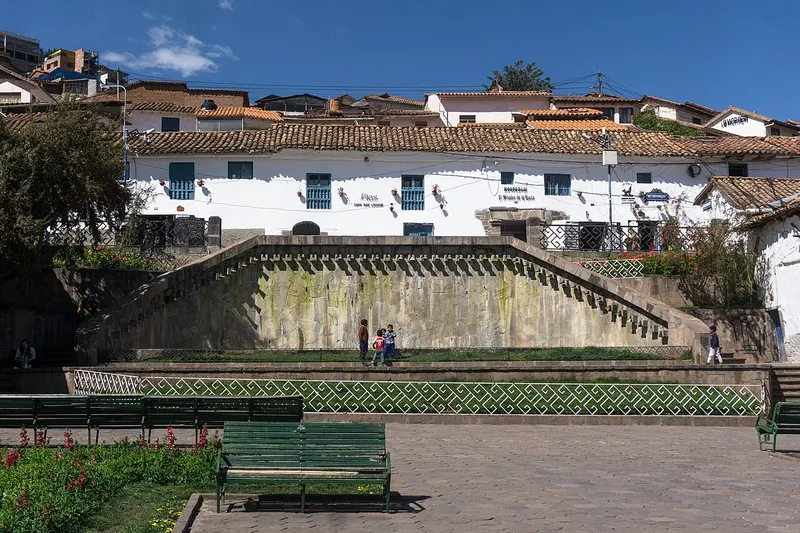
San Blas, Cusco's Art Quarter
The steep, bohemian barrio above the Plaza de Armas — artisan workshops, galleries, cafés, the little white church and the famous viewpoints — and how to enjoy its uphill lanes when the altitude is still new.
Read guide
Cusco's Plaza de Armas: A Guide
The heart of the old Inca capital and the easiest place to find your feet at altitude — the cathedral, the Compañía de Jesús, the arcades, and how to use the square as the hub of a gentle first day.
Read guideMore in Cusco Base
6
Best Cafés in Cusco
Where to take coffee, breakfast and a gentle acclimatization morning in Cusco — the plaza spots, the San Blas hideaways and the quieter local lanes, mapped for couples easing into the altitude.
Read guide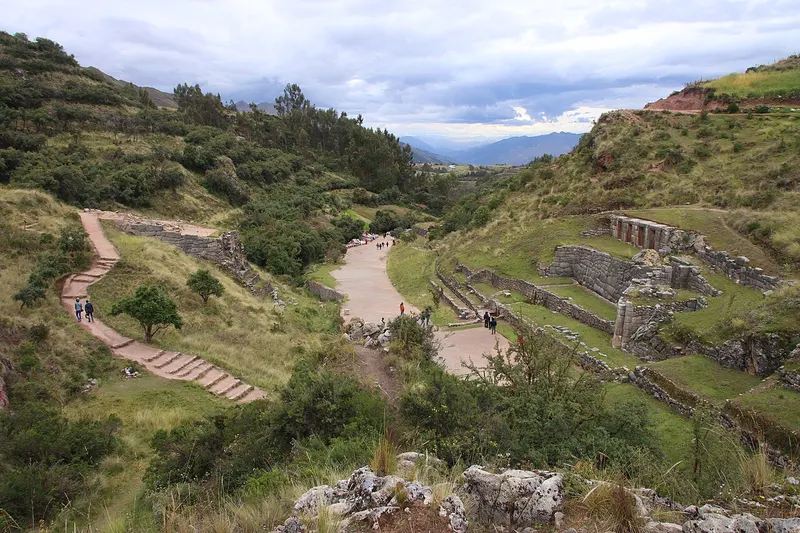
Boleto Turístico del Cusco
How the COSITUC Boleto Turístico works — the combined pass that covers Sacsayhuamán, Pisac, Ollantaytambo, Moray, the Maras–style sites and a clutch of Cusco museums — and when it's actually worth buying.
Read guide
Budget hotels in Cusco
How to sleep well in Cusco for less before Machu Picchu — value hotels, guesthouses and hostels, where the cheaper rooms cluster, and the few things never to scrimp on at 3,399 m.
Read guide
Cusco & Machu Picchu Costs
A realistic way to think about the money — the fixed citadel ticket, the train that dominates the budget, buses, guides, food and the trek add-ons — and where the costs hide.
Read guide
Cusco acclimatization & altitude
How to land soft in Cusco at 3,399 m: reading soroche, pacing your first day, what to eat and drink, the easy activities that help, and when to simply rest before Machu Picchu.
Read guide
Cusco Cathedral: The Plaza de Armas Centrepiece
The great colonial cathedral on Cusco's Plaza de Armas — built on Inca foundations, hung with Cusco School paintings, and home to the famous guinea-pig Last Supper. Tickets, art, dress code and how it fits a first acclimatizing day.
Read guide