
Cusco: Your Base for Machu Picchu
The old Inca capital at 3,399 m is where every Machu Picchu trip begins — where to stay, how to acclimatize, what to see on a gentle first day, and how to stage the train down to the citadel.

Photo: Sophia Simoes / Unsplash
- ✓Cusco (3,399 m) sits higher than the citadel itself — so it's where the altitude hits hardest, and where acclimatizing matters most.
- ✓Give the city two unhurried nights before you climb anything, or stage lower in the Sacred Valley if you're altitude-sensitive.
- ✓Stay in or near the historic centre — the Plaza de Armas, San Blas — to keep your first days low-effort and walkable.
- ✓Cusco is the launch point: the train to Machu Picchu, the treks, and the Sacred Valley all begin from here.
The navel of the Inca world — and your launchpad
Cusco was the capital of the Inca empire, the point from which four royal roads ran out across the Andes, and it is still the gateway every Machu Picchu traveller passes through. Colonial churches sit on Inca foundations; the stonework that survived earthquakes still carries the walls above it. It is a city you'd want to spend time in even if the citadel weren't waiting downstream — and that's lucky, because the smartest way to plan a trip is to give Cusco the time it needs at the start.
The counter-intuitive truth that shapes everything: Machu Picchu is lower than Cusco. The citadel sits around 2,430 m; the city stands at 3,399 m. So the altitude challenge is front-loaded — most travellers feel it on arrival here, not at the ruins. Land soft, go slow, and the rest of the trip rewards you.
Acclimatize first — everything else waits
The single best decision you'll make is to give Cusco two unhurried nights before climbing anything. Soroche — altitude sickness — is most likely in your first day or two, and it doesn't care how fit you are. Hydrate, go easy on alcohol and heavy meals at first, walk slowly, and let coca tea (the local standby) do its quiet work. If you're particularly sensitive, consider sleeping lower in the Sacred Valley (around 2,800 m) before tackling Cusco's full height.
This isn't lost time. A gentle first day at altitude is exactly the day you'd want to spend wandering Cusco anyway — which is why the acclimatization plan and the sightseeing plan happily overlap.
Where to stay
Base yourself in or near the historic centre. The streets around the Plaza de Armas and the bohemian San Blas quarter put you within easy, walkable reach of the sights, restaurants and tour offices — which keeps your acclimatization days low-effort, exactly what the altitude asks for. Cusco's lodging spans everything from hostels to grand heritage hotels, so the choice is about feel and budget, not logistics.
Two practical notes: keep that first night's walking gentle and downhill-biased where you can, and remember you'll leave the big bag here when you go down to the citadel — central hotels almost universally store luggage for guests between nights.
- Around the Plaza de Armas — most central and walkable, close to restaurants and tour offices; can be lively at night.
- San Blas — the bohemian artisan quarter just uphill; characterful, but the climb back up tests fresh-off-the-plane lungs.
- Quieter edges of the centre — calmer streets within a short, flat-ish walk of the plaza, a good compromise for sleep.
- Altitude-sensitive? Consider staging your first nights lower in the Sacred Valley and saving Cusco for after you've adjusted.


An easy first day, then down to the citadel
A low-effort first day writes itself: the Coricancha sun temple, the San Pedro market, the cathedral on the Plaza de Armas, and — if you're feeling steady — the Sacsayhuamán ruins above the city. None of it demands much exertion, which is the point. Save the climbing for once you've adjusted.
When it's time to move, Cusco is the staging post for everything downstream. Most travellers take the train toward the citadel from the Sacred Valley, treks set off from here, and the valley sights fill the days between. Cusco is where the trip is assembled — get the altitude and the booking order right here, and the rest of the journey runs in your favour.
The mechanics of the move down are worth knowing in advance. The usual chain is Cusco → Ollantaytambo (in the Sacred Valley) by road, then the train Ollantaytambo → Aguas Calientes, then the shuttle bus up to the gate. The road from Cusco to Ollantaytambo can be covered by colectivo (shared minivan), a private transfer, or a tour shuttle, and it is itself a gentle descent through the valley. Some services are bimodal, pairing a bus from the Cusco area with the train for the lower stretch. Because most trains start at Ollantaytambo rather than central Cusco, a night in the Sacred Valley often makes the citadel morning far simpler than a long, early transfer from the city.
- Gentle first-day sights: Coricancha, San Pedro market, the cathedral, Sacsayhuamán above town.
- The train, the treks and the Sacred Valley all launch from Cusco.
- Standard chain down: Cusco → Ollantaytambo (road) → Aguas Calientes (train) → shuttle bus up to the gate.
- Reach Ollantaytambo by colectivo, private transfer or tour shuttle; some services are bimodal (bus + train).
- Book the citadel ticket first, then build the train and overnight around the slot.


Your first hours, and what to avoid
Cusco's airport sits close to the city, so the transfer to a central hotel is short — but those first hours set the tone for the whole trip. Many people arrive having flown up from Lima or from sea level, and the jump to 3,399 m is felt fast. Take the first afternoon slowly: check in, rest, drink water, eat something light, and resist the urge to march straight up to Sacsayhuamán or out on a tour. The classic mistake is treating arrival day as a sightseeing day and arrival-plus-one as a Machu Picchu day, leaving no margin if soroche slows you down.
If your schedule allows only a narrow window in the highlands, the safest version is to acclimatise low first — straight down to the Sacred Valley for the first nights — and use Cusco on the way back, when you are adjusted. Whatever you do, hold a buffer day between landing and any fixed, timed citadel slot so a slow start can't cost you the entry you booked.
- The airport is near the centre — a short transfer — but the altitude jump is immediate; rest the first afternoon.
- Hydrate, eat light, skip alcohol, and keep day one gentle and walkable.
- Avoid scheduling a hard hike or high pass on arrival day, and never put the citadel on day two with no buffer.
- Altitude-sensitive or tight on time? Acclimatise low in the Sacred Valley first and save Cusco for the return.
At a glance
The Cusco-base essentials in one place. Altitudes are evergreen facts; verify any current rules and times locally.
- Altitude: Cusco 3,399 m — higher than the citadel (~2,430 m). Acclimatize here.
- Stay: two nights minimum before climbing; central (Plaza de Armas / San Blas) to keep it walkable.
- First day: low effort — Coricancha, San Pedro market, cathedral, Sacsayhuamán.
- Role: the launchpad for the train, the treks and the Sacred Valley.
- Golden rule: book the timed citadel ticket first, then everything else.
Related guides

Cusco: Your Base for Machu Picchu
The Inca capital at 3,399 m, where you acclimatize before climbing anything — where to sleep, which gentle sights to see first, how to pace your altitude days, and how to move on to the valley and the citadel when your body is ready.
Read guide
Cusco acclimatization & altitude
How to land soft in Cusco at 3,399 m: reading soroche, pacing your first day, what to eat and drink, the easy activities that help, and when to simply rest before Machu Picchu.
Read guide
The Sacred Valley: A Complete Guide
The lower, warmer valley of the Río Urubamba — Písac, Ollantaytambo, Maras and Moray — where most trips stage before the train to the citadel. Why it sits below Cusco, how its towns differ, where to sleep and eat, and how it links to Machu Picchu.
Read guideMore in Cusco Base
6
Best Cafés in Cusco
Where to take coffee, breakfast and a gentle acclimatization morning in Cusco — the plaza spots, the San Blas hideaways and the quieter local lanes, mapped for couples easing into the altitude.
Read guide
Best hotels in Cusco
How to choose well among Cusco's hotels for a Machu Picchu trip — judged not on stars alone but on altitude comfort, location and walkability, character, family fit, and how cleanly they set up the onward journey to the citadel.
Read guide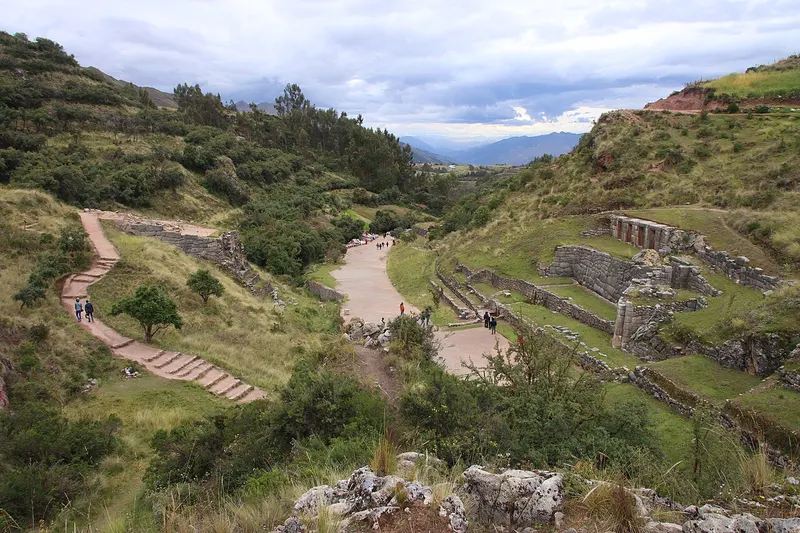
Boleto Turístico del Cusco
How the COSITUC Boleto Turístico works — the combined pass that covers Sacsayhuamán, Pisac, Ollantaytambo, Moray, the Maras–style sites and a clutch of Cusco museums — and when it's actually worth buying.
Read guide
Budget hotels in Cusco
How to sleep well in Cusco for less before Machu Picchu — value hotels, guesthouses and hostels, where the cheaper rooms cluster, and the few things never to scrimp on at 3,399 m.
Read guide
Cusco & Machu Picchu Costs
A realistic way to think about the money — the fixed citadel ticket, the train that dominates the budget, buses, guides, food and the trek add-ons — and where the costs hide.
Read guide
Cusco Cathedral: The Plaza de Armas Centrepiece
The great colonial cathedral on Cusco's Plaza de Armas — built on Inca foundations, hung with Cusco School paintings, and home to the famous guinea-pig Last Supper. Tickets, art, dress code and how it fits a first acclimatizing day.
Read guide