
Cusco City Tour: Guided vs DIY, and What to See
The classic Cusco half-day circuit — Qorikancha, the Cathedral, and the four Inca ruins above town: Sacsayhuamán, Q'enqo, Puka Pukara and Tambomachay. How to choose between a guided tour and doing it yourself, with altitude-friendly pacing.

Photo: Ruben Hanssen / Unsplash
- ✓The classic 'city tour' is really a half-day circuit: Qorikancha and the Cathedral in the centre, plus the four Inca sites on the hills above — Sacsayhuamán, Q'enqo, Puka Pukara and Tambomachay.
- ✓A guided coach tour does the logistics and gives you the history; doing it yourself by taxi, on foot or with the city's combined ticket gives you flexibility and a slower pace.
- ✓Either way, several of the sites need the boleto turístico (Cusco tourist ticket), so understand that before you set off.
- ✓It's a near-perfect acclimatizing activity for your first full day — but the ruins sit higher than the centre, so go gently.
What 'the Cusco city tour' actually covers
Ask in Cusco for a 'city tour' and you'll be sold a remarkably consistent half-day circuit, run by dozens of agencies in near-identical form. It opens in the historic centre with the great colonial-on-Inca pair — the sun temple of Qorikancha and the Cathedral on the Plaza de Armas — then drives up out of the city to the four Inca archaeological sites strung along the hills to the north: the giant fortress of Sacsayhuamán, the carved ritual outcrop of Q'enqo, the small lookout of Puka Pukara, and the elegant water shrine of Tambomachay. Most versions run four to five hours, usually in the afternoon.
It's the standard first-or-second-day outing in Cusco, and for good reason: it knits the city's headline sights into one manageable loop, gives you the historical backbone for everything that follows in the Sacred Valley and at Machu Picchu, and does it without asking too much of legs that are still adjusting to the altitude.

The stops, one by one
Whichever way you do it, these are the pieces of the circuit. Read them as a checklist you can assemble yourself or recognise on a guided coach.
- Qorikancha — the Inca empire's sun temple under the colonial church of Santo Domingo; the finest accessible Inca stonework in the city.
- Cusco Cathedral — the great colonial cathedral on the Plaza de Armas, hung with Cusco School paintings.
- Sacsayhuamán — the colossal zigzag fortress above town, built of some of the largest dressed stones the Inca ever set; the highlight of the upper loop.
- Q'enqo — a carved limestone outcrop with channels, niches and a subterranean altar, thought to be a ritual and ceremonial site.
- Puka Pukara — the 'red fortress', a small Inca complex that likely served as a control point or way-station on the road.
- Tambomachay — the 'baths of the Inca', an elegant ceremonial spring whose channels still run, suggesting a water cult.
Guided tour vs doing it yourself
There's no single right answer — it comes down to how you like to travel. A guided group tour is cheap, sorts the transport between the scattered upper sites, and gives you a guide to explain the stonework and the history; the trade-off is a fixed pace, a coach timetable and limited time to linger. Doing it independently — by taxi, on foot for the closer sites, or a mix — costs more in effort but lets you set your own rhythm, dwell where you like, and skip what you don't.
A popular middle path: walk or taxi up to Sacsayhuamán on your own (it's the one site you could happily spend longest at), do Qorikancha and the Cathedral independently in the centre, and decide site by site whether the smaller upper ruins are worth the trip for you. Whatever you choose, hiring even an informal local guide at Sacsayhuamán's gate transforms the stones from impressive to intelligible.
- Guided tour: cheap, sorts transport, includes a guide — but fixed pace and a coach schedule.
- DIY: more flexible and slower-paced — but you arrange the transport and the timing yourself.
- Hybrid: do the centre independently, taxi up to Sacsayhuamán, and pick a guide at the gate.
The tourist ticket (boleto turístico) you'll need
Here's the practical catch that trips people up: most of the upper Inca sites — Sacsayhuamán, Q'enqo, Puka Pukara and Tambomachay — are not sold individually at the gate. They're covered by Cusco's combined boleto turístico, a single multi-site pass that also bundles many of the Sacred Valley ruins. Qorikancha and the Cathedral are usually separate tickets on top. A guided tour may or may not include the boleto in its price, so always ask exactly what's covered before you book.
If you're doing the city tour and the Sacred Valley both, the combined ticket often works out as good value because it spreads across so many sites — but the rules, validity and pricing change, so check the current details before you commit. Understand the ticket first; it shapes how you sequence the whole Cusco-and-valley portion of your trip.
At a glance
A quick reference for planning the day. Tour durations, prices and exactly which tickets are bundled all vary by operator and change over time — treat the following as evergreen guidance and confirm the current details with your agency or locally before you book.
- What it is: a half-day circuit of Qorikancha, the Cathedral and four Inca sites on the hills above Cusco.
- Duration: most guided versions run roughly four to five hours, often in the afternoon — verify with the operator.
- Tickets: the upper ruins need the boleto turístico; Qorikancha and the Cathedral are usually separate — confirm what your tour includes.
- Effort: gentle overall, but the ruins sit higher than the centre — pace it for the altitude.
- When to do it: ideally your first or second full day, while acclimatizing, before the Sacred Valley and the citadel.
Pacing it for the altitude
One thing no city tour brochure stresses enough: the upper sites are higher than the centre. Sacsayhuamán and its neighbours sit on the hills above town, so even gentle walking among the stones can leave you breathless if you've only just arrived in Cusco. That's not a reason to skip the tour — it's an argument for doing it early and slowly, as part of the deliberate acclimatizing that makes the rest of the trip comfortable. Drink water, walk at half your usual speed, and don't be shy about sitting on a warm stone to take in the view.
Done this way, the city tour is close to ideal first-trip planning: it's low-intensity, it fills the acclimatizing days you should be taking anyway, and it gives you the historical and architectural grounding that makes the Sacred Valley and Machu Picchu land far more deeply. Get the context here, take it gently, and head down the valley ready.
Why the city tour comes first
There's an order to a good Cusco-and-Machu-Picchu trip, and the city tour sits near the front of it for two reasons. The first is acclimatization: you should not be charging up to Machu Picchu the morning after you land, and the city tour gives your first days a purpose that doesn't overtax your body. The second is comprehension. The circuit is, in effect, a crash course in Inca engineering and the colonial overlay — Sacsayhuamán's impossible stones, Qorikancha's flawless joints, the Cathedral's Andeanised saints. Absorb all of that in one afternoon and the Sacred Valley and the citadel stop being a blur of impressive walls and start telling a coherent story.
Think of it as calibration. Once you've stood with your hand on a twelve-tonne block at Sacsayhuamán and understood that the Inca shaped it without iron tools, wheels or mortar, the Temple of the Sun at Machu Picchu lands as the work of the same astonishing tradition rather than an isolated wonder. The city tour is cheap, gentle and short, and it quietly does more to enrich the headline experience than almost anything else you can book in Cusco.

Related guides

Sacsayhuamán: Cusco's Hilltop Inca Fortress
The colossal zigzag walls on the hill above Cusco — what to see, the entry ticket, the altitude effort, walking up versus taking a taxi, and the timing around the Inti Raymi festival.
Read guide
Qorikancha: Cusco's Golden Sun Temple
The Inca empire's holiest sanctuary, sheathed in gold and now half-buried under the colonial church of Santo Domingo. What to see, how to read the stonework, and why it decodes Machu Picchu before you ever board the train.
Read guide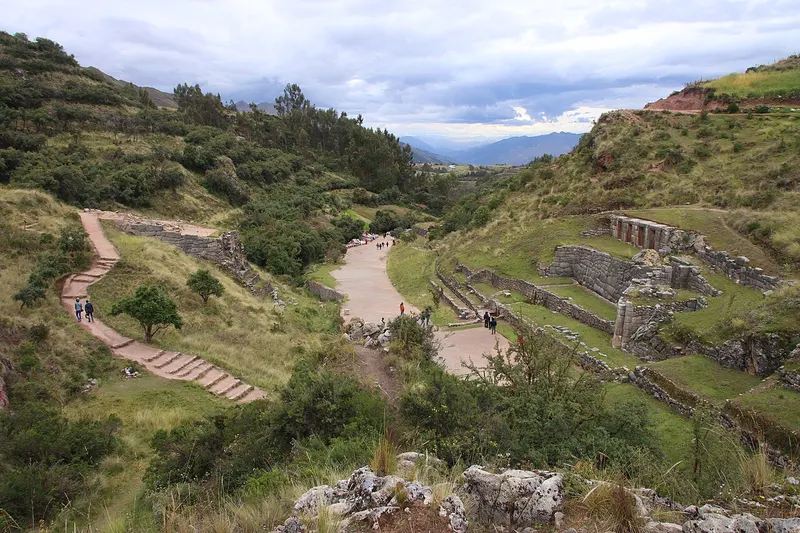
Boleto Turístico del Cusco
How the COSITUC Boleto Turístico works — the combined pass that covers Sacsayhuamán, Pisac, Ollantaytambo, Moray, the Maras–style sites and a clutch of Cusco museums — and when it's actually worth buying.
Read guideMore in Cusco Base
6
Best Cafés in Cusco
Where to take coffee, breakfast and a gentle acclimatization morning in Cusco — the plaza spots, the San Blas hideaways and the quieter local lanes, mapped for couples easing into the altitude.
Read guide
Best hotels in Cusco
How to choose well among Cusco's hotels for a Machu Picchu trip — judged not on stars alone but on altitude comfort, location and walkability, character, family fit, and how cleanly they set up the onward journey to the citadel.
Read guide
Budget hotels in Cusco
How to sleep well in Cusco for less before Machu Picchu — value hotels, guesthouses and hostels, where the cheaper rooms cluster, and the few things never to scrimp on at 3,399 m.
Read guide
Cusco & Machu Picchu Costs
A realistic way to think about the money — the fixed citadel ticket, the train that dominates the budget, buses, guides, food and the trek add-ons — and where the costs hide.
Read guide
Cusco acclimatization & altitude
How to land soft in Cusco at 3,399 m: reading soroche, pacing your first day, what to eat and drink, the easy activities that help, and when to simply rest before Machu Picchu.
Read guide
Cusco Cathedral: The Plaza de Armas Centrepiece
The great colonial cathedral on Cusco's Plaza de Armas — built on Inca foundations, hung with Cusco School paintings, and home to the famous guinea-pig Last Supper. Tickets, art, dress code and how it fits a first acclimatizing day.
Read guide