
Ollantaytambo: A Living Inca Town Guide
The Sacred Valley's most atmospheric staging base — a fortress town where the Inca street grid is still lived in, the train to Machu Picchu departs, and an early citadel morning becomes a short walk to the platform.

Photo: Ashim D’Silva / Unsplash
- ✓Ollantaytambo (around 2,790 m) is both a living Inca town and the main rail gateway to Machu Picchu — most PeruRail and IncaRail trains begin here.
- ✓Its centre is one of the few places where the original Inca street grid is still inhabited: walled canchas, single doorways and water running in the old channels.
- ✓The terraced fortress rises straight out of town at the western edge — climb it early, before the day-trippers arrive from Cusco.
- ✓Lower and kinder than Cusco for the night before, and close enough to the platform that an early train is a stroll rather than a dawn dash.
Why Ollantaytambo, and why everyone ends up here
Ollantaytambo — Ollanta, to almost everyone who spends a night here — is the rare Sacred Valley town that earns its keep twice over. It is the practical front door to Machu Picchu, the place where the bulk of the trains depart and where the gorge ride into the cloud forest is shortest. And it is, quite apart from any of that, one of the loveliest and most intact Inca settlements anywhere in Peru: a town you would want to stay in even if there were no railway at all.
That double identity is what makes it special. You wake beneath a fifteenth-century terraced fortress, in streets laid out on their original Inca grid, and within an hour you can be boarding a train that threads a gorge no road can follow. Most well-paced Machu Picchu trips spend their last night before the citadel right here, and the longer you linger the more the town reveals: the temple hill catching the first light, the canalised lanes, the courtyard restaurants glowing after dark.
At a glance
The shape of the town before you arrive. Altitudes are approximate and stable; anything to do with prices, train times and luggage limits moves with the operators and the season, so verify those directly when you book.
- Altitude: around 2,790 m — lower and gentler than Cusco (3,399 m), a kinder place to sleep before climbing higher.
- Where: the lower Sacred Valley, roughly an hour and a half to two hours by road from Cusco (verify with your transfer).
- Why stay: the main departure station for trains to Machu Picchu Pueblo (Aguas Calientes), plus the great terraced fortress.
- Main sights: the Temple Hill / fortress terraces, the living Inca old town (Qosqo Ayllu), the Pinkuylluna granaries on the opposite hillside.
- Site ticket: the fortress is covered by the regional boleto turístico, not a standalone ticket — confirm which version you need.
- Train luggage: a strict carry-on limit applies onward to the citadel; leave the big bag with your hotel here.

The living Inca town — reading the streets
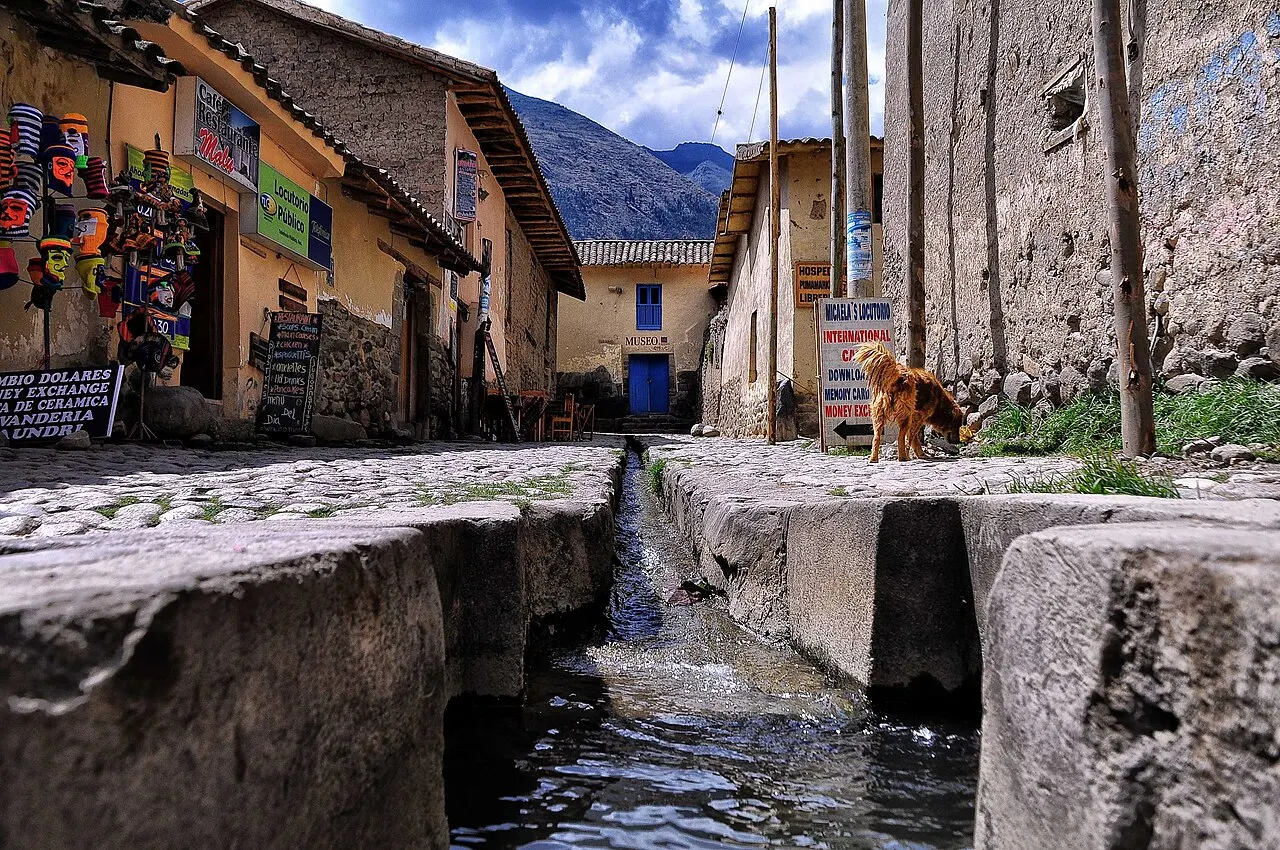
Most Inca towns survive only as ruins; Ollantaytambo survives as a town. The old quarter on the north bank of the Río Patacancha, called Qosqo Ayllu, is built on the original Inca grid of long, straight cobbled lanes divided into canchas — walled residential compounds, each entered through a single trapezoidal doorway, several families living around a shared courtyard within. People still live in them. Water still runs in the stone channels along the streets, as it has for more than five centuries. Walking here is the closest most visitors come to standing inside a working Inca settlement rather than looking at one through a rope barrier.
Give yourself an unhurried hour to wander it. The trapezoidal niches and doorways, the perfectly fitted polygonal stonework at the bases of houses, the worn cobbles and the sound of irrigation water — these are the same details you will meet again, grander, at Machu Picchu, and seeing them lived-in first makes the citadel read differently. Early morning and the hour before dusk are the quietest and most beautiful, when the day-trip coaches from Cusco have not yet arrived or have already gone.

The fortress and the Pinkuylluna granaries
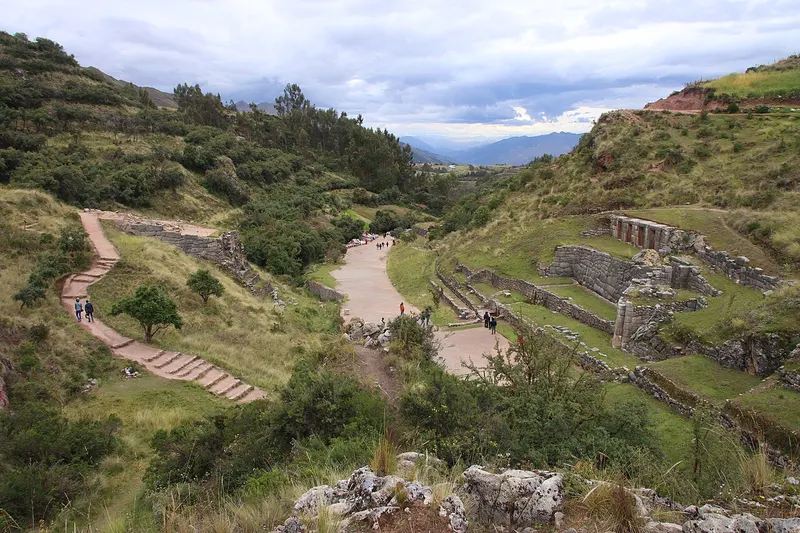
The town's great set-piece rises straight out of its western edge: the steep terraces of the Temple Hill, climbing in green steps to a ceremonial plateau crowned by the unfinished Sun Temple and its famous wall of six monolithic pink-granite blocks. It was here, in the 1530s, that Manco Inca's forces routed a Spanish cavalry expedition — one of the few Inca victories of the conquest — by flooding the plain below from the channels above. The terraces are a stiff climb at altitude but a short one, and the view back over the town and valley from the top is worth every breath.
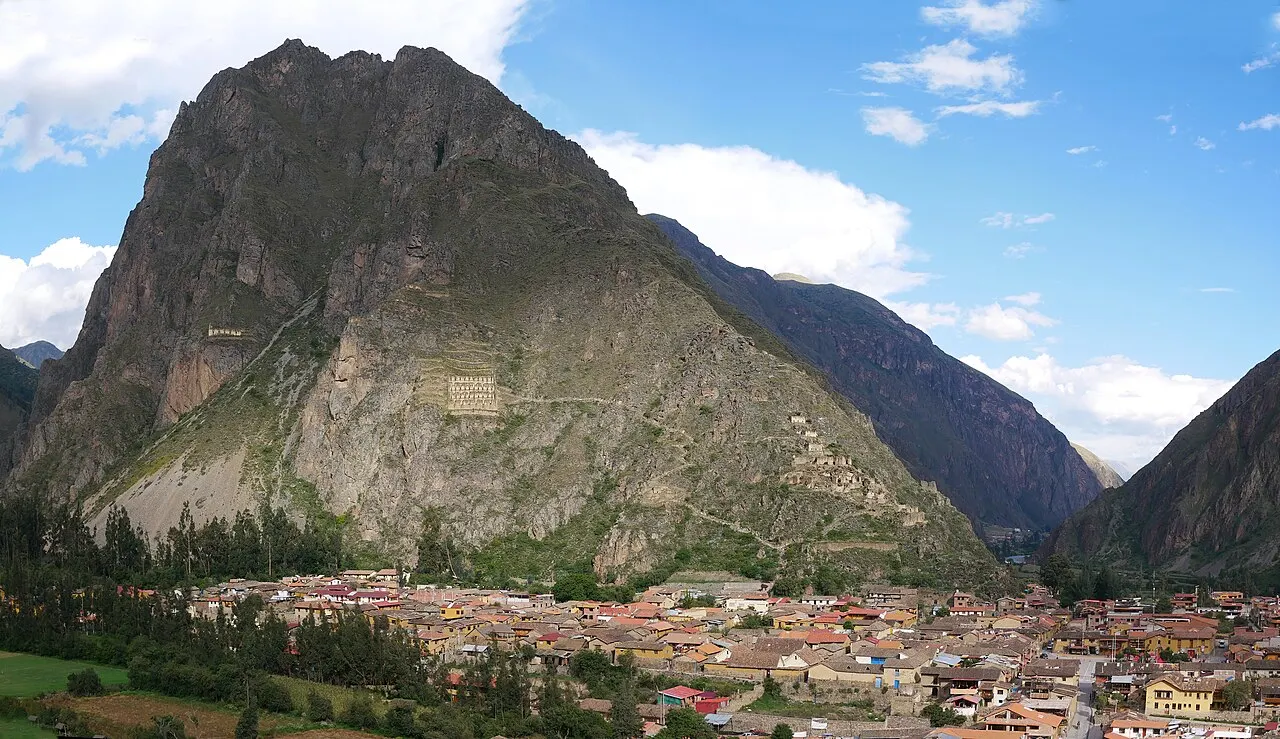
Look across the valley from the terraces and you will see another set of Inca structures clinging to the bare hillside opposite: the Pinkuylluna granaries (qollqas), storehouses built high to catch the cold, dry wind that kept grain from spoiling. The walk up to them is free, steeper and rougher than the fortress, and rewards the effort with the best aerial view of the whole town grid laid out below. Both sit a few minutes' walk from the plaza — this is a place where the great Inca monuments are woven into daily life rather than fenced off from it.
The station, the train, and getting it right
The reason most itineraries sleep in Ollantaytambo is the railway. There is no road to Machu Picchu — you reach the citadel by rail or on foot — and the great majority of trains begin at Ollantaytambo's station, at the lower edge of town. Staging here turns the most fraught part of any Machu Picchu day, getting to the platform on time with the right bag, into a short walk or a five-minute taxi rather than a pre-dawn dash from Cusco that can be swallowed by traffic or a road closure.
Two operators, PeruRail and IncaRail, run frequent services from here down the Urubamba gorge to Machu Picchu Pueblo, also called Aguas Calientes, where a shuttle bus climbs to the citadel gate. The one wrinkle to know is the approach: the lane down to the platform is narrow and lined with vendors, and before a busy departure it fills with vehicles all converging on the same boarding time. If you are staying in town, walking the last stretch is often faster than queuing in a taxi. Carry the passport your ticket was booked under — it is checked on board and again at the gate.


Where to stay and how the night before works
Sleeping in Ollantaytambo is the single move that turns a tense citadel morning into an easy one. The town has lodging across the range — simple family guesthouses, characterful mid-range hotels in old courtyards, and a handful of more comfortable valley properties on the outskirts — much of it within a short walk of the station. The centre skews toward atmosphere rather than resort scale; for the largest pools and grandest lodges you look to the wider Urubamba countryside down-valley instead.
It also fits the altitude logic of the whole trip. The valley floor here is lower than Cusco, so a night in Ollantaytambo is genuinely gentler on a body still adjusting, and it positions you perfectly for an early entry slot. Almost every hotel will store your large suitcase free while you are at the citadel — confirm it when you book — so you travel onward with just a small, train-legal bag. In the June–July peak, both the best rooms and the morning train slots sell out weeks ahead, so secure your Machu Picchu ticket first and build the night around it.


Eating and drinking in town
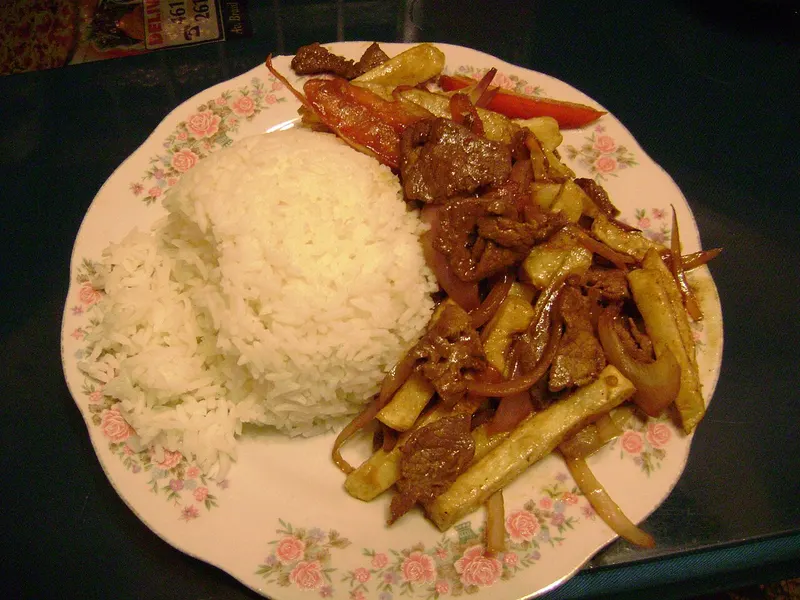
For a small town, Ollantaytambo eats well. Around the Plaza de Armas and along the lanes toward the station you will find courtyard restaurants serving Andean staples — alpaca, trout from the valley's rivers, hearty quinoa soups, the slow-roasted favourites of highland cooking — alongside a clutch of cafés that have grown up to feed trekkers and rail travellers. Several have terraces or upper rooms with a view of the fortress, which makes an early dinner or a coffee before the train a genuinely lovely thing rather than a refuelling stop.
Practical notes: the valley is milder than Cusco but still high, and clear evenings turn cold fast once the sun drops behind the terraces, so a warm layer for an outdoor table is worth carrying. Some kitchens keep early hours, so if you have a late-afternoon train check that dinner fits your schedule, or eat before you board. As everywhere in the Andes, drink plenty of water and go easy your first day at altitude.
How long to give it, and how it fits the trip
Most travellers spend a single night in Ollantaytambo, arriving in the afternoon, climbing the fortress and wandering the old town in the soft light, then catching an early train to the citadel the next morning. That is the efficient version, and it works beautifully. But the town rewards a second night if you have it: a slow morning in the lanes, the granary climb, a day trip out to Maras and Moray, and the simple pleasure of being in a living Inca town after the day-trip crowds have gone.
However long you stay, the order is the same as the rest of the trip: book your timed Machu Picchu entry ticket first, then a train from Ollantaytambo that lands you in time for it, then your bed in town for the night before. Get those three lined up and the citadel morning becomes a calm walk to the platform — which is, in the end, the whole reason this little fortress town is where everyone ends up.
- Tight plan: one night — fortress and old town on arrival, early train out the next morning.
- Better plan: two nights — add the Pinkuylluna granaries and a Maras–Moray day trip.
- Book in order: Machu Picchu ticket first, then the train, then the Ollantaytambo hotel.
- Leave the big bag at your hotel; travel onward with one small, train-legal bag.
- Verify current prices, train times, luggage limits and site-ticket details directly.




Related guides

Ollantaytambo Ruins: Terraces, Temple Hill & the Sun Temple
How to visit Ollantaytambo's terraced fortress — the ticket you need, the climb up Temple Hill, the six monolithic pink-granite blocks of the Sun Temple, the granaries opposite, and how to pair the ruins with a Machu Picchu train.
Read guide
Ollantaytambo to Machu Picchu: The Easiest Way In
Why Ollantaytambo is the most reliable rail gateway to the citadel — the timing, the short gorge ride, where to stay, taxis to the platform, and how to stage it from the Sacred Valley.
Read guide
Where to Stay in the Sacred Valley
A base-by-base guide to sleeping in the Sacred Valley before Machu Picchu — Ollantaytambo, Urubamba, Yucay, Písac and the luxury riverside lodges — chosen for altitude comfort, train access and the kind of trip you're taking.
Read guideMore in Sacred Valley
6
Best Hotels in the Sacred Valley
A curated shortlist of where to sleep in the Sacred Valley before Machu Picchu — sorted by what each does best: shortest train day, gardens and acclimatization comfort, family space, honeymoon luxury and value.
Read guide
Chinchero: Weaving, Terraces & the High Plateau
The 'birthplace of the rainbow' on the plateau above the Sacred Valley — its living weaving tradition, the church built on Inca foundations, the terraces, the Sunday market, and how the new airport and a valley loop fit around it.
Read guide
Family Hotels in the Sacred Valley
Where families should sleep in the Sacred Valley before Machu Picchu — garden resorts with lawns and pools, family rooms, easy meals, low-altitude comfort and smooth train-day logistics.
Read guide
Hiring a Private Driver in the Sacred Valley
When a private driver beats a group tour in the Sacred Valley — the flexibility, the off-road plateau sites, families and luggage, citadel-morning transfers, and realistic route ideas with honest timing.
Read guide
Luxury Sacred Valley Hotels
The Sacred Valley's high-end lodges, spa retreats and honeymoon bases — destination hotels where pampering doubles as low-altitude acclimatization before Machu Picchu.
Read guide
Maras & Moray: A Half-Day Route
A practical half-day plan for combining Moray's circular Inca terraces and the Maras salt pans — from Cusco or a Sacred Valley base. Transport options compared, the best order, timing for light and crowds, tickets, altitude notes and how to add it to a bigger valley day.
Read guide