
Sacred Valley Site Tickets: The Boleto Turístico, Explained
Which Sacred Valley ruins need the boleto turístico, which sit outside it, and how to choose between the full and partial versions so you pay only for the sites you'll actually walk.

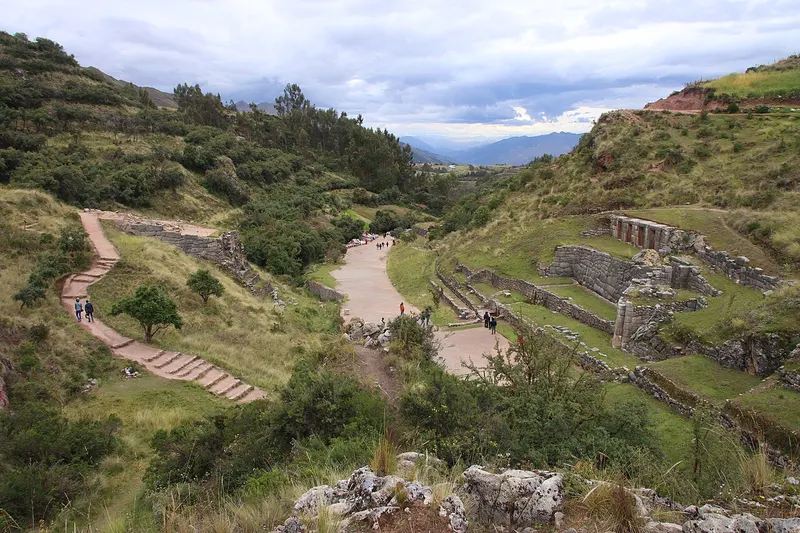
Photo: Silvia Fang / Unsplash
- ✓Most valley ruins — Písac, Ollantaytambo, Chinchero and Moray — are not sold at the gate individually; they sit on the regional boleto turístico (Cusco Tourist Ticket).
- ✓The ticket comes in a full version and cheaper partial versions, each covering a different cluster of sites — match the version to your actual route.
- ✓Machu Picchu is a completely separate, timed ticket and is not on the boleto turístico at all.
- ✓A few valley sights sit outside the system entirely — notably the Maras salt pans — with their own small separate entry. Verify current prices and which sites each version covers directly.
What the boleto turístico is — and isn't
The first thing to understand about Sacred Valley ruins is that you mostly cannot just rock up and pay at the gate. The major Inca archaeological sites across Cusco and the valley are bundled into a single combined ticket, the boleto turístico — the Cusco Tourist Ticket — issued by the regional authority. It is the ticket that gets you into Písac, Ollantaytambo, Chinchero and Moray, among others, and it is checked at the entrance to each. Turn up without it and you may not get in.
Crucially, the boleto turístico has nothing to do with Machu Picchu. The citadel is a separate, timed-entry ticket on its own system entirely, tied to a circuit and a slot. So a complete trip needs both: the boleto turístico for the valley ruins, and a distinct Machu Picchu ticket for the citadel. Don't let the two be confused — they are bought differently, cost differently and work differently.


Full ticket or partial — which version do you need?
The boleto turístico is sold as a full ticket and as cheaper partial circuits. The full version covers the broadest set of sites — Cusco-area ruins, museums and the valley together — over several days and is the natural choice if you are sightseeing widely across both the city and the valley. The partial versions each cover a smaller, themed cluster of sites over a shorter validity, and one of them is built around the Sacred Valley ruins specifically.
The practical move is to map your actual route first, then pick the version that covers it and nothing more. If your whole plan is a one or two-day valley loop — Písac, Ollantaytambo, Chinchero, Moray — a valley-focused partial ticket is usually the better value than the full one. If you are also doing the Cusco city sights and Sacsayhuamán, the full ticket may pay for itself. Exactly which sites fall under each version, and the current prices and validity periods, are set by the regional authority and change, so verify them directly before you buy.
- Doing only the valley ruins? A valley-focused partial ticket is usually best value.
- Doing valley plus Cusco city and Sacsayhuamán? The full ticket may work out cheaper overall.
- Each version has its own validity period and site list — match it to your route, not the reverse.
- Verify current prices, validity and the exact site list for each version before buying.
Which valley sites need it — and which don't
Here is the quick sort for the main Sacred Valley stops. Treat it as a planning guide and confirm the specifics when you buy, because coverage and access rules do shift.
- Písac ruins — on the boleto turístico. The high terraces and Inca complex above the market town.
- Ollantaytambo fortress — on the boleto turístico. The great terraced Temple Hill at the western end of the valley.
- Chinchero — on the boleto turístico. The Inca terraces and the church built on Inca walls.
- Moray — on the boleto turístico. The concentric circular agricultural terraces on the plateau.
- Maras salt pans (Salineras) — NOT on the boleto turístico. A separate small community entry; access rules to walk among the pans can change, so verify.
- Písac and Ollantaytambo markets, and walking the towns — free; the ticket covers the ruins, not the streets.
- Machu Picchu — entirely separate, timed-entry ticket. Never on the boleto turístico.
Common questions
The questions travellers ask most often about valley site tickets.
- Can I buy individual tickets for a single ruin instead of the boleto? Generally no — the major valley ruins are bundled into the boleto turístico, not sold standalone at the gate. Plan to buy the ticket.
- Is Maras (the salt pans) on the boleto turístico? No. Maras has its own separate small entry, paid locally. Moray, nearby, is on the boleto — they are different systems despite being close together.
- Does the boleto turístico include Machu Picchu? No, never. The citadel is a wholly separate timed ticket.
- Where do I buy the boleto turístico? It is sold at official ticket offices in Cusco and at some of the sites; many tours and drivers can arrange it. Confirm current sales points when you plan.
- How long is it valid? The full and partial versions have different validity windows — verify the current periods, as they are set by the regional authority.
- Do I need to print it or can I show a phone? Rules can change; the safest assumption is to carry the physical ticket, as it is hole-punched or checked at each site. Verify the current format.
How to plan the ticket into your valley day
Buy the right version before you set out, not at the first gate, because the offices are not always where you want them when the clock is running. If your day is a valley loop ending at the train, a valley-focused partial ticket usually covers everything you will touch — Písac, Ollantaytambo, Chinchero, Moray — while leaving Maras to its own small separate entry, paid on the spot. Carry small cash for that, for the markets, and for tips.
And keep the two ticket systems firmly separate in your head. The boleto turístico is the valley ruins; the timed citadel ticket is Machu Picchu. Book the Machu Picchu ticket first — it is the slot the whole trip is built around and the one that sells out — then sort the boleto turístico for the valley around it. Verify current prices, validity and coverage directly before you buy either, because both are set by Peruvian authorities and do change.
- Buy the boleto turístico (the right version) before your valley day starts.
- Carry small cash for the separate Maras salt-pan entry and the markets.
- Keep it distinct from the Machu Picchu ticket — two different systems entirely.
- Book the citadel ticket first; sort the valley boleto around it.
- Verify current prices, validity periods and site coverage directly before buying.



Related guides
Boleto Turístico del Cusco
How the COSITUC Boleto Turístico works — the combined pass that covers Sacsayhuamán, Pisac, Ollantaytambo, Moray, the Maras–style sites and a clutch of Cusco museums — and when it's actually worth buying.
Read guide
Ollantaytambo: A Living Inca Town Guide
The Sacred Valley's most atmospheric staging base — a fortress town where the Inca street grid is still lived in, the train to Machu Picchu departs, and an early citadel morning becomes a short walk to the platform.
Read guide
Písac Market: Textiles, Crafts & Etiquette
The famous artisan market in the Sacred Valley town of Písac — what to buy, how the timing and bargaining work, telling handwoven from machine-made, and how to fit the market and the hilltop ruins into one day.
Read guideMore in Sacred Valley
6
Best Hotels in the Sacred Valley
A curated shortlist of where to sleep in the Sacred Valley before Machu Picchu — sorted by what each does best: shortest train day, gardens and acclimatization comfort, family space, honeymoon luxury and value.
Read guide
Chinchero: Weaving, Terraces & the High Plateau
The 'birthplace of the rainbow' on the plateau above the Sacred Valley — its living weaving tradition, the church built on Inca foundations, the terraces, the Sunday market, and how the new airport and a valley loop fit around it.
Read guide
Family Hotels in the Sacred Valley
Where families should sleep in the Sacred Valley before Machu Picchu — garden resorts with lawns and pools, family rooms, easy meals, low-altitude comfort and smooth train-day logistics.
Read guide
Hiring a Private Driver in the Sacred Valley
When a private driver beats a group tour in the Sacred Valley — the flexibility, the off-road plateau sites, families and luggage, citadel-morning transfers, and realistic route ideas with honest timing.
Read guide
Luxury Sacred Valley Hotels
The Sacred Valley's high-end lodges, spa retreats and honeymoon bases — destination hotels where pampering doubles as low-altitude acclimatization before Machu Picchu.
Read guide
Maras & Moray: A Half-Day Route
A practical half-day plan for combining Moray's circular Inca terraces and the Maras salt pans — from Cusco or a Sacred Valley base. Transport options compared, the best order, timing for light and crowds, tickets, altitude notes and how to add it to a bigger valley day.
Read guide