
Machu Picchu on a Budget: The Cheaper Way In
A lower-cost Machu Picchu itinerary staging via Ollantaytambo or the long Hidroeléctrica route, with budget hotels, market food and honest tradeoffs — without pretending the one truly fixed cost, the entry ticket, is optional.

Photo: Victor Rodriguez / Unsplash
- ✓The train is the single biggest cost most travellers can cut: the long Hidroeléctrica road-and-walk route reaches Machu Picchu Pueblo for a fraction of the rail fare, in exchange for a much longer, rougher day.
- ✓Some costs are fixed and shouldn't be gambled on — the timed-entry citadel ticket and the official permit system are real; budget by trimming transport, beds and food, not by skipping the things that get you legally through the gate.
- ✓Stage smart: sleeping in Ollantaytambo or Aguas Calientes itself, eating from markets and menú del día set lunches, and walking up to the gate instead of taking the bus all shave real money.
- ✓Book the entry ticket first regardless of budget — it sells out in dry season, and no amount of saving elsewhere helps if there's no slot left to enter.
Where the money actually goes — and where it doesn't
Machu Picchu has a reputation as an expensive trip, and parts of it genuinely are — but the cost is lumpy, not uniform, and knowing where it concentrates is the whole game. A handful of items dominate the budget: the timed-entry ticket, the train, the shuttle bus up to the gate, and beds in the captive little town of Aguas Calientes. Around those sit the flexible costs — food, transport between towns, guiding, extra activities — where a thrifty traveller can save a great deal without missing anything that matters. The art of doing Machu Picchu cheaply is to attack the flexible costs hard while accepting that a few fixed ones simply are what they are.
The biggest lever by far is how you reach the citadel. There is no road to Machu Picchu, so you arrive either by train into Aguas Calientes — comfortable, scenic, and the priciest leg of most trips — or by the long, budget back door via Hidroeléctrica, a road journey to the end of the line followed by a walk along the railway into town. The Hidroeléctrica route trades a lot of time and some comfort for a large saving, and it is the defining choice of a budget itinerary. This guide builds the cheaper trip around that decision and then squeezes the smaller costs everywhere else.
One honest caveat up front: budget does not mean cutting corners on the things that get you legally and safely through the gate. The three-circuit timed-entry ticket system has been real since the 2024 reorganisation, the Inca Trail permit system is real and capped, and the official ticket site is the place to buy. Save on beds and buses, not on the ticket that is the entire point of the trip.

At a glance — the budget plan
The shape of the cheaper trip before you commit. Altitudes are stable; everything to do with fares, ticket prices, hostel rates, food costs and schedules moves constantly, so treat any figure you see anywhere as 'verify before you rely on it' and check the official ticket site and current operator pages directly.
- Length: four to six days is realistic — the budget route trades money for time, so don't try to do it in a rush.
- Big saving: take the Hidroeléctrica road-and-walk route in at least one direction instead of the train.
- Stage in Ollantaytambo (cheaper than valley resorts) or go straight to Aguas Calientes; eat menú del día set lunches and from markets.
- Walk up to the gate instead of taking the shuttle bus to shave the bus fare — but mind the steep climb and altitude.
- Circuit: the standard timed-entry ticket and a lower-cost circuit; skip the paid add-on peaks if you're counting every sol.
- Fixed costs: the entry ticket and any Inca Trail permit are real and non-negotiable — book the ticket first, in dry season especially.
- Self-guide where you can; share a guide with other travellers at the gate to split the cost.

Decision one — train, Hidroeléctrica, or a trek
Everything about a budget itinerary flows from how you get into the gorge, so settle this first. The three realistic options sit on a clear spectrum of money against time and effort.
The train from Ollantaytambo is the comfortable, scenic, expensive default — two easy hours through the cloud forest, but the single biggest line on most budgets. The Hidroeléctrica route is the classic backpacker back door: a long road journey (often via Santa Teresa) to the end of the line at the Hidroeléctrica station, followed by a roughly two-to-three-hour walk along the railway tracks into Aguas Calientes. It is dramatically cheaper than the train and genuinely scenic, but it eats most of a day and is not for those short on time or stamina. Many budget travellers split the difference — Hidroeléctrica in, train out, or vice versa — to taste both.
The third option is to walk in on a trek, which changes the maths entirely. The classic Inca Trail requires a capped permit booked months ahead through a licensed operator and is not cheap once portering and camping are included. But an alternative like the Salkantay can be done as a comparatively economical multi-day trek, and crucially it bundles transport, food and accommodation into one price — sometimes better value than it first appears, and an adventure in its own right. Weigh the per-day cost honestly rather than just the headline number.
- Train: easiest and most scenic, but the priciest single leg — the cost to beat.
- Hidroeléctrica: far cheaper, road-and-walk via Santa Teresa, but a long, tiring day.
- Mix it: Hidroeléctrica one way and train the other to balance cost, time and comfort.
- Salkantay trek: bundles transport, food and lodging — sometimes better value than it looks.
- Inca Trail: needs a permit booked months ahead; budget for porter and camping costs.


Days 1–2 — Cheap days in Cusco and the valley
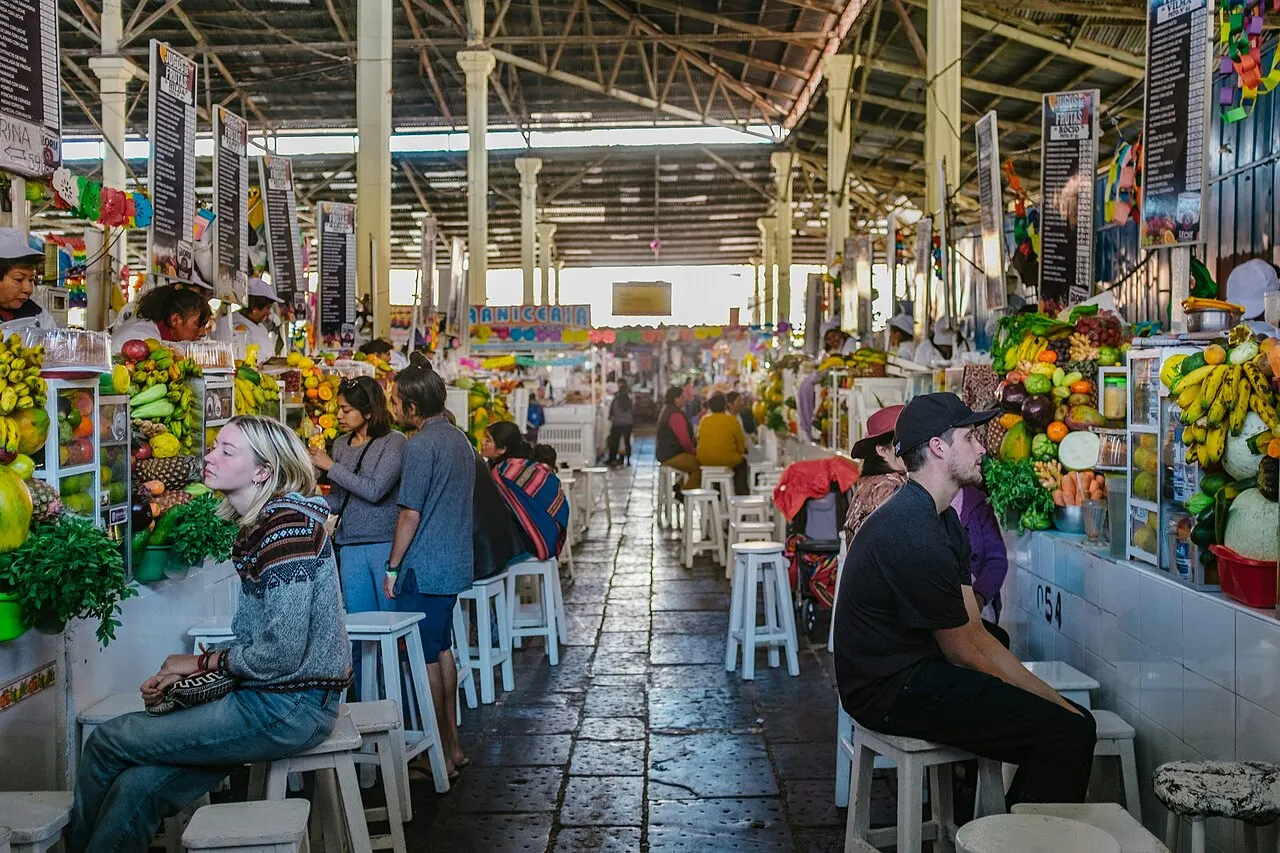
Start, as everyone does, with altitude — and the good news is that acclimatizing is free. Cusco sits at 3,399 m and the citadel is lower at 2,430 m, so the whole trip is essentially a descent; your first job is simply to land, slow down, drink water and let your body adjust before you exert yourself. Budget travellers actually have an advantage here, because the cheapest first days — wandering the free public squares, the San Pedro market, the artisan lanes of San Blas, sipping coca tea — are also the most acclimatization-friendly. You don't need to spend money to do this part right; you need to do less.
Eat where locals eat. The menú del día — a set two- or three-course lunch served almost everywhere in Cusco and the valley for a modest fixed price — is the budget traveller's best friend, far cheaper and often better than the tourist-strip restaurants. Markets sell fruit, bread, cheese and juices for next to nothing. For your bed, hostels and guesthouses in Cusco are plentiful and inexpensive; when you move toward the citadel, staging a night in Ollantaytambo costs less than the valley's resort hotels and puts you right by the train (or the road transport for Hidroeléctrica). Keep these days simple, low and cheap, and you've banked both money and acclimatization for the climb to come.


Day 3 — The cheap way into the gorge
This is the big budget day, and the one that demands an early start. If you've chosen the Hidroeléctrica route, you'll spend much of it on the road — a long, winding drive over a high pass and down into the cloud forest to the Hidroeléctrica station, followed by the trackside walk into Aguas Calientes. It's a real journey, not a transfer: pack water, snacks and sun protection, expect a tiring but rewarding day, and book the shared transport in advance through a reputable operator rather than gambling on turning up. The payoff is a saving large enough to fund several days of everything else.
If you've decided the train is worth it after all, this becomes a far gentler day — a short morning in the valley, then the scenic two-hour ride from Ollantaytambo. Either way, you arrive in Machu Picchu Pueblo (Aguas Calientes) and check into a budget room. The town is captive and prices run higher than elsewhere, so book a cheaper bed early, eat away from the main tourist strip where set lunches and simpler kitchens cost a fraction of the menu-board restaurants, and keep the evening cheap and early — the citadel is tomorrow, and you'll want the energy.
- Hidroeléctrica day: start early, pack water and snacks, book shared transport ahead.
- Train alternative: a short, easy day if you've decided the fare is worth it.
- Book a budget room in Aguas Calientes in advance — it's a captive, pricier town.
- Eat off the main strip; set lunches and simpler kitchens cost far less.

Day 4 — The citadel, cheaply but properly
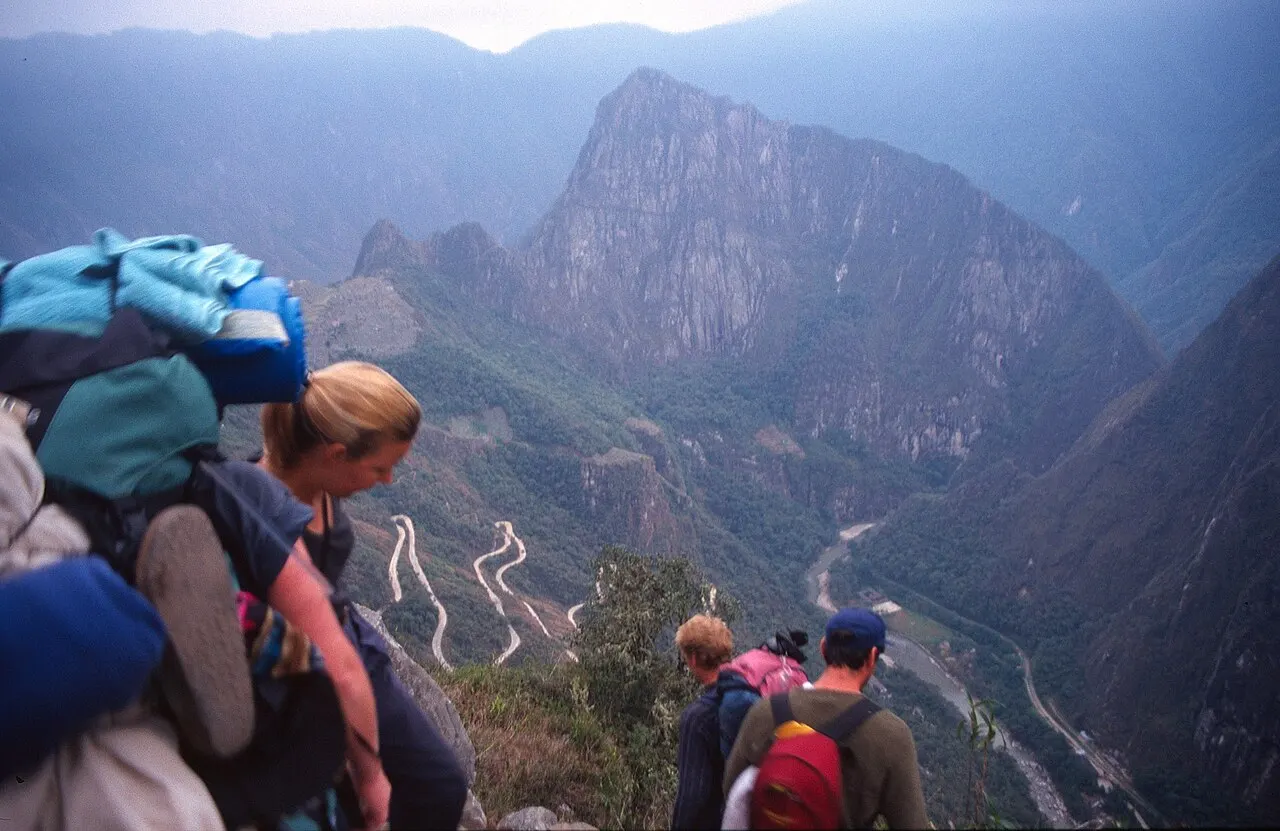
The whole point of the trip, and where the savings get serious for the last time. The shuttle bus from Aguas Calientes up the switchbacks to the gate is convenient but costs real money for a short ride; budget travellers often walk up instead, climbing the steep stone trail through the forest in roughly an hour and a half. It's free and it's beautiful, but it's genuinely strenuous at altitude and a pre-dawn start in the dark, so weigh it against your fitness and how much you actually value the saving — the legs that climb up have to walk the citadel afterwards.
Inside, the timed-entry ticket and your chosen circuit are fixed costs — this is not where to economise, and the gate checks the passport or ID you booked with. Where you can save is on guiding: a private guide is a lovely upgrade but not compulsory, and budget travellers either self-guide with a good map and downloaded notes, or team up with other independent travellers at the entrance to hire a guide together and split the fee. Bring your own water and a packed snack (large food, big packs and tripods are restricted inside, so keep it small), and plan to walk your circuit at a steady pace. Done thoughtfully, the cheapest visit and the most expensive one see exactly the same astonishing place.
- Walk up to save the bus fare — but it's steep, dark and strenuous at altitude.
- Don't economise on the entry ticket; it's the fixed cost and is checked at the gate.
- Self-guide, or share a guide with other travellers at the entrance to split the cost.
- Carry your own water and a small snack; large food and big packs are restricted inside.
- Choose a lower-cost circuit and skip the paid peak add-ons if you're counting sols.


Day 5 — Out cheaply, and the honest tradeoffs
Leave the way that costs least. If you came in by Hidroeléctrica, you can walk the tracks back out and take the road transport up to Cusco, banking the same saving in reverse; if you splurged on the train one way, this is the day to take the cheaper road option the other. Either way, you climb back up to Cusco only at the end, fully acclimatized, for a final cheap night before flying home — squaring the altitude ladder and the budget in a single move.
It's worth being honest about what the budget route actually costs you, because the saving is real but so are the tradeoffs. The Hidroeléctrica option is long and tiring and not suited to those short on time, in poor health or shaky at altitude. Walking up to the gate is strenuous and adds fatigue before a big day. Skipping a guide means missing the stories that make the stones come alive, unless you do your reading. And the captive town of Aguas Calientes will always cost more than you'd like. None of these are dealbreakers — millions of travellers do Machu Picchu cheaply and adore it — but a budget plan made with eyes open is a far happier one than a budget plan that assumed everything would be free. Trim transport, beds and food hard; never trim the ticket, the permit, your safety or your common sense.
- Exit by the cheapest route you didn't use on the way in (Hidroeléctrica or train).
- Return up to Cusco only at the end, acclimatized, for a last cheap night.
- Be honest: Hidroeléctrica is long, the walk-up is hard, and Aguas Calientes is pricey.
- Save on transport, beds and food; never on the entry ticket, permits or your safety.




Related guides

Cusco & Machu Picchu Costs
A realistic way to think about the money — the fixed citadel ticket, the train that dominates the budget, buses, guides, food and the trek add-ons — and where the costs hide.
Read guide
Budget hotels in Aguas Calientes
How to sleep cheaply in the town below Machu Picchu without missing a train, a bus or your early entry — what a good budget room needs to get right, where the value sits, and the traps to dodge.
Read guide
The Hidroeléctrica Budget Route to Machu Picchu
The backpacker's back door — a long minivan ride to the Hidroeléctrica station, then a flat riverside walk to Aguas Calientes. What it costs you in time, the rain and landslide risk, and who should skip it.
Read guideMore in Itineraries
6
A Luxury Machu Picchu Itinerary
A high-end Machu Picchu plan with palace hotels in Cusco, luxury Sacred Valley lodges, the Hiram Bingham train, private guiding and soft, altitude-kind pacing.
Read guide
A Machu Picchu Honeymoon
How to build a honeymoon around Machu Picchu — romantic hotels in Cusco and the Sacred Valley, a luxury train into the gorge, a private guide, spa days and a dawn at the citadel.
Read guide
Beyond the Citadel: Peru Add-Ons to Machu Picchu
How to bolt the rest of Peru onto a Machu Picchu trip — Rainbow Mountain, Humantay Lake, the South Valley and the bigger leaps to the Amazon, Lake Titicaca, Lima and Arequipa — sequenced for altitude and time.
Read guide
Family Machu Picchu Itinerary: A Kid-Paced Plan
A family-paced Machu Picchu itinerary built around the altitude ladder, kid-friendly circuits, the train, Sacred Valley downtime and unhurried buffer days — so children and grandparents arrive at the citadel rested, not wrecked.
Read guide
Five Days: Cusco, the Sacred Valley & Machu Picchu
A balanced five-day Machu Picchu itinerary — proper Cusco acclimatization, an unhurried Sacred Valley, an overnight in Aguas Calientes and the citadel, with altitude and ticket buffers built in so a cloudy morning or a late train never sinks the trip.
Read guide
Machu Picchu by Train: A Step-by-Step Itinerary
A train-based Machu Picchu itinerary from Cusco or Ollantaytambo — the booking order, hotel timing, the bus up from Aguas Calientes, and the backups that keep the day calm.
Read guide