
Around the Site: Machu Picchu Up Close
The hub for the world immediately around the citadel — what to see inside it, the town of Aguas Calientes below, where to stay, the first buses up, the hot springs, the restaurants, and how to visit responsibly.

Photo: Denisse Leon / Unsplash
- ✓Everything around the citadel orbits one place: the gateway town of Aguas Calientes (Machu Picchu Pueblo), the only base at the foot of the mountain.
- ✓The shuttle bus climbs the switchbacks from town to the gate; the first departures leave very early to catch dawn light — verify current times.
- ✓Inside, what you see depends on your circuit and route, so the highlights and the ticket choice are read together.
- ✓This hub gathers the close-in pieces — the site itself, the town, hotels, buses, hot springs, food and responsible-visit guidance.
The world at the foot of the mountain
Machu Picchu does not sit alone on its ridge. It sits at the top of a small, intense world — a steep cloud-forest gorge with a single gateway town below, a road of switchbacks climbing to the gate, and a tight choreography of trains, buses and timed tickets that gets everyone up the mountain and back. This hub is about that world: not how to reach the region, but what to do once you are right at the foot of the citadel.
Almost everything here orbits Aguas Calientes — officially Machu Picchu Pueblo — the only settlement at the base of the mountain. It is where the train sets you down, where the bus up begins, where you sleep the night before an early entry, and where you soak in the hot springs that gave the town its name. Small, steamy and entirely built around the citadel above it, it is the staging ground for the visit itself.
Inside the citadel
What you actually see at Machu Picchu is decided before you arrive, because the post-2024 ticket system routes every visitor along one of three circuits and a set of numbered routes — largely one-way, with no backtracking. That is why the site's highlights and the ticket choice belong in the same breath: the classic terrace overlook, the Temple of the Sun, the Sacred Rock, the Intihuatana and the Sun Gate are not all reachable on a single ticket. Read the highlights first, then choose the circuit that reaches the ones you most want to stand in front of.
A few landmarks anchor most people's mental map of the citadel. The high terrace overlook gives the postcard view back over the whole site with Huayna Picchu rising behind it. The Temple of the Sun is the curved tower built over sacred rock; the Intihuatana is the carved stone often described as a ritual sun-marker; the Temple of the Condor uses the natural rock to suggest a bird in flight; and the Sun Gate (Intipunku), up the old trail, is where Inca Trail walkers get their first view. Which of these your ticket reaches depends on the circuit — so decide what you most want to see, then read the circuit detail before you book.
- Entry is one-way along a numbered route within one of three circuits — no wandering, no backtracking.
- Not every landmark is on every ticket: pick the circuit that reaches what matters most to you.
- Add-on peaks (Huayna Picchu, Machu Picchu Mountain) are separate permits and sell out earliest of all.
- A licensed guide is part of the visit for many tickets; confirm current requirements on the official portal when you book.

Aguas Calientes: sleeping, soaking, eating
The town below earns a few unhurried hours of its own. Sleeping here the night before a dawn entry is the move that turns a frantic day into a calm one — it puts you first in the bus queue rather than racing a morning train. Hotels range from simple hostels to a handful of plush riverside lodges, and demand tracks the citadel's, so book early for dry-season dates.
Between the train and the gate, the town offers two reliable pleasures: the thermal hot springs that give Aguas Calientes its name, perfect for tired legs after the citadel; and a strip of restaurants along the river and the main streets, where you can eat well before or after the climb. Pace it gently — the altitude here is lower than Cusco, but you are still in the mountains.
- Sleeping here the night before a dawn slot puts you ahead of the morning-train crowd at the bus queue.
- Hotels run from simple hostels to riverside lodges; demand tracks the citadel, so book early for dry-season dates.
- The hot springs are a fine reward for tired legs; the riverside restaurant strip covers most budgets.
- Store your large luggage in Cusco or Ollantaytambo and bring only a small bag down — the trains cap luggage anyway.

Visiting well
Machu Picchu is a fragile UNESCO World Heritage site under real pressure from its own popularity, and the rules around it — timed entry, fixed circuits, guide requirements, restrictions on what you can carry — exist to protect it. Visiting responsibly is partly about following those rules and partly about temperament: staying on the routes, not touching the stonework, carrying out what you carry in, and treating the place as the living sanctuary it remains. Read the responsible-visit guidance alongside the highlights, and you'll leave the citadel exactly as you found it.

The bus up, and timing the morning
The last leg from town to gate is a shuttle bus that climbs a tight series of switchbacks up the mountainside; the alternative is a steep stairway on foot for the fit and unhurried. The buses start very early to serve the first entry slots, and in peak season the queue forms before the first departure, so the calm play is to be in line with time to spare rather than racing up to a slot. Buy the bus ticket separately from your entry ticket, and keep the passport you booked with — identity is checked at the gate.
Build the morning backwards from your timed slot: allow for the bus queue, the ride up, and the walk from the drop-off to the entrance, then add a buffer. Trying to thread an early-morning train, the town, the bus and a tight entry window all in one go is the classic way to start the visit flustered; a night in Aguas Calientes removes most of that risk. Exact first-bus and entry times shift, so confirm them against current official and operator sources close to your date.
- Shuttle bus up the switchbacks, or a steep stairway on foot; buses start early for the first slots.
- Bus tickets are separate from entry tickets — sort both before the morning.
- Carry the exact passport you booked with; it is checked at the gate.
- Work the morning backwards from your slot and add a buffer; a night in town makes it far easier.
What to avoid
Most disappointing Machu Picchu mornings come from a handful of avoidable mistakes rather than bad luck. Keep these in mind and the day around the citadel runs smoothly.
- Don't leave the entry ticket until last — book it first; everything below the mountain is built around the slot.
- Don't assume one ticket sees everything — landmarks are split across circuits, so choose deliberately.
- Don't gamble on a same-morning train into a tight slot if you can sleep in Aguas Calientes instead.
- Don't touch the stonework, step off the route, or carry banned items — the rules protect a fragile site, and they are enforced.
- Don't forget the passport you booked with, or rely on screenshots of times that may have changed — verify current details officially.


Related guides

Machu Picchu Highlights: What You'll See
The set pieces inside the citadel — the Guardhouse overlook, the Temple of the Sun, the Intihuatana, the Sacred Rock, the Sun Gate and the Inca Bridge — and which circuit and route reaches each one.
Read guide
Machu Picchu Site Guide: Circuit by Circuit
How to read and walk the citadel under the post-2024 system — the three circuits, the landmarks each one reaches, the photo points, the order you move, and how to pace a one-way visit at altitude.
Read guide
Aguas Calientes bus to the citadel
How the shuttle bus from Aguas Calientes (Machu Picchu Pueblo) up to the citadel gate works — buying tickets, the morning queue, timing it to your entry slot, and the walking alternative.
Read guideMore in Highlights
6
A Rainy Day at Machu Picchu
Rain at the citadel is normal, not a disaster — how to dress for cloud forest, which circuits cope best, how to build train buffers, the Aguas Calientes backups, and why mist makes the most haunting photographs of all.
Read guide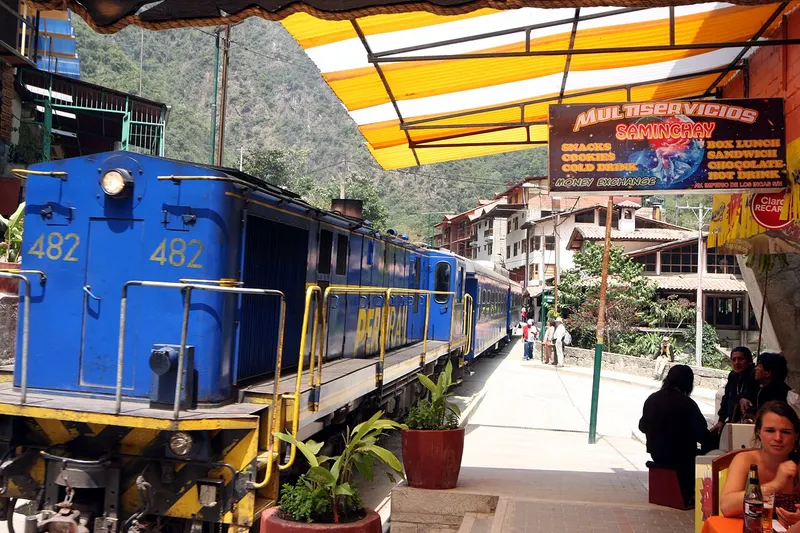
Aguas Calientes (Machu Picchu Pueblo): The Complete Guide
Aguas Calientes — officially Machu Picchu Pueblo — the cloud-forest town at the foot of the citadel. Where to sleep, how the trains and buses connect, the food, the hot springs, luggage, and how long to stay for a calmer entry.
Read guide
Best Photography Spots at Machu Picchu
Where the great Machu Picchu photographs are actually made — the classic upper-terrace frame, the llamas, the morning cloud, and which circuit reaches each angle. Plus the sunrise myth and what you simply cannot access.
Read guide
Budget hotels for Machu Picchu
Better-value places to sleep along the Machu Picchu route — honest guesthouses and well-run hostels in Cusco, Ollantaytambo and Aguas Calientes — chosen to stretch the trip without wrecking the altitude ladder or the citadel-morning logistics.
Read guide
Luxury hotels for Machu Picchu
The top-end stays that string together a polished Machu Picchu journey — restored monasteries and oxygen-equipped suites in Cusco, hacienda-and-spa retreats in the Sacred Valley, and the one true luxury option at the gate of the citadel itself.
Read guide
Machu Picchu History: The Story in the Stone
Who built Machu Picchu and why, the engineering that holds a city to a ridge, the centuries of quiet, Hiram Bingham's 1911 arrival, and the UNESCO status that shapes how we visit today.
Read guide