
Aguas Calientes (Machu Picchu Pueblo): The Complete Guide
Aguas Calientes — officially Machu Picchu Pueblo — the cloud-forest town at the foot of the citadel. Where to sleep, how the trains and buses connect, the food, the hot springs, luggage, and how long to stay for a calmer entry.
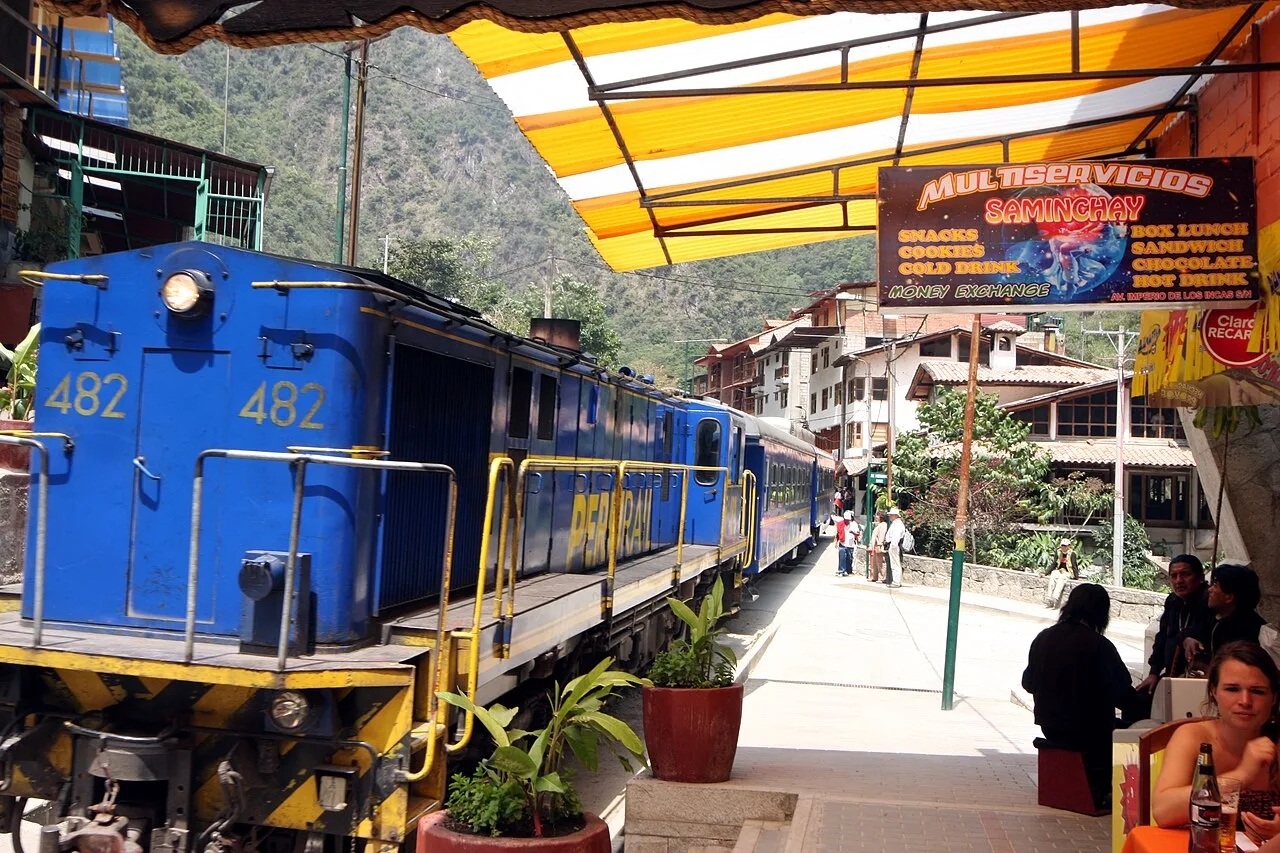
Photo: Bruce Tuten / Wikimedia Commons · CC BY 2.0
- ✓Aguas Calientes — officially Machu Picchu Pueblo — is the only town at the foot of the citadel, where the train ends and the bus up begins.
- ✓There is no road in; you arrive by train or on foot via the Inca Trail or the Hidroeléctrica route, and the same is true of leaving.
- ✓Sleeping here the night before is what makes a dawn entry realistic — the early bus is far easier from the town than from the valley.
- ✓It is a small, steep, river-loud place built almost entirely for visitors: hotels, restaurants, the bus office, and the namesake hot springs.
The town at the foot of the mountain
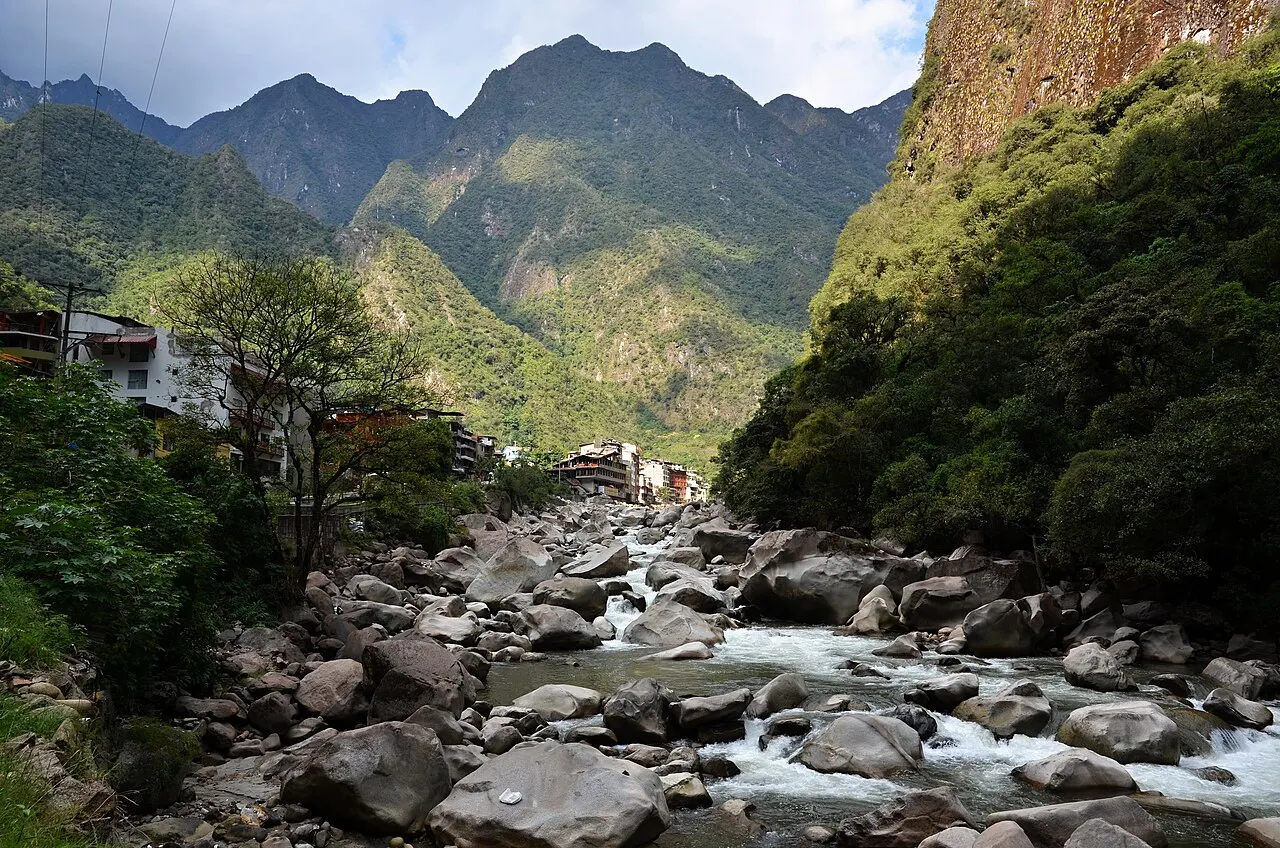
Every road to Machu Picchu ends in the same improbable place: a narrow town crammed into a cloud-forest gorge, with the Urubamba roaring through its middle, railway tracks for streets, and green mountain walls rising so steeply on every side that the sky is a ribbon overhead. This is Aguas Calientes — 'hot waters', for the thermal springs that gave it its name — though Peru officially renamed it Machu Picchu Pueblo to bind it to the citadel above. You will hear both names; they mean the same town.
It is an honest place to be honest about. Aguas Calientes exists almost entirely to serve the citadel: it has no historic old town, the building is dense and unlovely in patches, and prices run higher than elsewhere in the valley because everything arrives by train. And yet it has a real charm if you let it — the river-noise, the warm cloud-forest air, the hummingbirds, the buzz of travellers either nervous before their visit or glowing after it. Treat it not as a destination but as the staging post it is, and it does its job beautifully: it puts you at the foot of the mountain so you can be on top of it at first light.

At a glance
The essentials before you book a night here. Train times, fares, bus schedules and hot-spring hours are set by operators and the municipality and change — confirm the current details before you travel.
- Names: Aguas Calientes = Machu Picchu Pueblo — one town, two names.
- Access: train, or on foot via the Inca Trail or the Hidroeléctrica route — there is no road in.
- Getting up: the shuttle bus climbs the switchbacks to the citadel gate in roughly half an hour; the trail up is a steep ~1.5-hour stair.
- Why stay: an overnight makes a dawn entry realistic and far less frantic than a same-day dash.
- Has: hotels at every budget, many restaurants, the bus ticket office, left-luggage, and the hot springs.
- Lacks: an ATM you should rely on, a historic centre, and any sense of quiet near the tracks — plan accordingly.
How long should you stay?
The single most useful decision is whether to sleep here at all, and the answer for most people is yes — one night. The reason is timing. The citadel runs on capped, timed entry, and the early-morning slots, when the light is best and the cloud most theatrical, are realistic only if you are already in the town. A same-day round trip from Cusco or the Sacred Valley means a very early train, a tight, anxious connection to the bus, and no margin if anything slips. A night in Aguas Calientes turns that scramble into a short, calm walk to the bus queue.
One night is plenty for a standard visit: arrive in the afternoon, settle in, eat, perhaps soak in the springs, sleep, and rise for the early bus. A second night only earns its keep if you are climbing Huayna Picchu or Machu Picchu Mountain and want a recovery evening, doing two entries on consecutive days, or building in a buffer against the train and weather disruptions that occasionally close the line. For nearly everyone else, an overnight is the sweet spot between a frantic day-trip and an unnecessary lingering in a town that is, frankly, not built to detain you.
- One night suits most visitors — it makes the dawn entry calm instead of frantic.
- Consider a second night for the peak climbs, two entries, or weather/train buffer.
- A same-day dash is possible but unforgiving on timing and altitude.
- Book the entry ticket first; the night here is arranged around the slot.

Trains, buses and arriving on foot
Aguas Calientes has no road, which shapes everything. Most visitors arrive by train — PeruRail or IncaRail, almost always from Ollantaytambo in the Sacred Valley, down the Urubamba gorge to the town's compact station in the middle of everything. Trekkers arrive on foot: the classic and short Inca Trail walk in over the mountains, while budget travellers come the long way via Hidroeléctrica and a riverside path. However you arrive, you leave the same way, so your departure train is as much a fixed point as your entry slot.
From the town, the last leg up to the citadel is the shuttle bus, which grinds up the switchback road to the gate in about half an hour. Its ticket is separate from your entry ticket and bought specifically — online ahead or at the operator's office in town. The dawn queue in high season can be long, so buy the bus ticket the evening before and be in line early. The free alternative is the steep stair trail, around an hour and a half of hard uphill; many ride up and walk down. Coordinate train, bus and entry slot as one connected sequence, working backwards from the gate.
- Arrive by train (usually from Ollantaytambo), on the Inca Trail, or via the Hidroeléctrica route.
- The shuttle bus up the switchbacks takes ~30 minutes; the ticket is separate — buy it the evening before.
- First buses leave before dawn in peak season — queue early for an early entry slot.
- Your departure train is a fixed point — confirm it and don't cut the connection fine.

Food, the hot springs, and luggage
Aguas Calientes is wall-to-wall restaurants, clustered along the river and the main streets, and ranging from tourist-menu pizzerias with insistent touts at the door to a handful of genuinely good kitchens cooking Andean and Peruvian dishes. Prices sit above valley norms because supply comes in by rail, so judge by a quick look at the room rather than the menu board and the host on the pavement. Reserve nothing-fancy expectations and you will eat perfectly well; come hungry for trout from the river or a warming soup after a cold dawn on the mountain.
The hot springs that named the town are a short uphill walk from the centre — a set of thermal pools where many soak tired legs after the citadel, especially trekkers coming off the trail. They are rustic rather than luxurious, and busy in the late afternoon; bring a towel and swimwear, and check current hours and the small entry fee locally. As for luggage: the trains enforce a strict size limit and you cannot take a large bag up to the citadel, so leave the big pack in Cusco or Ollantaytambo and travel into town with an overnight bag only. Left-luggage is available in town and at hotels for the hours you are up at the ruins. Verify current spring hours, fees and bag rules before you rely on them.
- Many restaurants, above-valley prices — judge by the room, not the tout at the door.
- Hot springs are a short walk uphill — rustic, busy late afternoon; bring towel and swimwear, verify hours and fee.
- Travel in with an overnight bag only; the big pack stays in Cusco or Ollantaytambo.
- Left-luggage is available in town and at hotels for your hours at the citadel.

Making the most of a night here
Used well, the overnight is not a chore but a quiet pleasure. Arrive in the afternoon with the day's pressure off, drop the bag, and walk the river while the cloud forest cools. Sort the practical things the evening before so the morning is calm: buy the bus ticket, lay out warm layers and rain gear, set the alarm for the early queue, and confirm where your departure train leaves from. Then eat well, soak if you like, and sleep — though the river and the early-rising town mean light sleepers should pack earplugs.
The payoff comes at dawn, when you step into the bus queue while same-day visitors are still rattling down the gorge on the first train, and you reach the gate fresh, on time, and ahead of the heaviest crowds. That is the whole argument for Aguas Calientes in one sentence: it is not where you come to linger, but it is where you stand the night before the morning you came all this way for. Get the small things right here, and the citadel above gives you its best self.



Related guides

Where to stay in Aguas Calientes
How to choose a base in the little town below Machu Picchu — weighed not on stars but on how cleanly it gets you onto the first bus, off a late train, fed early, and settled for an altitude-friendly night before the citadel.
Read guide
Aguas Calientes bus to the citadel
How the shuttle bus from Aguas Calientes (Machu Picchu Pueblo) up to the citadel gate works — buying tickets, the morning queue, timing it to your entry slot, and the walking alternative.
Read guide
Aguas Calientes restaurants
Where and how to eat in the town below Machu Picchu — the early breakfast that makes a dawn entry possible, the warm lunch on the way down, the celebratory dinner, and how to time meals around late trains.
Read guideMore in Highlights
6
A Rainy Day at Machu Picchu
Rain at the citadel is normal, not a disaster — how to dress for cloud forest, which circuits cope best, how to build train buffers, the Aguas Calientes backups, and why mist makes the most haunting photographs of all.
Read guide
Around the Site: Machu Picchu Up Close
The hub for the world immediately around the citadel — what to see inside it, the town of Aguas Calientes below, where to stay, the first buses up, the hot springs, the restaurants, and how to visit responsibly.
Read guide
Best Photography Spots at Machu Picchu
Where the great Machu Picchu photographs are actually made — the classic upper-terrace frame, the llamas, the morning cloud, and which circuit reaches each angle. Plus the sunrise myth and what you simply cannot access.
Read guide
Budget hotels for Machu Picchu
Better-value places to sleep along the Machu Picchu route — honest guesthouses and well-run hostels in Cusco, Ollantaytambo and Aguas Calientes — chosen to stretch the trip without wrecking the altitude ladder or the citadel-morning logistics.
Read guide
Luxury hotels for Machu Picchu
The top-end stays that string together a polished Machu Picchu journey — restored monasteries and oxygen-equipped suites in Cusco, hacienda-and-spa retreats in the Sacred Valley, and the one true luxury option at the gate of the citadel itself.
Read guide
Machu Picchu Highlights: What You'll See
The set pieces inside the citadel — the Guardhouse overlook, the Temple of the Sun, the Intihuatana, the Sacred Rock, the Sun Gate and the Inca Bridge — and which circuit and route reaches each one.
Read guide