
The Llamas of Machu Picchu
The llamas grazing the terraces of Machu Picchu — why they're there, where to find them, the etiquette for photographing them, which circuit reaches them, and what they mean for families with children.

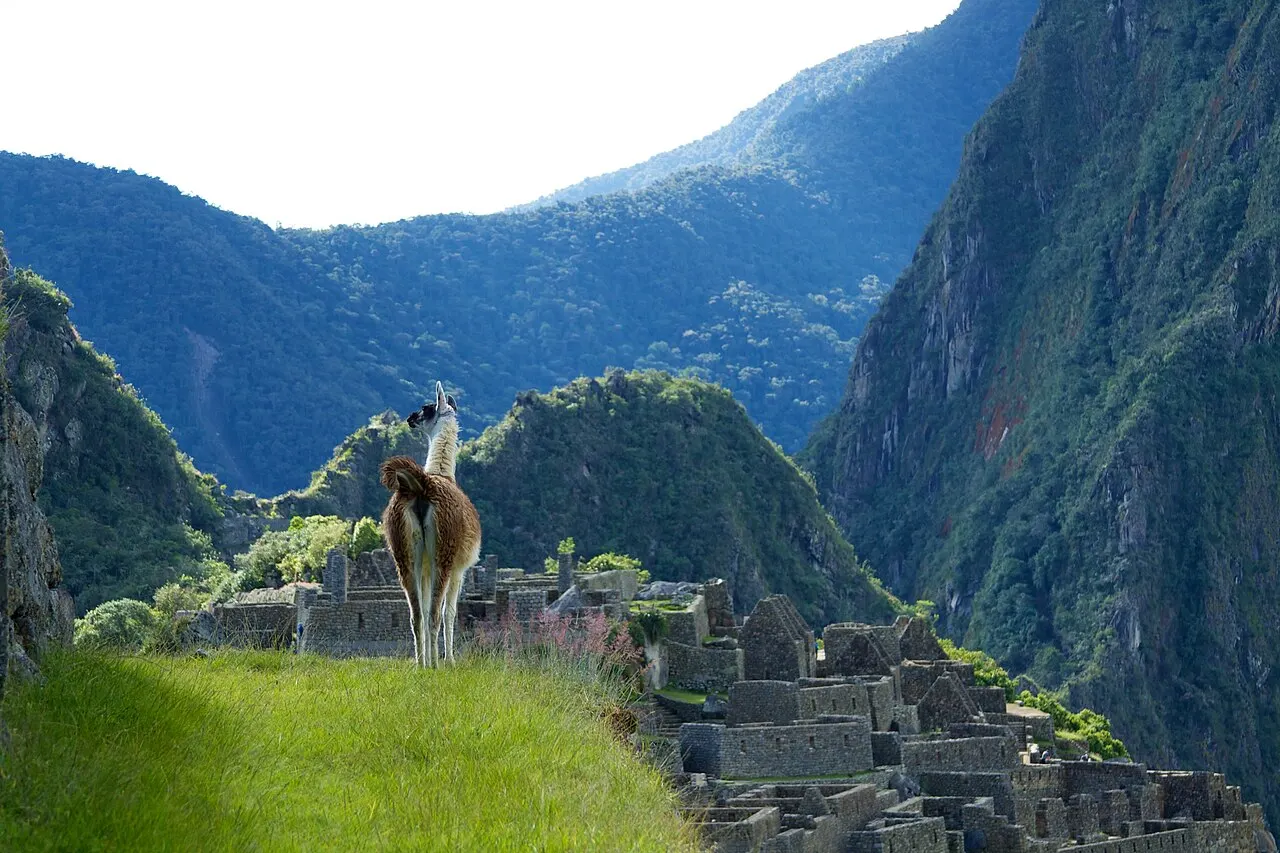
Photo: Junior Moran / Unsplash
- ✓The llamas are a small resident herd kept to graze and trim the agricultural terraces — living lawnmowers that also keep the masonry roots in check.
- ✓They are usually found on the upper terraces near the classic viewpoint, the same panoramic zone that holds the postcard frame.
- ✓They roam freely and are not on a fixed circuit — a charming bonus, not a guaranteed encounter, and never to be fed or chased.
- ✓Calm, unfenced and wandering, they are one of the best things about the site for children — but they are working animals, not a petting zoo.
Why there are llamas at the citadel
Somewhere on the upper terraces of Machu Picchu, framed against the most photographed ruin on earth, a llama will be chewing grass with the serene indifference of an animal that has seen it all. They are not a tourist gimmick bolted on for the photographs — though they have become one of the site's most beloved features — but a small working herd with a real job. The terraces that step down the mountainside were farmland once, and grass left to grow long sends roots into the ancient stonework and feeds the damp that erodes it. The llamas graze it down. They are, in the gentlest possible sense, the citadel's groundskeepers.
There is a deeper rightness to their presence, too. The llama was the engine of the Inca world — pack animal, source of wool and meat, sacrificial offering, walking wealth — and the high terraces of Machu Picchu would have known their hooves five centuries ago. To meet one here is to meet the Andes' oldest companion in the place it belongs, against a backdrop that needs no explaining. For many visitors, and almost every child, the llamas are the warm, living surprise of a visit otherwise built around stone.
At a glance
The essentials before you go looking for them. The herd is small and free-roaming, so nothing here is a guarantee — these are evergreen pointers, not a timetable.
- What they are: a small resident herd that grazes the terraces — working animals, not a petting attraction.
- Where: usually the upper agricultural terraces near the classic viewpoint, on the panoramic routing.
- Reliability: free-roaming and not on a fixed circuit — likely, but never guaranteed.
- Etiquette: photograph from a respectful distance; do not feed, chase, corner or touch them.
- Llama vs alpaca: these are llamas — taller, longer-faced, banana-shaped ears; alpacas are smaller and woollier.
- Best for: families with children, for whom the llamas are often the highlight of the whole visit.
Where to find them, and which circuit reaches them
The llamas are most reliably found on the broad upper agricultural terraces — the green tiers that sweep down toward the urban core near the Guardhouse and the classic viewpoint. That happens to be the panoramic zone, the upper routing, the same part of the site that frames the postcard view of the whole citadel. So if a llama-against-the-ruins photograph is on your wish list, the upper or classic circuit is where to be. On the lower routing you may still glimpse them, but the open terrace grazing that makes the famous shot belongs up top.
That said, they wander. Unlike every fixed landmark at the site, the llamas obey no circuit and keep no schedule; they amble across terraces, doze in the sun, and occasionally stroll right onto the path. This is part of their charm and part of why you cannot plan an encounter the way you plan a viewpoint. Build the upper routing into your day for the best odds, keep your eyes open throughout, and treat any meeting as the bonus it is. Confirm current circuit definitions when you book, as the routing has been revised before.
- Most likely on the upper agricultural terraces near the classic viewpoint.
- That is the upper/panoramic routing — the same zone as the postcard frame.
- They roam freely and keep no schedule — likely up top, never guaranteed.
- Choose the upper or classic circuit for the best chance and the best backdrop.

Llama etiquette: how to share the terraces
The llamas are tame enough to ignore you and wild enough to mind their own business, and the kindest, smartest way to enjoy them is to let that be the relationship. Keep a respectful distance and let them come and go as they please. Do not feed them — human food is bad for them and teaches them to pester visitors. Do not chase a llama for a photograph, corner one against a wall, or reach out to touch it; a startled or annoyed llama can spit, and the polite thing is simply not to crowd an animal at work. Photograph them as you would any wildlife: patiently, quietly, from where you are.
The same site rules that protect the masonry protect the llamas and everyone around them. Stay on the marked circuit, do not climb on terraces or walls to get closer, and keep the one-way flow moving rather than blocking the path for a perfect frame. If a llama wanders into your shot, you are lucky; if it does not, you have lost nothing the site promised you. Treat them as the dignified residents they are, and they will reward you with the most disarming photograph of the day. Verify current site conduct rules before you go, as the Ministry updates them periodically.
- Keep a respectful distance and let them approach or leave on their terms.
- Never feed, chase, corner or touch them — a crowded llama may spit.
- Stay on the marked circuit; do not climb terraces or walls for a closer angle.
- Photograph patiently, like wildlife — the best shots come to those who wait.
Llamas and kids: the family highlight
If you are bringing children to Machu Picchu, the llamas may be the single most valuable thing about the visit — and worth knowing about in advance. Stone ruins, however magnificent, ask a lot of a young attention span; a llama ambling across the grass does not. For many families the llamas are the moment the trip lands for their children, the thing they talk about afterward, the photograph on the fridge. Pitch the day around that: tell them before you arrive that the citadel has its own llamas, make spotting them a game, and let the animals carry the parts of the circuit that the masonry cannot.
Keep the etiquette firmly in place for small visitors. Children are likely to want to run toward a llama or feed it; gentle, clear ground rules beforehand — no chasing, no feeding, no touching, watch from where we stand — keep everyone safe and the animals calm. The terraces are steep and some edges are unfenced, so hold little hands near the drops. Done with a bit of forethought, the llamas turn a potentially long, hot, queue-and-circuit day into the one your children will ask to do again.


Related guides

Best Photography Spots at Machu Picchu
Where the great Machu Picchu photographs are actually made — the classic upper-terrace frame, the llamas, the morning cloud, and which circuit reaches each angle. Plus the sunrise myth and what you simply cannot access.
Read guide
Machu Picchu Entry Rules
Bag size, food, tripods, walking sticks, re-entry, one-way routes and the behaviour that keeps you inside the gate — the practical rules to verify before you go.
Read guideMore in Highlights
6
A Rainy Day at Machu Picchu
Rain at the citadel is normal, not a disaster — how to dress for cloud forest, which circuits cope best, how to build train buffers, the Aguas Calientes backups, and why mist makes the most haunting photographs of all.
Read guide
Aguas Calientes (Machu Picchu Pueblo): The Complete Guide
Aguas Calientes — officially Machu Picchu Pueblo — the cloud-forest town at the foot of the citadel. Where to sleep, how the trains and buses connect, the food, the hot springs, luggage, and how long to stay for a calmer entry.
Read guide
Around the Site: Machu Picchu Up Close
The hub for the world immediately around the citadel — what to see inside it, the town of Aguas Calientes below, where to stay, the first buses up, the hot springs, the restaurants, and how to visit responsibly.
Read guide
Budget hotels for Machu Picchu
Better-value places to sleep along the Machu Picchu route — honest guesthouses and well-run hostels in Cusco, Ollantaytambo and Aguas Calientes — chosen to stretch the trip without wrecking the altitude ladder or the citadel-morning logistics.
Read guide
Luxury hotels for Machu Picchu
The top-end stays that string together a polished Machu Picchu journey — restored monasteries and oxygen-equipped suites in Cusco, hacienda-and-spa retreats in the Sacred Valley, and the one true luxury option at the gate of the citadel itself.
Read guide
Machu Picchu Highlights: What You'll See
The set pieces inside the citadel — the Guardhouse overlook, the Temple of the Sun, the Intihuatana, the Sacred Rock, the Sun Gate and the Inca Bridge — and which circuit and route reaches each one.
Read guide