
Walking up from Aguas Calientes
The stairway route from Aguas Calientes up to the Machu Picchu entrance on foot — how hard it is, how long it takes, the effect of rain, darkness and altitude, and who should take the bus instead.

Photo: Emmanuel Hernandez / Unsplash
- ✓A steep stone stairway climbs from Aguas Calientes to the citadel gate in roughly an hour and a half of hard uphill.
- ✓It is free — the alternative to paying for the shuttle bus — but the effort at altitude is real and not for everyone.
- ✓The trail crosses the switchback bus road repeatedly; you start near the bridge below town and climb relentlessly.
- ✓Many walkers ride the bus up to make their entry slot and save the walk for the much easier descent.
The honest climb to the gate
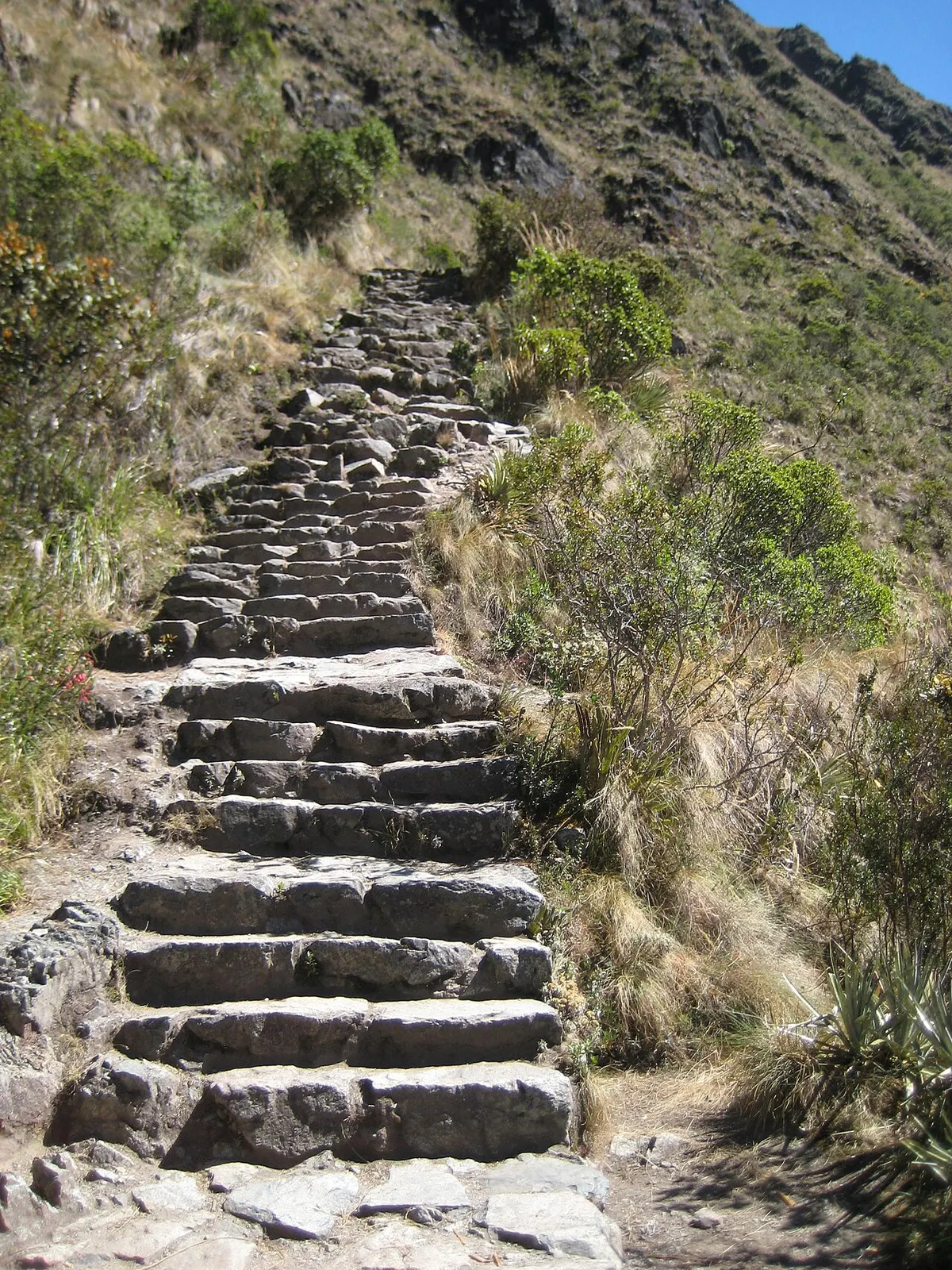
There is a romance to walking up to Machu Picchu rather than riding — arriving at the gate on your own steam, the citadel earned step by step through the cloud forest. The route exists: a steep stone stairway that links Aguas Calientes to the entrance high above, climbing through dripping greenery and crossing the bus road again and again as it goes. For the fit and the unhurried it is a genuinely lovely way to begin the day.
But it deserves an honest description, because the same stairway that thrills one walker breaks another. This is a sustained, calf-burning climb at altitude, in air that may be wet and, if you start before dawn, dark. This guide lays out exactly what the walk involves, how long it really takes, how rain and darkness change it, and — just as importantly — who should fold their pride and take the bus.
At a glance
The walk in brief. Times vary widely with fitness, weather and crowds — treat the figures as a realistic middle, not a promise.
- Route: stone stairway from near the bridge below Aguas Calientes up to the citadel gate.
- Time up: roughly 1.5 hours for an average fit walker, more with stops or in the wet.
- Effort: steep and sustained, all stairs — demanding at this altitude.
- Cost: free — the no-fare alternative to the shuttle bus.
- Descent: much easier than the ascent, around an hour, and a popular way down.
- Bring: water, layers, rain protection, a head torch for pre-dawn starts, sturdy shoes.
How hard is the walk, really?
Hard enough to respect. The route is essentially one long staircase gaining several hundred metres of height in a short horizontal distance, which is a polite way of saying it is relentlessly steep. There is little flat to recover on; you climb, you climb, and then you climb some more. At a fit, steady pace it takes around an hour and a half, but plenty of people take longer, and there is no shame in pausing often on the steps to let your breath catch up.
Altitude sharpens all of it. Even though Aguas Calientes and the citadel sit lower than Cusco, you are still well above the heights most visitors live at, and hauling yourself up endless stairs in thinner air is harder than the same climb would be at home. If you have only just arrived in the region and not acclimatized, the walk will feel disproportionately brutal. Strong walkers who have had a few days at altitude tend to enjoy it; everyone else should weigh it carefully.
What about rain and darkness?
Both change the calculation. This is cloud forest, and the stone steps can be slick with rain or morning damp for much of the year, especially in the wetter months from October to April. Wet stone underfoot turns a steep climb into a careful, hands-occasionally-needed scramble, and the descent in particular demands real attention — slips happen most often coming down. Sturdy shoes with grip are not optional, and trekking poles help some walkers a great deal.
Darkness is the other factor. If you are chasing an early entry slot, you may set off before the sun is properly up, and the forest under the canopy is genuinely dim. A head torch — leaving your hands free for balance — is essential for a pre-dawn start, and you should never attempt the climb in the dark without one. If the idea of steep, wet, dark stairs at altitude before breakfast sounds more ordeal than adventure, that is your answer: take the bus and save your legs for the citadel.
- Expect slick, damp steps; wet-season months make this far more likely.
- Wear shoes with real grip; consider trekking poles for the descent.
- Carry a head torch for any pre-dawn start — do not climb in the dark without one.
- Take the descent slowly and deliberately; most slips happen on the way down.
Walking it to make an early entry slot
Here is the timing trap. Because the citadel runs on capped, timed entry, you must reach the gate within your booked window, and the walk eats a generous, variable chunk of time. If you have an early slot and you intend to walk up, you have to start very early indeed and build in a wide margin for a slower-than-expected climb. Misjudge it and you arrive at the gate after your window — a genuinely costly mistake.
For that reason, many walkers reverse the logic: they ride the bus up to guarantee they make their slot fresh and on time, then walk back down afterwards, when the descent is easy and there is no clock to beat. It is the best of both — you keep the satisfaction of the trail, on the gravity-assisted leg, without gambling your entry on your stair-climbing speed. If walking up is non-negotiable for you, treat the start time as your strictest deadline of the whole trip.
Who should walk, and who should take the bus
Walk up if you are reasonably fit, well acclimatized after a few days in the region, travelling without a tight early slot to beat, and drawn to the quiet of the forest and the satisfaction of arriving on foot. In good conditions and at the right pace, it is one of the trip's small triumphs, and it costs nothing but effort.
Take the bus if you have altitude symptoms, knee or joint trouble, very young children or limited mobility, an early slot with no margin, or simply no wish to start the biggest day of the trip already drained. There is no virtue in arriving at the city in the clouds too exhausted to enjoy it. A perfectly happy compromise that suits most people is to bus up and walk down — the climb's reward without its cost. Whatever you choose, carry water, layers and the passport your ticket is booked under, which is checked at the gate.



Related guides

Aguas Calientes bus to the citadel
How the shuttle bus from Aguas Calientes (Machu Picchu Pueblo) up to the citadel gate works — buying tickets, the morning queue, timing it to your entry slot, and the walking alternative.
Read guide
Hiking & Site Safety at Machu Picchu
Staying safe on the steep, slick, exposed parts of the visit — the citadel's stone stairs, wet-weather footing, altitude on the climbs, and the demanding mountain ascents of Huayna Picchu and Machu Picchu Mountain.
Read guide
First-bus strategy
How the dawn shuttle-bus queue in Aguas Calientes really works, when catching the first bus is worth it, and how to match your effort to your timed entry slot without unnecessary pre-dawn stress.
Read guideMore in Getting There
6
Cusco airport to city & valley
Getting from Cusco's Velasco Astete airport to your hotel or the Sacred Valley — taxi, pre-booked transfer or hotel pickup — plus the altitude-first question of where to head after you land.
Read guide
Cusco to Machu Picchu: Every Way to Make the Journey
The realistic ways from the old capital to the citadel — train, bimodal bus-and-train, staging in the Sacred Valley, the long Hidroeléctrica back door, and whether a one-day round trip is sane.
Read guide
Cusco to Ollantaytambo
The ways to cover the road from Cusco to the rail gateway at Ollantaytambo — private driver, shared colectivo, tour transfer and taxi — plus the baggage strategy that saves you on the train.
Read guide
Lima to Cusco to Machu Picchu
Why getting from Lima to Machu Picchu is a staged journey, not a single hop — the flight to Cusco, the altitude jump, where to stage, and how to pace it so the citadel day actually works.
Read guide
Luggage Rules & Storage for Machu Picchu
Train baggage limits, where to leave the big bag in Cusco or Ollantaytambo, what to carry into the citadel, station storage in Aguas Calientes, and the trek-duffel system.
Read guide
Ollantaytambo to Machu Picchu: The Easiest Way In
Why Ollantaytambo is the most reliable rail gateway to the citadel — the timing, the short gorge ride, where to stay, taxis to the platform, and how to stage it from the Sacred Valley.
Read guide