
Machu Picchu Without a Tour: The Independent Plan
How to visit Machu Picchu independently — buying official tickets, booking trains and the shuttle bus, sorting a guide and a hotel, and building in backups, all without a packaged tour.

Photo: Juan Carlos / Unsplash
- ✓Going tour-free is entirely doable: the citadel runs on a few official, bookable pieces — entry ticket, train, bus, guide, hotel — that you can assemble yourself.
- ✓Book in scarcity order: entry ticket first (the gate is the bottleneck), then the train, then the night below, then a guide, then the bus.
- ✓An official site guide is required for entry, but you can hire one independently at the gate or pre-book — you do not need a multi-day package to get one.
- ✓Build in backups: keep dates flexible, carry the exact passport you booked with, and have a fallback entry slot in mind for the dry-season squeeze.
You can absolutely do this yourself
There is a quiet thrill to standing at the Guardhouse overlook knowing you planned every step of the way there yourself — the timed ticket, the train threading the gorge, the dark first bus up the switchbacks. Machu Picchu has a reputation as a place you must hand over to an agency, and for the multi-day Inca Trail that is true. But for the standard train-and-citadel visit, the independent route is well-trodden, fully legal, and often cheaper and more flexible than a packaged tour.
The reason it works is that the whole experience is built from a small number of official, separately bookable parts. Peru's Ministry of Culture sells the entry ticket. Two licensed rail operators sell the train. A single concession runs the shuttle bus. Licensed guides offer their services by the visit. Hotels in Aguas Calientes, Ollantaytambo and Cusco take their own bookings. A tour company simply bundles these and adds a margin. Assemble them yourself and you keep the margin — and the control.
This guide walks the independent plan end to end, in the order you should book it, with the backups that turn a tight, anxious trip into a calm one. It does not quote live prices or exact times — those move, and you should confirm them on the official channels — but the method below is evergreen.

At a glance: the independent checklist
Five pieces, booked in scarcity order. Lock the hardest-to-get thing first and fit the flexible things around it. Everything below expands on these steps.
- 1. Entry ticket — the timed slot and circuit, bought on Peru's official Ministry of Culture platform. This is the bottleneck.
- 2. Train — PeruRail or IncaRail, chosen to land you in Aguas Calientes before your entry window.
- 3. A bed below — Aguas Calientes for a dawn start, or the Sacred Valley for a morning train.
- 4. A guide — required for entry; pre-book or hire a licensed guide at the gate.
- 5. Shuttle bus — the ride up the switchbacks from Aguas Calientes, bookable last.
- Plus: a passport that matches the one on your ticket, and a flexible-date mindset for the dry season.
Step one — the entry ticket, on the official site
Everything starts here. Since the 2024 reorganisation, entry is by a timed ticket tied to one of three official circuits, each with numbered routes through the citadel. The gate is capped daily, which makes the ticket the scarcest link in the chain — and the thing to secure before you commit to a single train seat or hotel night.
Buy it on Peru's official Ministry of Culture ticket platform rather than a reseller, where you control the date, the time band and the circuit, and pay the face price. Choose your circuit deliberately: it decides whether you get the classic terrace overlook, the urban sector and temples, or the lower royal sector with the add-on peaks. You cannot backtrack once inside, so the circuit is effectively your whole route, picked before you arrive.
If you want to climb Huayna Picchu or Machu Picchu Mountain, those are separate add-on permits attached to specific circuits, and they sell out earliest of all. Decide on a peak now or not at all — bolting one on later can force you to rebook the base ticket.

Step two — the train, matched to your slot
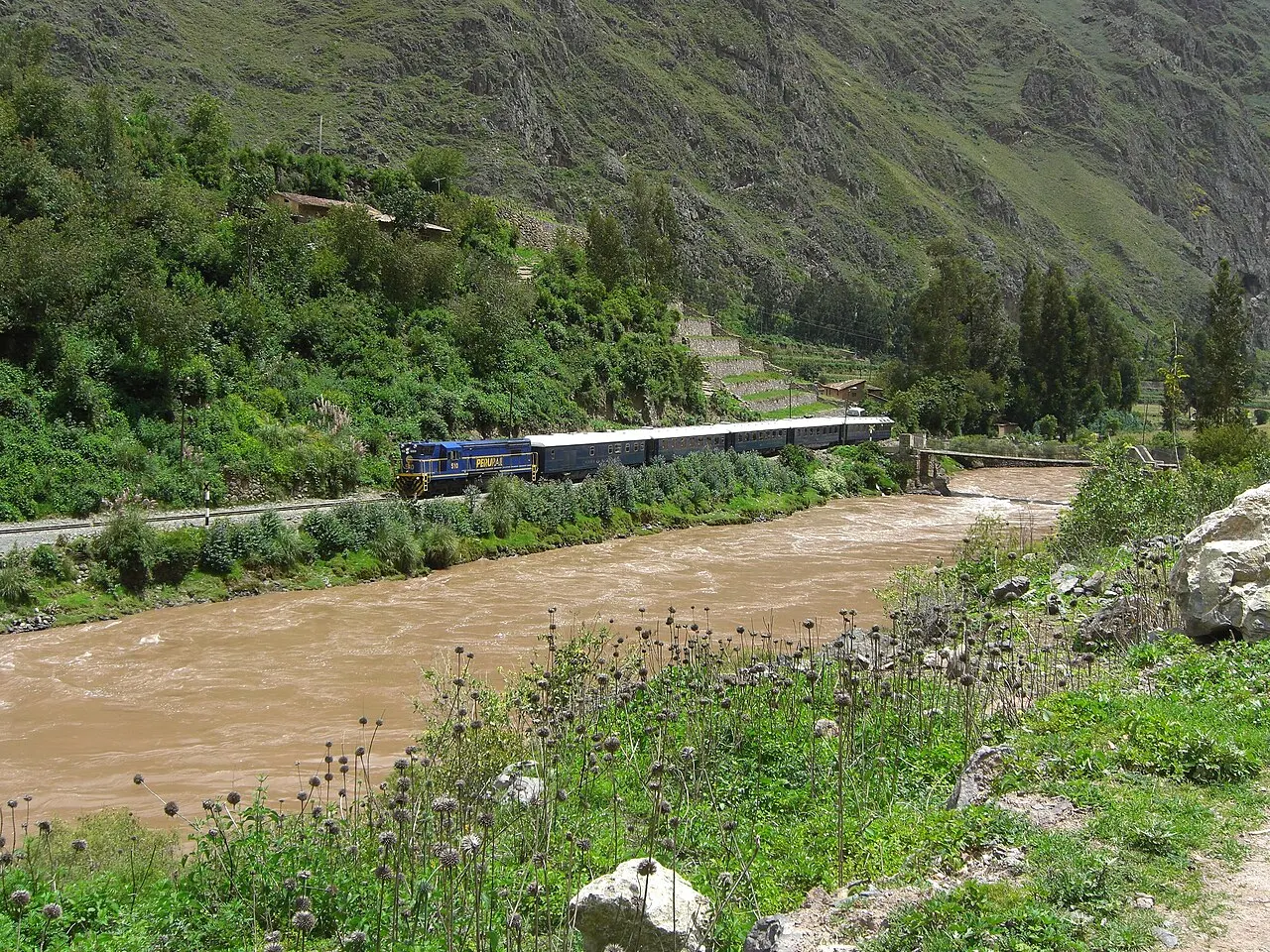
With the entry time fixed, the train becomes a calm ten-minute job. Both PeruRail and IncaRail run the line down the Urubamba gorge to Aguas Calientes, with services through the day and tiers from panoramic tourist trains to luxury carriages. Because the rail companies carry far more passengers than the gate admits in any time band, seats are comparatively plentiful — which is exactly why the train comes second, not first.
Most departures leave from Ollantaytambo in the Sacred Valley, so the practical choice is whether to take an early train in on the day or sleep below the night before. Match the arrival to your entry window with a comfortable buffer: the bus up the switchbacks and the queue at the gate both eat time. Mind the strict luggage allowance on the trains — leave the big bag in Cusco or Ollantaytambo and travel up with a daypack.
Step three — where to sleep the night before
Where you stay turns entirely on how early your entry slot is. A dawn slot all but demands a night in Aguas Calientes at the foot of the mountain, so you can ride the first buses up in the dark and meet your window without a frantic morning. A mid-morning slot is often reachable on an early train from the Sacred Valley, letting you sleep lower, warmer and cheaper in Ollantaytambo.
Aguas Calientes has every grade of room from hostel to lodge, but it is a small, pricey, captive market — book ahead in the dry season. The Sacred Valley gives more choice and better value, plus the bonus of acclimatising at a gentler altitude than Cusco. Whichever you choose, you book it directly with the hotel; there is no need for a package to put a roof over your head.


Step four — the guide you still need
Here is the one thing tour-free travellers most often miss: a licensed guide is required for entry to Machu Picchu under the current rules. That does not, however, mean you need a multi-day package. You can pre-book a private or shared guide independently, or hire a certified guide on the spot at the entrance, sharing the cost with other independent visitors to bring the price down.
A good guide is not just a rule to satisfy — reading the citadel is far richer with someone who can explain the Intihuatana, the Temple of the Sun and the astronomy built into the stone. Confirm the current guide requirement and what counts as official before you travel, since the rule has been tightened in stages and the detail is the kind of thing worth verifying close to your date.
Step five — the shuttle bus up the switchbacks
The last piece is the simplest. A single concession runs the shuttle bus from Aguas Calientes up the zigzag road to the gate, a steep climb that takes far less effort than the alternative — a long, sweaty stairway walk that purists love and most visitors skip. The bus is a high-frequency service rather than a fixed seat, so it flexes around you and is the one thing you can leave until last.
Buy bus tickets in Aguas Calientes (or online in advance in busy months) and join the queue early for a dawn entry, when the line forms before first light. Do not let it be an afterthought entirely: a beautifully timed plan that arrives with no bus strategy is a classic late stumble.

Backups — what to do when something slips
Independent travel rewards a little contingency planning. The dry-season squeeze is real: popular morning slots can sell out weeks ahead, so if your ideal time is gone, hold a fallback entry band in mind — a slightly later slot, or an adjacent date — rather than abandoning the trip. Trains are more forgiving, but the last service out of Aguas Calientes is firm, so never book an entry so late that you risk missing it.
Carry the exact passport you booked everything under; it is checked against your ticket at the gate, and a mismatched or expired document can cost you entry. Keep a buffer day in your itinerary if you possibly can — weather, strikes and the occasional landslide on the rail line do happen, and a packaged tour's only real advantage here is that someone else absorbs the chaos. With a spare day, you absorb it yourself and lose nothing.

Verify before you pay
The method above is evergreen; the numbers are not. Prices, daily capacities, exact circuit-to-peak rules, the guide requirement and train timetables are all set by the Ministry of Culture and the rail operators, and they shift. Treat this guide as the map and confirm the live details on the official channels at the moment you book.
- Confirm entry prices, circuits and the guide rule on Peru's official Ministry of Culture platform.
- Cross-check train times and luggage limits with PeruRail and IncaRail directly.
- Re-check shuttle-bus operating hours and the last train out before you fix your entry slot.


Related guides

Machu Picchu Tickets Guide
How the official timed-entry ticket works, where to buy it, what sells out first, and how to match the right ticket to the route and view you came for.
Read guide
Trains to Machu Picchu
PeruRail vs IncaRail, Cusco vs Ollantaytambo departures, the service classes, stations, the strict luggage allowance, bimodal road-and-rail options, and where the train fits in the booking order.
Read guide
Two Days at Machu Picchu: The Overnight Plan
A two-day Machu Picchu itinerary built around one night in Aguas Calientes — calmer entry slots, the second-entry decision, less transit stress, and a relaxed train in and out, paced for couples and first-timers who want the citadel to breathe.
Read guideMore in Tickets guide
6
Best Circuit for the Classic Machu Picchu Photo
Which routes deliver the iconic postcard view, when the light is best, how mist and season play, and how to avoid the photo disappointment that catches first-timers.
Read guide
Do You Need a Guide at Machu Picchu?
When a licensed guide is required or simply worth it, private versus shared, how the route flow works, and how to book ethically.
Read guideHow to Book Machu Picchu Tickets
The booking sequence, in order: pick the date, choose the circuit and route, secure the entry window, enter passport details, then arrange the train and your overnight.
Read guide
Intipunku, the Sun Gate: How to Reach It
The Sun Gate above the citadel — the Inca Trail's grand entrance and a stiff out-and-back for ticket holders. How to reach it, the seasonality, the views and the effort involved.
Read guide
Last-Minute Tickets in Aguas Calientes
Buying Machu Picchu entry in person at the foot of the mountain — the official sales offices in Machu Picchu Pueblo and Cusco, the real risks and caveats, and why this is a backup, not Plan A.
Read guide
Machu Picchu Circuit Map Guide: Reading the Routes
How to read the official Machu Picchu route map — the three circuits and their numbered routes — and match your timed ticket to the views and monuments you actually came for.
Read guide