
Machu Picchu in One Day from Cusco
A realistic, hour-by-hour single-day plan to reach Machu Picchu from Cusco and return the same night — train and bus logistics, the timed-entry ticket, a guide, and the fatigue and weather cautions that come with doing it all in one push.

Photo: Christopher Burns / Unsplash
- ✓A one-day Machu Picchu trip from Cusco is genuinely possible, but it is a long, pre-dawn-to-late-night push with no margin for error and no second chance if the morning is lost to cloud.
- ✓The clock is set by the trains: the citadel has no road, so a day trip means an early train in and a late train out, with a Cusco–Ollantaytambo road transfer bolted onto each end.
- ✓Book in the fixed order — timed-entry ticket first, then the matching train pair, then the bus — because the entry slot is the only piece with a hard, finite supply.
- ✓Machu Picchu (about 2,430 m) sits lower than Cusco (3,399 m), which actually helps; the real enemy of a day trip is fatigue and weather, not altitude.
Can you really do Machu Picchu in a day from Cusco?
Yes — and it is one of the most demanding ways to do it. There is no road to the citadel, so a true day trip is a relay of legs strung end to end: a road transfer out of Cusco down into the Sacred Valley, a train through the Urubamba gorge to Aguas Calientes (Machu Picchu Pueblo), a shuttle bus up the switchbacks to the gate, a guided circuit through the ruins, and then the whole sequence again in reverse before dark. Done well it is unforgettable. Done carelessly it is a blur of transit with a famous view in the middle.
This plan exists for the traveller who genuinely cannot spare a night — a tight Peru loop, a fixed flight, a single free day. If you have any flexibility at all, the honest advice is to add one night in Aguas Calientes and turn this into a two-day trip; that single overnight transforms the day from a sprint into a journey and gives you a calmer, better-timed entry. But if one day is all you have, here is how to make it land rather than exhaust you.
The thing to internalise before anything else: on a one-day trip, you are at the mercy of the timetable and the weather, and you have no buffer. If the early train is full, if the morning is socked in with cloud, if a landslide closes the line, there is no second morning to fall back on. Go in clear-eyed about that trade-off, build in every sensible margin, and the day can still move you to tears at the top.
 All Machu Picchu itinerariesHow the one-day dash compares with the two-, three- and five-day plans.
 Two days at Machu PicchuThe overnight version that fixes almost everything that makes a day trip stressful.
 Cusco to Machu PicchuThe transfer-and-train logistics that make a same-day return even possible.
At a glance
The shape of the day before you commit to it. Altitudes are stable and evergreen; everything to do with train times, prices, ticket release windows and circuit rules shifts with the season and the operators, so treat the figures below as orientation and verify the specifics directly when you book.
- Total day length: realistically 16–18 hours door to door from your Cusco hotel, much of it in transit.
- Legs: Cusco → Ollantaytambo (road, roughly 1.5–2 hours) → Aguas Calientes (train, around 1.5 hours) → citadel (bus, around 25–30 minutes) — then all of it back.
- Altitude: Cusco 3,399 m, the citadel ~2,430 m. You are descending to the ruins, so soroche is rarely the day's problem; fatigue is.
- Tickets needed: a timed-entry ticket on a specific circuit, a return train pair, and a return bus up from Aguas Calientes. A guide is now required at the site.
- Booking order: timed-entry ticket first, then the train pair that lands you in time for it, then the bus and any transfer.
- Biggest risks: a fully booked early train, weather closing the view, and missing the last train back. Build margin into all three.
- Verify before you go: current timetables, the latest entry rules, circuit availability and prices — all move.
Book in the right order, weeks ahead
The single most important move happens long before the day itself: lock the pieces in the correct sequence. The timed-entry ticket comes first, always, because it is the only element with a hard, finite daily supply and the only one that genuinely sells out — dry-season morning slots can be gone weeks ahead. Once you hold a slot, you know the window you must reach the gate by, and everything else is reverse-engineered from it.
Next comes the train, and specifically the pair: an inbound train that lands you in Aguas Calientes with comfortable time to make your entry window, and a return train late enough to give you a real visit but early enough to get you back. Both PeruRail and IncaRail run the line; for a day trip you want the earliest sensible inbound and a return that is not the very last service, so a small delay does not strand you. Then book the return shuttle bus up from Aguas Calientes, and finally your Cusco–Ollantaytambo transfer (private car or a tour that bundles it).
A guide is now required to enter the site, so factor that in — either a private guide you arrange in advance or a shared guided circuit booked through an operator. On a one-day trip, a well-run organised tour that bundles transfer, train, bus, ticket and guide into a single booking can be worth the premium precisely because it removes the coordination risk from the most error-intolerant version of the trip.
- Step 1: secure the timed-entry ticket on your chosen circuit — this is the keystone and the thing that sells out.
- Step 2: book the inbound train to land you in time for your entry window, plus a return that leaves margin (not the last service).
- Step 3: book the return shuttle bus up from Aguas Calientes.
- Step 4: arrange the Cusco–Ollantaytambo road transfer, or use a tour that bundles everything.
- Carry the exact passport you booked the ticket with — it is checked at the gate.


The hour-by-hour shape of the day
Here is how a well-built single day flows. Treat the times as a rhythm rather than a timetable — your exact hours are dictated by the train pair and the entry slot you managed to book — but the order and the pacing hold whatever the clock says.
Pre-dawn, you leave your Cusco hotel in the dark. Most efficient day trips start with a private car or tour shuttle down to Ollantaytambo rather than catching the train all the way from the Cusco/Poroy end, because the valley departures are earlier, more frequent and far closer to the gorge. You will want to have packed a small daypack the night before, eaten something, and arranged a takeaway breakfast or coffee, because nothing is open at the hour you set out.
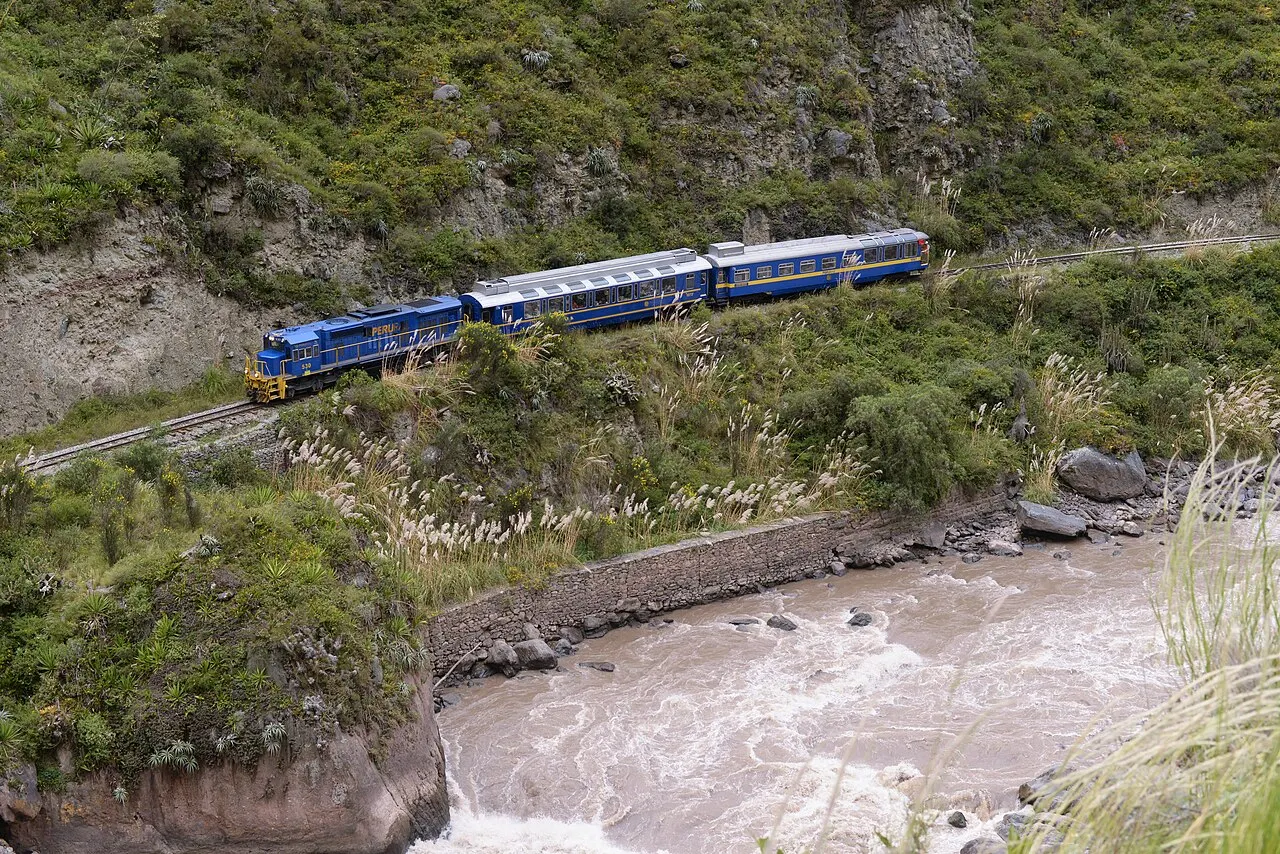
Mid-morning, you board the train at Ollantaytambo and ride down the Urubamba as the gorge narrows and the vegetation turns from valley scrub to dripping cloud forest. It is one of the great train journeys, and on a day trip it is also your one chance to sit still — take the window, watch the river, and let the altitude ease as you drop. At Aguas Calientes you walk from the platform to the bus queue and ride the switchbacks up to the gate, timing your arrival to your entry window.
From late morning into the early afternoon, you walk your circuit with your guide. Then it reverses: bus down, train out of the gorge, transfer back up to Cusco, arriving late at night. It is a long arc, but the middle of it — that hour or two on the terraces — is the whole point, and everything either side is in service of it.
- Pre-dawn: leave Cusco by private car or tour shuttle for Ollantaytambo; eat and pack the night before.
- Mid-morning: board the train at Ollantaytambo, ride down the gorge to Aguas Calientes.
- On arrival: walk to the bus queue, ride the switchbacks up, reach the gate within your entry window.
- Late morning–early afternoon: guided circuit through the citadel.
- Afternoon–night: bus down, return train out of the gorge, road transfer back to Cusco.


Which circuit to choose for a single visit
On a one-day trip you get one entry and one circuit, so the choice carries weight. Since the 2024 reorganisation, the site runs on three circuits subdivided into numbered routes, each tracing a largely one-way path through the citadel — there is no general-admission wander where you double back at will. For a first and only visit, the classic circuit that pairs the postcard overlook with a descent into the urban sector is the natural pick: it gives you both the iconic terrace view and a walk among the temples and houses, which is exactly what most people picture when they imagine standing inside Machu Picchu.
If your heart is set on the photograph — the high, panoramic frame above the agricultural terraces with the city below and Huayna Picchu behind — make sure the route you book actually reaches that overlook, as not every circuit does. And be honest about the peak climbs: Huayna Picchu and Machu Picchu Mountain are separate add-on permits tied to specific circuits, they sell out earliest of all, and on a day trip they add real time and effort to an already long day. For most one-day visitors, the climbs are a stretch too far; save them for an overnight trip with a fresher start.
Whatever you choose, your circuit is fixed at booking, so decide before you reserve the ticket rather than at the gate. Verify the current circuit and route availability when you book — the structure is real and stable since 2024, but which routes are open and what they include can vary.
- For a single visit, the classic circuit (postcard overlook plus the urban sector) is the all-rounder.
- Confirm your route reaches the panoramic overlook if the photograph matters most to you.
- Peak climbs (Huayna Picchu, Machu Picchu Mountain) are separate permits, sell out earliest, and are a stretch on a one-day trip.
- Your circuit is locked at booking — choose before you reserve, not at the gate.

The fatigue and weather cautions, told straight
This is the section a glossy tour listing leaves out, and it is the one that decides whether your day feels triumphant or punishing. A one-day Machu Picchu trip is, before it is anything else, a very long day of transit with a glorious but short window in the middle. You will spend more hours moving than standing in the ruins. Pre-dawn starts, hours on the train and road, queues for the bus, and a late return all stack up, and they stack up at altitude — and while the citadel itself is lower than Cusco, you sleep at Cusco's height at both ends of the day.
Weather is the wild card you cannot book around. The cloud forest makes its own mist, and mornings can sit under thick low cloud that lifts at unpredictable hours — or doesn't. On a multi-day trip, a cloudy first morning is a shrug because you have another; on a day trip, it is the whole visit. There is no remedy except acceptance and a little luck, so set your expectations accordingly and treat a clear sky as the gift it is rather than the guarantee it never was.
The other hard constraint is the last train. Miss it and you are stuck in Aguas Calientes overnight with no booking — so leave a deliberate cushion, do not cut your return tight, and keep an eye on the time during your visit rather than chasing one more photo. The mountains, the rails and the weather all get a vote on a Machu Picchu day; on the one-day version, you have given away every buffer, so respect the few margins you have left.
- Expect more hours in transit than in the ruins — pace yourself and protect your energy for the citadel.
- Morning cloud can hide the view, and on a day trip there is no second chance; treat clear weather as luck.
- Never cut the return tight — missing the last train means an unplanned night in Aguas Calientes.
- You bookend the day at Cusco's altitude (3,399 m); the descent to the ruins helps, but the long day still tires.
- Carry water, sun protection, a rain layer and snacks — the cloud forest is warm, wet and changeable.
 Machu Picchu in the rainWhat a wet, cloudy visit is actually like and how to make the best of it.
 Acclimatization & altitudeWhy your nights at Cusco's height matter even though the ruins are lower.
 Travel disruptionsStrikes, landslides and rail closures, and why a day trip has no slack to absorb them.
How to make one day feel like more
If the day is fixed, the craft is in protecting its core. Spend money to buy back time and reduce risk wherever you can: a private transfer rather than a public bus to Ollantaytambo, an inbound train with comfortable margin to your slot, and a guide arranged in advance so no time is lost finding one. The premium on a well-bundled day tour is, on this version of the trip, often money well spent — it converts a dozen ways the day can go wrong into a single booking that someone else is watching.
Inside the citadel, resist the urge to power through for photos. You have one short window in the most extraordinary place; the kindest thing you can do for the memory is to stop, twice, and simply look — once at the high overlook with the whole city laid out below, and once down among the temples where the stonework is close enough to touch. A good guide will give you the history; you give yourself the silence. That, more than any extra ruin ticked off, is what makes a single day feel like enough.
And when the train pulls back out of the gorge that evening, tired and full, the smart traveller is already half-resolved to return — because the one-day trip is, at its best, not the whole story of Machu Picchu but a first, breathless chapter of it. If this is your only window, make peace with that and let the day be what it is: a long, hard, luminous pilgrimage to one unforgettable view.
- Spend to buy back time and reduce risk: private transfer, margin-rich train, pre-arranged guide.
- A well-bundled day tour collapses many failure points into one managed booking.
- Inside the citadel, stop and look rather than rushing for photos — the memory is the point.
- Treat the day as a first chapter; many one-day visitors return for the overnight version.


Related guides
Cusco to Machu Picchu: Every Way to Make the Journey
The realistic ways from the old capital to the citadel — train, bimodal bus-and-train, staging in the Sacred Valley, the long Hidroeléctrica back door, and whether a one-day round trip is sane.
Read guide
Machu Picchu Tickets Guide
How the official timed-entry ticket works, where to buy it, what sells out first, and how to match the right ticket to the route and view you came for.
Read guide
Machu Picchu Entry Times & Time Slots
How the timed-entry system works, morning versus midday versus afternoon, matching your slot to the train and the bus, and why late arrivals fail.
Read guideMore in Itineraries
6
A Luxury Machu Picchu Itinerary
A high-end Machu Picchu plan with palace hotels in Cusco, luxury Sacred Valley lodges, the Hiram Bingham train, private guiding and soft, altitude-kind pacing.
Read guide
A Machu Picchu Honeymoon
How to build a honeymoon around Machu Picchu — romantic hotels in Cusco and the Sacred Valley, a luxury train into the gorge, a private guide, spa days and a dawn at the citadel.
Read guide
Beyond the Citadel: Peru Add-Ons to Machu Picchu
How to bolt the rest of Peru onto a Machu Picchu trip — Rainbow Mountain, Humantay Lake, the South Valley and the bigger leaps to the Amazon, Lake Titicaca, Lima and Arequipa — sequenced for altitude and time.
Read guide
Family Machu Picchu Itinerary: A Kid-Paced Plan
A family-paced Machu Picchu itinerary built around the altitude ladder, kid-friendly circuits, the train, Sacred Valley downtime and unhurried buffer days — so children and grandparents arrive at the citadel rested, not wrecked.
Read guide
Five Days: Cusco, the Sacred Valley & Machu Picchu
A balanced five-day Machu Picchu itinerary — proper Cusco acclimatization, an unhurried Sacred Valley, an overnight in Aguas Calientes and the citadel, with altitude and ticket buffers built in so a cloudy morning or a late train never sinks the trip.
Read guide
Machu Picchu by Train: A Step-by-Step Itinerary
A train-based Machu Picchu itinerary from Cusco or Ollantaytambo — the booking order, hotel timing, the bus up from Aguas Calientes, and the backups that keep the day calm.
Read guide