
Corpus Christi in Cusco
Cusco's grandest Catholic-Andean festival — fifteen saints and virgins carried into the Plaza de Armas, the food, the crowds, and how to fold it into a Machu Picchu trip without losing your hotel or your slot.

- ✓Corpus Christi is one of Cusco's two great festivals — fifteen effigies of saints and virgins paraded into the Plaza de Armas in a fusion of Catholic and Inca ritual.
- ✓It falls sixty days after Easter, so the date moves each year — usually late May or June, just ahead of the Inti Raymi peak — verify the exact date for your year.
- ✓It lands in the dry season: clear skies, cold nights, fierce midday sun and the busiest, priciest stretch of the Cusco calendar.
- ✓Chiriuchu — the cold festival dish piled high with guinea pig, chicken, sausage, cheese and seaweed — is eaten across the city this week.
The day the saints come to the square
Of all the festivals that fill Cusco's year, Corpus Christi is the one where you most clearly feel the old city's double soul. On the morning of the feast, fifteen effigies — saints and virgins, each the patron of a different Cusco parish — are carried out of their home churches and processed through the streets to the cathedral on the Plaza de Armas, swaying on enormous silver-clad litters that take teams of bearers to lift. They are dressed in robes heavy with gold and silver thread, surrounded by brass bands, incense and a crowd that has been doing this, in one form or another, for centuries. Beneath the Catholic surface runs something far older: the Inca once paraded the mummies of their rulers around this same square, and the Spanish, in the way of the Andes, did not so much erase that ritual as dress it in new clothes.
For a traveller building a trip around Machu Picchu, Corpus Christi is a gift and a complication in equal measure. Catch it and you witness one of the most genuinely moving religious spectacles in South America, in the heart of the city you were going to use as your base anyway. But it falls in the most crowded, most expensive window of the Andean year, and it puts real pressure on the very hotels, trains and tickets your citadel plan depends on. Plan for both halves of that and the festival becomes the highlight of the trip rather than the thing that derailed it.

Corpus Christi at a glance
The festival in one card. The pattern is evergreen, but the exact date moves each year and the city's logistics shift around it — verify the date, hotel availability, train schedules and any street closures with official and local sources before you commit.
- When: sixty days after Easter Sunday — usually late May or June; the date moves yearly, so check it for your year.
- Where: centred on the Plaza de Armas and the cathedral, with processions through the surrounding streets.
- Season: deep in the dry season — clear days, cold nights, strong high-altitude sun.
- Crowds: very high — among the busiest weeks in Cusco, on the run-up to Inti Raymi (24 June).
- Signature food: chiriuchu, the elaborate cold festival platter, sold from stalls around the centre.
- Tone: devout and ceremonial — a working religious festival, not a show staged for tourists.
How the festival unfolds
The rhythm builds over several days. In the run-up, the fifteen saints and virgins make their 'entrada' — each effigy travels from its own parish church into the centre, an event in itself for the neighbourhood that owns it. On the feast day proper, all fifteen gather in or around the cathedral, and the great procession carries the consecrated host and the saints around the Plaza de Armas while the square heaves with worshippers, bands and onlookers. An octave later — eight days on — the saints process again before returning to their home churches, so there are really two peak days to aim for, not one.
You do not need a ticket or a tour to take part. The processions happen in public, in the open square, and the simplest plan is to base yourself within walking distance of the plaza and let the festival come to you. Arrive early to claim a spot with a sightline, expect to stand for a long time, and be ready for the crowd to surge as the litters pass. This is a moment of genuine devotion for the Cusqueños around you, so it rewards patience and respect far more than elbows.
- Entradas: the saints arrive from their parishes in the days before the feast.
- Feast day: the main procession around the Plaza de Armas — the spectacle peaks here.
- The octave: eight days later, a second procession before the saints go home.
- No ticket needed — it all happens in public; arrive early for a plaza sightline.

Chiriuchu and the food of the feast
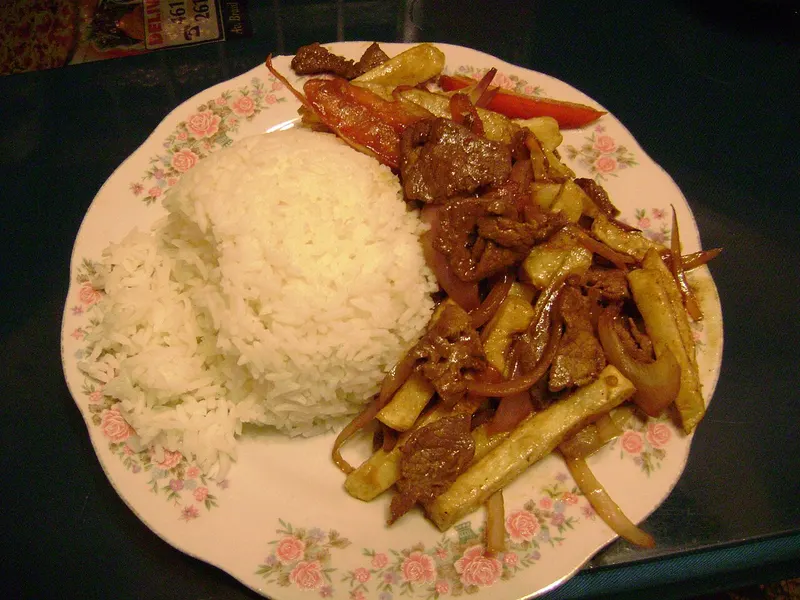
No Corpus Christi is complete without chiriuchu, the dish that belongs to this festival the way panettone belongs to Christmas. Its name means 'cold chilli' in Quechua, and it is served cold by design: a single laden plate that brings together roast guinea pig (cuy), chicken, dried sausage, fish roe, cheese, a sheet of toasted corn tortilla, seaweed from the coast and other elements, each a small act of bringing the regions of old Peru onto one platter. Stalls and tents around the centre sell it through the festival week, and trying it is as much a part of Corpus Christi as watching the procession.
It is, gloriously, a lot of food and a lot of unfamiliar ingredients all at once — approach it with curiosity rather than caution, but listen to your stomach if you've only just arrived at altitude. A heavy, rich, cold platter is not the gentlest welcome to 3,399 metres, and the first day in Cusco is exactly when soroche tends to strike. If you're newly landed, a smaller portion and plenty of water serve you better than diving in headfirst.

The catch: hotels, trains and tickets
Here is where Corpus Christi reaches into your Machu Picchu plan. The festival falls squarely in the dry-season peak, and it concentrates demand even further. Central Cusco hotels — especially the ones a short walk from the Plaza de Armas, exactly where you want to be for the processions — fill early and charge their highest rates of the year. Trains down to Aguas Calientes and the timed-entry citadel tickets are under their heaviest pressure of the calendar, and the popular morning slots and add-on peaks go first. None of this is a reason to avoid the festival; it is simply a reason to book unusually far ahead.
Lock the citadel ticket first, then the train and your night in Aguas Calientes, then your Cusco hotel for the festival nights — and do all of it weeks, ideally months, in advance. If a central plaza-side room is sold out or beyond budget, a base in San Blas or just off the square still puts you within walking reach of the processions while you sleep slightly quieter. Treat the festival days as 'in Cusco' days and slot the citadel either side, so a noisy, crowded, joyous night in the old capital doesn't collide with an early train and a fixed entry slot.
- Book early: central Cusco hotels fill months ahead at peak-season prices for the festival.
- Citadel tickets and trains are at their tightest now — reserve the ticket first, then the train.
- Can't get a plaza-side room? San Blas keeps you within walking distance but a touch calmer.
- Separate festival nights from your citadel day so a late, crowded night doesn't clash with an early train.

Watching with respect — and at altitude
Corpus Christi is a living act of faith, not a performance, and the most rewarding way to experience it is as a respectful guest. Keep clear of the bearers and the path of the litters, don't climb on monuments for a photo, ask before pointing a camera at someone praying, and follow the lead of the crowd around you. The Cusqueños who carry these saints have done so all their lives; you are watching something that matters deeply to them.
Remember, too, that the festival doesn't suspend the altitude. Cusco sits at 3,399 metres — nearly a kilometre above Machu Picchu itself — and the long hours on your feet, the cold night air, the rich food and, for some, a celebratory drink can compound soroche on a first or second day in the city. Hydrate, ease into the alcohol, and let your acclimatization days double as festival days rather than stacking a hard climb on top of a late night in the square.
- Treat it as worship, not theatre — stay clear of the bearers and ask before close-up photos.
- Long hours on your feet at 3,399 m — hydrate and pace yourself, especially on arrival.
- Go easy on the festival drinks if you've only just reached altitude.
- Let festival days double as acclimatization days before you head for the citadel.

The Corpus Christi verdict
If your dates fall anywhere near it, build your trip to catch Corpus Christi. It is one of the most powerful festivals in the Andes, it happens in the city you were going to stay in anyway, and it shows you a Cusco far richer than the one between the tour buses. The price of admission is forward planning: book the citadel ticket, the train and a central hotel well ahead, separate your festival nights from your entry slot, watch with respect, and mind the altitude. Get that right, and you come home with both the citadel and one of South America's great living spectacles — and the memory of fifteen gold-robed saints swaying across a candlelit square will outlast almost everything else.

Related guides

Cusco's Plaza de Armas: A Guide
The heart of the old Inca capital and the easiest place to find your feet at altitude — the cathedral, the Compañía de Jesús, the arcades, and how to use the square as the hub of a gentle first day.
Read guide
Cusco: Your Base for Machu Picchu
The old Inca capital at 3,399 m is where every Machu Picchu trip begins — where to stay, how to acclimatize, what to see on a gentle first day, and how to stage the train down to the citadel.
Read guide
Where to stay in Cusco
A neighbourhood-by-neighbourhood guide to basing in Cusco before Machu Picchu — weighing altitude comfort, charm, walkability, station and airport access, and which area suits families, couples, luxury and budget travellers.
Read guideMore in By month
6
Christmas & New Year
Visiting Machu Picchu over the festive season — the holiday demand spike that meets wet-season weather, the booking windows, the Cusco festivities, and how to make a green, atmospheric, lower-crowd Christmas trip work.
Read guide
Machu Picchu in February
February at Machu Picchu — the wettest month, the annual Inca Trail closure, the highest disruption risk of the year, and the flexible, buffer-heavy planning that makes a green-season visit work.
Read guide
Machu Picchu in January
January at Machu Picchu — deep rains and deeper greens, the thinnest crowds of the year, real landslide and train risk, and the flexible, buffer-built strategy that makes the green season work.
Read guide
Machu Picchu in March
March at Machu Picchu — the late rains easing, the Inca Trail reopening after its February closure, terraces at their greenest, and the shoulder-season value that makes this an underrated month to visit.
Read guide
Santurantikuy in Cusco
Cusco's vast Christmas Eve craft fair, one of the largest in the Andes — the figures, the Niño Manuelito, the wet-season cold and crowds, and how to weave a festive market day into a Machu Picchu trip.
Read guide
Semana Santa in Cusco
Holy Week in the old Inca capital — the Señor de los Temblores procession, the red ñucchu rain, the food of Holy Thursday, and how the date, the crowds and the rail demand reshape a Machu Picchu trip.
Read guide