
What to Pack for Machu Picchu
The full kit for the citadel and the journey to it — cloud-forest rain and Andean sun, the stepped circuits, train luggage limits, altitude, and the hotel-hopping that defines a Cusco–Sacred Valley–Aguas Calientes trip.

Photo: Samuel Malmström / Unsplash
- ✓Pack for two climates in one day: cloud-forest rain and humidity at the citadel, hard Andean sun and cold nights up in Cusco.
- ✓Grippy footwear and a hooded rain shell are the two items that most change whether the day goes well — bring them in any season.
- ✓Trains enforce a strict luggage allowance, so travel light and leave the big bag in Cusco or the Sacred Valley.
- ✓Carry the exact passport you booked your ticket with — it's checked at the gate — plus a refillable bottle, sun protection and small cash.
At a glance — the Machu Picchu packing card
The whole list compressed into one card. Site bag rules, train luggage limits and ticket requirements are set by operators and the Ministry of Culture and can change, so verify the current specifics before you travel rather than trusting any single figure here.
- On your body: grippy trail shoes, quick-dry layers, a hooded waterproof shell, a sunhat.
- In the daypack: water in a refillable bottle, sunscreen, sunglasses, insect repellent, a snack, a lens cloth.
- Documents: the exact passport you booked with, your ticket, train tickets, and small cash in soles.
- Weatherproofing: a dry bag or zip-lock for phone and passport; a packable poncho over the pack.
- Leave behind: large rigid backpacks, big umbrellas, tripods and selfie sticks — these run into site rules.
- Logistics: a small lock and a left-luggage plan for the big bag, since trains cap your luggage.
- Verify: current bag/size rules, train luggage limits and ticket/passport requirements before you go.
Pack for two climates in one day
The core challenge of packing for this trip is that you're not dressing for one place — you're dressing for a vertical journey through several. Up in Cusco at 3,399 m the air is thin and dry, the sun is fierce by day and the nights drop cold. Down at the citadel, nearly a kilometre lower in cloud forest, it's warmer, humid and prone to mist and rain. The Sacred Valley sits somewhere in between, and a single day can carry you across all of it. That's why the answer is never a heavy coat or a thin t-shirt but layers: a base you can wear alone in the heat, a mid-layer for the cool, and a shell for the wet, each easy to shed and stow as conditions swing. You'll genuinely go from cold and misty at a dawn gate to shirt-sleeves an hour later when the sun burns through.
Because rain is possible at the citadel on any day of the year — even in the dry season — you build the list around weatherproofing whatever month you visit. The Andean sun, meanwhile, is unforgiving at altitude regardless of temperature: it can be cool and still burn you badly. So the two extremes you're always packing for are wet and bright, and both belong in the bag even if the forecast looks kind. Hope for blue sky, dress for cloud forest, and let the mountain decide.

Footwear and clothing: the items that matter most
If you get only two things right, make them your shoes and your shell. Footwear with real grip and tread is the single most important safety item at Machu Picchu, because wet Inca stone is genuinely slippery and the circuits are stepped, uneven and often steep, with both hands sometimes busy on railings and rock. Trail shoes or light hiking boots that are already broken in beat new boots or fashion sneakers every time — and if you're trekking in, proper, tested boots are non-negotiable. The second essential is a packable, breathable waterproof shell with a hood. Skip the umbrella: it's awkward on the stairs, useless in wind on the exposed upper paths, and can run into the site's bag rules.
For everything else, think quick-dry and layered. Synthetic or merino base layers move moisture and dry on your body; cotton jeans turn cold, heavy and miserable the moment they soak through, so they're the one thing to leave at home. A warm mid-layer or fleece handles cold mornings and Cusco's nights; lightweight trousers or hiking leggings beat denim for the circuits. Top it with a sunhat with a brim for the equatorial glare and you've covered the full range from misty dawn to blazing noon. Pack modestly and practically — this is an outdoor archaeological site, not a city break — and you'll move comfortably through every part of the day.
- Grippy, broken-in trail shoes or light boots — the top safety item on slick, stepped stone.
- A packable hooded waterproof shell; skip the umbrella.
- Quick-dry base layers and a warm mid-layer or fleece for cold mornings.
- Lightweight trousers or leggings over jeans, which soak cold and heavy.
- A brimmed sunhat for the strong high-altitude sun.

The daypack: sun, water and small protection
Into a small, soft daypack goes the rest. Sun protection comes first: high-SPF sunscreen, sunglasses and that brimmed hat, because the altitude sun burns even on cool, cloudy days and there's little shade on the circuits. Water matters next — bring a refillable bottle and keep sipping, since the dry mountain air dehydrates you faster than you'd expect and good hydration also eases altitude. Add insect repellent, because the cloud forest has biting insects and the lower, greener routes near the river can be buggy. A snack or two keeps your energy up, and a small first-aid kit with blister plasters, any personal medication and basic painkillers is sensible for stepped terrain.
Then there's protecting what you carry. A dry bag or simple zip-lock keeps your phone, camera and passport safe from rain and humidity; a packable poncho thrown over the daypack keeps your gear dry; and a microfibre lens cloth saves a lot of fogged, blurry photos in the cloud-forest damp. Keep the bag soft and small — large rigid frame packs can fall foul of the site's bag rules, and tripods and selfie sticks are typically not allowed inside, so leave those out. Travelling light through the circuits is both a rule of thumb and, often, the rule.
- Sun kit: high-SPF sunscreen, sunglasses and a brimmed hat — the sun burns even when it's cool.
- A refillable water bottle; the dry air dehydrates you and hydration eases altitude.
- Insect repellent for the buggy, greener lower routes near the river.
- Snacks, blister plasters, personal medication and a small first-aid kit.
- A dry bag for phone and passport, a poncho over the pack, and a lens cloth for fogging.
- Keep the daypack soft and small; leave tripods, selfie sticks and rigid frame packs out.

Documents, money and the passport you booked with
Some of the most important things you pack weigh nothing. Top of the list is your passport — and not just any passport, but the exact one whose details you used to buy your timed-entry ticket, because identity is checked at the gate and a mismatch can cost you entry. Keep it with your ticket and your train tickets in your dry bag, and have digital backups (photos or copies stored securely) as a fallback. Carry some local cash in Peruvian soles in small denominations: the bus up from Aguas Calientes, snacks, tips and small purchases often want cash, and card acceptance thins out the closer you get to the site. A modest amount of small change for tipping porters, guides and drivers is both customary and appreciated.
Round out the essentials with travel insurance details, any required health documents, and a printed or offline copy of your bookings in case signal drops in the gorge. Pickpocketing is the most common petty risk in busy tourist areas and on crowded transport, so a zipped inner pocket or a money belt for your passport and main cash, with only what you need for the day in an outer pocket, is a sensible habit. None of this is heavy, but forgetting the right passport or running out of small cash is exactly the kind of avoidable problem that sours an otherwise perfect day.
- The exact passport you booked your ticket with — identity is checked at the gate.
- Your entry ticket and train tickets, plus secure digital backups.
- Local cash in soles, in small denominations, for the bus, tips and snacks.
- Travel insurance details and offline copies of your bookings.
- A zipped inner pocket or money belt for passport and main cash against pickpocketing.

Packing for the journey: trains, luggage limits and hotel-hopping
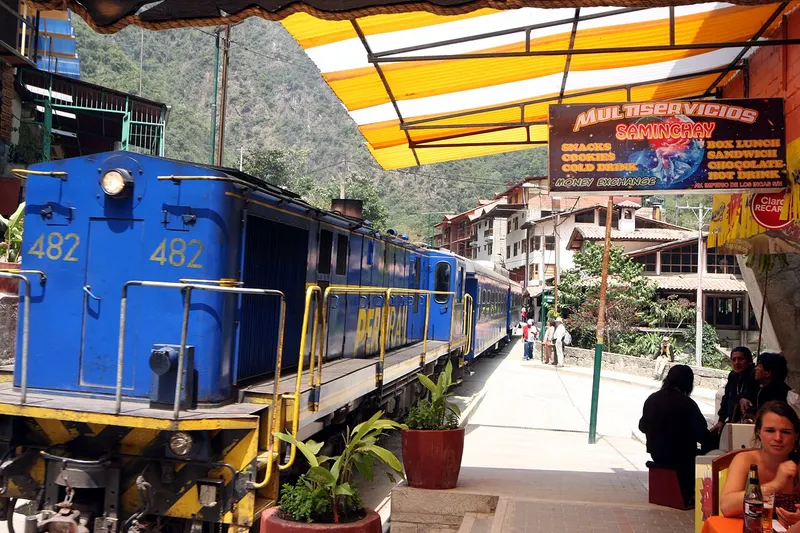
A Machu Picchu trip is really a chain of bases — Cusco, the Sacred Valley, Aguas Calientes — and how you pack for that movement matters as much as what you wear at the ruins. The crucial constraint is the train: both PeruRail and IncaRail enforce a strict luggage allowance, typically limited to a small bag or daypack per passenger, so you cannot simply roll a big suitcase down to the citadel. The standard solution is to leave your main luggage in storage at your Cusco or Sacred Valley hotel (most hold bags for guests) or at a left-luggage office, and travel down to Aguas Calientes with just an overnight daypack. Pack a compact, packable kit that covers a night or two: a change of quick-dry clothes, toiletries, chargers, medication and the documents above. Verify the current luggage limits with your specific train operator, since the exact allowance and dimensions can change.
Because you'll be hotel-hopping, a few small things smooth the whole trip. A compact lock secures stored bags. A portable charger or power bank keeps your phone alive through long travel days and patchy charging. Packing cubes or a couple of dry bags keep the small overnight bag organised and your wet gear separate from your dry. And building an overnight in Aguas Calientes into the plan — rather than a single in-and-out day from the valley — is the best logistical and weather buffer there is, turning a tight, anxious dash into an unhurried evening at the foot of the mountain. Pack for the movement, not just the destination, and the journey becomes part of the pleasure rather than a source of stress.
- Trains cap luggage to a small bag or daypack per person — verify the exact limit with your operator.
- Leave the big suitcase in storage in Cusco or the Sacred Valley; travel down with an overnight daypack.
- Pack a compact one-or-two-night kit: quick-dry change, toiletries, chargers, medication, documents.
- Bring a small lock, a power bank, and packing cubes or dry bags to keep wet and dry gear separate.
- An overnight in Aguas Calientes is the best buffer against tight connections and bad weather.



Related guides

Luggage Rules & Storage for Machu Picchu
Train baggage limits, where to leave the big bag in Cusco or Ollantaytambo, what to carry into the citadel, station storage in Aguas Calientes, and the trek-duffel system.
Read guide
Machu Picchu Weather Guide
What the weather actually does on the ridge — the two Andean seasons, daily cloud and clearing, rain and landslide risk, how to read your time slot, and how it all shapes your packing and your nerves.
Read guide
Hiking & Site Safety at Machu Picchu
Staying safe on the steep, slick, exposed parts of the visit — the citadel's stone stairs, wet-weather footing, altitude on the climbs, and the demanding mountain ascents of Huayna Picchu and Machu Picchu Mountain.
Read guideMore in Best time to visit
6
Accessible Machu Picchu
An honest look at mobility at the citadel — the uneven Inca stone, the stairs, how the train and shuttle bus help, hotel strategy, the gentlest circuit and route, and why a private guide is the key to a workable visit.
Read guide
Altitude & When to Go: The When-to-Visit Hub
The home for timing your trip — the two Andean seasons, altitude and acclimatization, dry- versus rainy-season trade-offs, and the month-by-month guides that tell you what each part of the year really means at the citadel.
Read guide
Altitude in Machu Picchu, Cusco & the Valley
How altitude really works across the trip — why Cusco is higher than the citadel, where soroche hits hardest, the low-to-high-to-low ladder, and sensible pacing, with medical-caution language throughout.
Read guide
Inti Raymi in Cusco
Cusco's Festival of the Sun on 24 June — the great Inca winter-solstice pageant at Sacsayhuamán, and how to plan Machu Picchu around the busiest, brightest week of the year.
Read guide
Is Machu Picchu Safe?
An honest safety picture for the whole trip — trains and buses, the treks, altitude, petty theft and money, occasional strikes and weather disruption, crowds, and travelling solo or as a woman.
Read guide
Luggage Storage in Cusco & Aguas Calientes
Where to leave the big bag for the citadel — hotel storage in Cusco and Ollantaytambo, the train baggage limit that forces the issue, station storage in Aguas Calientes, the trek-duffel system, and how to stage it all cleanly.
Read guide