
Machu Picchu Weather Guide
What the weather actually does on the ridge — the two Andean seasons, daily cloud and clearing, rain and landslide risk, how to read your time slot, and how it all shapes your packing and your nerves.

Photo: Scott Umstattd / Unsplash
- ✓Machu Picchu sits in cloud forest, so mist and rain are normal in any month — the site stays open and visits go ahead in the wet.
- ✓Think two seasons, not four: a dry season (roughly May–September) and a wet one (October–April), with the heaviest rain around January–February.
- ✓Daily weather has its own rhythm — a dawn white-out very often clears by mid-morning, so patience beats panic.
- ✓Heavy wet-season rain can occasionally disrupt the train line and roads; build buffers and verify current conditions locally before you travel.
At a glance — Machu Picchu weather
The quick orientation before the detail. Treat these as evergreen patterns rather than a forecast — mountain weather is local and fickle, so confirm the current outlook and any rail or road status close to your dates.
- Setting: high cloud forest where warm Amazon air meets the cold Andes — humid, green, and prone to mist.
- Two seasons: dry ≈ May–September (clearest, busiest); wet ≈ October–April (greener, quieter, cloudier).
- Wettest months: roughly January and February — the heart of the rains.
- Citadel altitude: about 2,430 m — milder and more humid than chilly Cusco at 3,399 m.
- Daily pattern: cloudy, cool dawns that often burn off to clear mid-mornings; afternoon build-ups are common in the wet.
- Always pack: a real rain shell and grippy shoes — rain is possible on any day of the year.
- Closure note: the classic Inca Trail (not the site) closes every February; verify dates.
A cloud forest, not a mountaintop
The first thing to understand is where Machu Picchu actually sits. Most people picture a bare Andean summit, cold and clear. The reality is gentler and stranger: the citadel perches on a ridge in cloud forest, on the eastern flank of the Andes where warm, moisture-laden air rising off the Amazon basin slams into the cold of the high mountains and condenses. That collision is the whole story of the weather here. It is why the slopes are impossibly green, why orchids and bromeliads grow from the stonework, and why mist drifts through the ruins on mornings that would be cloudless almost anywhere else. The Inca built drainage channels into every terrace precisely because they knew this ridge would always be wet.
Because of that setting, the citadel is also milder than the city most people fly into. At roughly 2,430 m, Machu Picchu is nearly a kilometre lower than Cusco, so it feels warmer, more humid and less brutal on the lungs. The flip side is that humidity and cloud are constant companions. A grey, dripping morning at the site is not bad luck or a ruined trip — it is the place behaving exactly as it always has, and many visitors come away describing the mist as the most haunting few hours of their lives, the city floating in and out of white while llamas materialise on the ledges.

Two seasons, not four
Forget spring, summer, autumn and winter — they don't map onto the Andes. There are two seasons here, and they drive almost every planning decision you'll make. The dry season runs roughly May to September: the clearest skies, the best odds of an unclouded postcard view, the coolest nights, and by some distance the heaviest crowds and the earliest ticket sell-outs. June and July are the peak of the peak, capped by Cusco's Inti Raymi sun festival on 24 June. If you want that hard-blue-sky photograph and you're willing to book weeks ahead and share the viewpoints, this is your window.
The wet season runs roughly October to April: greener, quieter, kinder on the wallet, and far cloudier, with the heaviest rains concentrated around January and February. This is when the gorge roars with full rivers, the terraces glow an electric green, and you may have viewpoints almost to yourself between cloudbanks. The trade-off is obvious — a higher chance of cloud, more rain, and the occasional weather disruption to trains and roads. Neither season is 'wrong'; they're trade-offs, and the right one depends entirely on what you're willing to spend in crowds versus what you're willing to risk in cloud. One firm calendar fact sits in the middle of the wet season: the classic Inca Trail — not the citadel itself — closes every February for maintenance and the height of the rains. Verify the exact dates before building a trek around them.
- Dry season (≈ May–September): clearest views, coolest nights, biggest crowds, earliest sell-outs.
- Wet season (≈ October–April): green, quiet, cheaper, cloudier; heaviest rain January–February.
- Peak: June–July, with Inti Raymi on 24 June filling Cusco.
- Shoulder months (April, October) can hand you a sweet spot — fewer crowds, still-reasonable odds of clear spells.
- The classic Inca Trail closes every February; the site stays open year-round.
The daily rhythm: cloud at dawn, clearing by mid-morning
Beneath the big seasonal pattern runs a smaller, daily one that matters just as much to your actual visit — and it surprises people who only planned around the months. Cloud-forest mornings are often cool and cloudy regardless of season. The classic experience is to arrive at the early gate to a near-total white-out, the famous overlook showing nothing but drifting fog, and then to watch the sun warm the gorge and lift the cloud over the next hour or two until the city lies clean and sharp below. This happens constantly, even in the dry season, which is why the single most useful weather skill at Machu Picchu is patience. Visitors who saw nothing at 6 a.m. routinely get their photograph from the very same spot by mid-morning.
In the wet season the rhythm tilts the other way later in the day: mornings can start clearer and then build toward afternoon cloud, showers and the occasional downpour as humidity climbs. That's a gentle argument for an earlier entry slot in the rains — you give the morning the most time to clear, and you're often done before the heaviest afternoon build-up. Because the official circuits are largely one-way and you can't loop back to the viewpoint, pace yourself to linger where the view will be rather than racing through the murk and missing the moment the cloud parts. On the days the cloud simply sits and never lifts, the city in the mist is its own reward — atmospheric, hushed and dreamlike, the Machu Picchu most postcards never show.
- A dawn white-out frequently clears by mid- to late morning as the sun warms the gorge — wait it out.
- Wet-season afternoons tend to cloud over and shower; an earlier slot dodges the worst of it.
- Circuits are largely one-way — don't rush past the viewpoint; let the cloud part on its own time.
- Some days the cloud never lifts — and a misty citadel is still a remarkable thing to witness.
Rain, landslides and travel disruption
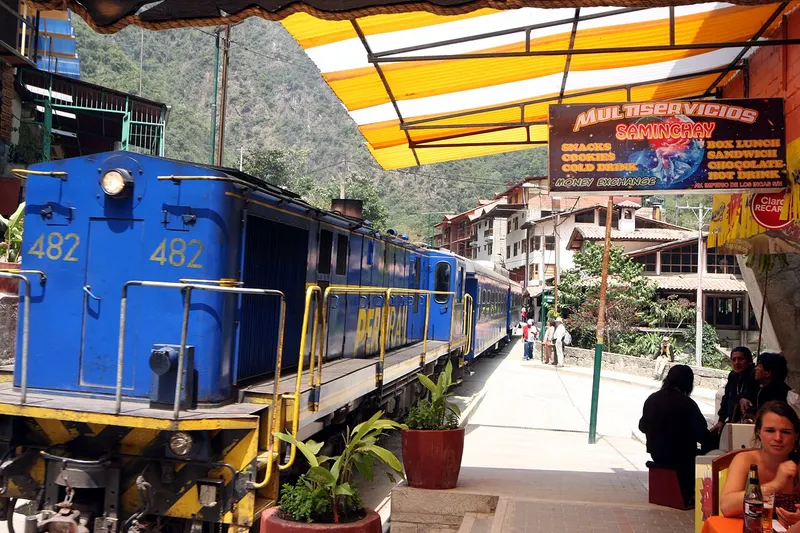
The serious end of the weather conversation is what heavy rain does beyond your comfort. Machu Picchu sits in a steep, narrow gorge along the Río Urubamba, and the wet season's downpours can swell the river and loosen slopes. In bad spells, landslides and high water have at times affected the rail line and the access roads, occasionally interrupting trains in and out of Aguas Calientes. This is uncommon rather than routine, but it is real, and it's the reason a wet-season trip rewards a little defensive planning. None of this should scare you off the rainy months — the site itself is engineered for water and rarely closes for weather — but it should make you build slack into the schedule rather than cutting your connections fine.
The practical defence is buffers and information. Don't book a return train so soon after your entry slot that any delay leaves you sprinting; give yourself a comfortable cushion. If your dates allow, an overnight in Aguas Calientes rather than a single in-and-out day from the Sacred Valley is the best single insurance — it removes the rush and buys a second roll of the weather dice. And because conditions and operations change, verify the current rail and road status, the forecast, and any advisories locally and with your train operator close to your travel date rather than trusting a guide written months earlier.
- Heavy wet-season rain can swell the Urubamba and, in bad spells, affect the train line and access roads — verify status locally.
- Landslide-related disruptions are occasional, not constant; the citadel itself rarely closes for weather.
- Leave a generous gap between your entry slot and your return train, especially in the wet.
- An overnight in Aguas Calientes is the strongest buffer against weather-driven delays.
- Always confirm the current forecast and rail/road status with your operator before you travel.

Dressing for the weather, and your time slot
Because rain is possible on any day of the year, you dress for cloud forest no matter which month you choose. The non-negotiables are a proper waterproof shell with a hood — packable and breathable, not a fashion raincoat — over quick-dry layers that shrug off damp instead of soaking through, and footwear with real grip, because wet Inca stone is genuinely slippery and the stepped circuits are uneven. Skip the umbrella: it's awkward on the stairs, useless in wind on the exposed upper paths, and can run into the site's bag rules. Add a dry bag or zip-lock for your phone and passport and a lens cloth for the inevitable fogging, and you're ready for whatever the ridge does. Temperatures swing fast here, so layers you can shed and stow matter more than a single heavy coat — you'll often go from jacket-on at a cold, misty gate to shirt-sleeves once the sun breaks through.
Your entry time interacts with the weather, too. In the wet season, an earlier slot gives the morning the most time to clear before your window closes and gets you ahead of the afternoon showers. In the dry season the calculus is more about crowds and light than rain, but an early entry still tends to catch the soft, even light before the harsh midday sun and the largest crowds arrive. Whatever slot you hold, treat the forecast as a probability, not a promise: pack for rain, hope for sun, and let the mountain decide.
- Always pack a hooded waterproof shell and grippy shoes — rain is possible in any month.
- Quick-dry layers over cotton; jeans turn cold and heavy when soaked.
- Dry bag for phone and passport, lens cloth for fogging; skip the umbrella.
- Wet season: favour an earlier slot to dodge afternoon build-up and catch the morning clearing.
- Dress in sheddable layers — gate-cold to shirt-sleeve warmth can happen within the hour.


Related guides

Best Time to Visit Machu Picchu
Two Andean seasons, not four — a full month-by-month guide to weather, crowds, ticket urgency, trains, treks and altitude, so you can pick the dates that fit the trip you actually want.
Read guide
What to Pack for Machu Picchu
The full kit for the citadel and the journey to it — cloud-forest rain and Andean sun, the stepped circuits, train luggage limits, altitude, and the hotel-hopping that defines a Cusco–Sacred Valley–Aguas Calientes trip.
Read guide
A Rainy Day at Machu Picchu
Rain at the citadel is normal, not a disaster — how to dress for cloud forest, which circuits cope best, how to build train buffers, the Aguas Calientes backups, and why mist makes the most haunting photographs of all.
Read guideMore in Best time to visit
6
Accessible Machu Picchu
An honest look at mobility at the citadel — the uneven Inca stone, the stairs, how the train and shuttle bus help, hotel strategy, the gentlest circuit and route, and why a private guide is the key to a workable visit.
Read guide
Altitude & When to Go: The When-to-Visit Hub
The home for timing your trip — the two Andean seasons, altitude and acclimatization, dry- versus rainy-season trade-offs, and the month-by-month guides that tell you what each part of the year really means at the citadel.
Read guide
Altitude in Machu Picchu, Cusco & the Valley
How altitude really works across the trip — why Cusco is higher than the citadel, where soroche hits hardest, the low-to-high-to-low ladder, and sensible pacing, with medical-caution language throughout.
Read guide
Hiking & Site Safety at Machu Picchu
Staying safe on the steep, slick, exposed parts of the visit — the citadel's stone stairs, wet-weather footing, altitude on the climbs, and the demanding mountain ascents of Huayna Picchu and Machu Picchu Mountain.
Read guide
Inti Raymi in Cusco
Cusco's Festival of the Sun on 24 June — the great Inca winter-solstice pageant at Sacsayhuamán, and how to plan Machu Picchu around the busiest, brightest week of the year.
Read guide
Is Machu Picchu Safe?
An honest safety picture for the whole trip — trains and buses, the treks, altitude, petty theft and money, occasional strikes and weather disruption, crowds, and travelling solo or as a woman.
Read guide