
What to buy in Cusco & the Valley
A buyer's guide to Cusco and the Sacred Valley — handwoven textiles, real alpaca, ceramics, chocolate and coffee, silver and jewellery — plus how to tell the genuine from the tourist-grade and shop in a way that helps the makers.

- ✓Cusco and the Sacred Valley are among the best places in South America to buy handwoven textiles and genuine alpaca — if you know how to spot the real thing.
- ✓The standout buys are handspun, naturally dyed weavings, soft baby-alpaca knitwear, hand-painted ceramics, single-origin chocolate and coffee, and Andean silver.
- ✓Buying directly from weaving cooperatives and village artisans, rather than mass-market stalls, puts your money where the craft is.
- ✓Carry small-denomination cash, learn a little gentle bargaining etiquette, and check what you're allowed to take home before you buy.
The Andes still make things by hand
Few places reward a souvenir hunter like the Cusco region. This is a living craft economy with roots that run straight back to the Inca and beyond — weaving traditions, ceramic styles and silverwork that have been passed down through families for centuries and are still practised in the villages around the Sacred Valley today. Walk the markets of Pisac or Chinchero, the artisan lanes of Cusco's San Blas, or the Christmas Eve craft fair of Santurantikuy, and you're not just shopping; you're meeting a culture that still makes beautiful things by hand.
But the same popularity that makes the region a paradise for buyers also fills it with the mass-produced and the misrepresented: acrylic passed off as alpaca, machine-printed 'weavings', factory ceramics. The aim of this guide is to help you buy the good stuff — the genuinely handmade, ethically sourced pieces with a story and a maker — and to do it in a way that supports the artisans who keep these traditions alive. Below, the things most worth your suitcase space, and how to tell the real from the tourist-grade.
Buyer's guide at a glance
The headline buys and where to find them. Prices, of course, vary widely by quality, maker and where you shop — bring cash and judge each piece on its merits rather than chasing a fixed figure.
- Handwoven textiles: runners, blankets, wall hangings — best from weaving cooperatives and Chinchero.
- Alpaca knitwear: scarves, sweaters, shawls — look for soft, lightweight baby alpaca, not acrylic.
- Ceramics: hand-painted bowls, the iconic Pucará bull, and Inca-style reproductions.
- Chocolate & cacao: single-origin Peruvian chocolate and nibs from Cusco's chocolate makers.
- Coffee: high-altitude beans from the Cusco region and the wider Peruvian highlands.
- Silver & jewellery: Andean silverwork, often set with local stones — buy from reputable shops.
- Where: Pisac and Chinchero markets, Cusco's San Blas, and Santurantikuy on Christmas Eve.
Handwoven textiles — the great buy
If you buy one thing in the Cusco region, make it a textile. Andean weaving is one of the world's great craft traditions: handspun alpaca or sheep's wool, dyed with natural pigments — cochineal for deep reds, indigo for blue, plants and minerals for the rest — and worked on a backstrap loom into runners, blankets, table pieces, wall hangings and the intricately patterned cloths that carry meaning in their motifs. A genuine handwoven piece from a village cooperative is an heirloom; the printed acrylic versions on the cheaper stalls are not.
Telling them apart takes a little attention. Turn the piece over: a true handweaving looks similar front and back, with no printed 'wrong side', and the patterns are built into the cloth rather than stamped on top. Natural dyes have a slightly irregular, living depth that flat synthetic colour lacks, and handspun yarn shows tiny variations along its length. The surest route of all is to buy where you can watch the work happening — the weaving cooperatives of Chinchero and the villages above the Sacred Valley demonstrate the whole process from raw fleece to finished cloth, and buying there sends your money straight to the weaver.
- Look for handspun yarn, natural-dye depth and a pattern that reads the same front and back.
- Be wary of perfectly uniform colour and a printed reverse — signs of machine-made, synthetic goods.
- Buy from weaving cooperatives where you can watch the process — Chinchero is the classic place.
- A genuine handwoven blanket or runner is an heirloom; price it as one.
Alpaca — and how not to buy acrylic
Alpaca is the Andes' signature fibre: warm, soft, light and hypoallergenic, spun into scarves, sweaters, shawls, hats and gloves. The very best is 'baby alpaca' — not the young animal, but the finest, softest grade of fleece — which feels silky and weightless against the skin. The catch is that 'alpaca' is one of the most abused labels in the Cusco markets, slapped on acrylic or wool blends that look the part at a glance. Learning to feel the difference is the single most useful souvenir skill you can pick up here.
Real alpaca is cool to the touch at first and then warms quickly; it's exceptionally soft without the slight itch of cheaper wool, and it doesn't squeak or feel plasticky the way acrylic does. It also won't be suspiciously cheap — a genuine baby-alpaca sweater costs real money, and a bargain-bin price is a red flag. For peace of mind, reputable alpaca boutiques in Cusco label their fibre content honestly and stand behind it; the market stalls can be wonderful, but they reward a buyer who knows the feel of the real thing.
- Seek out soft, lightweight 'baby alpaca' — the finest grade, not the youngest animal.
- Real alpaca is silky, warm and not itchy; acrylic feels plasticky and squeaks slightly.
- Genuine alpaca isn't cheap — a bargain price usually means a blend or acrylic.
- For certainty, buy from reputable boutiques that label fibre content honestly.

Ceramics, retablos and Andean folk art
Peruvian ceramics range from rustic village pottery to finely painted decorative pieces. Among the most recognisable is the Toro de Pucará, the little bull figure traditionally placed in pairs on Andean rooftops for protection and prosperity — a charming, characterful souvenir that packs small. You'll also find hand-painted bowls and plates, reproductions of Inca and pre-Inca designs, and retablos: the wooden boxes whose doors open to reveal painted scenes of festivals, nativities and Andean life. Around Christmas, Santurantikuy fills the Plaza de Armas with the finest selection of these of the year, much of it made by the artisan selling it.
As with textiles, the spectrum runs from genuine handcraft to mass-produced filler, and the signs are similar: handmade pieces carry small irregularities and the mark of the maker, while factory goods are flawlessly uniform and often identical from stall to stall. Buy the pieces that show a hand at work, and remember that ceramics are fragile — wrap them well and carry the most delicate ones in your hand luggage.
- The Toro de Pucará bull and hand-painted ceramics are classic, packable buys.
- Retablos — painted scenes inside wooden boxes — make distinctive folk-art souvenirs.
- Handmade pieces show small irregularities; identical, flawless items are usually factory-made.
- Wrap ceramics well and carry the fragile ones in hand luggage.
Chocolate, cacao and coffee
Peru is a world-class origin for both cacao and coffee, and the edible souvenirs are some of the easiest to bring home. Cusco has a lively chocolate-making scene built on Peruvian cacao, and you'll find single-origin bars, drinking-chocolate discs, cacao nibs, cacao tea and beauty products, often with tastings on offer — a fun, low-stakes way to shop and a reliable gift. Peruvian coffee, grown at high altitude in the Cusco region and beyond, is excellent and increasingly available as named single-origin beans; buy whole beans if you can and grind them at home for the freshest cup.
These make ideal presents because they're light, packable and unmistakably Peruvian. Just keep an eye on what you're allowed to carry across your own border — most countries admit sealed, commercially packaged chocolate and roasted coffee without trouble, but rules on agricultural products vary, so check your home country's customs guidance before you load up.
- Single-origin Peruvian chocolate, drinking-chocolate discs and cacao nibs — often with tastings.
- High-altitude Cusco-region coffee — buy whole beans for the freshest result at home.
- Light, packable and a reliable gift — and a sweet memory of the trip.
- Check your home country's customs rules on food imports before stocking up.

Silver, jewellery and a word on what to skip
Peru has a long silverworking tradition, and Andean silver jewellery — often set with local stones such as turquoise, chrysocolla and the blue-green Andean opal — is a beautiful, lasting buy. The artisan shops of San Blas, Cusco's craft quarter, are the place to look, and reputable jewellers will be clear about silver content and stone provenance. As always, a price that seems too good for 'sterling silver' usually is, so buy from established shops rather than the cheapest stall.
A few things are better left on the shelf. Avoid anything made from wildlife — real fur, feathers, animal teeth or claws — both on ethical grounds and because it can be seized at customs. Genuine antiquities and pre-Columbian artefacts are protected by Peruvian law and cannot legally be exported, so treat any 'ancient' piece on offer as either fake or illegal to take home. And give a wide berth to products that make medical claims. Buying well here is as much about what you decline as what you choose.
- Andean silver set with local stones is a fine buy — shop the San Blas artisan quarter.
- Buy silver from reputable shops that disclose content; bargain prices usually mean a lesser metal.
- Never buy wildlife products (fur, feathers, teeth) — unethical and often seizable at customs.
- Real antiquities can't legally leave Peru — anything 'ancient' on a stall is fake or illegal to export.

Where to shop, and how to do it well
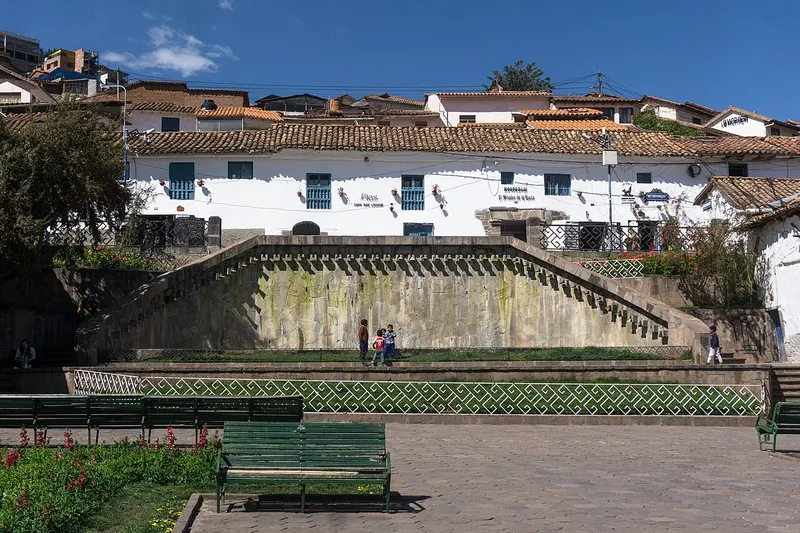
Each shopping spot has its character. Pisac's market is the Sacred Valley's most famous, sprawling and varied, busiest on the traditional market days; Chinchero is the place to buy textiles straight from the weavers and watch the natural-dye process; Cusco's San Blas is the artisan and gallery quarter, strong on silver, ceramics and finer craft; the central San Pedro Market mixes crafts with the food halls; and on Christmas Eve, Santurantikuy turns the Plaza de Armas into the year's largest folk-art fair. Buying directly from cooperatives and village artisans, rather than middlemen, keeps the most of your money with the maker.
A few habits make the experience smoother and fairer. Carry small-denomination cash in soles — most stalls don't take cards, and change for a large note can be scarce. Gentle bargaining is expected in the markets but not in fixed-price boutiques; do it with a smile, and remember that a few soles mean far more to the artisan than to you, so haggle for fun, not to grind. Have something to carry purchases in, wrap the fragile pieces yourself, and keep a hand on your bag in the festive crowds. Above all, buy the things that are genuinely made here, from the people who make them — that's how the souvenir becomes a story.
- Bring small-denomination soles in cash; cards are rarely accepted at market stalls.
- Bargain gently in markets, not in fixed-price shops — with a smile, and not to the last sol.
- Buy direct from cooperatives and artisans to keep your money with the maker.
- Carry a bag, wrap fragile pieces, and mind valuables in festive crowds.
The buyer's verdict
Shop the Cusco region with a little knowledge and you'll come home with the best souvenirs of any trip you take: a handspun, naturally dyed weaving from the weaver who made it; a baby-alpaca scarf you can feel is real; a hand-painted bull, a bar of single-origin chocolate, a piece of Andean silver. Buy direct from the makers, learn the simple tells of the genuine article, decline the wildlife and the 'antiquities', and carry small cash with a gentle hand for bargaining. Do that, and every object you unpack at home carries a piece of the Andes and the story of the hands that made it — which is worth far more than the suitcase space it takes.

Related guides

Písac Market: Textiles, Crafts & Etiquette
The famous artisan market in the Sacred Valley town of Písac — what to buy, how the timing and bargaining work, telling handwoven from machine-made, and how to fit the market and the hilltop ruins into one day.
Read guide
San Pedro Market: Cusco's Sensory Heart
Cusco's main covered market — fresh-fruit juices, cheap set-lunch counters, chocolate and souvenirs, and a glorious first-day overload of colour, smell and altitude. How to visit well, eat safely and not get fleeced.
Read guide
Chinchero: Weaving, Terraces & the High Plateau
The 'birthplace of the rainbow' on the plateau above the Sacred Valley — its living weaving tradition, the church built on Inca foundations, the terraces, the Sunday market, and how the new airport and a valley loop fit around it.
Read guideMore in By month
6
Christmas & New Year
Visiting Machu Picchu over the festive season — the holiday demand spike that meets wet-season weather, the booking windows, the Cusco festivities, and how to make a green, atmospheric, lower-crowd Christmas trip work.
Read guide
Corpus Christi in Cusco
Cusco's grandest Catholic-Andean festival — fifteen saints and virgins carried into the Plaza de Armas, the food, the crowds, and how to fold it into a Machu Picchu trip without losing your hotel or your slot.
Read guide
Machu Picchu in February
February at Machu Picchu — the wettest month, the annual Inca Trail closure, the highest disruption risk of the year, and the flexible, buffer-heavy planning that makes a green-season visit work.
Read guide
Machu Picchu in January
January at Machu Picchu — deep rains and deeper greens, the thinnest crowds of the year, real landslide and train risk, and the flexible, buffer-built strategy that makes the green season work.
Read guide
Machu Picchu in March
March at Machu Picchu — the late rains easing, the Inca Trail reopening after its February closure, terraces at their greenest, and the shoulder-season value that makes this an underrated month to visit.
Read guide
Santurantikuy in Cusco
Cusco's vast Christmas Eve craft fair, one of the largest in the Andes — the figures, the Niño Manuelito, the wet-season cold and crowds, and how to weave a festive market day into a Machu Picchu trip.
Read guide