
San Blas, Cusco's Art Quarter
The steep, bohemian barrio above the Plaza de Armas — artisan workshops, galleries, cafés, the little white church and the famous viewpoints — and how to enjoy its uphill lanes when the altitude is still new.
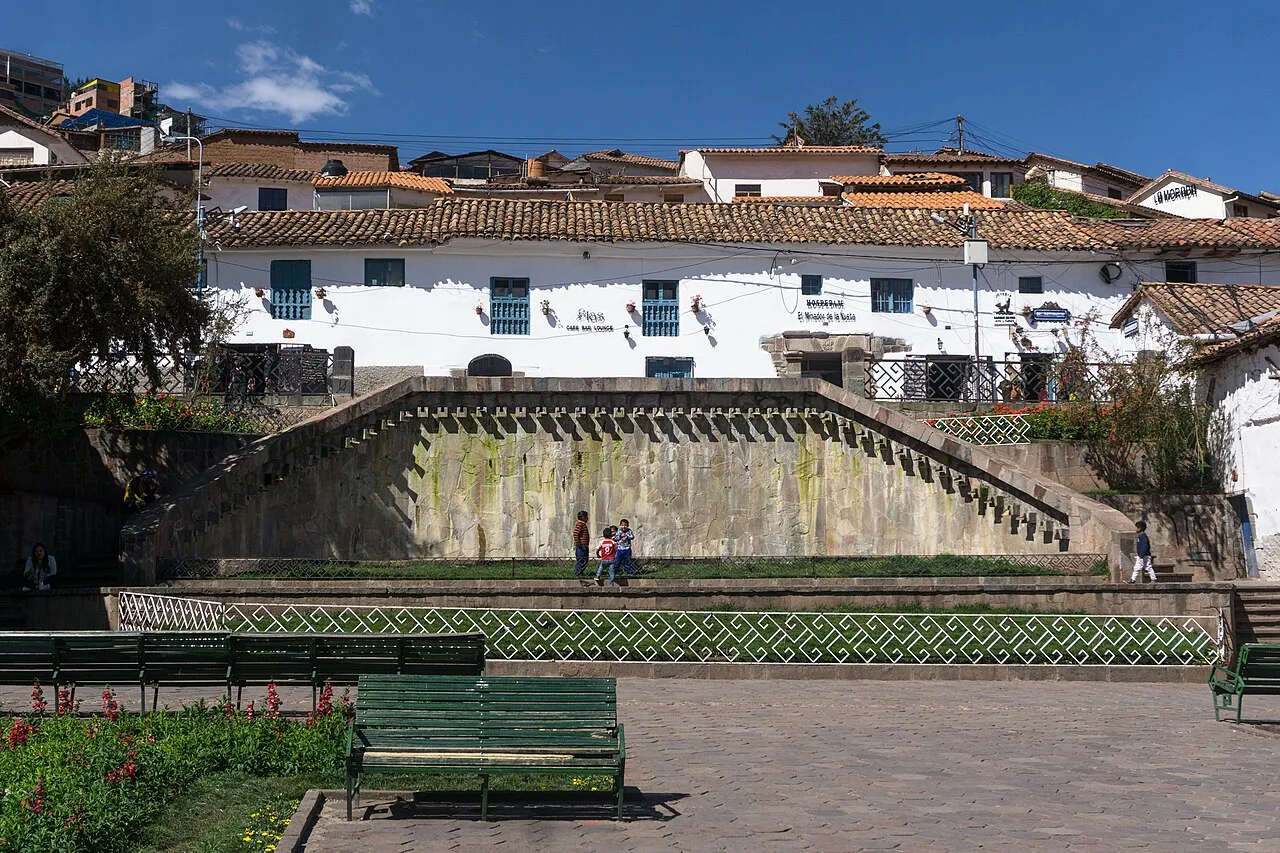
Photo: Alexey Komarov / Wikimedia Commons · CC BY-SA 4.0
- ✓San Blas is Cusco's artists' quarter — a warren of blue-doored adobe houses, ateliers and galleries climbing the hill above the cathedral.
- ✓Its lanes are steep and cobbled; the climb is a genuine effort at 3,399 m, so save it for once you've adjusted, or take a taxi up and walk down.
- ✓The little white church of San Blas holds a famously intricate carved cedar pulpit; the neighbourhood's viewpoints look out over the whole terracotta city.
- ✓It's the best quarter for slow afternoons — cafés, craft workshops and rooftop views — rather than a rush of sights to tick off.
The barrio of the artisans
Climb the lane of Hatun Rumiyoc from the Plaza de Armas — past the famous twelve-angled stone — and the city changes character. The grand colonial square gives way to San Blas: a tight web of cobbled streets and stairways, whitewashed adobe walls, blue-painted doors and balconies, and the steady, low hum of workshops. This is Cusco's bohemian, artisan quarter, where generations of woodcarvers, ceramicists, painters and silversmiths have kept studios, and where today's galleries, design shops and cafés have moved in alongside them.
Where the Plaza de Armas is built for ceremony, San Blas is built for wandering. There's no single must-see that organises a visit; the pleasure is in the drift — turning up a stairway because it looks pretty, finding an open workshop door, stopping for coffee when a viewpoint opens beneath you. It is the most romantic corner of Cusco, and the one most travellers wish they'd given more time.
The quarter's name comes from its little church, but its identity comes from its makers. In Inca times this was T'oqokachi, and after the conquest it became the parish where the city's craftspeople settled — a tradition that never really stopped. Walk here in the morning and you'll hear it before you see it: a chisel on wood, a loom's rhythm, a kiln being loaded. That working pulse, threaded through the prettiest streets in Cusco, is what gives San Blas its particular charm and keeps it from feeling like a museum of itself.


Mind the climb: San Blas and the altitude
There's no getting around it — San Blas is uphill, and at 3,399 m even a short flight of cobbled steps will leave you breathing hard for the first day or two. That's not a reason to avoid it, but it is a reason to time it well. The kindest approach is to save San Blas for your second day in Cusco, once you've slept on the altitude, or to take a taxi up to the little plaza at the top and explore downhill from there, letting gravity do the work.
If you're carrying luggage, travelling with small children, or pushing a stroller, weigh this seriously when choosing a hotel. San Blas has some of the most charming boutique stays in Cusco, but a beautiful room at the top of a stairway can mean a daily lung-busting climb. Pick a place low on the slope, or accept that you'll be taking taxis to your own front door.
- Steep, cobbled, stepped lanes — a real effort while you're still acclimatizing.
- Best tactic: taxi up to the top plaza, then explore gently downhill toward the centre.
- Save the climb for day two; keep day one flat around the Plaza de Armas.
- Choosing a San Blas hotel? Mind where it sits on the slope before you book.
The church, the workshops and the galleries
At the heart of the quarter sits its small, plain white church, the Templo de San Blas — modest from outside, but home to one of the great treasures of colonial Cusco: an extraordinarily intricate carved cedar pulpit, the work attributed to local hands and dense with figures and foliage. It usually keeps limited hours and may sit within a ticketed religious circuit, so check before you go up.
Around the church and down the lanes, the workshops are the real draw. San Blas has long been the home of Cusco's craft families, and you can still watch woodcarvers, weavers and ceramicists at work and buy directly from them. Some of these are names with generations behind them; the Mendívil and Mérida workshops, among others, helped make San Blas famous for its distinctive religious and folk figures, and their family studios are part of the neighbourhood's living history. The standard ranges from tourist trinkets to serious art, so browse slowly. Galleries and design boutiques have layered in alongside, and a clutch of small museums and craft cooperatives reward the curious — none of them strenuous, all of them easy to dip into between coffees.
Buying here can be genuinely rewarding if you take your time. A piece bought directly from the person who made it — a carved retablo, a handwoven textile, a ceramic — carries a story the souvenir stalls on the plaza can't match, and the prices are often fairer too. Ask before photographing someone at work, browse without pressure, and you'll find the artisans of San Blas generous with their craft.
- Templo de San Blas: famous carved cedar pulpit; limited hours and possible ticket — verify before climbing up.
- Artisan workshops: woodcarvers, weavers and ceramicists, often selling direct from the studio.
- Galleries and design shops: a mix of serious craft and souvenir fare — browse with patience.
Cafés, courtyards and the slow afternoon
San Blas is the best place in Cusco to do nothing well. Its cafés — tucked into courtyards, perched on terraces, hung over the rooftops — are exactly the kind of low-effort, high-reward stop the altitude rewards. Settle in with a coffee or a coca tea, let an afternoon dissolve, and you're acclimatizing and sightseeing at the same time. Come evening, the quarter has some of Cusco's most atmospheric small restaurants, candlelit and intimate, well suited to a slow dinner once you've got your appetite back.
The trick is not to over-program it. A morning's gentle wander and a long café stop is a better San Blas day than a forced march past every workshop. Let the neighbourhood set the pace.
San Blas is also where Cusco's coffee culture has put down its deepest roots, which suits a trip that starts in coffee-growing Peru. Several of the cafés roast their own beans or source directly from highland growers, and a careful flat white on a terrace overlooking the rooftops is, for many travellers, one of the small unexpected highlights of the whole city. Pair it with the slow afternoon light and you have the essence of San Blas in a single sitting.
The viewpoints
The reward at the top of all those steps is the view. San Blas sits high enough above the old centre that its little squares and terraces look out over a sea of terracotta roofs, the floodlit cathedral, and the green hills wrapping the valley. The classic vantage is the small plaza and mirador near the church; several cafés and a few hotels also have rooftop terraces that frame the same scene. It's loveliest at dusk, when the city lights come up and the cathedral glows — a fitting last image of a first day in Cusco.
Photographers should come up an hour before sunset, find a terrace, and simply wait. The light does the rest.
- Best vantage: the mirador and small plaza near the San Blas church.
- Rooftop café and hotel terraces frame the same rooftop-and-cathedral view.
- Come at dusk for the floodlit cathedral and the city lights below.
At a glance
The San Blas essentials. The neighbourhood's character is evergreen; church hours, tickets and individual workshops change, so confirm anything time-sensitive on the day.
- What it is: Cusco's steep, bohemian artisan quarter above the Plaza de Armas.
- Effort: uphill and cobbled — a real climb at 3,399 m; taxi up and walk down to spare your lungs.
- See: the carved-pulpit church, the craft workshops and galleries, the rooftop viewpoints.
- Best for: slow afternoons, coffee, dusk views and an intimate dinner — not a sight-by-sight rush.
- Timing: save it for day two, once you've adjusted to the altitude.
Related guides

Best Cafés in Cusco
Where to take coffee, breakfast and a gentle acclimatization morning in Cusco — the plaza spots, the San Blas hideaways and the quieter local lanes, mapped for couples easing into the altitude.
Read guide
Where to stay in Cusco
A neighbourhood-by-neighbourhood guide to basing in Cusco before Machu Picchu — weighing altitude comfort, charm, walkability, station and airport access, and which area suits families, couples, luxury and budget travellers.
Read guide
Romantic Restaurants in Cusco
Where to take a special dinner in Cusco — candlelit Novoandina rooms, colonial courtyards and quiet corner tables for honeymooners and couples celebrating before or after Machu Picchu.
Read guideMore in Cusco Base
6
Best hotels in Cusco
How to choose well among Cusco's hotels for a Machu Picchu trip — judged not on stars alone but on altitude comfort, location and walkability, character, family fit, and how cleanly they set up the onward journey to the citadel.
Read guide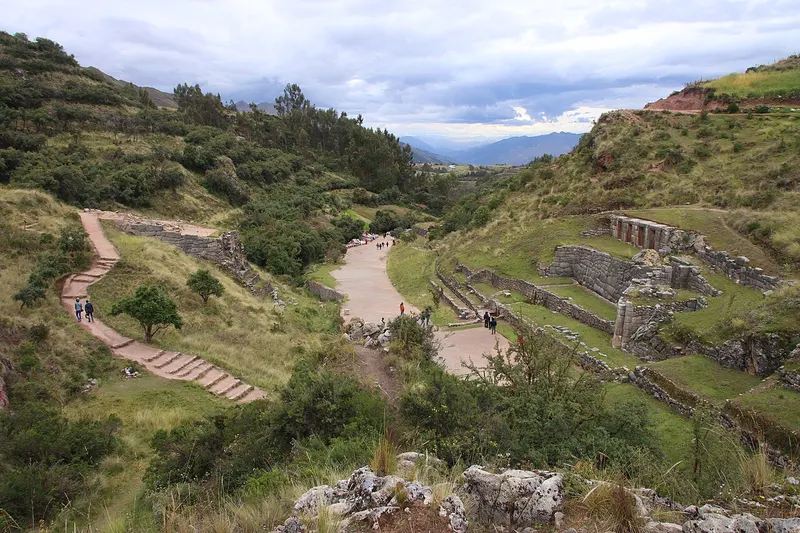
Boleto Turístico del Cusco
How the COSITUC Boleto Turístico works — the combined pass that covers Sacsayhuamán, Pisac, Ollantaytambo, Moray, the Maras–style sites and a clutch of Cusco museums — and when it's actually worth buying.
Read guide
Budget hotels in Cusco
How to sleep well in Cusco for less before Machu Picchu — value hotels, guesthouses and hostels, where the cheaper rooms cluster, and the few things never to scrimp on at 3,399 m.
Read guide
Cusco & Machu Picchu Costs
A realistic way to think about the money — the fixed citadel ticket, the train that dominates the budget, buses, guides, food and the trek add-ons — and where the costs hide.
Read guide
Cusco acclimatization & altitude
How to land soft in Cusco at 3,399 m: reading soroche, pacing your first day, what to eat and drink, the easy activities that help, and when to simply rest before Machu Picchu.
Read guide
Cusco Cathedral: The Plaza de Armas Centrepiece
The great colonial cathedral on Cusco's Plaza de Armas — built on Inca foundations, hung with Cusco School paintings, and home to the famous guinea-pig Last Supper. Tickets, art, dress code and how it fits a first acclimatizing day.
Read guide