
The Short 2-Day Inca Trail to Machu Picchu
The 1–2 day Inca Trail — the trail's grand finale past Wiñay Wayna and through the Sun Gate, without the high passes or camping. Permits, fitness, train logistics and the circuit caveats to know.

Photo: Matt Madonna / Unsplash
- ✓The short Inca Trail walks the final stretch of the classic route — past Wiñay Wayna and through the Sun Gate (Inti Punku) — in a single big day, with no high passes and no camping.
- ✓It still needs a permit through a licensed operator, capped like the four-day trail, and it closes every February with the rest of the route — verify current quotas and dates.
- ✓You start by train from Ollantaytambo to a railway kilometre marker in the valley, walk in to the Sun Gate, then usually sleep in Aguas Calientes and visit the citadel properly the next morning.
- ✓It is the romance of arriving on foot — the Sun Gate, Wiñay Wayna, the earned first view — for people short on time, wary of altitude, or unwilling to camp.
The trail's grand finale, in one day
Not everyone has four days, the legs for Dead Woman's Pass, or any wish to sleep in a tent at altitude — and yet the thing that makes the Inca Trail unforgettable is its ending, not its passes. The short Inca Trail exists for exactly that. It takes the final, loveliest stretch of the classic route — the cloud-forest path past the terraced ruin of Wiñay Wayna and up to the Sun Gate — and lets you walk it in a single day, arriving at Inti Punku to look down on Machu Picchu the way pilgrims always have.
You miss the high mountain crossings and the camps; you keep the moment that matters. For couples on a honeymoon, travellers tight on time, or anyone uneasy about days at altitude, it is a graceful compromise: the genuine Inca Trail experience, distilled to its emotional core, with a hot shower and a real bed in Aguas Calientes at the end of the day.
At a glance
The shape of the trek before you book. Permit caps, quotas, prices and closure dates are set by Peru's Ministry of Culture and change — confirm the current figures with a licensed operator, and remember the same timed-entry rules govern your citadel visit the next day.
- Format: a single long walking day (commonly sold as a '2-day' trip with the citadel visit the following morning).
- Route: train to a valley railway km marker, then on foot past Wiñay Wayna to the Sun Gate and down toward the citadel.
- No high passes, no camping: the night is usually spent in a hotel in Aguas Calientes.
- Permit: still required, capped, passport-named, via a licensed operator only — verify current quotas and cost.
- Closure: shuts every February with the rest of the Inca Trail (the citadel stays open) — verify dates.
- Difficulty: moderate — a long day with sustained ascent and stone stairs, far easier than the four-day route.
- Best for: limited time, altitude-wary travellers, non-campers who still want to arrive at the Sun Gate on foot.
How the day unfolds
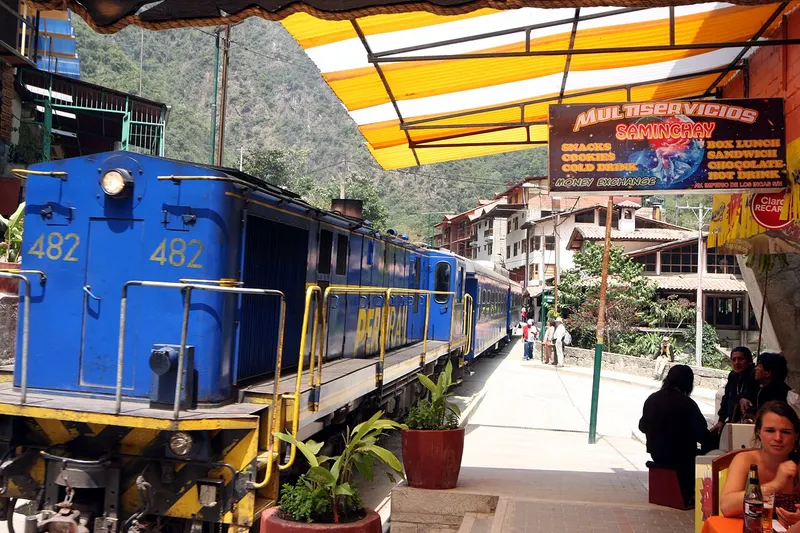
The logistics are part train, part trail. You leave from Ollantaytambo by morning train down the Urubamba gorge, but instead of riding all the way to Aguas Calientes you step off at a kilometre marker on the valley floor where the short trail begins. From there it is a steady, beautiful walk in — climbing through cloud forest on original Inca paving, passing Wiñay Wayna's terraces and fountains, and finishing with the ascent to the Sun Gate, where Machu Picchu appears below across the valley.
From Inti Punku you descend toward the citadel. Depending on your operator's itinerary and the day's timing you may walk down into Machu Picchu that afternoon or — more commonly — continue down to Aguas Calientes for the night and return up for a proper, unhurried visit the next morning. Either way you have earned your first view on foot rather than stepping off a bus, which is the whole point.
- Morning train from Ollantaytambo to the valley railway km marker where the trail starts.
- On foot through cloud forest, past Wiñay Wayna, up to the Sun Gate (Inti Punku).
- First view of Machu Picchu from above, then down — to the citadel or to Aguas Calientes for the night.
- Citadel visit usually the next morning on the standard timed-entry, circuit-based ticket — verify.

The permit and the February closure
It surprises people, but the short Inca Trail is permitted too. Because it uses the same protected trail and the same Sun Gate, it falls under the Inca Trail permit system: a capped daily quota, passport-named permits, licensed operators only, and no independent walking. The short-trail quota is generally easier to secure than the four-day one and can sometimes be booked closer to your dates, but in peak season it is not guaranteed, so treat it like any permit and book ahead rather than assuming availability.
The closure applies as well. When the Inca Trail shuts every February for maintenance and the heaviest rains, the short version closes with it — even though Machu Picchu itself stays open and reachable by train. If your trip falls in February and you had your heart set on arriving through the Sun Gate, the permit-free Salkantay or Lares routes, or simply the train, are the alternatives. Confirm the current quota, price and closure dates with a licensed operator before you plan around them.
- Same permit system as the four-day trail: capped, passport-named, licensed operators only — verify.
- Usually easier to secure than the four-day permit, but not guaranteed in high season — book ahead.
- Closes every February with the rest of the Inca Trail; the citadel stays open — verify dates.
- February fallbacks: Salkantay, Lares, or the train and bus.

Fitness and altitude — gentler, but not nothing
Compared with the four-day trail the short version is far kinder: no Dead Woman's Pass, no nights at altitude, no multi-day fatigue. But it is still a long single day of walking on uneven Inca stone with sustained climbing, much of it stairs, and the final pull to the Sun Gate comes at the end when legs are tired. Anyone reasonably active will manage it; it simply rewards a little preparation — some hill or stair training, and broken-in footwear.
Altitude is much less of a factor here than on the high routes, because the valley trail sits far lower than the classic passes. Even so, you are in the Andes, and the smart move is the same as for any Machu Picchu trip: arrive a couple of days early in Cusco or the Sacred Valley to let your body settle before you walk. You will enjoy the day more for not arriving straight off a flight.

The circuit caveat to know before you go
One detail trips up trekkers who expect the trail to grant free run of the citadel. Machu Picchu now runs on a timed-entry system of numbered circuits and routes, and where the Inca Trail deposits you — through the Sun Gate, into the upper citadel — connects to specific circuits rather than the whole site. What you can see, and in what order, on your citadel visit the day after the short trail depends on which entry your operator arranges. It is rarely a problem in practice, but it means the trek is not a backstage pass: the circuit rules still apply once you are inside.
Because these rules have been revised in recent years, the only reliable move is to ask your operator exactly which circuit and entry your short-trail package includes for the citadel portion, and to confirm it against the current Ministry of Culture system. Pair this page with our circuits guide so you know what the entry you are given actually lets you see.


Common questions
Is the short Inca Trail really the 'Inca Trail'? Yes — it walks original Inca paving on the protected route, passes Wiñay Wayna and enters through the Sun Gate. It simply skips the high mountain section and the camps. Many travellers feel it gives the trail's most memorable moments without the hardest parts.
Why is it called the 2-day trail if I walk one day? Because the standard package adds the citadel visit the following morning. The walking is essentially one long day; the second day is exploring Machu Picchu.
Do I still need to acclimatize? It is wise. The trail itself is much lower than the four-day passes, but you are in the high Andes, and a couple of nights in Cusco or the Sacred Valley first makes the whole trip more comfortable.
Can I just take the train instead? Of course — and if camping and walking hold no appeal, the train delivers you to the same citadel in comfort. The short trail is for those who specifically want to arrive at the Sun Gate on foot.


Related guides

The Classic 4-Day Inca Trail to Machu Picchu
The four-day Inca Trail — the only trek that walks you into Machu Picchu through the Sun Gate. Permits, camps, Dead Woman's Pass, altitude, porters and what each day actually feels like.
Read guide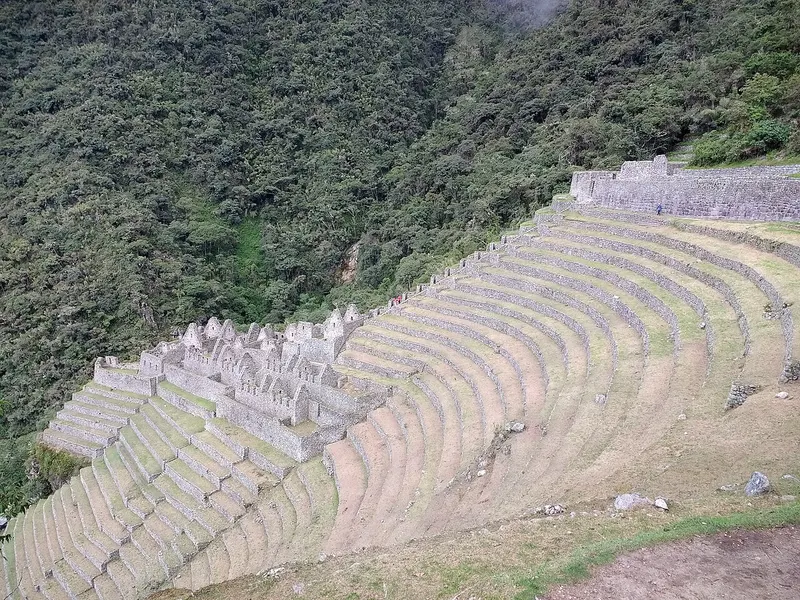
Wiñay Wayna: The Inca Trail's Hidden Masterpiece
Wiñay Wayna — 'forever young' — the spectacular terraced ruin near the end of the Inca Trail, with its ritual fountains and cloud-forest setting. Why trekkers rank it above the citadel, and how it fits the classic and two-day routes.
Read guideIntipunku, the Sun Gate: How to Reach It
The Sun Gate above the citadel — the Inca Trail's grand entrance and a stiff out-and-back for ticket holders. How to reach it, the seasonality, the views and the effort involved.
Read guideMore in Treks
6
Choosing a Licensed Inca Trail Operator
The classic Inca Trail can only be booked through a licensed operator — so the operator is your most important choice. How to vet permits, porter welfare, cancellation terms, and spot a too-good-to-be-true offer.
Read guide
Dead Woman's Pass: The Inca Trail's Hardest Day
Warmihuañusca — the 4,215 m high point of the classic Inca Trail and the day everyone fears. The altitude, the effort, the pacing, the weather and the mental game of the trek's toughest climb.
Read guide
Hiking Gear for Machu Picchu and the Treks
What to actually pack for the Inca Trail, Salkantay, rainy-season trekking, day hikes like Huayna Picchu, and the citadel circuits — the layering system, footwear, rain gear and daypack, without overpacking.
Read guideInca Trail Packing List
Exactly what to bring for the classic four-day Inca Trail — the layering system, rain gear, the sleeping setup, your daypack contents, medication and toiletries, and how the porter duffel weight limit shapes everything.
Read guide
Inca Trail Permits: How They Work and How to Get One
How Inca Trail permits work — who can book them, the strict daily cap, release timing, passport rules, the February closure, and what to do when your dates are sold out.
Read guide
Inca Trail vs Salkantay: Which Trek to Machu Picchu?
A clear head-to-head between the two classic treks to Machu Picchu — permits and availability, scenery, altitude, cost, comfort and archaeology — to help you pick the right one.
Read guide