
Boleto Turístico del Cusco
How the COSITUC Boleto Turístico works — the combined pass that covers Sacsayhuamán, Pisac, Ollantaytambo, Moray, the Maras–style sites and a clutch of Cusco museums — and when it's actually worth buying.
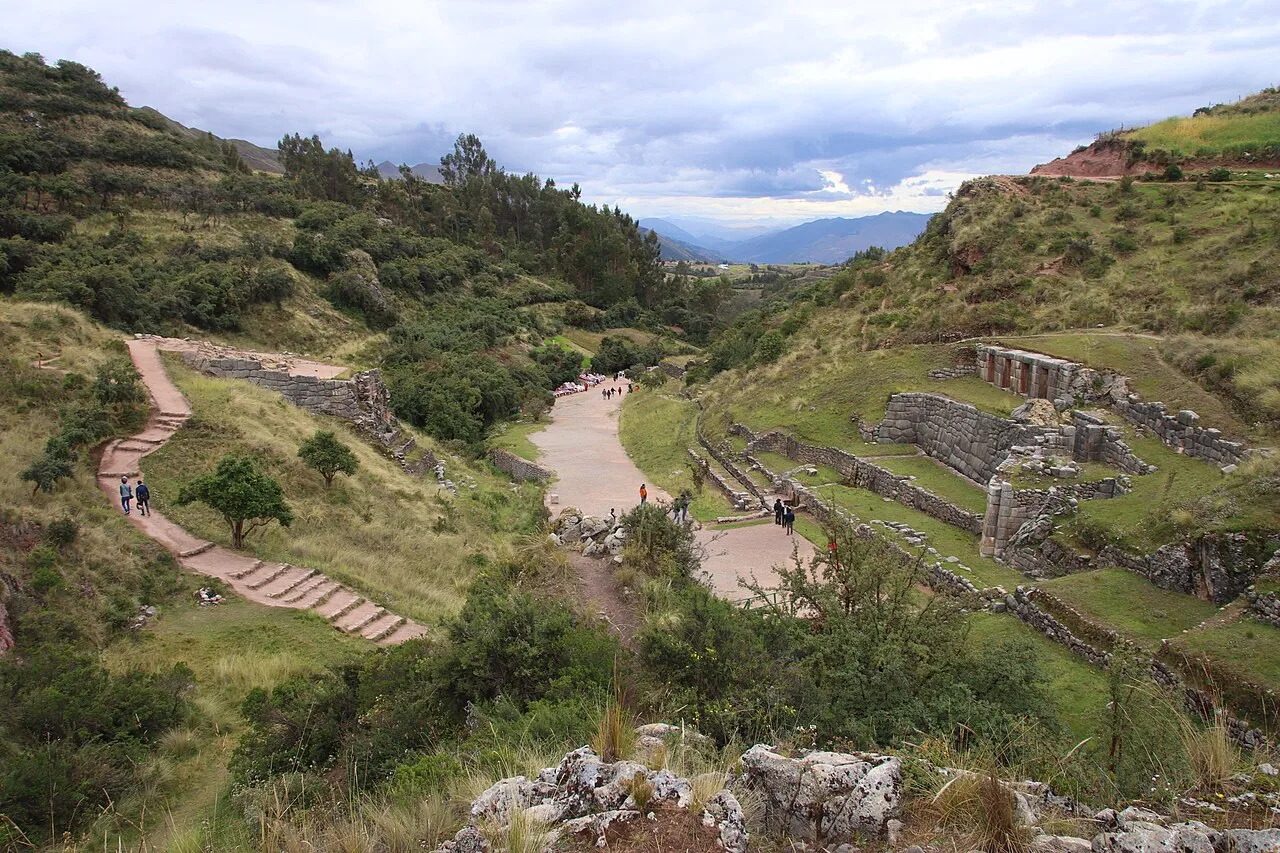
Photo: Draceane / Wikimedia Commons · CC BY-SA 4.0
- ✓The Boleto Turístico is a single combined ticket — sold by COSITUC — that bundles the headline Inca ruins around Cusco and the Sacred Valley plus several city museums.
- ✓Most marquee sites (Sacsayhuamán, Pisac, Ollantaytambo terraces, Moray) have no separate entry — the Boleto is the only way in.
- ✓It comes as a full circuit ticket valid for several days, or as cheaper partial tickets covering one cluster of sites.
- ✓It does NOT cover Machu Picchu, the Coricancha sun temple interior, the cathedral or the Maras salt pans — those are ticketed separately.
One ticket, most of the Inca sites around Cusco
Before the citadel downstream there is a whole world of Inca engineering ringing Cusco and threading down the Sacred Valley — and almost all of it is gated behind a single combined pass called the Boleto Turístico, administered by COSITUC (the regional tourism committee). Rather than buying a ticket at each ruin, you buy one document and show it at the gate of Sacsayhuamán, Qenqo, Pisac, Ollantaytambo's terraces, Moray, the South Valley sites of Tipón and Pikillaqta, and a string of Cusco museums.
For couples building the slow, romantic version of this trip — the version that lingers in the valley before riding the rails into the gorge — the Boleto is less a ticket than a passport for the warm-up week. It's the thing that turns a list of famous names into a route you can actually walk.
What's included — and what isn't
The full Boleto covers the big-name archaeological sites plus a cluster of museums and cultural venues in the city. The important thing to internalise is what it does not cover, because that's where travellers get caught out at a gate.
- Included (typically): Sacsayhuamán, Qenqo, Puka Pukara and Tambomachay above Cusco; Pisac and Ollantaytambo terraces and Chinchero in the valley; Moray; Tipón and Pikillaqta in the South Valley; several Cusco museums and the Centro Qosqo dance show.
- NOT included: Machu Picchu itself (a separate timed ticket entirely).
- NOT included: the Coricancha (Qorikancha) sun-temple interior — a separate small fee.
- NOT included: Cusco Cathedral and the religious-art circuit — a separate church ticket.
- NOT included: the Maras salt pans (Salineras) — owned and ticketed locally by the salt-farming community.
Full ticket vs partial tickets
The Boleto comes in two shapes. The full integral ticket bundles everything above and stays valid for several days — long enough to cover Cusco's surrounding ruins and a Sacred Valley loop on different days. If you only want a slice, COSITUC also sells partial circuit tickets, each grouping a handful of nearby sites and valid for a shorter window (commonly a single day).
There are usually a few partial circuits — broadly, the ruins immediately above Cusco; the Sacred Valley archaeological sites; and the city's museums and cultural venues. If your itinerary is short and you only plan to see, say, Sacsayhuamán and one valley town, a partial ticket can be the cheaper, cleaner choice. If you're giving the region the week it deserves, the full ticket almost always wins on value.
- Full (integral) ticket: all sites, valid several days — best for an unhurried valley + Cusco week.
- Partial tickets: one cluster of sites, shorter validity — best for tight, focused trips.
- Prices and exact validity windows change — verify the current tariff with COSITUC before you arrive.
Frequently asked questions
The questions couples ask us most often as they plot the warm-up days before the citadel.
- Where do I buy it? At the official COSITUC office in central Cusco, and at the gate of most of the included sites. Carry cash; verify which sites currently sell on the spot.
- Can I buy it online? Availability of an official online channel changes — treat in-person purchase in Cusco as the reliable default and verify any online option before relying on it.
- Is there a discount? Reduced rates typically exist for students with an ISIC card and for younger travellers; bring documentation. Verify current eligibility locally.
- How long is it valid? The full ticket spans several days; partials are shorter (often a single day). Confirm the exact window when you buy — it's printed on the ticket.
- Do I need it for Machu Picchu? No. Machu Picchu uses its own separate timed-entry ticket; the Boleto is for Cusco and the Sacred Valley only.
- Is it refundable? Treat it as non-refundable and non-transferable. Keep it dry and safe — it's checked and marked at each site.

Is the Boleto worth it for your trip?
If your romantic version of this journey includes Sacsayhuamán glowing over the city, Pisac's terraces stacked up a mountainside, and the green amphitheatre of Moray, the full Boleto is effectively unavoidable — and good value, because there's no other way through those gates. If you're on a two-night dash focused only on the citadel, you may not need it at all.
The honest rule of thumb: count the included sites you genuinely intend to visit. Two or fewer, look at a partial ticket; three or more, buy the full one and let the warm-up week unfold without doing maths at every gate.

At a glance
The Boleto Turístico essentials in one card. Treat prices, validity and online availability as things to verify with COSITUC before you travel — only the structure here is evergreen.
- What: COSITUC combined pass for Cusco-region ruins, valley sites and city museums.
- Covers: Sacsayhuamán, Qenqo, Pisac, Ollantaytambo terraces, Moray, Chinchero, Tipón, Pikillaqta, museums + more.
- Excludes: Machu Picchu, Coricancha interior, the cathedral, the Maras salt pans.
- Forms: full multi-day ticket, or cheaper single-cluster partial tickets.
- Buy: COSITUC office in Cusco or at participating site gates — bring cash and ID.
- Rule of thumb: three+ included sites on your plan → buy the full ticket.

Related guides

The Sacred Valley: A Complete Guide
The lower, warmer valley of the Río Urubamba — Písac, Ollantaytambo, Maras and Moray — where most trips stage before the train to the citadel. Why it sits below Cusco, how its towns differ, where to sleep and eat, and how it links to Machu Picchu.
Read guide
Cusco: Your Base for Machu Picchu
The Inca capital at 3,399 m, where you acclimatize before climbing anything — where to sleep, which gentle sights to see first, how to pace your altitude days, and how to move on to the valley and the citadel when your body is ready.
Read guide
Machu Picchu Tickets Guide
How the official timed-entry ticket works, where to buy it, what sells out first, and how to match the right ticket to the route and view you came for.
Read guideMore in Cusco Base
6
Best Cafés in Cusco
Where to take coffee, breakfast and a gentle acclimatization morning in Cusco — the plaza spots, the San Blas hideaways and the quieter local lanes, mapped for couples easing into the altitude.
Read guide
Best hotels in Cusco
How to choose well among Cusco's hotels for a Machu Picchu trip — judged not on stars alone but on altitude comfort, location and walkability, character, family fit, and how cleanly they set up the onward journey to the citadel.
Read guide
Budget hotels in Cusco
How to sleep well in Cusco for less before Machu Picchu — value hotels, guesthouses and hostels, where the cheaper rooms cluster, and the few things never to scrimp on at 3,399 m.
Read guide
Cusco & Machu Picchu Costs
A realistic way to think about the money — the fixed citadel ticket, the train that dominates the budget, buses, guides, food and the trek add-ons — and where the costs hide.
Read guide
Cusco acclimatization & altitude
How to land soft in Cusco at 3,399 m: reading soroche, pacing your first day, what to eat and drink, the easy activities that help, and when to simply rest before Machu Picchu.
Read guide
Cusco Cathedral: The Plaza de Armas Centrepiece
The great colonial cathedral on Cusco's Plaza de Armas — built on Inca foundations, hung with Cusco School paintings, and home to the famous guinea-pig Last Supper. Tickets, art, dress code and how it fits a first acclimatizing day.
Read guide