
Best hotels in Cusco
How to choose well among Cusco's hotels for a Machu Picchu trip — judged not on stars alone but on altitude comfort, location and walkability, character, family fit, and how cleanly they set up the onward journey to the citadel.

Photo: Darya Luganskaya / Unsplash
- ✓In Cusco the 'best' hotel is the one that gets the basics right at 3,399 m: an easy walk in, a warm room and a gentle landing on your lungs — not just thread count.
- ✓Location and gradient matter more here than almost anywhere: flat and central spares you a breathless climb on your first acclimatizing days.
- ✓Useful, non-obvious extras to look for — oxygen on hand, heating, airport pickup and help arranging the Ollantaytambo transfer — separate a good Cusco hotel from a merely pretty one.
- ✓We name no rates and quote no nightly prices: those move constantly, so verify everything live when you book.
What makes a hotel 'best' in a city at 3,399 m
Cusco has hotels for every wallet and every mood, from candle-lit colonial palaces to cheerful backpacker bunks, and you can find a lovely room in almost any of them. But 'best' means something slightly different here than in a lowland city break, because Cusco sits at 3,399 m — the highest you sleep on a normal Machu Picchu trip, higher even than the citadel. The hotel that serves you best is the one that quietly handles altitude well: an easy, near-level walk from where the taxi can drop you, a genuinely warm room for the cold highland nights, and small mercies like oxygen available and a kettle of coca tea in the lobby. Those things matter more than a marble bathroom on the morning your head is thumping.
So this guide is a way of choosing rather than a list of room rates — and deliberately so, because Cusco's prices shift with season and demand and any number we printed would mislead you within a month. Instead it sets out the things actually worth weighing: altitude comfort, location and walkability, character, family suitability, and how well a hotel sets up the next leg toward Machu Picchu. Get those right and you will land on the hotel that fits your trip, whatever your budget, and you can confirm the live price yourself when you book.

At a glance — what to weigh
Before booking anything, run a candidate hotel through these. The first three matter more in Cusco than the glossy photos.
- Altitude comfort: heating, warm bedding, oxygen on hand, coca tea — does the hotel take the height seriously?
- Location & gradient: how flat and central is it, and how far is the walk from where a car can drop you?
- Character: colonial courtyard, modern boutique, simple and honest — match it to the trip's mood.
- Family fit: triples and family rooms, step-free access, a kitchen or flexible meals.
- Onward logistics: airport pickup, and help arranging the early transfer to the Ollantaytambo train.
- Price: always verify live — Cusco rates swing with season and demand.
Best for altitude comfort
If you have struggled with altitude before, or simply want the easiest landing, let altitude comfort lead the choice. The features that help are concrete: a hotel low in its street rather than at the top of a stair-stepped lane, so the walk from the taxi is short and flat; a warm room, because Cusco nights are cold and a chilly, restless sleep makes soroche worse; and, at the more equipped end, supplemental oxygen available — some Cusco hotels keep it on hand or even pipe it to rooms, which can transform a rough first night.
Look too for the smaller signals that a hotel understands its altitude: mate de coca freely poured, a lift rather than three flights of stairs to reception, staff who know the nearest clinic and can summon a doctor. None of this shows up in a star rating, but on your first night at 3,399 m it is worth more than a rooftop bar. When in doubt, message the hotel before booking and ask plainly about oxygen, heating and how level the approach is.
- Look for: flat, low-on-its-street location; warm rooms and good bedding.
- Bonus features: oxygen available or piped, a lift, coca tea, clinic know-how.
- Ask before booking: 'How level is the walk in, and is oxygen on hand?'
Best for location & walkability
For most travellers the single biggest quality-of-stay lever in Cusco is how central and how flat the hotel is. A base in or just off the Plaza de Armas puts the cathedral, the Coricancha, the great Inca walls and dozens of restaurants within an easy, mostly level stroll — which on acclimatizing days means you sightsee without the lung-burning climbs that come with a hilltop room. The plaza area is busiest and priciest, but for a short Cusco stay built around the citadel, the convenience usually justifies it.
If you want charm over flatness, San Blas up the hill is the romantic alternative, best chosen for a later, acclimatized stretch of the trip; if you want value and local life, the streets out toward San Pedro market deliver both, at the cost of a slightly longer or hillier walk to the marquee sights. The rule of thumb across all of them: read the map for gradient, not just distance. Two hotels three blocks from the plaza can be a world apart if one of them is three blocks straight uphill.
- Flattest and most central: in or just off the Plaza de Armas.
- Most charming, more climbing: San Blas, ideally later in the trip.
- Best value, real city life: around San Pedro market and beyond.
- Check gradient, not just distance, before you book.

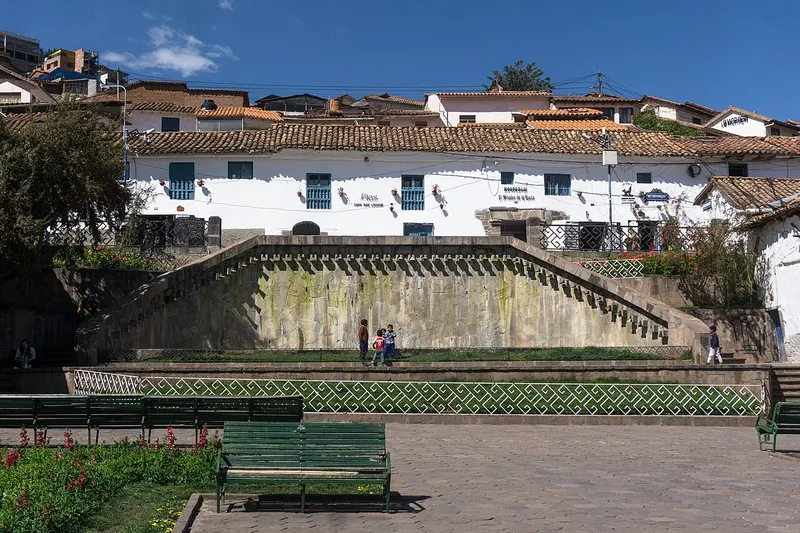
Best for character & romance
Cusco rewards travellers who care about the room as much as the view from it, because few cities offer such a rich seam of character hotels. The signature style is the colonial conversion: a former mansion or monastery built on Inca foundations, arranged around a courtyard where bougainvillea spills over centuries-old stone, with the rooms folded into cloisters and the comforts kept discreet. Stay in one and the history is not a backdrop you visit but the walls you sleep within — a quietly romantic prelude to the romance of the citadel itself.
Beyond the grand conversions, Cusco has a growing crop of design-led boutiques and characterful guesthouses, many in San Blas, where the appeal is more bohemian — exposed beams, local textiles, a viewpoint terrace, a courtyard café. For couples, an anniversary or a honeymoon, character is often the deciding factor, and Cusco delivers it across a wide price range. The thing to confirm is that the charm does not come at the cost of the basics: that the lovely old room is also warm, and the lovely old building is not at the top of an exhausting climb.

Best for families
Travelling to Cusco with children, or with older relatives, shifts the priorities. Family-friendly here means, first, the altitude basics done well — a warm room and a gentle, flat approach matter even more when small or older bodies are adjusting. It means practical room configurations: triples, connecting rooms or proper family suites rather than a cramped double with a folding cot. And it means flexibility around food and timing, since young children at altitude often eat and sleep on their own unpredictable schedule for a day or two.
Location helps families enormously. A central, flat base means you can retreat to the room mid-afternoon when someone flags, without a long uphill trudge — and being able to pop back easily is a lifesaver on the acclimatizing days. Some hotels offer kitchenettes or generous breakfasts that take the pressure off mealtimes, and step-free or lift access spares the stairs. As ever, message ahead: ask about family rooms, heating and how level the walk is, and you will quickly sort the genuinely family-ready hotels from those that merely say so.
- Look for: triples, connecting rooms or family suites; step-free or lift access.
- Prioritise: a flat, central base for easy mid-afternoon retreats.
- Helpful extras: kitchenette, flexible meals, warm rooms.
Best for value
Cusco is kind to travellers watching the budget, and you do not have to sacrifice a good stay to keep costs down. The best value tends to sit a few minutes' walk out from the plaza — around San Pedro market and in the residential streets beyond — where comfortable guesthouses, family-run hotels and well-run hostels charge a fraction of the central rate while keeping you within walking distance of the sights. You trade a little polish and flatness for real city life and money kept back for the train and the ticket, which for many travellers is exactly the right trade.
The smart move is to spend where it counts and save where it does not. A warm, clean, well-located budget room serves you just as well at altitude as a grand one; the splurge, if you have one, is often better spent on the citadel day itself. Read recent guest reviews with an eye for the things that matter in Cusco — warmth, hot water, how central, how steep the walk — rather than for luxuries you will not use. Done well, a value base leaves the trip richer everywhere else.
Best for the journey onward to Machu Picchu
An easily overlooked mark of a good Cusco hotel is how well it sets up the morning you leave for the citadel. Because the trains to Aguas Calientes run from Ollantaytambo down in the Sacred Valley — roughly an hour and a half to two hours away by road — the citadel day starts early, with a transfer before the train. The best hotels make that painless: they sit somewhere a driver can reach without negotiating stepped lanes, they will help arrange or book the Cusco-to-Ollantaytambo transfer to meet your train time, and they will hold a bag if you are coming back to Cusco afterwards.
Ask, when you book, whether the hotel arranges airport pickup on arrival and the early valley transfer on departure; many do, and having both handled removes the two most stressful logistical moments of a Cusco stay. Because exact train origins, departure points and transfer arrangements can change, confirm the specifics with the hotel and your train operator close to the date rather than assuming. A hotel that gets you in from the airport gently and out to the train cleanly has done the two hardest parts of its job.


Best for solo travellers
A solo traveller's idea of the best Cusco hotel often differs from a couple's or a family's: company, safety and easy logistics matter more than a romantic suite. The sweet spot tends to be a sociable but well-run guesthouse or hostel with both dorm beds and private rooms, where you can meet other travellers over breakfast, split a transfer or a trek booking, and still retreat to a quiet room when the altitude asks for an early night. A central or near-central location helps here too — being able to walk home on lit, busy streets after dinner is worth more than a bargain in a deserted lane.
Practical touches make the difference for solos. A hotel that will store a bag while you are at the citadel, that can book your onward transfer and that has staff used to helping independent travellers plan the next leg turns a room into a basecamp. Read recent reviews with an eye for the social-but-secure balance — some hostels lean party, others calm — and pick the register that suits how you travel. Cusco is well used to people arriving alone and breathless, and the right base makes the solo version of the trip easy and warm.
- Look for: sociable but well-run hostels and guesthouses with private-room options.
- Prioritise: a central, walkable, well-lit location for safe evenings.
- Helpful extras: bag storage, transfer booking, trek-planning help.
Best for a short, efficient stay
If Cusco is a quick bookend to the citadel rather than a destination in itself — a night or two to acclimatize, then onward — the best hotel is the one that wastes none of your limited time. That means flat and central above all, so the sights are a stroll away and the morning transfer to the train is painless; it means airport pickup arranged so your arrival is frictionless; and it means a hotel happy to handle the early Ollantaytambo transfer so your one full day is spent in the city, not on logistics. Character and spa afternoons are lovely, but on a tight stay, efficiency is the luxury.
Lean into hotels that fold the logistics into the room. The best short-stay bases will collect you from the airport, pour the coca tea, point you at a flat, gentle first-day loop of the centre, store a bag while you are at the citadel and have a driver ready before dawn for the train. Pay a little more for that seamlessness if it buys back time and removes stress; on a trip measured in days rather than weeks, a hotel that simply works is the right kind of best.
- Prioritise: flat, central location and seamless logistics over character.
- Look for: airport pickup, arranged Ollantaytambo transfer, bag storage.
- Spend on: time saved and stress removed, not on amenities you'll skip.
What to be wary of when booking
A few traps catch travellers who book Cusco on looks alone. The first is gradient hidden behind a low price or a pretty photo: a room that is 'five minutes from the plaza' may be five minutes straight uphill, which on your first altitude days is a daily ordeal. The second is cold: Cusco nights are genuinely chilly and not every hotel heats well, so a beautiful room with weak heating and feeble hot water can make altitude sleep miserable. Both are easy to check — read recent reviews for the words 'cold', 'climb' and 'hot water', and message the hotel to ask plainly.
The third trap is treating the hotel as the trip's keystone. It is not — the timed citadel ticket and the train are, and they should be booked and protected first. A common, avoidable mistake is falling for a hotel, building the dates around it, and then finding the entry slot or train you need has gone. Book the trip's fixed bones first, then choose the hotel that fits within them, and verify its live price rather than trusting any figure printed in a guide, including this one.
- Watch for hidden gradient — 'close to the plaza' can mean 'uphill from it'.
- Check heating and hot water in recent reviews before booking.
- Book the citadel ticket and train before committing to a hotel.
- Never trust a printed rate — confirm the live price yourself.
Booking well: a short checklist
Put it all together and a good Cusco booking comes down to a handful of confirmations. Match the hotel to your traveller type and the area that suits it, then verify the things that actually shape a high-altitude stay before you pay — because the prettiest listing photo tells you nothing about warmth, gradient or oxygen. A two-line message to the hotel usually settles every doubt.
And keep the whole trip's spine in mind: the citadel entry is the fixed, capped point everything else is built around, so secure that and your train before you fall in love with a hotel. The room is the easy part to change; the ticket is not. Book the trip's bones first, choose the Cusco hotel that fits the body and the budget, verify the live price, and you have the base sorted.
- Confirm altitude basics: heating, oxygen availability, how flat the approach is.
- Confirm logistics: airport pickup, the Ollantaytambo transfer, bag storage.
- Confirm fit: family rooms, accessibility, or the romance you're after.
- Verify the live price — never trust a quoted figure from any guide.
- Lock the citadel ticket and train before the hotel.


Related guides

Luxury hotels in Cusco
Cusco's grandest stays — the converted palaces and monasteries, oxygen-supported rooms, spa retreats and special-occasion bases that make the high capital a romance in its own right before Machu Picchu.
Read guide
Budget hotels in Cusco
How to sleep well in Cusco for less before Machu Picchu — value hotels, guesthouses and hostels, where the cheaper rooms cluster, and the few things never to scrimp on at 3,399 m.
Read guide
Where to stay in Cusco
A neighbourhood-by-neighbourhood guide to basing in Cusco before Machu Picchu — weighing altitude comfort, charm, walkability, station and airport access, and which area suits families, couples, luxury and budget travellers.
Read guideMore in Cusco Base
6
Best Cafés in Cusco
Where to take coffee, breakfast and a gentle acclimatization morning in Cusco — the plaza spots, the San Blas hideaways and the quieter local lanes, mapped for couples easing into the altitude.
Read guide
Boleto Turístico del Cusco
How the COSITUC Boleto Turístico works — the combined pass that covers Sacsayhuamán, Pisac, Ollantaytambo, Moray, the Maras–style sites and a clutch of Cusco museums — and when it's actually worth buying.
Read guide
Cusco & Machu Picchu Costs
A realistic way to think about the money — the fixed citadel ticket, the train that dominates the budget, buses, guides, food and the trek add-ons — and where the costs hide.
Read guide
Cusco acclimatization & altitude
How to land soft in Cusco at 3,399 m: reading soroche, pacing your first day, what to eat and drink, the easy activities that help, and when to simply rest before Machu Picchu.
Read guide
Cusco Cathedral: The Plaza de Armas Centrepiece
The great colonial cathedral on Cusco's Plaza de Armas — built on Inca foundations, hung with Cusco School paintings, and home to the famous guinea-pig Last Supper. Tickets, art, dress code and how it fits a first acclimatizing day.
Read guide
Cusco City Tour: Guided vs DIY, and What to See
The classic Cusco half-day circuit — Qorikancha, the Cathedral, and the four Inca ruins above town: Sacsayhuamán, Q'enqo, Puka Pukara and Tambomachay. How to choose between a guided tour and doing it yourself, with altitude-friendly pacing.
Read guide