
Machu Picchu in July
The absolute peak of the year — the driest, clearest skies and the heaviest crowds, sold-out circuits and premium train and hotel pricing. How to plan a July visit so it works.

Photo: Junior Moran / Unsplash
- ✓July is the high-season peak: the driest, clearest weather of the year and, by some distance, the heaviest crowds.
- ✓Circuits, peak climbs and the most-wanted morning slots sell out earliest of any month — book months ahead.
- ✓Train seats and the best hotels run at premium prices and limited availability through the month.
- ✓Cold dawns and sub-freezing nights at altitude sit alongside fierce midday sun — pack for both extremes.
The zenith of the season
July is Machu Picchu at full tilt. It sits at the dead centre of the dry season, which means the most reliable weather of the entire year: rain is unlikely, the skies are routinely hard blue, and the iconic cloudless view — citadel sharp against the green peaks, Huayna Picchu rising behind — comes good more dependably now than in any other month. It is, unambiguously, the safest single bet for clear skies. And that is precisely why it is also the busiest, most expensive month on the ridge. The same conditions that make July the surest window draw the maximum number of travellers, amplified by school holidays across the northern hemisphere and Peru's own July festivities.
So the July equation is the starkest of the year. You're buying the highest weather odds in exchange for the highest crowds, the highest prices and the longest lead times. The travellers who have a wonderful July are the ones who accept that bargain and plan accordingly — months ahead, in the right order, with realistic expectations about sharing the viewpoints. The ones who struggle are those who treated the world's most-wanted month like an ordinary one and left the booking late.

At a glance — July
The quick orientation before the detail. Treat these as evergreen seasonal patterns rather than a forecast, and confirm exact ticket release dates, prices, train schedules and trek permit availability with official sources before you commit.
- Season: the peak of the dry season — driest, clearest, busiest, priciest.
- Weather: the most reliable clear skies of the year, with cold dawns and nights.
- Crowds: the heaviest of the calendar; aim for an early slot to beat the bus crush.
- Book months ahead: ticket first, then train and hotel, then peaks; Inca Trail earliest of all.
- Pricing: premium and limited on the best trains and hotels — reserve early.
- Pack for contrast: hot midday sun, sub-freezing nights at altitude.
- Altitude is unchanged: Cusco (3,399 m) is higher and harder than the citadel (2,430 m).

The weather you'll actually get
July's forecast is as good as Machu Picchu's weather gets, but two honest caveats apply. First, even in the driest month the citadel sits in a cloud-forest gorge, so a dawn mist can still fill the valley before lifting through the morning — clear-sky odds are excellent, not guaranteed. Mornings are generally clearer than afternoons, which is the case for an early entry slot, and the classic move is to be at the overlook as the cloud burns off and the city emerges clean below. Patience still pays: visitors who see white at the gate often get their photograph from the same spot an hour or two later.
Second, dry and clear does not mean warm. July shares June's distinction as the coldest period of the year at altitude: dawns and nights across Cusco, the Sacred Valley and the citadel are genuinely cold, and the high trekking country regularly drops below freezing overnight under the clear skies. Midday sun at 2,430 m, by contrast, is fierce, and sunburn is a real hazard. July's packing list is therefore the dry season's contrast at full stretch: sun hat, high-factor sunscreen and sunglasses for the day, plus a serious warm layer, hat and gloves for the dawn, all sheddable as the sun climbs.
- The most reliable clear-view odds of the year — but morning mist is still possible.
- Aim for an early entry slot; mornings are clearer than afternoons.
- Cold dawns and sub-freezing nights at altitude despite the sunny days.
- Fierce midday sun at altitude — sun hat, sunscreen and sunglasses are essential.

Sold-out circuits — book months ahead, in the right order
Since the post-2024 reorganisation by Peru's Ministry of Culture, every visit runs on a timed-entry ticket tied to one of three official circuits and a numbered route — there is no general admission and no buying at the gate on the day. July is when this system bites hardest of any month. The popular morning slots, the all-rounder circuit that pairs the postcard view with the urban sector, and above all the two add-on peak climbs — Huayna Picchu and Machu Picchu Mountain — sell out earliest, often well in advance. Leaving any of it late in July is the single most common way to end up with a slot, circuit or climb you didn't want, or none at all.
The discipline is the same, only more urgent. Secure the entry ticket first, because it's the fixed point the train, the bus up from Aguas Calientes and your overnight all hang on; then book the train and hotel; then add the peak climbs. Carry the same passport you booked with, since it's checked at the gate. And keep volatile details — current prices, capacities, exact release windows — to official sources, which we deliberately don't reproduce here because they change.

Premium trains and hotels — reserve early
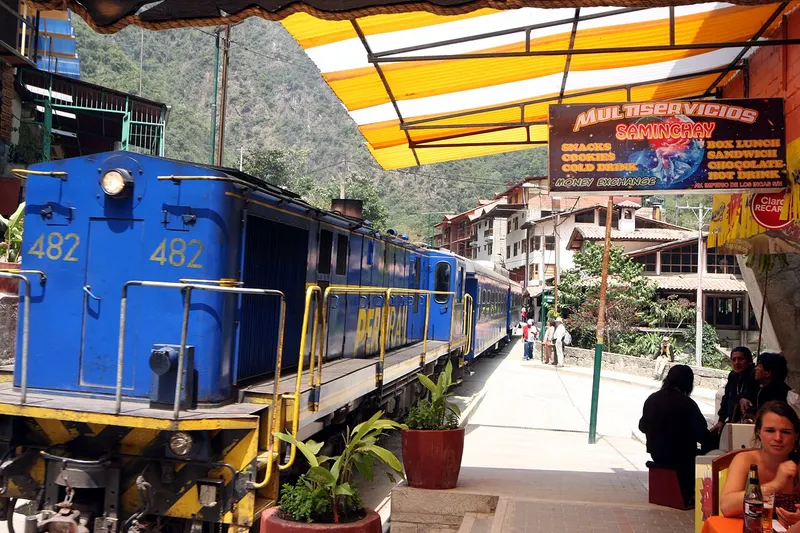
July's demand spills well beyond the gate. The trains from Ollantaytambo to Aguas Calientes run at their busiest, the most convenient departure times go first, and the premium services fill fast; book your seats as soon as your entry slot is fixed, since the train is built around the ticket, not the other way round. Hotels follow the same logic — the best rooms in Cusco, the Sacred Valley and Aguas Calientes book out, and pricing across the board sits at its annual high. An overnight in Aguas Calientes, rather than a single in-and-out day, is the most comfortable way to secure an early slot and a calm morning, but it's also the most sought-after, so reserve it early.
None of this means July is unaffordable or impossible; it means it rewards decisiveness. Lock the ticket, then the train, then the hotel, in quick succession and as far ahead as your dates allow. Verify current schedules, prices and availability with the operators directly — these shift, and a peak month is the worst time to be caught out by an assumption.
Trekking in July
July is peak trekking season too — at its best and its busiest. The classic four-day Inca Trail is in excellent condition, drier underfoot with the high passes clear, but its capped permits vanish earliest of all in July, so walkers must book months in advance through a licensed operator. The permit-free alternatives — Salkantay, Lares, the Inca Jungle — are easier to arrange, yet the good guides and lodges still fill fast in the peak. Whichever you choose, July's catch is the cold: the high passes, Salkantay's especially, are frigid and routinely sub-freezing at night under the clear skies, so pack a proper warm sleeping bag and real insulating layers despite the 'dry' season.

Altitude doesn't take a season off
Amid July's booking urgency it's easy to forget the timing question that never changes: the altitude. It's the same in every month. Cusco sits at 3,399 m, nearly a kilometre higher than the citadel at 2,430 m, so most altitude sickness strikes on arrival in the city, not at the ruins. Acclimatize before you climb anything — sleep low-to-high-to-low, ease into the lower Sacred Valley or pace your first Cusco days gently, hydrate, go easy on alcohol at first — and build a buffer day into the plan. In the peak month that buffer matters most of all, because a slow, soroche-y start can't be allowed to collide with a fixed, hard-to-rebook entry slot you booked months ago.

The July verdict
Come in July if you want the surest clear-sky odds of the year and you're prepared to plan for the peak — accepting the heaviest crowds, premium prices and the longest lead times in return. Book the entry ticket first and months ahead, then trains and hotels in quick succession, reserve the peaks and the classic Inca Trail as early as you possibly can, aim for an early slot to get ahead of the crush, and pack for sub-freezing nights under fierce midday sun. Do all that, and July gives you Machu Picchu at its most reliably magnificent — just shared with the rest of the world.


Related guides

Best Time to Visit Machu Picchu
Two Andean seasons, not four — a full month-by-month guide to weather, crowds, ticket urgency, trains, treks and altitude, so you can pick the dates that fit the trip you actually want.
Read guide
Machu Picchu Tickets Guide
How the official timed-entry ticket works, where to buy it, what sells out first, and how to match the right ticket to the route and view you came for.
Read guide
Trains to Machu Picchu
PeruRail vs IncaRail, Cusco vs Ollantaytambo departures, the service classes, stations, the strict luggage allowance, bimodal road-and-rail options, and where the train fits in the booking order.
Read guideMore in Best time to visit
6
Accessible Machu Picchu
An honest look at mobility at the citadel — the uneven Inca stone, the stairs, how the train and shuttle bus help, hotel strategy, the gentlest circuit and route, and why a private guide is the key to a workable visit.
Read guideAltitude & When to Go: The When-to-Visit Hub
The home for timing your trip — the two Andean seasons, altitude and acclimatization, dry- versus rainy-season trade-offs, and the month-by-month guides that tell you what each part of the year really means at the citadel.
Read guide
Altitude in Machu Picchu, Cusco & the Valley
How altitude really works across the trip — why Cusco is higher than the citadel, where soroche hits hardest, the low-to-high-to-low ladder, and sensible pacing, with medical-caution language throughout.
Read guide
Hiking & Site Safety at Machu Picchu
Staying safe on the steep, slick, exposed parts of the visit — the citadel's stone stairs, wet-weather footing, altitude on the climbs, and the demanding mountain ascents of Huayna Picchu and Machu Picchu Mountain.
Read guide
Inti Raymi in Cusco
Cusco's Festival of the Sun on 24 June — the great Inca winter-solstice pageant at Sacsayhuamán, and how to plan Machu Picchu around the busiest, brightest week of the year.
Read guide
Is Machu Picchu Safe?
An honest safety picture for the whole trip — trains and buses, the treks, altitude, petty theft and money, occasional strikes and weather disruption, crowds, and travelling solo or as a woman.
Read guide