
The Intihuatana: Machu Picchu's Hitching Post of the Sun
The carved granite ritual stone at the citadel's high point — what 'hitching post of the sun' means, the astronomy and debate around it, the no-touch rule, and which routes reach it.
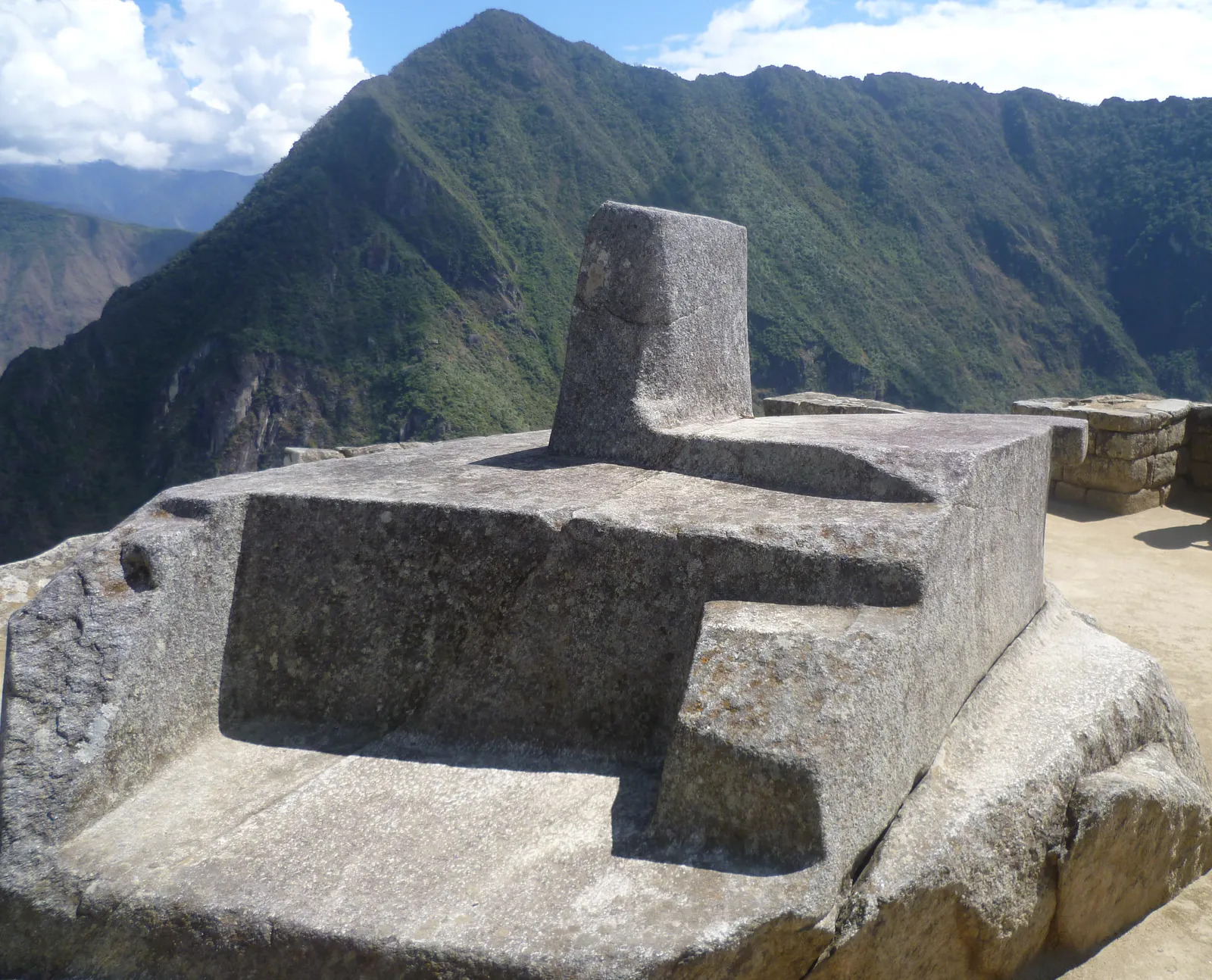
Photo: Alesegura / Wikimedia Commons · CC BY-SA 4.0
- ✓The Intihuatana is a single carved granite outcrop — a sculpted platform topped by a short upright pillar — set at one of the highest points of the citadel.
- ✓Its Quechua-derived name is usually translated 'hitching post of the sun'; it is widely read as a ritual and astronomical stone tied to the solstices.
- ✓Most Inca intihuatanas were destroyed by the Spanish; Machu Picchu's survived intact because the conquistadors never found the city — a rare, complete original.
- ✓Touching the stone is no longer permitted, and access depends on your circuit/route — verify whether the upper sector is included before you book.
A stone that ties down the sun
Climb to the high terraces at the heart of Machu Picchu and you arrive at a single piece of carved granite that the Inca raised above almost everything else: the Intihuatana. It is not a building but a sculpture worked directly from the living bedrock — a flat, terraced platform crowned by a short, angled upright, like a gnomon cut from the mountain itself. The name comes from Quechua roots and is usually rendered 'hitching post of the sun,' the idea being that here, at the turning of the year, the sun could be symbolically tied down and held.
Whatever its precise function, the Intihuatana feels different from the rest of the citadel. It sits at a ritual high point, raised on its own platform, with the green peaks ringing the horizon all around. The Inca cut these stones at their most sacred sites across the empire, and they were clearly central to a religion built on watching and honouring the sun. Standing beside it, you are at the symbolic centre of Machu Picchu's spiritual life — the point where stone, sky and season were meant to meet.
What it was for — and what we don't know
The honest answer is that nobody can be certain. The most enduring reading is astronomical: the carved upright and the angles of its platform are thought to relate to the sun's movement through the year, perhaps marking the solstices or equinoxes, when shadows cast by the pillar would fall in particular ways. Around the equinoxes, it is sometimes said, the sun stands almost directly above the stone and casts virtually no shadow at all — a moment when the sun seems, briefly, to be 'tied' to the spot. The name and the alignment together gave rise to the 'hitching post of the sun' interpretation that has stuck for over a century.
But the Inca left no writing, so much of this is informed inference rather than proven fact, and scholars still debate exactly how the stone was used — as a calendar, an altar, an astronomical sighting tool, a sacred huaca, or some combination. Treat the confident-sounding explanations you hear at the site as the leading theories, not settled truth. The uncertainty is part of what makes the Intihuatana compelling: it is plainly important and plainly deliberate, yet it keeps a measure of its meaning to itself.
- Leading reading: an astronomical and ritual stone tied to the solstices and equinoxes.
- Around the equinoxes the noon sun is said to cast almost no shadow from the upright.
- No Inca writing survives, so interpretations are informed inference, not proven fact — leading theories, not certainties.
- Likely a sacred huaca as much as a measuring instrument; the two were not separate to the Inca.
The one that survived
Part of what makes Machu Picchu's Intihuatana so precious is that it is one of the very few left whole. When the Spanish conquered the Inca, they set about destroying these stones wherever they found them — smashing or defacing the intihuatanas as instruments of a 'pagan' sun cult they meant to stamp out. Across the former empire, almost none survived intact. Machu Picchu's did, for the simple, extraordinary reason that the Spanish never found the city: it sat hidden in its cloud-forest ridge, unrecorded and unreached, until the twentieth century.
So the stone you stand beside is a genuine, undamaged Inca original — a rare survivor of a deliberate campaign of erasure. That history gives the no-touch rule its weight. For years visitors were allowed to lay a hand on the Intihuatana, and a notorious filming accident chipped the stone, so it is now roped off and protected. You view it from the surrounding path, close but hands-off. Respect the rope: this is one of the few places where the Inca's sun-religion still stands exactly as they cut it.
- Most Inca intihuatanas were destroyed by the Spanish — Machu Picchu's survived because the city was never found.
- It is a rare, undamaged original of a once-widespread sacred stone.
- Touching is no longer permitted; a past accident chipped the stone, and it is now roped off.
- View it from the surrounding path — close, but hands-off.
Which routes reach it — and why a guide helps
The Intihuatana sits in the upper part of the urban sector, on the climb to the citadel's ritual high ground, and under the timed-entry circuit system reorganised by Peru's Ministry of Culture in 2024, not every ticket route includes it. Access to the Intihuatana has at times been limited to specific routes and even specific hours of the day, with capped numbers and timed access, precisely because the stone is fragile and the platform is small. Do not assume your ticket reaches it: check that your circuit and route include the Intihuatana sector, and confirm any time-window restrictions, at the point of sale. The official routing has been revised before — verify the current rules before you book.
This is also a stone that means very little without interpretation. To the eye it is an oddly shaped block on a platform; its significance lives entirely in the astronomy, the religion and the history of survival behind it. A guide is what turns it from a curiosity into one of the most moving objects on the site — and since Peru's rules already steer many visitors toward guided entry, the Intihuatana is a strong argument for going in with someone who can explain what you are looking at.
- The Intihuatana sits in the upper urban sector; only some circuits/routes reach it.
- Access has at times been capped and limited to specific routes or time windows — confirm before booking.
- Do not assume your ticket includes it; verify the current routing and any time restrictions.
- A guide adds the most value here — the stone's meaning is not visible to the eye.


At a glance
A quick reference before you choose a route that reaches it. Exact routing, capacities and access windows change with official policy — treat what you find on official sources as current and verify before booking.
- What it is: a carved granite ritual stone — the 'hitching post of the sun' — at the citadel's high point.
- Function: widely read as astronomical and ritual, tied to the solstices and equinoxes — leading theory, not proven fact.
- Significance: a rare intact original; most others were destroyed by the Spanish, who never found this city.
- Access: the upper urban sector — only some circuits/routes, sometimes with capped or timed access. Verify.
- Rule: no touching; viewed from the surrounding path.
- Who it suits: anyone interested in Inca astronomy, religion and history — go in with a guide for the full meaning.
The symbolic centre of the citadel
It would be easy to walk past the Intihuatana and see only a strangely carved rock. Slow down, and it becomes the key to the whole place: the point where the Inca's reverence for the sun, their mastery of stone and their reading of the sky all converge in a single sculpted outcrop. That it survived at all — when its cousins across the empire were smashed — gives standing beside it the quality of touching something that should not still exist.
Make sure you can actually reach it. Because access to the Intihuatana is route-dependent and sometimes capped, the cardinal rule of Machu Picchu planning applies with full force here: the stone you can see is decided when you buy your ticket, not at the gate. If the hitching post of the sun is on your list, pick a route that includes it, check for any time-window limits, and consider a guide who can tie the stone, the sky and the history together for you.
Related guides

Machu Picchu Highlights: What You'll See
The set pieces inside the citadel — the Guardhouse overlook, the Temple of the Sun, the Intihuatana, the Sacred Rock, the Sun Gate and the Inca Bridge — and which circuit and route reaches each one.
Read guide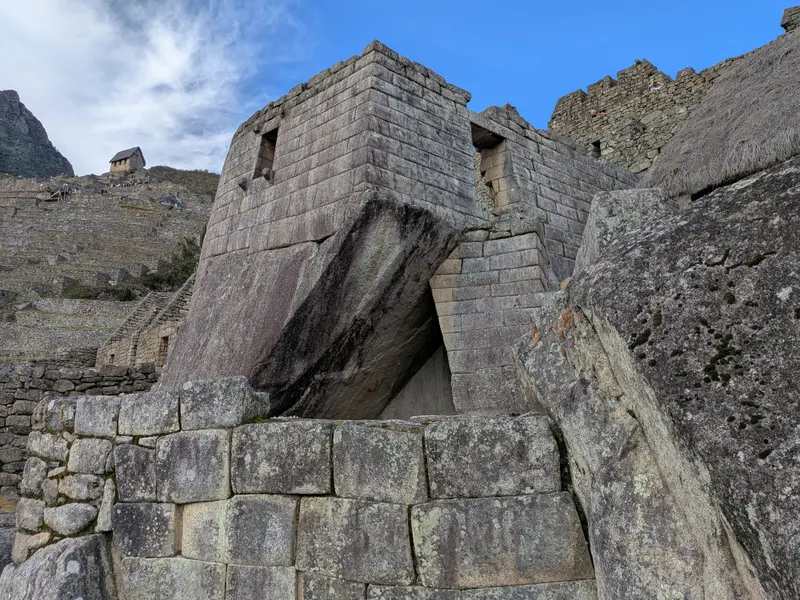
The Temple of the Sun (Torreón): A Visitor's Guide
The curved solar tower at the heart of Machu Picchu — its solstice-aligned window, the royal mausoleum beneath it, the finest masonry on the site, and which circuit reaches it.
Read guide
Machu Picchu History: The Story in the Stone
Who built Machu Picchu and why, the engineering that holds a city to a ridge, the centuries of quiet, Hiram Bingham's 1911 arrival, and the UNESCO status that shapes how we visit today.
Read guideMore in Highlights
6
A Rainy Day at Machu Picchu
Rain at the citadel is normal, not a disaster — how to dress for cloud forest, which circuits cope best, how to build train buffers, the Aguas Calientes backups, and why mist makes the most haunting photographs of all.
Read guide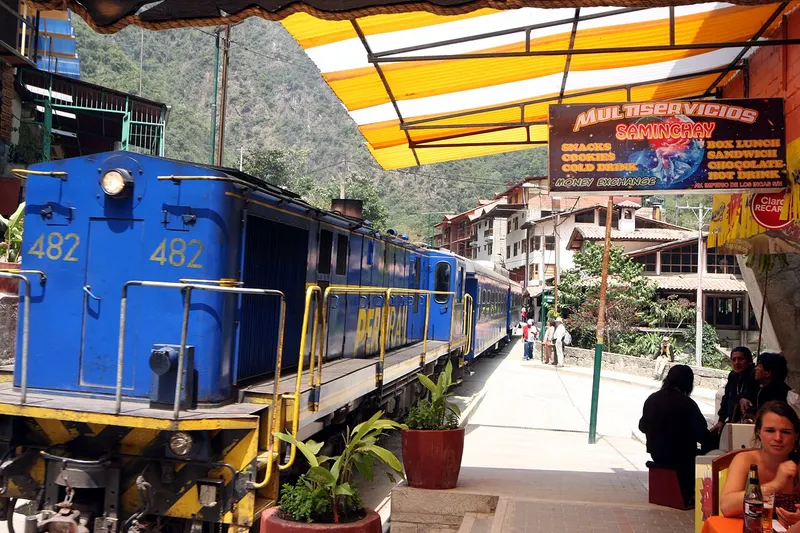
Aguas Calientes (Machu Picchu Pueblo): The Complete Guide
Aguas Calientes — officially Machu Picchu Pueblo — the cloud-forest town at the foot of the citadel. Where to sleep, how the trains and buses connect, the food, the hot springs, luggage, and how long to stay for a calmer entry.
Read guide
Around the Site: Machu Picchu Up Close
The hub for the world immediately around the citadel — what to see inside it, the town of Aguas Calientes below, where to stay, the first buses up, the hot springs, the restaurants, and how to visit responsibly.
Read guide
Best Photography Spots at Machu Picchu
Where the great Machu Picchu photographs are actually made — the classic upper-terrace frame, the llamas, the morning cloud, and which circuit reaches each angle. Plus the sunrise myth and what you simply cannot access.
Read guide
Budget hotels for Machu Picchu
Better-value places to sleep along the Machu Picchu route — honest guesthouses and well-run hostels in Cusco, Ollantaytambo and Aguas Calientes — chosen to stretch the trip without wrecking the altitude ladder or the citadel-morning logistics.
Read guide
Luxury hotels for Machu Picchu
The top-end stays that string together a polished Machu Picchu journey — restored monasteries and oxygen-equipped suites in Cusco, hacienda-and-spa retreats in the Sacred Valley, and the one true luxury option at the gate of the citadel itself.
Read guide