
Museo Inka: Context Before the Citadel
Cusco's archaeology museum of the Inca, in the colonial Casa del Almirante just off the Plaza de Armas. When to add it, what it holds, and why an hour here makes the Sacred Valley and Machu Picchu read far more clearly.
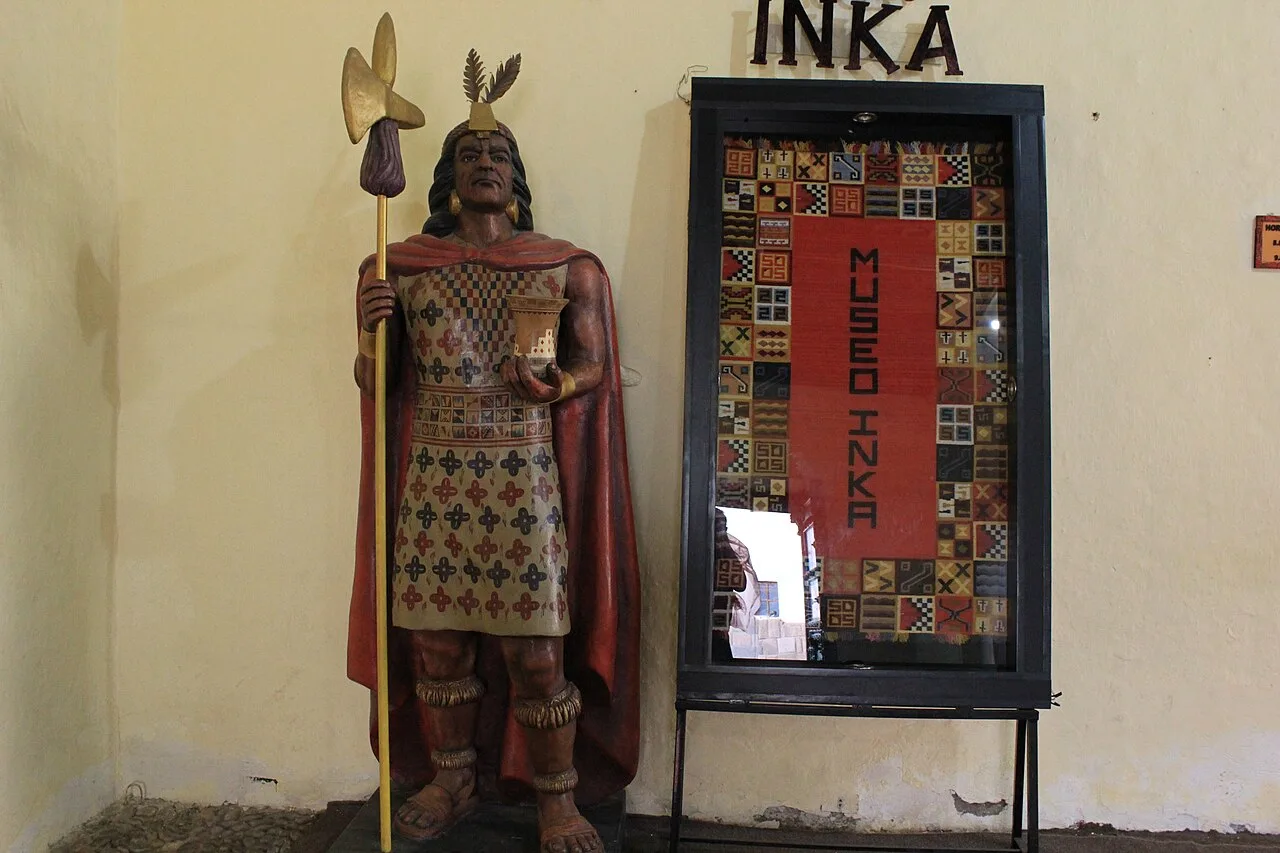
Photo: Laslovarga / Wikimedia Commons · CC BY-SA 4.0
- ✓Museo Inka is Cusco's dedicated museum of Inca and pre-Inca culture, run by the city's national university and housed in a grand colonial mansion, the Casa del Almirante.
- ✓Its collection — ceramics, metalwork, textiles, mummies and the famous queros (carved wooden ceremonial cups) — gives the human context the stone sites can't.
- ✓It's a separate paid entry, a couple of minutes uphill from the Plaza de Armas; flat-ish, indoor and gentle for an early acclimatizing day.
- ✓Best used early in the trip: an hour here makes the Sacred Valley and Machu Picchu read as a living civilisation rather than a set of beautiful ruins.
Why a museum, when the ruins are right there?
It's a fair question. You came for Machu Picchu, not glass cases. But the citadel and the Sacred Valley sites, for all their grandeur, are silent — they're stone, stripped long ago of the objects, colour and people that filled them. The Museo Inka is where you put the flesh back on the bones. An unhurried hour here, early in your trip, turns the ruins from gorgeous empty shells into the centres of a sophisticated, recently-living civilisation, and almost everyone who does it finds Machu Picchu hits harder for it.
The museum is also a beautiful building in its own right: the Casa del Almirante ('Admiral's House'), one of Cusco's finest colonial mansions, built — of course — partly on Inca foundations. So you get a quiet courtyard and carved stone doorways as the frame for the collection, a calm scholarly retreat a couple of minutes from the noise of the Plaza de Armas.

What's inside
Run by Cusco's national university (the Universidad Nacional de San Antonio Abad), the Museo Inka traces the Andes from pre-Inca cultures through the height of the empire and into the colonial collision. The galleries move through ceramics and metalwork, weaving and tools, jewellery and ritual objects, building a picture of how people actually lived: what they ate, wore, worshipped and made.
Two things tend to stay with visitors. The first is the collection of queros — the carved and painted wooden ceremonial drinking cups, often in matched pairs, used in the ritual sharing of chicha that sealed Andean social bonds; it's said to be one of the largest such collections anywhere. The second is the more sombre presence of Inca mummies and funerary material, a direct, slightly haunting encounter with the people whose empire you've come to walk through. Textiles, too, repay a slow look: the weaving traditions you'll see for sale in the markets reach back, unbroken, to the cloth in these cases.
- Ceramics, metalwork, jewellery and tools spanning pre-Inca cultures and the empire's height.
- An exceptional collection of queros — carved wooden ceremonial cups, often in pairs.
- Inca mummies and funerary objects — a direct, human counterpoint to the empty stone sites.
- Textiles linking the museum's ancient cloth to the weaving still sold in Cusco's markets today.
When to add it — and when to skip it
Timing is everything with this one. The Museo Inka pays off most when you visit it early — ideally before the Sacred Valley and Machu Picchu, so the vocabulary it gives you (the cultures, the chronology, the objects, the rituals) is fresh when you reach the stones. Do it on your first or second day in Cusco, when you're acclimatizing anyway and want flat, indoor, low-effort things to do.
Who should make a point of it: anyone travelling without a guide, who wants the context a good guide would otherwise provide; history-minded travellers; and families, who often find a museum a welcome change of pace from steps and altitude. Who can comfortably skip it: travellers on a tight two- or three-day dash with every hour spoken for, or those joining fully-guided tours that already deliver the backstory on site. It's a high-value hour, but it's an optional one — a primer, not a headline.
- Add it if: you're going guide-free, you love history, or you have a relaxed day or two in Cusco to fill.
- Time it: before the Sacred Valley and the citadel, so the context lands when you reach the stones.
- Skip it if: you're on a tight dash, or your guided tours already cover the history in depth.
At a glance
A quick reference for slotting the museum into your Cusco days. Opening hours and the entry fee change periodically, and the museum is generally a standalone ticket rather than part of the city's combined boleto — treat the following as evergreen guidance and confirm the current details locally before you visit.
- What it is: Cusco's museum of Inca and pre-Inca culture, in the colonial Casa del Almirante.
- Where: a couple of minutes uphill from the Plaza de Armas — flat-ish, indoor, gentle for an early day.
- Tickets: a separate paid entry; generally not part of the main tourist ticket — verify current pricing.
- Time needed: about an hour, more for the history-minded.
- Best paired with: Qorikancha and the Cathedral for a full, low-effort first-day context tour.
Fitting it into your Cusco days
The Museo Inka slots naturally into the same gentle first day as the Plaza de Armas, the Cathedral and Qorikancha — all within a few flat minutes of each other, all indoor and undemanding, all the right speed while you adjust to Cusco's 3,399 m. Do the sun temple for the stonework, the Cathedral for the colonial overlay, and the museum for the people and objects, and you'll arrive in the Sacred Valley and at the citadel reading them fluently.
If you'd rather have a guide thread it all together, a city tour can incorporate the museum or its themes; if you're the independent type, an hour here on your own is one of the best-value things you can do in Cusco before the train south.
Putting the citadel in context
The single most useful thing the Museo Inka does is set the empire in time and space, which is harder than it sounds when you arrive knowing only the postcard. The galleries trace the long run-up to the Inca — the earlier Andean cultures whose pottery and metalwork laid the groundwork — and then the startling speed with which the Inca state rose, expanded across thousands of kilometres of mountain and coast, and was undone by the Spanish conquest in the space of a single human lifetime. Stand in front of that arc and Machu Picchu stops being timeless and becomes precisely dateable: a royal estate of the fifteenth century, built and abandoned within a couple of generations.
The objects do the rest of the work. The matched queros remind you that Inca politics ran on reciprocity, on the ritual sharing of a drink to bind one person or province to another. The textiles show a society in which cloth, not coin, was a measure of value and a record of identity. The tools and ceramics make daily life concrete. By the time you reach the citadel's empty terraces, you can populate them — with the farmers, weavers, priests and nobility who once filled them — in a way no amount of staring at bare stone can manage alone.
- A clear chronology: pre-Inca cultures, the empire's rapid rise, and the conquest within one lifetime.
- Queros as evidence of an economy and politics built on reciprocity and ritual drinking.
- Textiles as currency, record and identity — the thread linking the cases to today's markets.
Related guides

Qorikancha: Cusco's Golden Sun Temple
The Inca empire's holiest sanctuary, sheathed in gold and now half-buried under the colonial church of Santo Domingo. What to see, how to read the stonework, and why it decodes Machu Picchu before you ever board the train.
Read guide
Cusco City Tour: Guided vs DIY, and What to See
The classic Cusco half-day circuit — Qorikancha, the Cathedral, and the four Inca ruins above town: Sacsayhuamán, Q'enqo, Puka Pukara and Tambomachay. How to choose between a guided tour and doing it yourself, with altitude-friendly pacing.
Read guide
Machu Picchu History: The Story in the Stone
Who built Machu Picchu and why, the engineering that holds a city to a ridge, the centuries of quiet, Hiram Bingham's 1911 arrival, and the UNESCO status that shapes how we visit today.
Read guideMore in Cusco Base
6
Best Cafés in Cusco
Where to take coffee, breakfast and a gentle acclimatization morning in Cusco — the plaza spots, the San Blas hideaways and the quieter local lanes, mapped for couples easing into the altitude.
Read guide
Best hotels in Cusco
How to choose well among Cusco's hotels for a Machu Picchu trip — judged not on stars alone but on altitude comfort, location and walkability, character, family fit, and how cleanly they set up the onward journey to the citadel.
Read guide
Boleto Turístico del Cusco
How the COSITUC Boleto Turístico works — the combined pass that covers Sacsayhuamán, Pisac, Ollantaytambo, Moray, the Maras–style sites and a clutch of Cusco museums — and when it's actually worth buying.
Read guide
Budget hotels in Cusco
How to sleep well in Cusco for less before Machu Picchu — value hotels, guesthouses and hostels, where the cheaper rooms cluster, and the few things never to scrimp on at 3,399 m.
Read guide
Cusco & Machu Picchu Costs
A realistic way to think about the money — the fixed citadel ticket, the train that dominates the budget, buses, guides, food and the trek add-ons — and where the costs hide.
Read guide
Cusco acclimatization & altitude
How to land soft in Cusco at 3,399 m: reading soroche, pacing your first day, what to eat and drink, the easy activities that help, and when to simply rest before Machu Picchu.
Read guide