
Pisac Ruins: Terraces, Temples & Cliff Tombs
How to visit the great cliffside Inca complex above Pisac — the ticket you need, the sweeping terraces, the Intihuatana sun temple, the cliff tombs, the steep hike from town, guide advice and how to pair the ruins with the market.

Photo: Willian Justen de Vasconcellos / Unsplash
- ✓The ruins are covered by the boleto turístico (Cusco tourist ticket), not a standalone entry — confirm which version you hold.
- ✓Pisac is one of the largest Inca sites in the valley: curved agricultural terraces, an Intihuatana sun temple, and a cliff face honeycombed with hundreds of ancient tombs.
- ✓Reach it by road from the upper gate (most tours and taxis) or on foot by a steep trail from town that climbs for a couple of hours.
- ✓Allow two to three hours to do the site justice; the ridge-top setting and the altitude (around 3,300–3,400 m at the top) reward an unhurried pace.
A citadel strung along a ridge
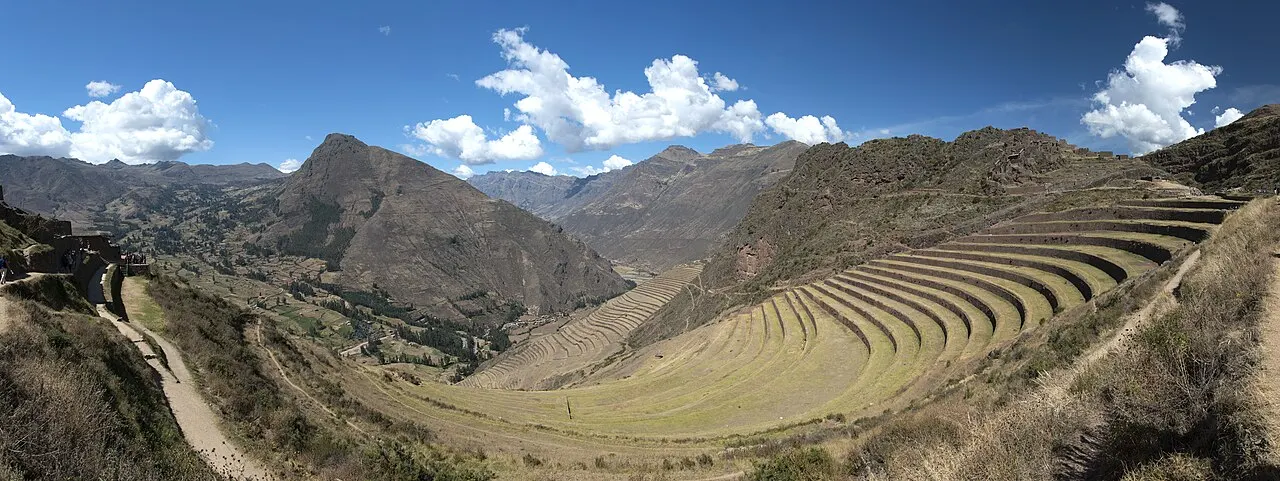
The ruins above Pisac are among the great Inca sites of the Sacred Valley, and for many travellers a genuine surprise — they arrive expecting the market and leave talking about the mountain. The complex is strung dramatically along a high ridge above the town, the land falling away steeply on both sides, and it is far larger and more varied than its profile from the plaza suggests. There are sweeping agricultural terraces, a fine ceremonial temple sector, residential and military zones, defensive gates, and, across a gorge, a cliff face riddled with hundreds of tombs.
It is, in scale and sophistication, a worthy companion to Machu Picchu, and because it sees a fraction of the crowds it can feel like a private discovery. Walking the ridge with the valley spread below on either hand is one of the quiet highlights of any Sacred Valley trip — and seeing the craftsmanship here, the curved terraces and the sun temple, makes the citadel itself read more richly when you reach it.

At a glance
The practical shape of a visit. The ticket structure and altitudes are stable; prices and exact hours change, so verify them with official sources before you go.
- Ticket: covered by the boleto turístico (Cusco tourist ticket), which bundles several valley and city sites — no separate standalone Pisac ruins ticket. Verify the current version and price.
- Time needed: about 2–3 hours to walk the terraces, the ceremonial sector and the viewpoints.
- Two ways up: by road to the upper gate (most tours/taxis) or a steep ~2-hour trail on foot from town.
- Altitude: the upper site sits around 3,300–3,400 m — higher than the town — so the walking can feel hard.
- Highlights: the curved terraces, the Intihuatana sun temple, the cliff tombs and the ridge viewpoints.
- Pairing: combine with the Pisac market and a long lunch in town for a full, unhurried day.
Tickets — the boleto turístico
Like the other great Sacred Valley sites, Pisac's ruins are not sold as a single standalone ticket. Entry is by the boleto turístico, the regional tourist ticket administered for the Cusco area, which also covers Ollantaytambo, Chinchero, Moray and a cluster of sites in and around Cusco. There are different versions — a full multi-day pass and shorter partial circuits grouping particular sites — so the right one depends on which other ruins you intend to visit across your trip.
Because prices, validity and exactly which sites each circuit bundles are set by the regional authorities and can change, treat the numbers as something to confirm rather than memorise. The durable advice: list the sites you actually want — Pisac, Ollantaytambo, Moray, Chinchero, Sacsayhuamán and so on — then buy the version of the boleto that covers them most economically. Keep the ticket safe, as it is checked at each entrance and is not re-issued if lost.
Walking the terraces and the sun temple
The terraces are the first thing that takes your breath, in both senses. Pisac's andenes fan out across the steep mountainside in great curving sweeps that follow the contours of the land rather than cutting straight across it — among the most beautiful and graceful agricultural terracing the Inca ever built. They were not only farmland but a statement of mastery over the slope, and walking among them, with the valley falling away below, you feel the scale of the engineering in your legs.
Higher up lies the ceremonial heart of the site, the sector known as Intihuatana, named for its carved stone 'hitching post of the sun' — a ritual astronomical stone like the famous example at Machu Picchu. Here the stonework shifts to the finest fitted masonry, with temples, ritual baths and water channels, the same vocabulary of sun-worship and hydraulics you meet at the citadel. Take your time among these structures; this is the part of Pisac that most repays slow, attentive looking.

The cliff tombs and the ridge viewpoints
Across a gorge from the main ruins, the bare cliff face is pocked with hundreds of holes — an ancient cemetery, one of the largest known Inca burial grounds, where the dead were placed in tombs cut and built into the rock. The tombs themselves are off-limits and long since looted, but the sight of the honeycombed cliff from the ruins is haunting, and a reminder that these sites were as much about the sacred dead as the living.
Linking the sectors are defensive gateways and tunnels and a series of viewpoints strung along the ridge, each opening a different panorama of the valley, the town far below and the terraces draped across the slopes. The walking between them is the real pleasure of Pisac — a high, airy ridge walk among Inca stone — so wear shoes with grip, watch your footing on the steps and narrow paths, and give yourself time to stop and simply look.
Getting up — road versus the hiking trail
There are two ways to reach the ruins, and they suit different travellers. The easy option is the road: taxis and day tours drive up to the upper entrance high on the ridge, from where you walk down through the complex to the lower sectors — much less climbing, and the choice for most visitors and anyone feeling the altitude. You can arrange a taxi up from the plaza and either walk back down to town or have the driver wait.
The rewarding option is the hike: a steep footpath climbs directly from the town, switching up past lower terraces to the main site over roughly a couple of hours. It is a genuine workout at altitude and not for everyone, but for fit, acclimatized walkers it is a glorious approach, earning every viewpoint and arriving at the ruins from below as the Inca intended. A popular hybrid is to taxi up to the top gate and walk the trail back down to town — the views without the lung-burning ascent.

Pairing the ruins with the market
The natural way to do Pisac is to combine the ruins with the market and a meal, making a full and unhurried day of it. A classic rhythm is to take the ruins in the cooler morning, when the light rakes across the terraces and the crowds are thinner, then descend into town for the market and a long lunch in one of Pisac's cafés. On a market day the timing works especially well, the busy plaza below making a lively counterpoint to the silent ridge above.
If you are coming from Cusco, Pisac sits at the near, eastern end of the Sacred Valley, which makes it an excellent first stop on a westward valley loop — ruins and market here, then on toward Urubamba, Maras and Moray, and finally Ollantaytambo for the train. Routed that way, you descend in altitude through the day and end up perfectly placed for the citadel, with Pisac as the opening act rather than a detour.

Common questions about visiting Pisac ruins
The things travellers most often ask, kept evergreen — confirm the moving details with official sources before you travel.
- Do I need a separate ticket? No — the ruins are covered by the boleto turístico, not a standalone entry. Verify which version covers them.
- How long does it take? About 2–3 hours for a proper visit, longer if you hike up from town.
- Do I have to hike? No — you can drive to the upper gate by taxi or tour; the trail from town is optional and steep.
- How high is it? The upper site sits around 3,300–3,400 m, higher than the town — pace yourself if newly arrived.
- Do I need a guide? Not required, but a guide brings the terraces, the sun temple and the tombs to life; many hire one at the gate or on a tour.
- Can I combine it with the market? Yes — ruins in the morning, market and lunch in town is the classic full day.



Related guides
Boleto Turístico del Cusco
How the COSITUC Boleto Turístico works — the combined pass that covers Sacsayhuamán, Pisac, Ollantaytambo, Moray, the Maras–style sites and a clutch of Cusco museums — and when it's actually worth buying.
Read guide
Pisac: Market Town, High Ruins & Valley Views
The Sacred Valley's eastern gateway — the famous artisan market, the spectacular cliffside ruins, the cafés and bohemian streak, and whether Pisac is worth a full day on the way to or from Machu Picchu.
Read guide
Ollantaytambo Ruins: Terraces, Temple Hill & the Sun Temple
How to visit Ollantaytambo's terraced fortress — the ticket you need, the climb up Temple Hill, the six monolithic pink-granite blocks of the Sun Temple, the granaries opposite, and how to pair the ruins with a Machu Picchu train.
Read guide