
The Inca Trail to Machu Picchu: A Complete Guide
Walking the original Inca road to the citadel — the four-day classic and the short version, the permit, what each day holds, porters and ethics, the camps and ruins, and arriving through the Sun Gate at dawn.

Photo: Ashim D'Silva / Unsplash
- ✓The Inca Trail is the only route that walks the original Inca road the whole way and enters Machu Picchu through the Sun Gate, Inti Punku.
- ✓It comes in two forms: the classic four-day, three-night trek and the short one- to two-day version covering the final scenic stretch.
- ✓It can only be walked with a licensed operator on a permit booked months ahead — there is no independent hiking and no buying a permit at the trailhead.
- ✓It closes every February for maintenance, and its highest pass tops 4,200 m, so acclimatization and fitness genuinely matter.
What makes the Inca Trail the Inca Trail
There are many ways to walk to Machu Picchu, but only one walks to it the way the Inca did. The classic Inca Trail — the Camino Inca — follows a surviving stretch of the vast royal road network that once bound the empire together, paved in places with original Inca stone, climbing stairways the Inca cut, and passing a string of their ruins along the way. It is not merely a hike that ends at Machu Picchu; it is a journey through the same landscape, on the same road, to the same gateway. That is what sets it apart from every alternative trek, however beautiful those are.
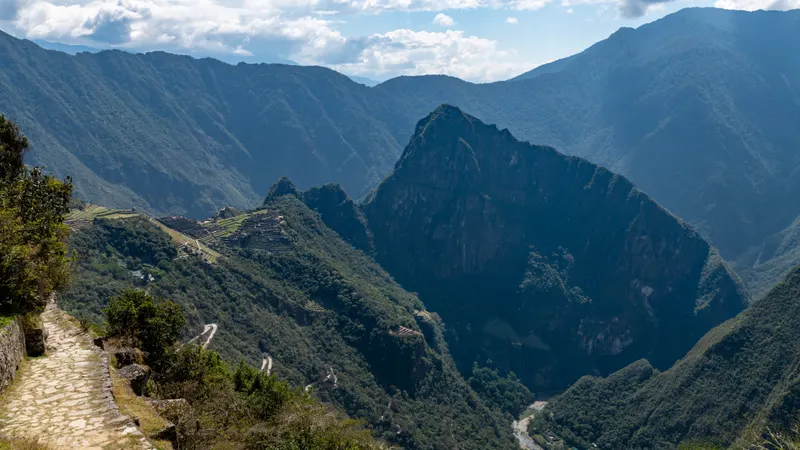
The reward is concentrated in the final morning. On the last day you rise in the dark, walk the last stretch of polished stone path, and arrive at Inti Punku, the Sun Gate — the notch in the ridge where the trail crests and the whole citadel is suddenly laid out below you, often catching the first light. No bus, no ticket queue, no shuffling crowd: just the city revealing itself exactly as it was meant to, to travellers who walked. For many people it is the single most moving moment of the entire trip, and it is the reason the Inca Trail is worth all the planning and the permit it demands.
Because of that demand, the trail is tightly controlled. A daily cap on the number of people allowed to start, a permit system, a requirement to go with a licensed operator and guide, and an annual February closure for maintenance all exist to protect a fragile, irreplaceable path. You cannot hike it independently, you cannot buy a permit at the trailhead, and you cannot leave it to the last minute in high season. Knowing that up front is the first step to actually doing it.
Classic four-day or short two-day?
The Inca Trail comes in two main forms. The classic is the four-day, three-night trek, covering the full surviving route — roughly 40-odd kilometres of climbs, passes and descents, sleeping at designated camps, and ending at the Sun Gate on the morning of the fourth day. It is the complete experience: the high passes, the cloud-forest descents, the chain of ruins, and the slow build to that final view. It is also the more demanding, asking for genuine fitness, good acclimatization and a tolerance for camping at altitude.
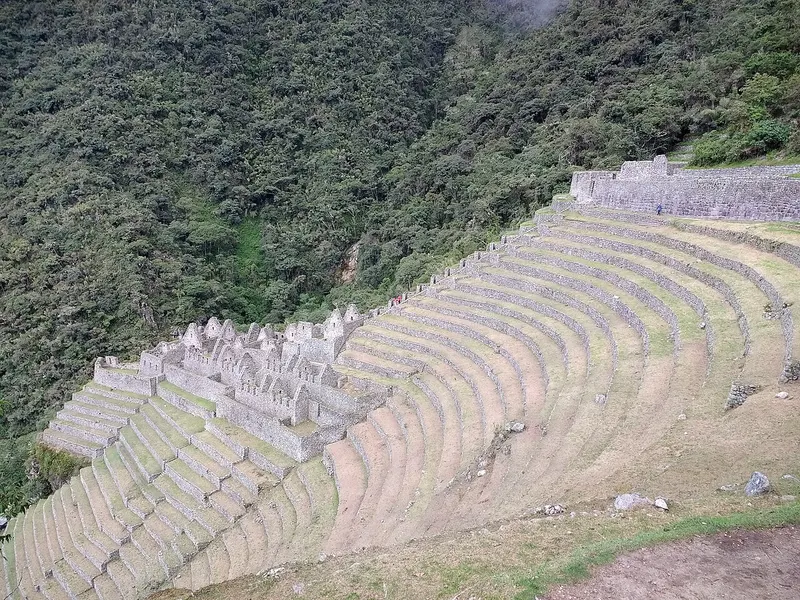
The short Inca Trail compresses the romance into one or two days by walking only the final, most scenic stretch of the original road. Trekkers usually take the train partway, get off at an intermediate stop, and walk the last leg — passing the lovely ruins of Wiñay Wayna — to arrive at the Sun Gate, then descend to the citadel. It still needs a permit (though fewer are issued than for the full trek), still walks the original stone, and still delivers the Sun Gate arrival, but with a fraction of the effort and no camping for the shortest versions. It is the ideal middle ground for travellers who want the authentic entrance without four days of trekking — and a good fallback when classic-trail permits are gone.
- Classic: four days, three nights, the full surviving route with high passes and camps.
- Short: one to two days walking the final stretch to the Sun Gate, often with a train leg first.
- Both walk original Inca stone and enter through Inti Punku; both require a permit.
- Short uses fewer permits and far less effort — a strong option if the classic is sold out.
The four days, day by day
The classic trek follows a well-established rhythm. Day one is the gentle introduction: from the trailhead in the Sacred Valley near Ollantaytambo, you cross the Urubamba and follow the river valley on relatively easy ground, passing early ruins and getting your legs and lungs used to the load before camping. It is the day to settle into the pace and let the guides and porters fold you into the routine of trail life.
Day two is the hard one — the day everyone remembers. It climbs relentlessly to the trek's highest point, Warmiwañusca, the 'Dead Woman's Pass', at over 4,200 m, then drops steeply the other side. This is where acclimatization pays off or punishes; the air is thin, the climb is long, and pacing yourself slowly is the whole game. Day three is often the most beautiful: a roller-coaster of passes and descents through increasingly lush cloud forest, past several of the trail's finest ruins, with the vegetation thickening and the views opening as you lose altitude. It usually ends near Wiñay Wayna, the last camp.
Day four is the prize. You wake in the dark to be ready when the checkpoint opens, then walk the final stretch of stone path in the pre-dawn to reach the Sun Gate as the light comes up over the citadel. From Inti Punku you descend into Machu Picchu itself, where your timed entry and circuit take over for the guided visit of the ruins. After three days of effort, walking down into the city you've been climbing toward is the kind of arrival no train can match. Exact daily distances, camps and timings vary by operator and conditions, so treat this as the shape of the trek rather than a fixed schedule.
- Day 1: easy valley walking from the trailhead, early ruins, first camp.
- Day 2: the big climb to Dead Woman's Pass (over 4,200 m) and a steep descent.
- Day 3: passes, cloud forest and the trail's finest ruins; camp near Wiñay Wayna.
- Day 4: pre-dawn walk to the Sun Gate, then down into the citadel for the guided visit.
Porters, guides and trekking ethically
The Inca Trail runs on the backs of porters — the extraordinary teams who carry the tents, food and equipment, set up camp before you arrive, and break it down after you leave, often racing ahead up the same brutal passes that leave trekkers gasping. They are the reason the trek is possible and comfortable, and how an operator treats them is the single best measure of whether that operator deserves your money. Peru sets legal limits on how much porters may carry and standards for their pay, food and gear, but enforcement varies, so choosing a company with a genuine commitment to porter welfare matters.
Practically, that means asking real questions before you book: how much do porters carry, how are they paid and fed, do they have proper sleeping and clothing equipment? A reputable operator will answer readily and proudly. On the trail itself, treat the porters and guides as the skilled professionals they are, learn a few words of Quechua or Spanish, and budget to tip fairly at the end — tipping is customary and a meaningful part of porters' income. Your guide, meanwhile, is what turns a walk into an understanding: a good one reads the ruins, the road and the landscape for you, and the official requirement to trek with one is part of why the experience is so rich.
- Porters carry the camp and cook — choose operators with real porter-welfare standards.
- Ask before booking how porters are paid, fed, equipped and how much they carry.
- Tipping guides and porters at the end is customary and important — budget for it.
- A licensed guide is required, and a good one turns the road and ruins into a story.

Permits, fitness, altitude and entry rules
Everything about the Inca Trail starts with the permit, and the permit is the part that catches people out. Numbers are capped per day and include trekkers, guides and porters, so they run out fast — in high season, months ahead. You book through a licensed operator using the exact passport details you'll travel on, the trail closes every February, and there is no walk-up option. Because this is the make-or-break logistic, we cover it in full on the dedicated permits page; treat booking it as the very first thing you do once your dates are set.
On fitness and altitude: this is a real trek, not a stroll. The classic route crosses a pass above 4,200 m and involves long days of climbing and steep stone descents that are hard on the knees, all at altitude. You don't need to be an athlete, but you do need to be reasonably fit, broken into walking, and — above all — properly acclimatized. Spend days beforehand in Cusco or the Sacred Valley letting your body adjust; arriving off a plane and onto the trail is asking for trouble. Trekking poles, broken-in boots and a sensible, slow pace on day two make all the difference.
Finally, the citadel entry. Arriving via the Sun Gate, you still enter Machu Picchu on a timed ticket and assigned circuit like everyone else — the trek permit and the citadel ticket are linked through your operator's booking, and your guided visit of the ruins happens within that framework on the final day. Bag rules, conduct rules and the one-way circuits apply to you just as to the train crowd. Specific permit numbers, prices, closure dates and entry rules change, so confirm the current details with your operator and official sources before you commit.
- Permits are capped per day, booked months ahead through a licensed operator, no walk-ups.
- The trail closes every February; book the moment your dates are fixed.
- It's a genuine trek — a pass above 4,200 m — so get fit and properly acclimatize first.
- You still enter the citadel on a timed ticket and circuit, linked through your operator.
- Numbers, prices, dates and rules change — verify the current ones before booking.

Frequently asked questions
The questions trekkers ask most, answered briefly. Details change, so confirm specifics with a licensed operator before booking.
- Can I hike the Inca Trail without a guide? No — the classic and short trails can only be walked with a licensed operator on a permit.
- How fit do I need to be? Reasonably fit and acclimatized; day two crosses a pass above 4,200 m with long climbs.
- When does it close? Every February, for maintenance and the heart of the rains; plan around it.
- Do I still need a Machu Picchu ticket? Yes — you enter on a timed ticket and circuit, arranged through your operator.
- What if permits are sold out? Take the short Inca Trail or a permit-free alternative like the Salkantay.
- How far ahead should I book? As early as possible — high-season permits go months in advance.

Related guides

Inca Trail Permits: How They Work and How to Get One
How Inca Trail permits work — who can book them, the strict daily cap, release timing, passport rules, the February closure, and what to do when your dates are sold out.
Read guide
Treks to Machu Picchu: The Routes Compared
Walk in instead of riding the rails. The classic Inca Trail and its short version, the Salkantay, the Lares, the Inca Jungle and far-flung Choquequirao — how they differ on permits, scenery, difficulty and how early you must book.
Read guide
Intipunku, the Sun Gate: How to Reach It
The Sun Gate above the citadel — the Inca Trail's grand entrance and a stiff out-and-back for ticket holders. How to reach it, the seasonality, the views and the effort involved.
Read guide